
The reports of New York City’s death are greatly exaggerated
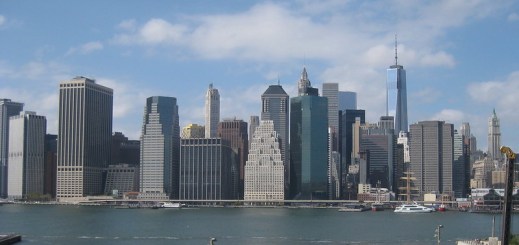
New York City’s obituary has been written many times. The latest declarations of Gotham’s demise harp on the current crop of problems but ignore New York’s ability to survive even the worst the world has to offer.
The current issues confronting NYC are for certain no joke. Our city was the epicenter of the global Coronavirus pandemic and its expansive economic impact and slow recovery continues to force businesses to close. Our vibrant nightlife and renowned theater district have been shuttered for months with no recovery in the near term. On top of that, we’ve seen a resurgence of crime and “quality of life” issues that harken back to the dark times of the 1970s and 1980s, replete with threats to lay off city workers including law enforcement.
It’s gotten to the point where a group of business leaders wrote a letter to New York City’s mayor pleading with him to begin addressing the crime problem and other issues of urban decay. Mayor Bill de Blasio began his first term promising to put a progressive spin on the successes of his predecessors; he will leave office an object of ridicule and a case study in how activist mayors consistently fail New York.
But as bad as New York’s problems are, they pale in comparison to problems that we’ve seen only a few short decades ago.
I first lived in New York City when I was born, and as a baby I lived on Sedgewick Avenue in the Bronx near Fordham Road. Not far from where I was living with my parents, landlords were routinely setting fire to their own buildings; cashing in the insurance money was more lucrative than renting apartments and the buildings were insured for more than they would have fetched on the real estate market. A few years later, New York’s Mayor Abe Beam famously appealed to President Gerald Ford for a federal bailout, as New York City was broke. ‘Ford to City: Drop Dead’ was the famous NY Daily News headline documenting his refusal to help.
A little over a century earlier, Union troops were drawn away from the battlefield of Gettysburg by the Draft Riots of 1863, which saw rampaging Irish mobs attack and murder Blacks, even setting fire to an orphanage. Even the most anarchic rioters of the current crime wave have not reached these levels of depravity.
I’ve been mugged and pickpocketed and gone through a year of unemployment to the point of having only a few dollars to my name. I have also played music on a stage that the Ramones made famous, had my family on cable television ringing the stock market’s opening bell, and seen some of the best concerts, plays and movies available to our civilization. New York is where I met my wife and where we raise our children and can show them the cultures of half the world by only traveling a few miles.
While the thought occurs to me to leave New York sometimes, the urge to stay is greater.
After the September 11 attacks, it became unpatriotic to flee the five boroughs in my opinion. It still breaks my heart that we have allowed religious lunatics to remake our skyline. But these failures of leadership do not make New York City less great, only more resilient.
The Roman Empire fell long ago, but Rome is still majestic and magical. New York was a force for the world before America became a reality. New York will survive the current malaise gripping America; it will survive until humanity dies out. New York City will be here forever.
Tribute in Light and the quest for normalcy
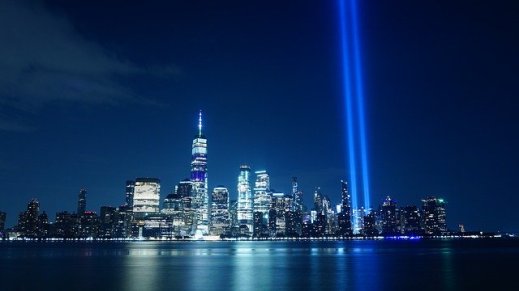
We are less than a month away from annual tributes to the September 11 attacks, and for a few tense days it looked like one of the most enduring traditions around the commemoration, the Tribute in Light—two columns of light projected from lower Manhattan close to where the Twin Towers were located—may not go on.
The National September 11 Memorial & Museum, which puts on the display, said it would have to cancel it over concerns for worker safety around the Coronavirus. The museum stated it didn’t have the financial support it needed to ensure the safety of the workers who would assemble and maintain the lights, and had made a contingency plan that replaced the traditional Twin Tower lights with other skyline observances on the night of September 11. There was a typical tabloid and internet-fueled outrage, and after securing funding promises from New York State, the museum reversed course and announced that the tribute will go on as planned.
It is a moving tribute that can be seen from the farthest reaches of the five boroughs and beyond: the night sky aglow with the ghostly shadow of our city’s loss. It is a sign of New York City’s resolve to create something beautiful out of tragic beginnings, and not forget the tremendous loss of that day even as we keep going.
Nearly 3,000 people died in the attacks; the largest loss of life in a single day since the General Slocum ship disaster of 1904. This past April, the death toll from the COVID-19 outbreak in New York City exceeded 4,000, surpassing the deaths from the September 11 attacks.
The Tribute in Light though, is additionally tragic because it also shines a light on our failure to rebuild properly. We have allowed Islamic fundamentalists to remake our greatest city. Every time we look at New York’s skyline, we see the work of murderous savages who thought Allah was commanding them to kill children and babies. I’m sure the new World Trade Center is a fine building; it certainly looks grand. But it’s not two Twin Towers. The Tribute in Light highlights our failures to stand up for ourselves.
When the towers fell, I thought for certain that our country would stand for nothing less than two new Twin Towers, maybe a few feet taller than the originals. That was the only proper rebuilding response to the terror attacks, and we made a hash of it.
The towers of light are what we have left, and the thought of not even having that was too much for some people. We cannot get people to wear masks and now we can’t pay tribute to September 11 victims because we cannot muster the resources to keep workers safe. If we can’t even shine lights into the sky, what has become of us?
New Yorkers have been living with the Coronavirus pandemic longer than anywhere outside of China. There’s a deep hunger for anything that is remotely normal. Any time we can safely do the normal human things we used to do; we’ll do it.
The Tribute in Light will be back this year; please think of those who we lost nearly two decades ago and the sacrifices so many made that day. It will be a moment of beauty in the midst of a lot of ugly.
Dispatch from an American vacationland
Long Beach Island, New Jersey
How does an area centered on catering to crowds of tourists manage to keep people safe during the heavy tourist season? Long Beach Island is coping in the time of the pandemic. It has been a family tradition to come to Long Beach Island for about a week every summer and we hoped since March that this year would be no exception.
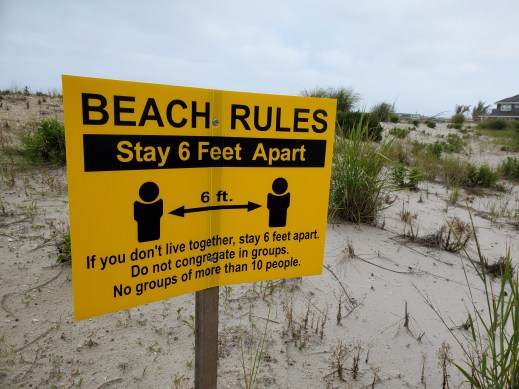
Early in the pandemic my in-laws, who invite us down ever year, mentioned that there would be new social distancing guidelines for the beaches and restaurants, that LBI had moved quickly to adapt.
The beach is still too crowded on some days. While being outdoors is a help; it’s still not safe enough during the heavy morning hours to go there. I went to bring my kids to the beach and quickly turned around when we saw the size and density of the crowd.
One of the key tragedies of the COVID-19 pandemic is that things that were once routine now require serious decision making. Can my kids play with that little girl in the pool? Can I take my girls to the beach to build a sandcastle? Those were no-brainers in the past; not anymore. There won’t be easy answers for a while.
Whether or not people wore facemasks on Long Beach Island is random. Being from New York City, we feel naked without them, but people from this part of New Jersey have not had the same level of virus infection to make mask-wearing second nature and it’s not as real to them. Shortly before coming down to Beach Haven, we saw that lifeguards in nearby towns had an outbreak of the Coronavirus, not from their time on the beach as lifeguards but from partying together after hours.
You can hear people partying into the night and see them moving unmasked and in irresponsibly large groups everywhere. The island is full of visiting young people and people old enough to know better traipsing around as if there is not a global pandemic still raging across the country.
If you tried to lecture everyone acting foolish about how to wear a mask or distance, you would do nothing else. Calling people out or trying to deliver street justice would quickly evolve into fistfights or some other unproductive screaming match ripe for the viral internet montages of hostility that are already plentiful. Instead you do your best to lead by example; keep the mask on if you are near people, keep six feet apart.
There is not much you can do but do the right thing and keep away from people who don’t. It is easier to do here than in New York, so this still counts as a vacation. Things are not going to be back to normal soon and it would be a rancid lie to pretend otherwise.
Life in this vacation spot goes on; those businesses that have survived on Long Beach Island have adapted well. The Chicken or the Egg is still in high demand and they offer only outdoor seating and to-go orders; the Jersey Devil sandwich still provides a terrific serving of pork roll and I was able to feast on their Buffalo shrimp again. My wife and I had a date night at the excellent Artisan Café that made an amazing Italian mac & cheese and moved its dining outdoors as well. Buckalew’s created an outdoor beer garden and has very on-time pickup service.
The Surflight Theatre survives not only from the Coronavirus but from Tropical Storm Isaias that knocked over its outdoor tent. We were still able to enjoy a Frozen musical with the kids and a comedy night featuring Mike Marino and Sheba Mason—outstanding.
This past Saturday I walked the beach at night. There were a few other people walking about in the darkness, some with cell phone flashlights, and a patrol vehicle that drove back and forth. Only a few yards away from masses of humanity, I took comfort in seeing two shooting stars and a blood orange moon that looked like a nighttime sun.
I stood in awe of the moon, which was sitting low in the sky and casting its bright colorful light over the sea. The thunder of the Atlantic Ocean drones on, its waves crashing to shore in a powerful chorus When our world appears cracked, nature has a way of putting human civilization in perspective.
Ars longa, vita brevis

What grinds us down most is not the presence of stress, but the absence of joy.
Even during the darkest times in human history. People survived not just on food, water, and medicine but on jokes, songs, and stories. It’s not a coincidence that in addition to our stockpiling cleaning supplies and toilet paper, the COVID-19 pandemic launched binge-watching of entertaining shows. I’m not sure I would have been as riveted by Tiger King if the insanity of private tiger parks was more cheerful than the insanity of the outside world at the time.
The present and resurgent health pandemic that has made havoc on our world, we remind ourselves that this too shall pass, and most of us will survive and be able to learn from this time to create a better tomorrow. I also must remind myself how lucky I am: I and my family are healthy, I have a job, our building has been safe from looting, arson, and teargas.
I live most of my days now in front of my work laptop at home. Even when the work-from-home life does its worst to my day, I’ll manage to feel some immense relief if I can scratch out the draft of a poem, or poorly play a few Misfits tunes on my guitar.
Creating something, even if it’s something small that no one else will see, is good for your health. The theory of cognition holds that creativity is a central aspect of human. It improves our brain function and therefore our health. So even when I’m dead tired from working all day and then move from the desk to the dinner table to putting the kids to bed; I know I can salvage what remaining time I have left before I fall asleep if I do something creative.
I’m working on getting better at playing guitar because I had the privilege of playing the six strings on stage earlier this year with Beer Drinking Fools. Now I’ve been bitten by the six-string bug and want to subject innocent eardrums to blistering crossover hardcore punk and thrash metal that will sound like S.O.D. having a blood orgy with Bad Brains and The Lunachicks.
Our current crises are beset with ignorance and villainy on all sides. History will condemn civilized societies that let their people die needlessly and found it virtuous to let their cities fall to ruin. It is difficult to feel hopeful, but even amid hopelessness, one can find solace in creativity.
A surge of creativity is not a cure-all for what ails our society. While the current politics and pandemic are new, it was a long time getting to where we are now, and it will take a long time to get to something better. But the seriousness of our times doesn’t negate the need for creative joy; it makes such creativity more necessary than ever.
During these times of pandemic, our creativity will sustain us and endure. Amid so much destruction and despair, creativity is a revolutionary act.
Illegal fireworks are as New York as bagels
Years ago, when I lived in Inwood, I walked to the public pier at Dyckman Street on the Hudson River to see fireworks on the Fourth of July. The sightings were disappointing. Through clouds in the distance I could see the faint glow of a few shows over New Jersey and could see none of the official Macy’s fireworks happening farther downtown.
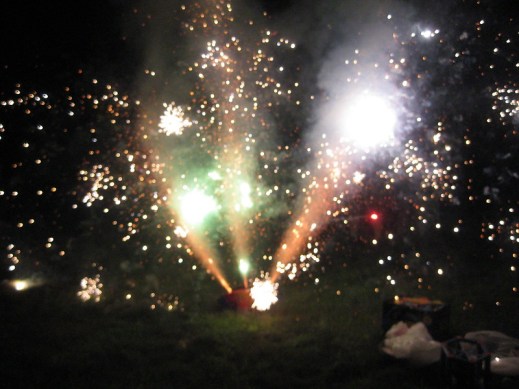
I returned to my apartment disappointed but was soon treated to shows of illegal fireworks that more than compensated. The barrage of ordnance that filled the northern Manhattan sky was a welcome sight that took me back to my childhood in Yonkers. I would emerge from our apartment in Yonkers on July 5th to a scene that resembled a war zone. The curbs and corners were filled with the spent paper from reams of firecrackers, and one time I saw a metal garbage can that had been exploded and overturned, looking like a giant metallic banana peel.
When I first returned to the city to live as an adult, I lived in Ozone Park, once the home to professional-grade illegal fireworks shows and street festivals paid for by the Gambino Crime Family boss John Gotti. Gotti had been in prison several years at that point, and the authorities worked hard to prevent the return of a large-scale illegal fireworks display. Police were all over 101st Ave. and the surrounding streets, but it made little difference. Managing to get on the roof of my building, I could see the official fireworks far away in Manhattan, but the cat-and-mouse game of cops and illicit fireworks was more entertaining.
Illegal fireworks have been a New York City staple for decades. When I was in fifth grade in the New York suburbs, I went to a neighbor’s yard where a friend’s father let me light sparklers off some candles set on the ground. I felt like the greatest outlaw on Earth. Kids waved around sparklers while adults set off bottle rockets and M-80s. When we heard police sirens in the distance, adults blew the candles out and we ran to the backyard until the danger had passed.
More recently, we have enjoyed the sights of fireworks over Whitestone and College Point. Early morning jogs through Flushing Memorial Field has found launch sites of the previous evenings fireworks displays, the tubes still smelling of gunpowder in the cool dawn, like a mortar position of a recently passed battle.
The allure of illicit explosives dates to the birth of the American nation. The first battles of the American Revolution were fought over the British Army’s attempt to seize illegal weapons.
New York, which was under the yoke of British rule for the bulk of the Revolution, was no less fervent in its commitment to the cause. One of the bloodiest battles of the war was fought in Brooklyn; the Battle of Long Island almost ended the Revolution—Washington barely escaped to regroup. The first woman known to take up arms for the United States did so in Manhattan at the Battle of Fort Washington; Americans lost that battle too and Fort Tryon park still bears the name of the British governor of New York at the time.
Our founding fathers would have been hanged as traitors to the crown had we not won. No matter our heritage, Americans are proudly descended from outlaws and outcasts. People setting off fireworks today are not would-be revolutionaries, but they are tapping into the same antiauthoritarian sentiment that is alive in spades in America today.
The city has seen an increase in setting off illegal fireworks. We hear them in every neighborhood and in some cases too late (true fireworks enthusiasts know to stop between 11 p.m. and 12 a.m., July Fourth excepted). There is a need now for people to celebrate and sending exploding stars into the night sky is best done while remaining safely distant from fellow citizens. Many bars and restaurants remain closed, large parts of the city are effectively locked down by massive protests. Fireworks are a needed respite, a needed release of our energies to celebrate something, whether that be the birth pangs of a better America or a fiery exegesis of an abiding patriotism.
Illegal fireworks are a proud New York tradition, a proud American tradition. Let it never die.
What is still beautiful about us…
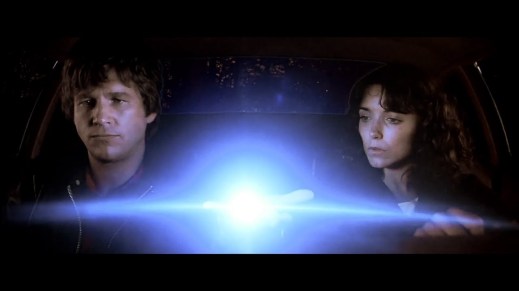
In John Carpenter’s 1984 film “Starman,” Jeff Bridges stars as an alien who is stranded on Earth, and goes on the run from U.S. government agents with the widow of a deceased housepainter, whose body he has cloned as a disguise. They have misadventures while eluding the authorities and the widow (Karen Allen) falls in love with this alien in the body of her dead husband.
In retrospect the plot summary makes this sound like a ludicrous B-film, but it works. One scene and one line from the film has stuck with me since I watched it in a movie theater as a 12-year-old.
The couple are finally cornered in a restaurant by the authorities and the federal agent who has been leading the hunt for them comes to confront them. He asks the alien about his journey and learns he is here to study Earthlings.
“You are a strange species, not like any other, and you would be surprised how many there are, intelligent but savage,” the Jeff Bridges/alien tells his pursuer. “Shall I tell you what I find beautiful about you?”
The federal agent nods yes.
“You are at your very best when things are worst.”
That line has been etched in my mind for more than three decades now, and it’s a fitting mantra for the times we are in.
“You are at your very best when things are worst.”
It can be hard to imagine things getting worse. We are still in the midst of a global pandemic that has hit the U.S. harder than any other country, followed by widespread civil unrest over the death of George Floyd in Minneapolis police custody, poisonous politics in an election year and unemployment levels not seen since the Great Depression.
These are times that try our patience and our resolve. It is easy to want to withdraw and bunker down, to tune out the outside world and lapse into a fatalistic nihilism, a hopeless sloth of withdrawal.
The pandemic reminded us that contact with others is an essential part of life. Human contact is something we took for granted, or even came to resent in New York City, where everything is too crowded and the inconsideration of others is amplified by proximity.
But the need to interact with others is more important now than ever, and despite the myriad conflagrations boiling over in our society, we can still find common ground with decent people of differing ideas.
Human life is inherently tribal, and America has forged tribes along lines of culture and character in ways other societies cannot fathom. These cultures appear to be irreconcilable, but basic human decency and goodness can transcend even our deepest chasms. The past few weeks have shown the extent of our divisions but also the depth of our decency and resolve.
“You are at your very best when things are worst.”
It is time to be the best person you can be and play some part in making our world a better one. You may be at odds with your friends and family, you may be subjected to hatefulness from smaller minds, but the things most worth doing are often most difficult. Keep going.
We can look back at this time and be proud we were at our very best.
Trump to New York: Drop Dead

Among the political headlines that screamed from the shameless ramparts of social media over the past few weeks, one news story that added to the four-year hate on Donald Trump was his switching his address to Florida from New York. It was a minor note that was lost in the partisan volleys regarding impeachment, with Trump complaining via Twitter that he has been treated unfairly by New York City and State leaders.
Donald Trump became a household name in the U.S. with his television show, “The Apprentice.” But New York has been familiar with Donald Trump much longer than the rest of America. For most of my adult life he’s been a tabloid figure, a willing mouthpiece for morning radio and other fodder for the endless chatter and ego jousting that hangs thick in the atmosphere of the city.
New York politicians were happy to take jabs at Trump’s repudiation of his home state. “Good riddance,’ said Governor Andrew Cuomo.
There are three reasons driving the move and Trump’s timing of it.
Distracts from the latest circus. Trump made the move during the week when several career, nonpartisan government officials were telling Congress about Trump’s conduct related to the Ukraine, the impetus for the current impeachment effort. Trump found an alternative instance to claim that Democrats were treating him unfairly, helping him construct the conspiratorial framework he’s hanging his entire anti-impeachment platform on: that the system is corrupt and everything is being driven by political machinations on the part of Democrats.
Helps with reelection in Florida. Trump did not win New York State and has little hope of doing so, but Florida is up for grabs and is a much needed piece of his reelection puzzle. His move aligns himself with the large population of transplants who fled to Florida from the Northeast.
Saves him money on taxes. This is probably the most important factor driving Trump to the Sunshine State. He’ll save significant money on taxes. New York State has a much higher tax rate than Florida, and if you can pick an official residence between the two, New York will lose out every time on tax considerations.
New Yorkers who don’t like Trump would like to disown him, and act as if he is some rare aberration who does not reflect at all on the five boroughs, but we can’t.
We can’t act like we’re the trendsetter and the capital of the world and then pretend that the leader of the free world, a native of our city, is somehow not a part of us. Yes, New York is more diverse and the focal point of a lot of worldly art and culture, but human nature doesn’t change, and New York is every bit as tribal and parochial as the rest of America. The partisan divide that creates ugly scenes across the country is present here also.
Landlords like Trump are slightly less revered than rats and muggers in New York. Trump’s rise in presidential politics is an indication of the complete dysfunction and utter detestability of our political class, not from any sheer genius on his part.
Atop of all the other controversies surrounding the Trump administration at the time, his moving his official residence to Florida is small potatoes. It was in the media for a day or two and wasn’t even the lead story those days; then it was gone. There are more important stories to chase during this absolutely bonkers administration, and political griping and standard tax dodging would just don’t fit the bill in these strange times.
No one can honestly say Trump is not a New Yorker. He’s one of us, and we can’t brush him off like yesterday’s news. The city helped create him; it was our tabloids that made him a celebrity and grew his name recognition for decades. It was our political leaders that constantly sought his donations and took their picture with him.
President Trump is thoroughly ‘Florida Man’ now, but he’ll always come stamped with the “Made in New York” label.
Bounce Castles and Bratwurst

The July event our family looks forward to ever year is a party held in Connecticut by Evil Jesus, the guitar player for Premature Strangulation. Premature Strangulation hasn’t played since their record breaking* world tour in 2015, but this annual gathering predates the concert series that served as a featured element.
After making a modest batch of Double Satanic Deviled Eggs and packing our children and other necessary accoutrements, we set out to make the journey from Queens to Killingworth. Despite typical heavy I-95 traffic, one children’s bathroom emergency and monsoon-like rains on I-91, we made pretty good time.
The Double Satanic Deviled Eggs were a hit, and others inspired by their long-standing success brought their own delicious but less Satanic versions.
It was a family-friendly event where children were so well occupied that attempts to check on them were met with a mix of perturbation and disgust. Older girls were magnets for young children and were incredibly gracious in minding toddlers. There was even a piñata that yielded great treats for the gathered children, and it was miraculous that no one was rendered unconscious with multiple youths swinging aggressively to break open the treat.
There was plentiful food and drink, but the real attraction is catching up with old friends. Our host, Evil Jesus, has known some of us since high school and others from college. Like his mother’s house was when we were in high school, his home is a center of an expansive social scene, a community. The guests at the party included includes Republicans, Democrats, Christians, atheists, lawyers, housewives, and other derivations of the human condition.
I met a young man who did extensive work in North Korea working to help reunite people with families in South Korea and has a grandmother north of the DMZ who has not seen family for decades. I learned another good high school friend is pursuing his dream of being a radio DJ, and heard about our host family’s recent trip to Paris.
The members of Premature Strangulation were not all there. The band has as many as nine members at any one time, like a more intoxicated and less-well-rehearsed Allman Brothers. Those members who were present discussed the possibility of getting together to play songs again. Maybe next year will be the reunion world tour that their adoring public is waiting for**.
The drive back was along less-crowded highways and under a clouded sky. Buzzing as best one can on diet Pepsi and Five Hour Energy, I was the only one awake for part of the drive. A slender golden moon haunted the night sky with a sense of beauty and adventure yet to come. Fireworks silently illuminated the sky from the far side of the highway.
Evil Jesus did it again. Another great gathering is in the books, and it produced good memories and good times, and a true sense of community. The human race needs more of this.
Thank you.
*largest concert attendance by a cover band in Killingworth Connecticut in the first-half of July on a non-leap year, according to the Evil Jesus Research Institute for Beer and Cynicism
**adoring public may be limited to sympathetic spouses, children, and pets
Fireworks and the American life

Last Wednesday thousands gathered in Fort Totten Park in Bayside, Queens for a fireworks display. The event had all the makings of potential disaster by modern metrics. Thousands of diverse people crammed into a limited area and jockeying for space to get a good view. A little league soccer team was wrapping up practice as people took their places in the expanse of green field between portable toilets and a row of food trucks. Bounce castles entertained children before the fireworks started and people took what they thought were the best positions to view the show as they waited for the sky to get dark enough.
The fireworks started promptly and a roaring whoop went up from the crowd as fireworks lit up the sky. New Yorkers cheered enthusiastically for this celebration of our War of Independence. When it was over, the crowd made its way out of Fort Totten without incident, or at least any major ones.
From parts of Fort Totten you can see the glitter of the Manhattan skyline and be inspired by the nighttime majesty of the Throgs Neck Bridge lit up. It is a marvel how New York holds itself together while the country seemingly tears itself apart. Gotham is as rife with division as everywhere else: New York City gave us both Donald Trump and Alexandria Ocasio-Cortez.
The greatness of New York serves as a microcosm of America. We see all the same issues in New York first, and the city, rightly or wrongly, serves as a template for how the rest of the country can navigate its problems.
The Fourth of July brings us down to Earth, reminds us of how American we are. It is popular to look upon outward signs of patriotism as right-wing or quaint, but if you believe America is for everyone and that patriotism is expansive and great, then join the celebration. The freedom we have was purchased in a bloody war, several actually.
The land we are on we do not claim by divine right. Every inch of America was fought over. We waged war on France, Great Britain (twice), Mexico (twice), Spain and countless Native American nations to get the current borders of the United States. July 4th celebrates the birth of our nation, a hard-fought war for Independence that was in effect our first civil war. When the war started it was not a foregone conclusion that we would win. The patriots who signed their names to the Declaration of Independence knew that the document would serve as their death warrant if the war didn’t go their way.
The Battle of Brooklyn was one of the bloodiest fights in the history of the American Revolution, and the war would have ended had Washington not been able to retreat to Manhattan. The British held New York for most of the war, but the city has signs of the American Revolution everywhere. The first woman who took up arms for America, Margaret Corbin, fought at the Battle of Fort Washington in Manhattan.
Some are fatalistic and see America as it is headed now as intrinsically doomed. There is no cultural coherence to sustain us through these times, they say, and new communities and nations will rise out of what is now a crumbling empire. But New Yorkers have bridged these divides in the crucibles of ambition and creativity. We are strong when we demand truth and strength, and turn to leaders not afraid to speak honestly and make the right enemies. We can do that in America as a whole if we are willing.
Let the American Revolution be our call to action today.
 Matthew Sheahan
Recent Comments