
The design of decline
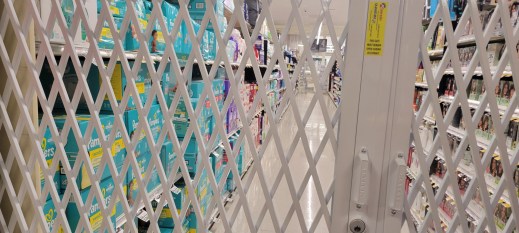
I was grocery shopping on a Friday night—I’m at an age when not only is that normal but admitting to it doesn’t bother me—and I noticed something new.
There were gates on a few of the aisles. Posted signs mentioned that the aisles would be closed after 7 p.m. and that customers could request they be opened. I was sure I knew why the gates were there, but I asked a store employee anyway. As I expected, he answered, “Too many people stealing.”
These kinds of gates are old news in many parts of the country. In most drug stores and convenience stores, high-theft items are already under guard, with alarm-trigger glass cases housing razor blades and cold medicine.
Over the past year, I’ve seen more shoplifters apprehended at this store than in the previous 10 years combined. In one case, there weren’t enough store security people to apprehend two men who had massive helpings of chicken hidden under their clothes, so the one lone guy made sure they dropped what they were stealing before letting them walk away. The would-be thieves sauntered through the parking lot, completely unconcerned that they would be arrested, not caring who saw them.
Across cultural and political divides, there is a sense in the U.S. that as a society, we are going out of our way to tolerate the intolerable. The percentage of the population that commits crimes may be small, but the gates on grocery aisles is a way that we all pay.
Everywhere the world around us bears the marks of our acceptance of the unacceptable and designing our environment in ways that are an acquiescence to societal problems. Park and subway benches have awkward dividers and ridges to prevent homeless people from sleeping on them rather than allowing people to sit on them comfortably. Many fast-food restaurants have no public restrooms, lest they attract homeless
In many ways, these elements of design indicate that we’re failing collectively. We are accepting the unacceptable because we don’t see a way out and we don’t feel a collective responsibility to the world around us. A collection of forces has chipped away at the collective “us.” When there is no “us,” no “we,” there’s not a common glue to the everyday world.
When we don’t feel connected to the community around us, we don’t take action to improve that community. People aren’t working together to solve their common problems; they are doing what they can to keep themselves away from the worst parts of the herd. They are covering their asses, and doing only their part.
People are starting to resist this spiral of decay. Customers are stopping shoplifters on their own when store employees are not allowed to. Even at my local grocery store, the last time I asked for the gates to be unlocked so I can buy some soap, the store employee told me that the gates were already unlocked, and that I should just close them behind me when I left.
Slowly but surely, if we regain our collective will, we can reverse our decline and make this design of decline a thing of the past.
Twitter is worth saving

Amid the implosion of one of the world’s largest cryptocurrency exchanges (I am far from the only one but I told you so) and the mid-term election vote counting, Twitter has become a bigger and more chaotic donnybrook under the leadership of Elon Musk. Many friends on the platform object to Musk’s policies and are searching for an alternative platform to go to, but I think we should all stay. It is better to save Twitter than to try to sink it.
Upset with Twitter’s policies, Musk seemingly trash-talked himself into buying the company for $44 billion, a terrible deal that he quickly started trying to back out of.
Now that he’s been forced to go through, he’s quickly trying to turn it around. One of the chief means he’s looking to make money is in selling the blue checkmarks that denote officiality for $8 per year. While there’s a sound logic to it—Stephen King is a millionaire and utilizes this platform to make money, why shouldn’t he pay a measly $8 per year—the results have been absolutely bonkers, with armies of would-be Elon Musks, George Washingtons and even Jesus Christ paying for a blue checkmark and creating outrageous content from newly “official” sources.
This chaos of renegade officialdom has got to be reined in first in order to save the platform. One of the chief appeals of using Twitter is that you can find first-source information quickly and know where it was actually coming from. His torpedoing of that in pursuit of $8 per year subscriptions undercuts a key strength and jeopardizes the ad revenue it needs.
The Internet was better in some ways when it was more of the Wild West. I didn’t want to watch Chechen rebels beheading Russian tank operators, but I was glad that no one was stopping people who did. The gruesome and the pornographic was a small price to pay for being able to read newspaper articles from every corner of the world, and knowing the news before the cable channels had it.
To a large degree, social media users agree to a certain level of curation and control that stops short of censorship. Pedophiles and murderers, hateful mobs, scam artists and criminals ought to be shut down, but the policing of “hate speech” and the folly of trying to filter conspiracy theorists has led to a large segment of otherwise decent users questioning the judgement of the online gatekeepers. Fully conceding the worst anyone has to say about Donald Trump and fully agreeing to his culpability in the Jan. 6 attack on the Capitol, it was still a mistake to kick Trump off of Twitter. There was other outcome of that move than to be interjected into the partisan political divide that has cleaved public discourse in the U.S. Erring on the side of free speech, even for sleazy charlatans, is better keeping with the promise Twitter makes to its users.
The pendulum that’s been swinging on the management of Twitter needs to be stabilized; Elon Musk should hand over management of the platform to people better versed in its management. Musk as the face of Twitter invites more trolling for sport. Re-institute a meaningful verification strategy and get advertising dollars to return. Institute better policies that value free speech. Crack down on scam accounts (an early sticking point that Musk used to try to back out of the deal).
Twitter can be saved and is worth saving. If you rebuild it, they will come back.
The coming crypto reckoning
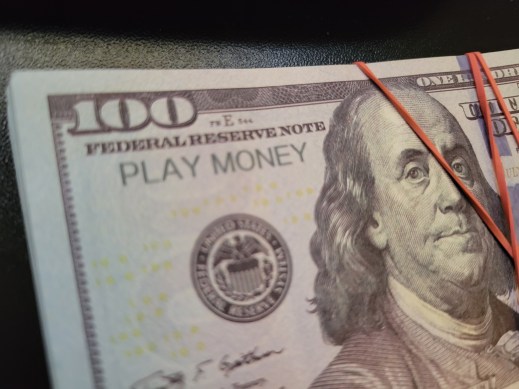
The lure of being lucky and striking it rich is a powerful opiate in America. From our very foundation as a place of refuge for the unluckiest of Europe, the self-made millionaire has a place of reverence in American lore. Very few attain that status, but millions have exhausted that dream and put themselves in an early grave working to attain it.
The chase for American riches has taken many forms, from the California Gold Rush to endless swindles, and the latest destination is cryptocurrency. Cryptocurrency is digital currency that can be exchanged for other currencies. Bitcoin is the most famous but there are more of them than I care to count.
There is absolutely a place in the world for a digital currency, but many of the current crop of these currencies defy what a currency needs to be: a stable unit of value measurement. If Bitcoin can lose 22% of its value in the matter of days, or drop precipitously in the course of a morning based on the whims of Chinese regulators, it is missing an essential element of being a usable currency.
And there will be a time when crypto currencies are real and have real value and usefulness. It’s important to note that in some totalitarian countries like China, the use of crypto currencies have been a force for good, enabling people to do business without oppressive government interference. But we are in such early days of the cryptocurrency world that the safe and regular use of cryptocurrencies is still years away.
There are cryptocurrencies pegged to regular currencies—such as Tether, which tracks the U.S. dollar—known as Stablecoins. In the future, some kind of Stablecoin may be used globally that would enable secure, anonymous use with the kind of stability that a currency needs.
But that kind of legitimate use is a long way away from the rampant speculation that is captivating the imaginations of get-rich-quick investors. What’s worse, the same kind of faux populism that gave us the GameStop rush of a year ago has been de rigueur in the crypto world.
And this rampant, pure speculative increase in value is based on hopeful dreams and nothing more. Even stocks that are widely overvalued are supported by an understandable business model. With crypto, you can lose your shirt in the course of an afternoon and have no one to blame but yourself. Most world currencies – U.S. Dollars, French or Swiss Francs, Euros, British Pounds—are backed by powerful governments that have a vested interest in maintaining a stable currency. You can argue that U.S. Dollars are propped up by the Federal Reserve Bank or even an Illuminati conspiracy, but they are doing a better job than they keyboard commandos, Russian bots and other shady characters running the crypto world.
What is so shameful about the current state of crypto is that people are being drawn in who otherwise would invest in something more constructive. Hard-working people who find it hard to get ahead and save for their kids’ college tuition are plowing money into the latest online toy money when they could be investing in something real. At this point I’d be happier with these people stuffing money into mattresses rather than putting it into the latest cryptocurrency that’s being talked up by social media shysters.
But like major speculative rushes of the past, the crypto world will experience a “shakeout,” where those that don’t have real values drop quickly and investors lose money. It could be quick and violent. There will be stories of people losing their life savings because they were told they could double their money in months.
Crypto currency speculation is going to be one of those things future generations read about and ask why people of our generation didn’t do something about this global boondoggle. The reckoning is coming; please don’t get burned.
Truth and civilization
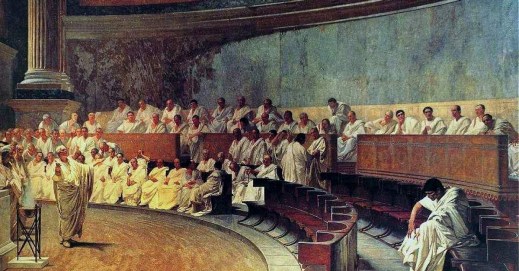
More than 30 years ago now, I was selected as my high school’s intern for our local Congressman. I spent a week working from the Capitol Hill office of Representative Bruce Morrison, a Democrat who represented the third district of Connecticut.
Though he was running for Governor of Connecticut that year, he still kept a very full schedule, and as Chairman of the House Immigration Subcommittee he was working on a bill that was instrumental, for better or worse, for bringing in tech workers from outside the U.S.
Bruce Morrison did not win his contest for governor, though I turned 18 that year and I am proud to say that the very first vote I ever cast that year was for him. The winner, Independent Lowell Weicker, instituted a deeply unpopular state income tax, was hanged in effigy in Hartford and did not run again; the Republican candidate, John Rowland, later became governor and wound up serving time in federal prison for bribery and campaign fraud, so Connecticut judged extremely poorly that November. Rep. Morrison did not run for political office again but left a lasting legacy. Among his many credits is that he was instrumental in helping bring about the Irish Peace accords by normalizing relations between the U.S. government and Ireland’s Sinn Fein.
I was only working in Congress for one week, but it was thrilling to be at the center of our country’s government, being part of what was making the news and seeing the workings of government up close. I helped write a letter to a woman in Mystic about the Women Infants and Children program, sent faxes to other Congressional offices, and did tasks that were menial office tasks but felt like they carried the gravitas of democracy nonetheless.
I would spend hours after work in the visitors’ galleries of the House and Senate, watching the debates. It was thrilling to see Senators and Representatives argue their positions with eloquence and mutual respect. The formality of how they addressed one another, as “Senator” on the Senate and “Gentleman” or “Gentlewoman” in the House, lent grace and dignity to the proceedings, even amid what counted as partisan rancor in 1990.
Among the tasks was going around to various offices collecting signatures on a letter to the Secretary of State in the wake of army killings of students in Zaire, which later resulted in Congress cutting military aid to that country (their dictator would be overthrown in a coup seven years later). I walked the halls of the House office buildings, finding my way to the various offices and sometimes meeting the different Representatives along the way—I usually only handed the letter to a staff member who would go into the inner sanctum of the office and return with the signature of the Congressperson, but chatted with a few in person. At one point while gathering these signatures, I ran into my sophomore year English teacher, Mr. Degenhardt, and my high school’s former Principal, Gilbert Cass, and showed them to our Congressman’s office.
At another point, a Congressman who pledged to sign the letter was on the floor of the House. I was not allowed to go there. Only Representatives, pages, and certain other staff were allowed. Luckily, someone—I think it was another Congressman—ran the letter to the floor and back for me.
The floor of the House of Representatives was a kind of sacred ground; it was for people who got elected, who entered by the will of the people. It is not another part of the office, or a fancy perk Congress gave itself. People died to keep it free. In fact, the British burned the U.S. Capitol and the White House during the War of 1812.
So last month when Trump supporters stormed the U.S. Capitol, it took on a kind of unfathomable horror. There was an element of watching something we didn’t think could happen here. Even in the most depraved days of Trump’s two presidential campaigns, I had a higher level of faith in his rank-and-file supporters than to think they could be led so far astray from reality.
The past several years have shown us that the fringe elements of our politics have gained traction among the mainstream and have no allegiance beyond their own ideas. The history and honor of our country mean nothing to them, as they see themselves as elite warriors correcting injustices rather than as citizens with obligations and responsibilities. Whatever destruction they or their allies cause is considered justified by the morality of their cause.
What the last four years have laid bare is that both political parties are broken, with great swaths of voters and activists that will be led to violence based on misinformation and propaganda.
Overwrought self-styled patriots, who thought Donald Trump was the last bastion of defense of law and order and America itself, stood with crowds that attacked police officers in an attempt to thwart a democratic election. Self-indulgent social justice advocates, who looked the other way as mobs burned down police stations and created “autonomous zones” in major cities, posted tributes to fallen Capitol police offers and talk of meting out punishment for sedition.
The partisans stuck with extremists in their midst want to blame someone else. Trump supporters claim these were really Antifa activists in the Capitol on Jan. 6, and Black Lives Matter supporters would have us believe it was secret Trump “Boogaloo” militia burning and looting U.S. cities last summer.
Two central tenets can guide us forward out of this decades-long quagmire:
- There must be an absolute and unwavering respect for and obedience to the truth.
- American institutions deserve our utmost care and protection, not because they are perfect but because they are ours.
The truth knows no political allegiances and always disappoints dogmatic partisan politicians. Our institutions were created in different times by different people than comprise America today, but they were made to last and have survived multiple wars and upheavals. If we respect them, they can thrive again.
Meeting New York’s First Guardian Angel

Traveling to Washington, D.C. for work means taking the Amtrak Accela train from Penn Station. Penn Station was once a gleaming monument to New York’s greatness, but decades ago it was leveled, reduced to a subterranean maze of misery by the powers of commerce without conscience and New York’s Philistine tradition of tearing down some of its most beautiful historical landmarks in the name of progress.
Getting ready for the three-hour train ride to Washington meant stopping by one of the independent delis that still survive there amid the chain concessions. As I approached I saw a man in a red Guardian Angels jacket and red beret, and thought it was probably Curtis Sliwa. It was.
Curtis Sliwa was a night manager at a McDonald’s on Fordham Road in the Bronx when he decided to do something about New York’s Crime problem. He founded the Guardian Angels, an unarmed, unformed crime fighting group that started patrolling New York’s dangerous subways and streets. He didn’t ask permission or get political approval for what he was doing, he just did it. This was at a time when landlords were burning down their old buildings because the insurance money was worth more than the property was valued. The 1970s saw crime explode in every borough as a bankrupt New York City appealed to the federal government for help that never came and was forced to lay off police officers.
The Guardian Angels were the vanguard of resistance to the hopelessness that gripped New York. They didn’t have police approval and politicians dubbed them “vigilantes;” they didn’t care. The unarmed volunteers in their trademark red berets were a sign that people still cared about the city and were willing to put their lives on the line to make a difference.
It was not all straight shooting, though. Sliwa admitted that some of the early stories he told about Guardian Angel heroism were fabrications. Still, Sliwa was an anti-crime crusader before it was cool, a strong voice that cut through the blather of polite talk and gave the criminal class the harsh language it deserved. Even as New York started to turn around, Sliwa’s crime-fighting ways led to an attempt to kill him by the Gambino Crime Family.
Sliwa’s career as a broadcaster has almost always paired him with someone left-of-center to discuss and debate the issues of the day. His pairing with Ron Kuby on MSNBC was a highlight of the network’s earlier days before all of cable television spun into hyper-partisan outposts; they later reunited on AM radio.
I said hello and Curtis Sliwa shook my hand and give me his business card, asking me where I was from. I gave him my business card and told him I was from where I worked.
“No, where are you from? Born and raised?”
“I’m from the city originally and grew up mostly in Yonkers.” I didn’t want to give him my last two decades of history being a city resident, as we were waiting in line at the deli. Our wait was shortly over, and he bid me farewell.
The politicians who once spurned the Guardian Angels later embraced them, and they now operate in more than 130 cities in 13 countries. And Sliwa remains an outspoken personality in New York politics. He’s even vowed to run for New York City mayor next year.
Similar to Ed Koch, Curtis Sliwa is a personification of New York City and will always remain one of the defining personalities of our chaotic metropolis. My encounter with a legit New York City celebrity was brief, but it brightened my day.
NYC’s transit mess to spread above ground

The lives of New York City residents are filled with transit fatigue and the endless negotiation of a failing subway system. Our city subways are in such a sorry state that real lives get interrupted and sidetracked. People miss their college graduations, arrive late for job interviews, or don’t get to say a final good-bye to loved ones.
With the resignation of MTA chief Andy Byford in a dispute with Governor Andrew Cuomo, there is a sense that the situation will get much worse before it gets better.
Queens is poorly served by the New York City subway system and does not have the more comprehensive service that you find in Manhattan, Brooklyn and the Bronx. The subways are so Manhattan-centric that Queens lacks a basic north-south subway route. If you want to get from Ozone Park to the Queens Center Mall it can take you as little as 25 minutes by bus. It would require at least three different subways to get there and it’s only four and a half miles.
Where I live is more than a mile to the nearest subway, which would add 25 minutes to my commute were it not for buses. More recently I’ve learned to take the express bus, which is more expensive but is much better—more comfortable seats and direct service to midtown Manhattan.
The express buses are not a panacea though. Just this past week, as I stood directly next to a bus stop sign on 6th Ave. and 42nd Street, a QM20 bus drove right by as if I wasn’t there, even though I was trying to wave down the driver. So even the express bus system, which is the best experience the MTA has to offer, is still rife with problems.
But not content to serve up sub-par subway service on a good day, the MTA has proposed a plan to slash bus service throughout New York City’s largest borough, Queens. Neighborhood after neighborhood in the borough are organizing to try to stop service cuts that will do things such as: consolidate bus stops, denying service to some areas of the city already lacking for subway access; and stop service earlier in the evening, leaving people stranded in Manhattan if they go to a play or concert.
We need more bus service in the city, not less. Especially at a time when the subways are running so poorly.
Here is a goal for any and all mass transit systems. No one should ever have to wait more than 15 minutes for any bus or train at any time of day or night at any bus stop or train station.
Is that not realistic? Under our current system, yes, that’s a pipe dream, but why should we expect anything less than the best in our city. This is New York. Were it not for our transit system, we would not have experienced the tremendous growth over the last century.
Mass transit will pay for itself in a stronger economy and more productive workforce. Think about all the things you don’t do or places you don’t visit because the travel would be too difficult. Seriously, things only a few miles away are considered out of reach right now because our transit system is so underperforming and unreliable. I know I avoid going to cultural events because getting there and back in a reasonable amount of time is not possible under our current system.
A reliable transit system will have people going more places and doing more things, spending money that keeps our economy going.
Take the MTA out of the hands of political appointees and officeholders who have the power to raid its coffers. Our taxes should support an independent entity governed by a board of directors selected from a population of accomplished people who are transit users.
New York City transit is still way too far away from where it needs to be. There’s no quick fix. Creating a fully functioning transit system is going to take years of political struggle. Let’s start now.
Latest subway brouhaha misses the point
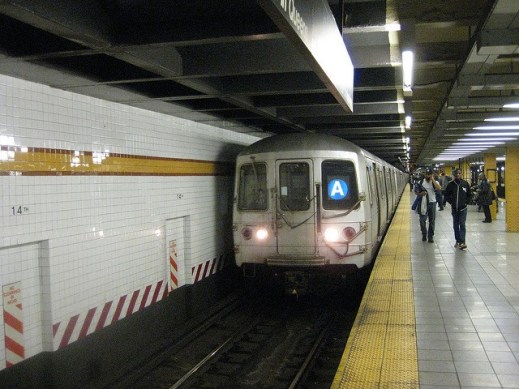
Citizens voiced criticism of the police when a woman selling churros was handcuffed by NYPD officers at the Broadway Junction station in Brooklyn.
The police said the vendor had been issued several citations and had refused officers’ orders to move. Also, the vendor was not officially arrested, but briefly handcuffed and issued a citation. Whichever way you cut it, “the optics” as we say in the public relations world, were bad.
In the scale of subway scofflaws and annoyances, the Spanish-speaking women selling churros don’t register at all. The churro ladies usually stay out of the way of foot traffic and sell delicious homemade treats at a good price. They don’t loudly beg for money from strangers or drag their carts through crowded subway cars at rush hour.
Why aren’t the police clearing out the homeless who can render entire subway cars unusable? Why aren’t we seeing more photos of the brain-addled aggressive panhandlers being put in handcuffs, or the people bringing bicycles or in some cases, motorcycles onto the subways being given the heave-ho by New York’s finest?
I get why the MTA wants to crack down on subway fare beaters, but they are avoiding the bigger, harder issues that makes a bigger difference in the deteriorating level of subway service that arouses the ire of straphangers.
Subway riders are furious because the subways are terrible. There are frequent delays and overcrowding on the subways, trains and buses that never show up, and service that is sub-par even when going according to plan. Almost all of the lines have outdated signaling systems that frequently stall trains and the MTA is decades behind replacing them. People have missed job interviews, meetings with loved ones, and even their own college graduations because the MTA’s inexcusable performances.
The transit system has singled out the people who jump the turnstiles and don’t pay their fare as a major issue to be addressed. Indeed the agency reported that these freeloaders could cost the system more than $300 million this year. Its approach to fixing this problem has been typically ham-handed. It spent money on signs and stickers telling people not to use the exit-only emergency exits to leave the subway, as it enables people to run in through the open door to avoid paying. Such a campaign could only be designed by people who don’t actually ride the subway. The subways need more exit-only gates. Taking up turnstile space to leave only stalls people who are rushing to get on a train. People who leave by the exit only gates and the emergency exits while people are trying to get in are doing the right thing. All these stupid stickers and signs do is flush money down the toilet that could be used for upgrading the system.
While fare beaters certainly do account for a major shortfall in the MTA’s budget, but it is small potatoes compared to the larger underfunding issues that require a political solution. It will be a hard-fought battle between the city and state governments, and will take years to make right. It will include unpopular tax increases.
No doubt there should be cost cutting. Why does track construction cost many times more in New York than anywhere else? Why are there thousands of no-show jobs on the books every time we want to build some new track in New York? Solving these issues of construction corruption and graft will go a long way to improving our transit situation, but it still can’t entirely address the funding gap.
This central funding question is the one the MTA needs to tackle first. Without adequate funding from New York State, all the other ideas are impotent half-measures that will drive more outrage than revenue.
Demanding a better 2020

As the presidential race of 2020 is already underway, before the office-holders elected in the mid-terms have even taken their oaths of office, it would be a great time for Americans to demand that the level of conversation be switched permanently to ‘grown up.’ The stakes are very high with the looming possibility of a recession, a bitterly divided Congress and an executive branch in a constant churn. It would be a real treat for a few brave candidates to insist on taking the high road and talking about how their policies will benefit the citizenry.
This will run afoul of the zeitgeist of contemporary politics. Rampant partisanship has created a knee-jerk politics where not only is everyone expected to wear their allegiances on their sleeves, but to be at the most ideologically pure part of the spectrum with blind obedience. Facts that may run counter to one’s argument are “Fake News” or “Hate Facts.” Serious adults don’t use terms like that except to mock those that do.
We’re seeing the worst in tantrum politics and mental gymnastics among both major political parties as the current budget impasse over a border wall continues. Trump’s insistence on a border wall is a clear sign he doesn’t understand the issues, and Democrats are hard-pressed to demonstrate any serious commitment to increased border security or give lie to the notion they want open borders.
Both parties once were able to function and understand nuances of policy. Sovereignty and human dignity are not mutually exclusive. It is inexcusable for Americans to support a porous border and deny our right to a sovereign nation. It is also inexcusable that children would die preventable deaths in the wealthiest country in the world, no matter their circumstances. We are a better country than to let people die of common disease or dehydration in detention centers; we also won’t be a country without strong, enforceable borders—there is no contradiction in those statements.
Let’s all admit that our political opponents are not monsters and that seeing the logic in the other side’s argument is not a betrayal of our own ideals. No, people advocating for stopping family separation at the border are not doing so to create some kind of socialist global utopia just as people advocating for tougher border controls are not trying to reproduce the Third Reich on American soil. These are not staggering revelations to the worlds of adults, but these are gut-punching concepts to hyper-partisan audiences that tend to dominate the public conversation these days.
Future generations will look upon these times as days of decay and decline, when a vacuum in leadership and long-standing myopic public policy exacerbated a fractured society. The values that make our society great can endure even if our institutions crumble, but it means a conscious effort to build new communities for those of us with clear vision and willingness to see beyond the outdated prism of our fraying standards.
We can rebuild communities if we leave the echo chambers of media and engage with the world around us. If we can take anything constructive from the Trump candidacy and record in office, it’s that people respond to frank dialogue and people who stick to their guns. Trump trampled several political sacred cows in his road to the White House—I thought his candidacy was dead when he insulted John McCain before the first primary was held. Have no doubt: Trump’s success in winning office came from his being rooted firmly outside the political establishment. You don’t have to be a fraudulent, vulgar ignoramus to break out of the mold and effectively challenge that status quo. Let the barriers Trump broke down let in a better slate of candidates and activists. There are decent people who hold all kinds of political opinions. Hear them out and be one of them.
Let this be the year you speak your mind and demand honesty and understanding from candidates within your own party. The first step of breaking out of our political rut is to embrace the politics of honesty and change on our own terms.
Demand more from the election of 2020 than we got in 2016. We (hopefully) can only go up from here.
The Anti-Wanderlust of Wintertime New York
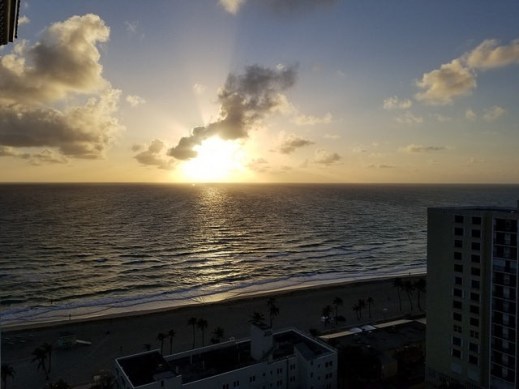
There is a habit of New Yorkers to head South for the winter once they’ve reached a certain age or level of financial security. I can understand why but will fight to stay north for the winter as long as I can.
The deep chill of a January and February in New York can be no fun. The outdoors is windblown and desolate, and the normal stroll through the city that is normally a joy is an appointment with wincing pain. The chill combined with the dry air of the indoor heat stresses and fractures the skin, our eyes tear with windy cold, and we fumble for our gloves and try to find the way to both be agile of hand and not feel frostbitten.
But give me the most frozen winter on record and it will still be preferable to the constantly warmer climate of regions south. I can say this with certainty as I’ve had to go to Florida twice in the past three weeks for work and don’t wish to live in a perpetual spring and summer all year.
My first trip to the Fort Lauderdale area earlier in January was a suitable introduction to the tourist-fueled aquamarine madness of South Florida. Just because your company sends you someplace nice for work doesn’t mean that the real word stops, and it’s hard to enjoy the seaside camaraderie when you know a thousand emails are piling up on your laptop.
One of the more interesting parts of the trip was talking to the Uber drivers that ferried me about. In one evening I met a woman from Costa Rica who was an animal rights activist and got caught up in some controversy in her home country around money she raised for abused animals. Later on that night I had a driver whose full-time job was inspecting airplanes that were manufactured; he had been burned in a recent divorce settlement but was working his way back to fiscal and emotional health and had no problem telling a perfect stranger that (well, Uber passengers aren’t perfect strangers – the drivers arrive knowing your first name and have the right to charge your credit card; this may count as intimacy in this day and age).
My second trip to Florida was to attend a financial conference, the biggest of its kind for the investing niche it represents. It was so popular that I could not get a room at the hotel where the conference was held, and instead found shelter a few minutes’ drive away at the Margaritaville of Hollywood Florida.
As it sounds the Margaritaville is a hotel chain based on Jimmy Buffet’s tropical music. And despite this it’s actually a nice place. The room I had was nice with a balcony that had an ocean view. When I arrived, I thought the woman ahead of me at the check-in desk was wearing a pair of beige pants that made her look crudely exposed. But I was mistaken: my fellow hotel guest was speaking to the hotel clerk wearing nothing below the waist except a flimsy G-string bikini bottom and a pair of flip flops. This is what Floridians refer to as “business casual.”
Again, it was the cab drivers that wind up giving you a better flavor for the place. On my final day in Florida, I got to speak with a driver who had moved to Florida from New Jersey in 1973 (you meet very few native-born Floridians in Florida) and had seen it change tremendously. He liked it when it was less populated and he was younger. He had the easygoing manner of someone who had escaped the rat race years ago and could enjoy whatever life threw at him. He was a moderate liberal Yankee who was at ease with the easygoing ways of South Florida and could drink all afternoon with more right-wing friends and still go home friends. He maneuvered around the traffic islands and stoplights with an ease that escapes many of the ride-share drivers of today’s generation. It was a good way to begin my final day in the Sunshine State.
As the conference wound down, people were finishing up their business and making arrangements to get out of town. I managed to book an earlier flight and quickly caught a cab to the airport.
It was 75 degrees when I flew out of Fort Lauderdale and 39 degrees when I landed in New York. It was a strong slap in the face of cold air, but it felt like home.
Work from home during our latest transit hell

New York City is entering a deeper level of transit hell this week.
That transit officials are already saying how bad our commute is going to be and begging companies to let their employees work from home wherever possible is significant and should strike fear in the heart of every New Yorker. Our transit authorities are normally presenting a falsely rosy view of how their systems operate. I have no doubt that the official numbers they give for on-time arrivals and such are soundly bogus, cooked up with some noxious bureaucratic justification and presented with a straight face.
Things on our subways have been getting significantly worse. Commuters trapped hours underground on un-air-conditioned subways, a young man stuck in a train so long he missed his entire college graduation ceremony, trains that are more crowded, the list of grievances goes on. Add to this some new Amtrak and N.J. Transit derailments and you’ve got a strong brew of grade-A clusterfuck ready to be served.
So those advisories to let people work from home whenever possible should be taken seriously. For a lot of commuters in today’s working world, the daily commute is an unnecessary exercise in frustration and lost time. Having the ability to work from home takes a lot of worry off your plate and improves morale.
In this day and age, more companies would save a lot more money by letting more of their employees work from home more often. We hold devices in our hand with more computing power than it took to put men on the moon (really). Anyone with a home computer or a work laptop should be able to work from home easily. If I can figure out how to work from home effectively, any desk jockey can pull it off.
One day earlier this year, when the city was threatened with a large snowstorm and the transit systems were closed in advance, our entire office worked from home. It was one of the most productive days any of us have ever had. Without the horrendous commute to take into account, the vast majority of us had an additional two hours of time to dedicate to actually doing work rather than suffering through getting to work.
At a company where I used to work, they have consolidated so much office space that there will not be enough desks for everyone who works there. So people will always be working from home. A former coworker who lives in New Jersey and is still in journalism (I “crossed over to the dark side” of public relations a few years ago), works from home two or three days a week. He’s running a financial magazine all by himself and he holds down a part-time job two days a week, but he’s getting it done.
There is definitely a benefit to a common work area and having face-to-face meetings that can’t be duplicated over the phone and email. But much of what many of us do at work each day can be done just as easily at home. Technology is only going to keep making that easier.
New York’s transit woes will not improve anytime soon. Everyone should work from home if they can. Ask your boss about it if you haven’t already.
An indictment in the Bronx is an indictment of our city
A few weeks ago I saw a man get arrested at the 23rd St. N/R Station. As two NYPD officers tried to cuff him he broke free of them, and shoved them, shouting ridiculous blather about being treated unfairly and fearing the police. One of the officers pulled his Taser and I thought the man, who looked significantly larger than both of the cops, was going to get Tasered. Instead one of the officers talked him down and he soon put his hands behind his back and allowed the cops to cuff him. A witness told me he was being arrested because he was mentally disturbed and had been on the train tracks.
The cops had every right to Taser the guy, and if I was in their shoes I can honestly say that would have been my inclination. I was impressed with the cops’ ability to avoid violence in the situation. Police don’t always have that option.
Lost among the media coverage of two terror attacks in England and the U.S. President’s declaration about withdrawing from the Paris Climate Accord, a New York Police Department Sergeant was charged with murder in the Bronx.
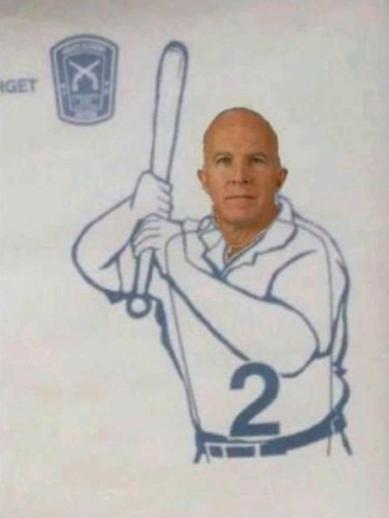
Sgt. Hugh Barry responded to a call last October to find a mentally ill woman threatening officers with a pair of scissors. He managed to talk her down and she dropped the scissors, but she then retrieved a baseball bat and swung at the sergeant, who shot her twice. That’s a very clear case of an officer being threatened with deadly force and responding appropriately.
But soon after the incident New York City Mayor Bill de Blasio and police Commissioner James O’Neill condemned the officer, claiming he violated department procedure by not calling for the Emergency Service Unit or using his Taser. Last week, the Bronx District Attorney filed murder charges against the sergeant.
It’s a travesty that should be inciting outrage nationwide. And not because we adhere to some warped notion that all cops are heroes and we should get behind anyone with a badge. This indictment should elicit outrage because Hugh Barry is a human being who has a right to stop someone trying to murder him. This indictment is an affront to decency because #FactsMatter.
New York police are rightfully angry.
The indictment of Sergeant Barry is not the action of a truthful or serious people. It’s the action of an ignorant and myopic ruling class that by sacrificing the right innocent people, they can somehow forge a tenuous peace in a volatile society. We’ve seen this before. Many of the most well-known cases in recent years that spurred large-scale protests and questionable prosecutions were manufactured controversies that didn’t stand up to a desultory examination of the facts. In places like Ferguson, Missouri and Staten Island, New York, grand juries correctly rejected politically-motivated criminal charges against police.
But a large segment of the body politic insists that any death at the hands of police fit a certain narrative, a narrative that’s been undercut by the facts at almost every turn. Mayor de Blasio and Commissioner O’Neill bought into this narrative despite very clear evidence to the contrary. They would rather appease an extremist activist movement than work to protect our citizens.
If our city still has any respect for the truth, Sgt. Barry will be back on the job by this time next year and Bill de Blasio and Commissioner O’Neill will be looking for work.
I’ll always be friends with someone you hate

“Say it’s not so, Matt,” my friend’s message read, accompanied by a photo of a public figure that I don’t know personally but follow on social media. I explained that I follow/befriend people on social media that I often disagree with, and that while I find some of this person’s views extreme, they were not the murderous villain popularly portrayed in the mainstream press.
My explanation was lost and I found myself “blocked.” It’s a real shame. This is someone I’ve been friends with since college that is generally open-minded and intellectually strong. I know this person from a college debate society, the whole purpose of which is to listen to people you disagree with and debate them peaceably without tantrums or emotional self-immolation.
Maybe this person will find it in their heart to befriend me on social media again, but if not, so be it. I can’t please everyone and I can’t apologize for the opinions of others.
No matter who you are or what your politics, you are going to find I am friends with someone you hate. I can guarantee that to everyone: someone on my list of friends is going to piss you off.
I won’t have it any other way. I refuse to live in an echo chamber only occupied by people who share my view of the world. No matter how right you think you are, no one is above having their opinions and perceptions challenged and there is absolutely nothing virtuous about a closed mind.
In our era of divided politics, trolls on both sides of the spectrum feel morally justified in becoming increasingly uncivil. I’ve had a few people block me or “unfriend” me. One even called me names and blocked me so I couldn’t see or respond, a cowardly low. People engage in this kind of behavior when they have no real ideas or don’t have the wherewithal to defend their beliefs.
But I also have lots of friends that don’t block me. The friends with more substantial progressive activist bona fides – the people who’ve actually been in the streets and done battle with the cops, who’ve been to jail for their activism or actually rumbled with real Nazis in the real world – don’t find the need to block me on social media or prove their online virtue through their computer keyboards. I have friends who are law enforcement officers and military veterans who have been shot at in the line of duty at home and abroad; none of them have expressed horror that I’m friends with people that are communists or anarchists. They don’t need to wear their patriotism or their toughness on their sleeves, they live it every day.
Fortunately, the majority of my friends are confident enough in who they are to listen to other’s people’s views. That doesn’t mean they agree with me or like that I’m online friends with people they deplore, but they have strong enough wits to disagree without name calling.
I can’t judge people based on their ideology alone. Some of the people considered most virtuous in public life have been some of the most miserable human beings; egos rendering them incapable of treating others with dignity and respect. How you treat the waiter or waitress at a restaurant tells me much more about you than whatever politician you voted for last November. So many people who check all the right virtue boxes can’t be bothered to act like a decent human being in real life.
I hope my friend comes back online. I won’t block or unfriend someone just because they hold opinions we may despise. There’s something about my collection of friends that everyone can hate. But I have a great group of friends nonetheless. I’ll never apologize for keeping an open mind to different ideas, no matter how offensive they might seem to others. If that makes enemies out of some friends, then that’s too bad.
If you’re not making enemies, you’re not living life.
New York Taxis: no English required

Years ago, I was helping someone move apartments and we took a cab. We were calling for gypsy cabs as this was in uptown Manhattan where it was difficult to hail a cab. The driver had zero English. Even when my friend wrote the address on a piece of paper and handed it to him, he thought he was going to 124th Street because the number of the building address was 124. He called his dispatcher on his cell phone and him interpret this address.
We don’t expect everyone to speak the King’s English in New York—what native New Yorkers speak is far from the King’s English—but driving a cab or working with the public in this town in any official capacity should require English and until recently that was the case for having a license to drive a cab (colloquially known as a “hack license.”)
New York City taxi drivers are no longer required to pass an English language proficiency test. This regulation had been on the books for a while but not stringently enforced. Ask any New Yorker who has taken cabs in the city regularly and they have had drivers with little or no English. Now it’s just official.
And it’s a bad idea. We don’t have a lot of things that hold us together here in New York or America anymore for that matter. If we’re going to perish in a suicidal cultural bouillabaisse, then I guess descending into a hellish Babel is part of the deal. But the interest of public safety can’t be abandoned so quickly and recklessly.
What’s motivating this in New York is not a lack of drivers who are willing to learn English, but the medallion cab companies losing drivers to startup hailing app companies like Uber and Lyft. It’s not a matter of public policy or politicians’ hearts breaking for destitute non-English speakers, but the cold hard cash that fuels what remains of our “democracy.”
It’s amazing that you can get a driver’s license in the U.S.A. without knowing English, but at least let make sure that those who drive other people professionally know the language. New Yorkers come from every part of the globe and whatever your opinions of our current immigration question, most people agree that people who live and work together need to know the same language.
Technology that’s shaking up the taxi industry will enable drivers who are restricted in language to only deal with clientele they can communicate with. Since you can order any kind of vehicle to pick you up with a ride-sharing mobile application, you can also specify that language proficiency of your driver. Thus the balkanization of the U.S. is advanced further, and all in the name of helping and fairness.
I have never been a frequent user of cabs but in my days of hard drinking and late nights that became early mornings, I would take a cab. Since most cab drivers in New York are from other countries, I enjoyed speaking to them about where they were from and learning about what was going on in the world from people who had a closer connection to it.
New York has survived for hundreds of years in part because people have learned to work with one another despite enormous differences. A common language makes that possible.
Back in Skel Country
Circumstances have smiled upon me and I found myself with new and more gainful employment. I made the move from journalism to “the dark side” of public relations. My days are still filled trying to understand the minutia of financial terms and technological jargon, I’m just writing for a different audience.
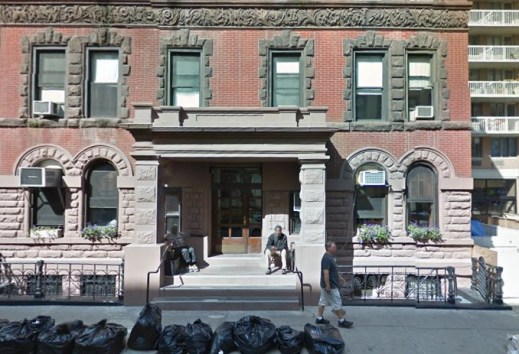
The new job is a shorter commute and is in the Flatiron district of New York. It’s less than two blocks from Madison Square Park and only one block away from the 6 train. The office is in a small building on 24th Street. It’s convenient to both a 7-Eleven and a deli, and near a Baruch College building.
The new office is also only a few doors down from some kind of halfway house or rehab center. There’s no sign on the building indicating this, and a cursory web search of the address revealed nothing about its current use. You can tell what it is by the people who congregate outside and can be seen coming and going. Even before I discovered its location, I knew there was some sort of facility in the area because of the skels I would see on the street.
Skel is an antiquated term meaning street criminal but it’s a catch-all word that is used to include any kind of troubled sort given to criminality, and the homeless and mentally ill seemingly fit into this category.
It’s easy to pick out the skels on the street. They are dirty and wrinkled. They are not homeless-level dirty and don’t have the mile-away stink that typical street bums do. They do not carry around excessive luggage or tons of crap in shopping carts; they have a place to live. But street people have a way of standing out, at least in today’s less crime-ridden city. Twenty years ago things were different and many parts of the city were blanketed with homeless and other skels. Today Manhattan does not have too many poverty pastures. There’s still plenty of poor people in New York, but the space allowed for skels has diminished significantly.
When I worked in the lower part of midtown Manhattan about 12 years ago, the area was populated with a lot of street people. There was a methadone clinic across the street from the building where I worked and some kind of halfway house was not far either. One time I was on my way out of a Duane Reade drug store after buying a few things when a man and woman rushed up to the counter. The man was holding a $10 bill.
“I need change right away! I have to pay the taxi!”
“They’re going to send him to jail if he doesn’t pay!” his female companion said.
The clerks behind the counter shook their heads lazily.
There was no cab outside with an angry driver waiting.
Another time I was walking around on my lunch break and I saw a two men approach a man from behind, one flashed a badge and the two plainclothes cops took the man by the arms and pinned him against the building where I worked.
“Where’s the weed?” one of the cops asked him. I didn’t bother to stick around to see how this encounter ended. When I returned from my lunch break, they were gone.
There is both a Taco Bell and a White Castle on that block of 8th Ave. and 36th Street, which is heavenly unless you are so poor you really can’t afford either. I was coming off of more than a year of unemployment and I was so poor that my lunch sometimes consisted of the free snacks that the failing company offered. Still, the kinds of human abominations that frequented the area were seemingly from a different era. A woman complained to her friends about not getting what she needed from the methadone clinic. Random skels shouted their opinions for the world to hear.
Despite the improved conditions in the Big Apple over the last 20-plus years, New York is still famous for its seedy element. Before it was populated with fancy hotels and trendy restaurants, The Bowery was famous for its many flop houses, where people paid low rent to live in rooms no bigger than a jail cell. It was a world-famous refuge for drunks, drug addicts and criminals and there are still some homeless charities left on The Bowery, which is also known for its stores that providing lighting and restaurant supplies.
The residents of the nearby halfway house are easy to spot. They are dirty and disheveled. But even if you cleaned them up and dressed them in tuxedos and ball gowns, they would still stand out because they’ve acquired such gaunt features and acquired the mannerisms of the permanently destitute.
People often wear their desperation outwardly, and for the lifelong criminal and drug addict these are impossible to hide. Despite all of their efforts, you can hear the junkie quavering in their voice, sense the hurting shiftiness in their eyes, and know to avoid them.
Sometimes you can get fooled, but not for long. One time a man in a suit waved to me and held out his hand to shake mine. He looked a lot like someone I knew so I assumed I knew him and that I had forgotten his name, which I do all the time. Once he started talking though, he started blathering on about his wife being somewhere and he needed money for a cab etc. Damn, I got suckered into listening to a panhandler. I didn’t give him any money but felt like a sucker anyway.
No matter how real or sincerely someone may seem, you’re a damn fool if you give one cent to a panhandler. Even the most bleeding-hearted skel lover admits that the overwhelming majority of money you give to panhandlers goes to purchasing drugs and/or alcohol.
For some reason we allow people to live worse than animals on the streets and subways. If a dog looked and smelled like that, they’d be taken away and given shelter. Somehow it’s deemed liberating to watch people wallow in their own filth, but there’s nothing progressive or enlightening about it at all.
Eventually gentrification will continue and the city and private charities will realize they can generate more revenue for their cause by selling the valuable real estate they hold in Manhattan and move their services to less expensive neighborhoods.
There’s a belief among many artists and poets that the destitute and poor some kind of unique insight or soulful legitimacy. Since they are not blessed with American success they are not cursed by it, or so the logic goes. But you’ll find that most bums on the street are just that: bums. They’re every bit as shallow and ignorant as the douchebag financier or the fashionable hipsters we love to hate.
The world will never be rid of street people. New York’s dwindling clans of them are still around, but their roaming grounds have been sharply reduced and can’t support as large a population.
 Matthew Sheahan
Recent Comments