
Tear down these (excessive) paywalls
I attempted to watch Super Bowl LX on television this past Sunday. As I pay for several subscription services, I assumed that one of them would be able to show me the game, which was broadcast on a national network that one would be able to watch for free if you had a traditional or cable television.
As a Jets fan, I have absolutely no reason to watch postseason football, but I wanted to watch the Super Bowl to see the halftime show, which generated pointless and contrived garbage controversy, and to see if the game or commercials might be entertaining.
Last year, I was able to stream the Super Bowl so my daughters could catch a glimpse of Taylor Swift in the stands. I didn’t have to subscribe to anything new or pay a fee to see the game, and it worked out well. My girls got to see Taylor Swift and the game was interesting to watch by Super Bowl standards.
But it was not to be. I tried every service I could find that offered live streaming of the super bowl, but all I was able to access without a subscription were live feeds of people watching the game at a bar or in some kind of lounge area, or video-game approximations of the action on the field. Neither was the game.
To get the Super Bowl score during the game on The New York Times website, I’m blocked and told I need to upgrade my subscription to include The Athletic, a premium service because apparently the bespoke genius of The New York Times has found a way to give us the score of a football game that is premium and better than the masses of hoi polloi who long ago figured out how to do this.
This was especially sad to see The New York Times sink to these depths. The Times is one of the first websites I ever had a subscription to. Back when it was free, I signed up online and got a cool username and password for the Times website that still works to this day. It was a rite of passage in entering the digital age, and I was proud to begin my journey of consuming news online with the newspaper of record.
I gladly stained my hands and arms reading vociferously since my father introduced me to the Gray Lady when I was in middle school. Now I’m just another mark that the Times thinks it can squeeze for an extra subscription to get the score of a football game. ESPN’s web site had the score of the game without going through a paywall, but I would have just as soon given that web traffic to the Times.
I had to enjoy the Super Bowl vicariously through the news and social media posts of friends and family. As a large, national event, it goes against the populist American ethos for the Super Bowl to be shuttered behind multiple pay walls. I felt betrayed by the providers I already pay handsomely for access to the digital world, even if I was probably the better for it.
Lotto Dreams
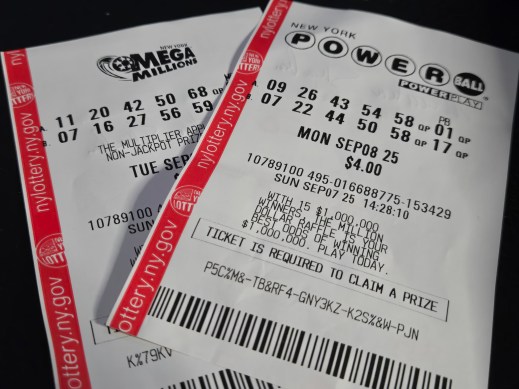
The Powerball lottery game recently reached a jackpot close to $2 billion. Those jackpots spur people who don’t normally buy lotto tickets to shell out for a big win, and I am guilty of being one of those people.
Compared to some of my family and friends, my investment in lotto tickets is pretty low. With that weak justification, I forgive myself for this vice. I am not sure what else $2 will buy you today, and sometimes a hopeless dream can get you through the day.
The odds of winning the lottery are massively stacked against us. Still, I have a go-to lotto buy that I repeat to the tired clerks at my local drug store:
“Two Powerball, two Mega Millions, please.”
They have raised the price on some lottery games recently, so this minor vice is now more expensive. I buy two kinds of lottery tickets because it increases my chances of winning by a minuscule amount and I can pat myself on the back with the illusion of being a smart tactician, when I am really a hopeless dreamer like everybody else.
The news cycle surges around big lotto jackpots have been going on for as long as I can remember. Lotto was ubiquitous growing up in the New York City area in the 1980s, and my parents played it semi-regularly. I remember buying a lotto ticket soon after I turned 18 as a rite of passage, similar to registering to vote or getting your draft card.
When I moved to Georgia in the early 1990s, there was a statewide referendum on the ballot over the question of whether there would be a lottery. I couldn’t believe the lottery didn’t exist in Georgia. What was wrong with these people that they didn’t have lotto? It was a mark of civilization in my mind.
It was actually a close vote; the lottery ballot initiative passed, but barely. Churches and religious organizations had organized against the lottery, and people were divided over the issue.
In retrospect, the church groups and religious activists who oppose lotto raise good points: Lotto preys upon the poor; it exacerbates gambling problems and gets the bulk of its cash from those who can least afford to give it. It promotes a ‘get rich quick’ ethos and encourages the illusion of wealth without work.
My daughters will ask me to promise them things if I win a big jackpot. I have promised them a home where they can each have their own bedroom, a trip to Paris and other travel adventures, and adopting a dog to live in our new house. I won’t make a big announcement, but if you see me wearing a cowboy hat and a fur coat like Dusty Rhodes, I’ve won.
I would spend my days writing and playing music, traveling, and sitting on a lawn to feel my own grass under my feet. I would have time to read all the books I want, see all the movies my friends talk about, take my friends to lunch, and plan my next trip with my daughters.
Lotto is not a viable path to changing our lives, but it’s a chance to dream aloud with the ones we love, and in that it serves a purpose.
Wish me luck.
The coming crypto reckoning
The lure of being lucky and striking it rich is a powerful opiate in America. From our very foundation as a place of refuge for the unluckiest of Europe, the self-made millionaire has a place of reverence in American lore. Very few attain that status, but millions have exhausted that dream and put themselves in an early grave working to attain it.
The chase for American riches has taken many forms, from the California Gold Rush to endless swindles, and the latest destination is cryptocurrency. Cryptocurrency is digital currency that can be exchanged for other currencies. Bitcoin is the most famous but there are more of them than I care to count.
There is absolutely a place in the world for a digital currency, but many of the current crop of these currencies defy what a currency needs to be: a stable unit of value measurement. If Bitcoin can lose 22% of its value in the matter of days, or drop precipitously in the course of a morning based on the whims of Chinese regulators, it is missing an essential element of being a usable currency.
And there will be a time when crypto currencies are real and have real value and usefulness. It’s important to note that in some totalitarian countries like China, the use of crypto currencies have been a force for good, enabling people to do business without oppressive government interference. But we are in such early days of the cryptocurrency world that the safe and regular use of cryptocurrencies is still years away.
There are cryptocurrencies pegged to regular currencies—such as Tether, which tracks the U.S. dollar—known as Stablecoins. In the future, some kind of Stablecoin may be used globally that would enable secure, anonymous use with the kind of stability that a currency needs.
But that kind of legitimate use is a long way away from the rampant speculation that is captivating the imaginations of get-rich-quick investors. What’s worse, the same kind of faux populism that gave us the GameStop rush of a year ago has been de rigueur in the crypto world.
And this rampant, pure speculative increase in value is based on hopeful dreams and nothing more. Even stocks that are widely overvalued are supported by an understandable business model. With crypto, you can lose your shirt in the course of an afternoon and have no one to blame but yourself. Most world currencies – U.S. Dollars, French or Swiss Francs, Euros, British Pounds—are backed by powerful governments that have a vested interest in maintaining a stable currency. You can argue that U.S. Dollars are propped up by the Federal Reserve Bank or even an Illuminati conspiracy, but they are doing a better job than they keyboard commandos, Russian bots and other shady characters running the crypto world.
What is so shameful about the current state of crypto is that people are being drawn in who otherwise would invest in something more constructive. Hard-working people who find it hard to get ahead and save for their kids’ college tuition are plowing money into the latest online toy money when they could be investing in something real. At this point I’d be happier with these people stuffing money into mattresses rather than putting it into the latest cryptocurrency that’s being talked up by social media shysters.
But like major speculative rushes of the past, the crypto world will experience a “shakeout,” where those that don’t have real values drop quickly and investors lose money. It could be quick and violent. There will be stories of people losing their life savings because they were told they could double their money in months.
Crypto currency speculation is going to be one of those things future generations read about and ask why people of our generation didn’t do something about this global boondoggle. The reckoning is coming; please don’t get burned.
 Matthew Sheahan
Recent Comments