
The reports of New York City’s death are greatly exaggerated
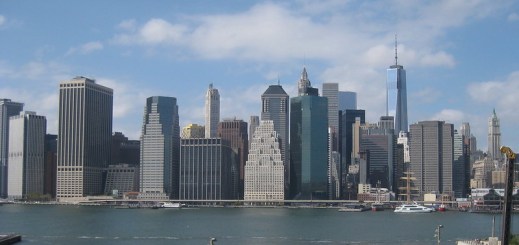
New York City’s obituary has been written many times. The latest declarations of Gotham’s demise harp on the current crop of problems but ignore New York’s ability to survive even the worst the world has to offer.
The current issues confronting NYC are for certain no joke. Our city was the epicenter of the global Coronavirus pandemic and its expansive economic impact and slow recovery continues to force businesses to close. Our vibrant nightlife and renowned theater district have been shuttered for months with no recovery in the near term. On top of that, we’ve seen a resurgence of crime and “quality of life” issues that harken back to the dark times of the 1970s and 1980s, replete with threats to lay off city workers including law enforcement.
It’s gotten to the point where a group of business leaders wrote a letter to New York City’s mayor pleading with him to begin addressing the crime problem and other issues of urban decay. Mayor Bill de Blasio began his first term promising to put a progressive spin on the successes of his predecessors; he will leave office an object of ridicule and a case study in how activist mayors consistently fail New York.
But as bad as New York’s problems are, they pale in comparison to problems that we’ve seen only a few short decades ago.
I first lived in New York City when I was born, and as a baby I lived on Sedgewick Avenue in the Bronx near Fordham Road. Not far from where I was living with my parents, landlords were routinely setting fire to their own buildings; cashing in the insurance money was more lucrative than renting apartments and the buildings were insured for more than they would have fetched on the real estate market. A few years later, New York’s Mayor Abe Beam famously appealed to President Gerald Ford for a federal bailout, as New York City was broke. ‘Ford to City: Drop Dead’ was the famous NY Daily News headline documenting his refusal to help.
A little over a century earlier, Union troops were drawn away from the battlefield of Gettysburg by the Draft Riots of 1863, which saw rampaging Irish mobs attack and murder Blacks, even setting fire to an orphanage. Even the most anarchic rioters of the current crime wave have not reached these levels of depravity.
I’ve been mugged and pickpocketed and gone through a year of unemployment to the point of having only a few dollars to my name. I have also played music on a stage that the Ramones made famous, had my family on cable television ringing the stock market’s opening bell, and seen some of the best concerts, plays and movies available to our civilization. New York is where I met my wife and where we raise our children and can show them the cultures of half the world by only traveling a few miles.
While the thought occurs to me to leave New York sometimes, the urge to stay is greater.
After the September 11 attacks, it became unpatriotic to flee the five boroughs in my opinion. It still breaks my heart that we have allowed religious lunatics to remake our skyline. But these failures of leadership do not make New York City less great, only more resilient.
The Roman Empire fell long ago, but Rome is still majestic and magical. New York was a force for the world before America became a reality. New York will survive the current malaise gripping America; it will survive until humanity dies out. New York City will be here forever.
RIP Walter Lure
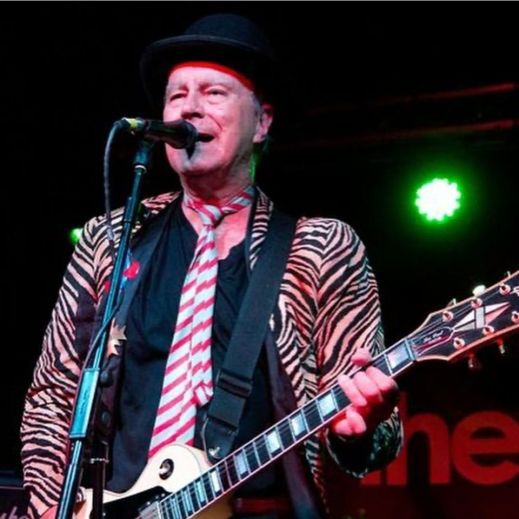
This year has seen the departure of some great musicians: Little Richard, Charlie Daniels, Neil Peart from Rush, Frankie Banali of Quiet Riot and W.A.S.P., Fleetwood Mac cofounder Peter Green, Power Trip lead singer Riley Gale, the list goes on.
Walter Lure’s passing is a loss that hits home for music fans, especially punk rock fans. Lure was one of the founders of The Heartbreakers, the band led by former New York Dolls Guitarist Johnny Thunders. The Heartbreakers were immensely influential in shaping punk rock. Lure helped write many of the band’s most famous songs and was part of the vanguard that brought punk rock to the world. After the Heartbreakers, he continued to play and record music with his own band, The Waldos. His musical virtuosity extended beyond his own groups as well. If you ever hear a guitar solo on a Ramones record, chances are Walter Lure is playing it. He was the one holding things down and singing lead vocals oftentimes when Johnny Thunders, addled by drug use, would nod off on stage.
Lure struggled with his own addiction, and recounted in an interview that an arrest for buying drugs on his lunch break and almost losing his job was what finally drove him to beat his habit. He worked in the financial world, running large clearing operations, and eventually retiring in 2015 from Neuberger Berman.
“The funny bit was that back in the 90s when I was in charge of all those people on the job, a lot of them would come to my shows and laugh at the fact that their boss was playing punk rock music onstage. My clothes closet had all my work suits and ties on one side and the other side had all the beat-up stage clothes. Dr. Jekyll and Mr. Hyde here you are!”
And here is another way in which Walter Lure continues to inspire so many musicians. The rock stars you see on the covers of magazines are an exceedingly small percentage of the people who are out there playing music every night. Most musicians who make music don’t make money at it and have to hold down day jobs to keep a roof over their head. Walter Lure was a big enough musician that if this were a just world, he would have had mansions all over the world, but he held down a day job and continued to make great music.
My band Blackout Shoppers got to play with The Waldos in the basement of CBGB’s 13, which was part of CBGB’s but not the more famous main stage. Walter Lure had played that main stage plenty of times and would later be one of the last acts to play when CB’s shut down a few years later.
He would have had every right to carry a massive rock star ego or bristle at the idea playing on a small stage in a basement with a bunch of unknown bands, but there was none of that from him. He showed up with his band and rocked, playing lots of the famous punk rock songs he helped write. He gladly took pictures with people who wanted to and hung around and chatted with everyone afterwards. He stayed true to the punk ethos to his dying day.
One of my friends whose band was on that same show commented, “We all got to play with Walter Lure, how lucky were we all??”
The world was lucky to have Walter Lure making music for so long. RIP and thank you Waldo.
Tribute in Light and the quest for normalcy
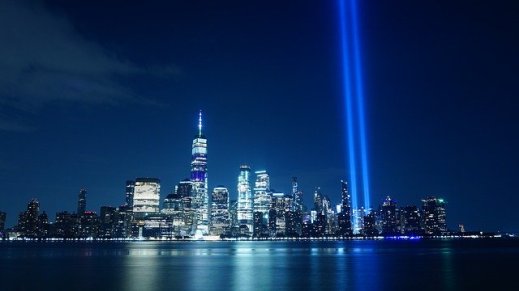
We are less than a month away from annual tributes to the September 11 attacks, and for a few tense days it looked like one of the most enduring traditions around the commemoration, the Tribute in Light—two columns of light projected from lower Manhattan close to where the Twin Towers were located—may not go on.
The National September 11 Memorial & Museum, which puts on the display, said it would have to cancel it over concerns for worker safety around the Coronavirus. The museum stated it didn’t have the financial support it needed to ensure the safety of the workers who would assemble and maintain the lights, and had made a contingency plan that replaced the traditional Twin Tower lights with other skyline observances on the night of September 11. There was a typical tabloid and internet-fueled outrage, and after securing funding promises from New York State, the museum reversed course and announced that the tribute will go on as planned.
It is a moving tribute that can be seen from the farthest reaches of the five boroughs and beyond: the night sky aglow with the ghostly shadow of our city’s loss. It is a sign of New York City’s resolve to create something beautiful out of tragic beginnings, and not forget the tremendous loss of that day even as we keep going.
Nearly 3,000 people died in the attacks; the largest loss of life in a single day since the General Slocum ship disaster of 1904. This past April, the death toll from the COVID-19 outbreak in New York City exceeded 4,000, surpassing the deaths from the September 11 attacks.
The Tribute in Light though, is additionally tragic because it also shines a light on our failure to rebuild properly. We have allowed Islamic fundamentalists to remake our greatest city. Every time we look at New York’s skyline, we see the work of murderous savages who thought Allah was commanding them to kill children and babies. I’m sure the new World Trade Center is a fine building; it certainly looks grand. But it’s not two Twin Towers. The Tribute in Light highlights our failures to stand up for ourselves.
When the towers fell, I thought for certain that our country would stand for nothing less than two new Twin Towers, maybe a few feet taller than the originals. That was the only proper rebuilding response to the terror attacks, and we made a hash of it.
The towers of light are what we have left, and the thought of not even having that was too much for some people. We cannot get people to wear masks and now we can’t pay tribute to September 11 victims because we cannot muster the resources to keep workers safe. If we can’t even shine lights into the sky, what has become of us?
New Yorkers have been living with the Coronavirus pandemic longer than anywhere outside of China. There’s a deep hunger for anything that is remotely normal. Any time we can safely do the normal human things we used to do; we’ll do it.
The Tribute in Light will be back this year; please think of those who we lost nearly two decades ago and the sacrifices so many made that day. It will be a moment of beauty in the midst of a lot of ugly.
Dispatch from an American vacationland
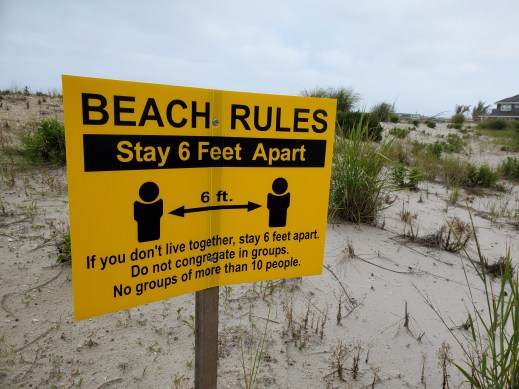
Long Beach Island, New Jersey
How does an area centered on catering to crowds of tourists manage to keep people safe during the heavy tourist season? Long Beach Island is coping in the time of the pandemic. It has been a family tradition to come to Long Beach Island for about a week every summer and we hoped since March that this year would be no exception.
Early in the pandemic my in-laws, who invite us down ever year, mentioned that there would be new social distancing guidelines for the beaches and restaurants, that LBI had moved quickly to adapt.
The beach is still too crowded on some days. While being outdoors is a help; it’s still not safe enough during the heavy morning hours to go there. I went to bring my kids to the beach and quickly turned around when we saw the size and density of the crowd.
One of the key tragedies of the COVID-19 pandemic is that things that were once routine now require serious decision making. Can my kids play with that little girl in the pool? Can I take my girls to the beach to build a sandcastle? Those were no-brainers in the past; not anymore. There won’t be easy answers for a while.
Whether or not people wore facemasks on Long Beach Island is random. Being from New York City, we feel naked without them, but people from this part of New Jersey have not had the same level of virus infection to make mask-wearing second nature and it’s not as real to them. Shortly before coming down to Beach Haven, we saw that lifeguards in nearby towns had an outbreak of the Coronavirus, not from their time on the beach as lifeguards but from partying together after hours.
You can hear people partying into the night and see them moving unmasked and in irresponsibly large groups everywhere. The island is full of visiting young people and people old enough to know better traipsing around as if there is not a global pandemic still raging across the country.
If you tried to lecture everyone acting foolish about how to wear a mask or distance, you would do nothing else. Calling people out or trying to deliver street justice would quickly evolve into fistfights or some other unproductive screaming match ripe for the viral internet montages of hostility that are already plentiful. Instead you do your best to lead by example; keep the mask on if you are near people, keep six feet apart.
There is not much you can do but do the right thing and keep away from people who don’t. It is easier to do here than in New York, so this still counts as a vacation. Things are not going to be back to normal soon and it would be a rancid lie to pretend otherwise.
Life in this vacation spot goes on; those businesses that have survived on Long Beach Island have adapted well. The Chicken or the Egg is still in high demand and they offer only outdoor seating and to-go orders; the Jersey Devil sandwich still provides a terrific serving of pork roll and I was able to feast on their Buffalo shrimp again. My wife and I had a date night at the excellent Artisan Café that made an amazing Italian mac & cheese and moved its dining outdoors as well. Buckalew’s created an outdoor beer garden and has very on-time pickup service.
The Surflight Theatre survives not only from the Coronavirus but from Tropical Storm Isaias that knocked over its outdoor tent. We were still able to enjoy a Frozen musical with the kids and a comedy night featuring Mike Marino and Sheba Mason—outstanding.
This past Saturday I walked the beach at night. There were a few other people walking about in the darkness, some with cell phone flashlights, and a patrol vehicle that drove back and forth. Only a few yards away from masses of humanity, I took comfort in seeing two shooting stars and a blood orange moon that looked like a nighttime sun.
I stood in awe of the moon, which was sitting low in the sky and casting its bright colorful light over the sea. The thunder of the Atlantic Ocean drones on, its waves crashing to shore in a powerful chorus When our world appears cracked, nature has a way of putting human civilization in perspective.
Ars longa, vita brevis

What grinds us down most is not the presence of stress, but the absence of joy.
Even during the darkest times in human history. People survived not just on food, water, and medicine but on jokes, songs, and stories. It’s not a coincidence that in addition to our stockpiling cleaning supplies and toilet paper, the COVID-19 pandemic launched binge-watching of entertaining shows. I’m not sure I would have been as riveted by Tiger King if the insanity of private tiger parks was more cheerful than the insanity of the outside world at the time.
The present and resurgent health pandemic that has made havoc on our world, we remind ourselves that this too shall pass, and most of us will survive and be able to learn from this time to create a better tomorrow. I also must remind myself how lucky I am: I and my family are healthy, I have a job, our building has been safe from looting, arson, and teargas.
I live most of my days now in front of my work laptop at home. Even when the work-from-home life does its worst to my day, I’ll manage to feel some immense relief if I can scratch out the draft of a poem, or poorly play a few Misfits tunes on my guitar.
Creating something, even if it’s something small that no one else will see, is good for your health. The theory of cognition holds that creativity is a central aspect of human. It improves our brain function and therefore our health. So even when I’m dead tired from working all day and then move from the desk to the dinner table to putting the kids to bed; I know I can salvage what remaining time I have left before I fall asleep if I do something creative.
I’m working on getting better at playing guitar because I had the privilege of playing the six strings on stage earlier this year with Beer Drinking Fools. Now I’ve been bitten by the six-string bug and want to subject innocent eardrums to blistering crossover hardcore punk and thrash metal that will sound like S.O.D. having a blood orgy with Bad Brains and The Lunachicks.
Our current crises are beset with ignorance and villainy on all sides. History will condemn civilized societies that let their people die needlessly and found it virtuous to let their cities fall to ruin. It is difficult to feel hopeful, but even amid hopelessness, one can find solace in creativity.
A surge of creativity is not a cure-all for what ails our society. While the current politics and pandemic are new, it was a long time getting to where we are now, and it will take a long time to get to something better. But the seriousness of our times doesn’t negate the need for creative joy; it makes such creativity more necessary than ever.
During these times of pandemic, our creativity will sustain us and endure. Amid so much destruction and despair, creativity is a revolutionary act.
Illegal fireworks are as New York as bagels
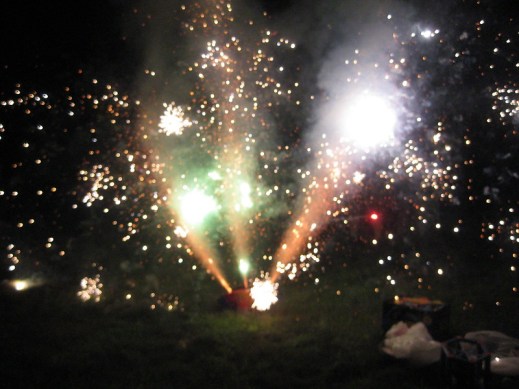
Years ago, when I lived in Inwood, I walked to the public pier at Dyckman Street on the Hudson River to see fireworks on the Fourth of July. The sightings were disappointing. Through clouds in the distance I could see the faint glow of a few shows over New Jersey and could see none of the official Macy’s fireworks happening farther downtown.
I returned to my apartment disappointed but was soon treated to shows of illegal fireworks that more than compensated. The barrage of ordnance that filled the northern Manhattan sky was a welcome sight that took me back to my childhood in Yonkers. I would emerge from our apartment in Yonkers on July 5th to a scene that resembled a war zone. The curbs and corners were filled with the spent paper from reams of firecrackers, and one time I saw a metal garbage can that had been exploded and overturned, looking like a giant metallic banana peel.
When I first returned to the city to live as an adult, I lived in Ozone Park, once the home to professional-grade illegal fireworks shows and street festivals paid for by the Gambino Crime Family boss John Gotti. Gotti had been in prison several years at that point, and the authorities worked hard to prevent the return of a large-scale illegal fireworks display. Police were all over 101st Ave. and the surrounding streets, but it made little difference. Managing to get on the roof of my building, I could see the official fireworks far away in Manhattan, but the cat-and-mouse game of cops and illicit fireworks was more entertaining.
Illegal fireworks have been a New York City staple for decades. When I was in fifth grade in the New York suburbs, I went to a neighbor’s yard where a friend’s father let me light sparklers off some candles set on the ground. I felt like the greatest outlaw on Earth. Kids waved around sparklers while adults set off bottle rockets and M-80s. When we heard police sirens in the distance, adults blew the candles out and we ran to the backyard until the danger had passed.
More recently, we have enjoyed the sights of fireworks over Whitestone and College Point. Early morning jogs through Flushing Memorial Field has found launch sites of the previous evenings fireworks displays, the tubes still smelling of gunpowder in the cool dawn, like a mortar position of a recently passed battle.
The allure of illicit explosives dates to the birth of the American nation. The first battles of the American Revolution were fought over the British Army’s attempt to seize illegal weapons.
New York, which was under the yoke of British rule for the bulk of the Revolution, was no less fervent in its commitment to the cause. One of the bloodiest battles of the war was fought in Brooklyn; the Battle of Long Island almost ended the Revolution—Washington barely escaped to regroup. The first woman known to take up arms for the United States did so in Manhattan at the Battle of Fort Washington; Americans lost that battle too and Fort Tryon park still bears the name of the British governor of New York at the time.
Our founding fathers would have been hanged as traitors to the crown had we not won. No matter our heritage, Americans are proudly descended from outlaws and outcasts. People setting off fireworks today are not would-be revolutionaries, but they are tapping into the same antiauthoritarian sentiment that is alive in spades in America today.
The city has seen an increase in setting off illegal fireworks. We hear them in every neighborhood and in some cases too late (true fireworks enthusiasts know to stop between 11 p.m. and 12 a.m., July Fourth excepted). There is a need now for people to celebrate and sending exploding stars into the night sky is best done while remaining safely distant from fellow citizens. Many bars and restaurants remain closed, large parts of the city are effectively locked down by massive protests. Fireworks are a needed respite, a needed release of our energies to celebrate something, whether that be the birth pangs of a better America or a fiery exegesis of an abiding patriotism.
Illegal fireworks are a proud New York tradition, a proud American tradition. Let it never die.
What is still beautiful about us…
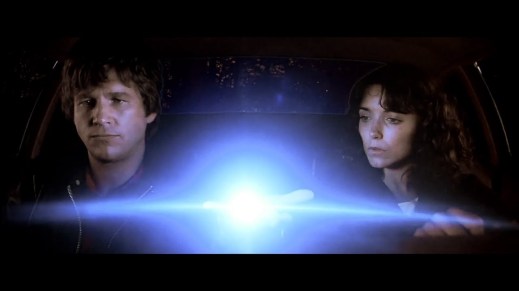
In John Carpenter’s 1984 film “Starman,” Jeff Bridges stars as an alien who is stranded on Earth, and goes on the run from U.S. government agents with the widow of a deceased housepainter, whose body he has cloned as a disguise. They have misadventures while eluding the authorities and the widow (Karen Allen) falls in love with this alien in the body of her dead husband.
In retrospect the plot summary makes this sound like a ludicrous B-film, but it works. One scene and one line from the film has stuck with me since I watched it in a movie theater as a 12-year-old.
The couple are finally cornered in a restaurant by the authorities and the federal agent who has been leading the hunt for them comes to confront them. He asks the alien about his journey and learns he is here to study Earthlings.
“You are a strange species, not like any other, and you would be surprised how many there are, intelligent but savage,” the Jeff Bridges/alien tells his pursuer. “Shall I tell you what I find beautiful about you?”
The federal agent nods yes.
“You are at your very best when things are worst.”
That line has been etched in my mind for more than three decades now, and it’s a fitting mantra for the times we are in.
“You are at your very best when things are worst.”
It can be hard to imagine things getting worse. We are still in the midst of a global pandemic that has hit the U.S. harder than any other country, followed by widespread civil unrest over the death of George Floyd in Minneapolis police custody, poisonous politics in an election year and unemployment levels not seen since the Great Depression.
These are times that try our patience and our resolve. It is easy to want to withdraw and bunker down, to tune out the outside world and lapse into a fatalistic nihilism, a hopeless sloth of withdrawal.
The pandemic reminded us that contact with others is an essential part of life. Human contact is something we took for granted, or even came to resent in New York City, where everything is too crowded and the inconsideration of others is amplified by proximity.
But the need to interact with others is more important now than ever, and despite the myriad conflagrations boiling over in our society, we can still find common ground with decent people of differing ideas.
Human life is inherently tribal, and America has forged tribes along lines of culture and character in ways other societies cannot fathom. These cultures appear to be irreconcilable, but basic human decency and goodness can transcend even our deepest chasms. The past few weeks have shown the extent of our divisions but also the depth of our decency and resolve.
“You are at your very best when things are worst.”
It is time to be the best person you can be and play some part in making our world a better one. You may be at odds with your friends and family, you may be subjected to hatefulness from smaller minds, but the things most worth doing are often most difficult. Keep going.
We can look back at this time and be proud we were at our very best.
Meeting New York’s First Guardian Angel

Traveling to Washington, D.C. for work means taking the Amtrak Accela train from Penn Station. Penn Station was once a gleaming monument to New York’s greatness, but decades ago it was leveled, reduced to a subterranean maze of misery by the powers of commerce without conscience and New York’s Philistine tradition of tearing down some of its most beautiful historical landmarks in the name of progress.
Getting ready for the three-hour train ride to Washington meant stopping by one of the independent delis that still survive there amid the chain concessions. As I approached I saw a man in a red Guardian Angels jacket and red beret, and thought it was probably Curtis Sliwa. It was.
Curtis Sliwa was a night manager at a McDonald’s on Fordham Road in the Bronx when he decided to do something about New York’s Crime problem. He founded the Guardian Angels, an unarmed, unformed crime fighting group that started patrolling New York’s dangerous subways and streets. He didn’t ask permission or get political approval for what he was doing, he just did it. This was at a time when landlords were burning down their old buildings because the insurance money was worth more than the property was valued. The 1970s saw crime explode in every borough as a bankrupt New York City appealed to the federal government for help that never came and was forced to lay off police officers.
The Guardian Angels were the vanguard of resistance to the hopelessness that gripped New York. They didn’t have police approval and politicians dubbed them “vigilantes;” they didn’t care. The unarmed volunteers in their trademark red berets were a sign that people still cared about the city and were willing to put their lives on the line to make a difference.
It was not all straight shooting, though. Sliwa admitted that some of the early stories he told about Guardian Angel heroism were fabrications. Still, Sliwa was an anti-crime crusader before it was cool, a strong voice that cut through the blather of polite talk and gave the criminal class the harsh language it deserved. Even as New York started to turn around, Sliwa’s crime-fighting ways led to an attempt to kill him by the Gambino Crime Family.
Sliwa’s career as a broadcaster has almost always paired him with someone left-of-center to discuss and debate the issues of the day. His pairing with Ron Kuby on MSNBC was a highlight of the network’s earlier days before all of cable television spun into hyper-partisan outposts; they later reunited on AM radio.
I said hello and Curtis Sliwa shook my hand and give me his business card, asking me where I was from. I gave him my business card and told him I was from where I worked.
“No, where are you from? Born and raised?”
“I’m from the city originally and grew up mostly in Yonkers.” I didn’t want to give him my last two decades of history being a city resident, as we were waiting in line at the deli. Our wait was shortly over, and he bid me farewell.
The politicians who once spurned the Guardian Angels later embraced them, and they now operate in more than 130 cities in 13 countries. And Sliwa remains an outspoken personality in New York politics. He’s even vowed to run for New York City mayor next year.
Similar to Ed Koch, Curtis Sliwa is a personification of New York City and will always remain one of the defining personalities of our chaotic metropolis. My encounter with a legit New York City celebrity was brief, but it brightened my day.
Shakedown at the warehouse club

There was shopping to do and we had to get the kids out of the house.
If you have a car in New York City you are one of a privileged few. You can blaze a trail of adventure and wanderlust across the land. Or, you can simply drive someplace where it is a little less crowded to do your shopping, avoiding the hordes that clog your local stores for the slightly less overstuffed shopping experiences of the suburbs.
Pro tip for current and future parents: IKEA stores have a free indoor play area called “Småland” where they will babysit your kids for free if you are in their store.
This past Sunday we headed to Hicksville for the chance to look again at a couch we may want to buy from IKEA and to do our bulk shopping where it was slightly less aggravating.
The drive had put our children to sleep and my wife and I enjoyed listening to Joan Jett’s greatest hits and catching up on adult conversation while our three blessed hellions slumped in their child seats. We decided to get some of our shopping done while they napped. I headed to BJs.
BJ’s is not as fun as it sounds. It’s not an emporium of fellatio but rather a warehouse club like Costco or Sam’s Club. Showing your BJ’s card only wins you the pleasure of buying in bulk.
The BJs in Westbury, Long Island, was a lot less crowded than the one we usually visit in College Point, Queens. I found the things I needed easily. I got in line at one of the self-checkout lanes as going to one of the other lines means an incredibly long wait behind people whose shopping carts are filled to the brim with bulk items.
The woman is taking too long looking over everyone’s cart and there is a line forming just to get out of the store.
The only question I’ve ever had facing this security check in the past is if one of my daughters asks me if this person is going to draw a Mickey Mouse on our receipt.
The woman looks at my cart for what seems like an extended period and then circles the number of items on my receipt. She says there is a problem, something about me having too many items in my cart. Her English is poor, and I ask what is the item that wasn’t scanned. She points to the checkout area, and I think she wants me to go back there but I want to understand this problem and solve it quickly. I’m not going to scan every item again or stand on another line if the store is bringing up the issue. I keep asking what the problem is and what’s not right, and I get no answer. The woman leaves me there and starts checking other customers’ receipts. A chubby woman mumbles something under her breath at me as she walks by, but not loud enough to hear.
The receipt women with broken English calls someone else over. He checks my receipt. He counts the items in my cart. He checks the receipt again; he counts the items in my cart again. People keep passing by and looking at me. I stay stoic.
The young man now checks the UPC numbers on every item against my receipt. He’s moving more things around in the cart and checking off each item on the receipt.
“The tomato sauce,” he says before scurrying off. “The tomato sauce.”
The receipt checking lady has forgotten about me. Her backup left me standing there with my marked-up receipt and no recommendations. I don’t bother to check his work; I just want out of there. I put the tomato sauce aside and walk out the door. No one stops me. I’m free but without the tomato sauce we wanted to buy and with precious time wasted.
Westbury BJ’s: 1, Polite New Yorker: 0.
I had traded the aggravation of weaving your way through crowds of clueless shoppers to being shaken down by store security and singled out as a potential shoplifter. While this was annoying it could have been so much worse. People who forget to scan the groceries on the bottom shelf of their shopping cart have been accused of shoplifting and had their careers ruined. The store employees could have called the police.
I made it back to my van without further delay. The children were awake. We moved on to our next adventure.
NYC’s transit mess to spread above ground

The lives of New York City residents are filled with transit fatigue and the endless negotiation of a failing subway system. Our city subways are in such a sorry state that real lives get interrupted and sidetracked. People miss their college graduations, arrive late for job interviews, or don’t get to say a final good-bye to loved ones.
With the resignation of MTA chief Andy Byford in a dispute with Governor Andrew Cuomo, there is a sense that the situation will get much worse before it gets better.
Queens is poorly served by the New York City subway system and does not have the more comprehensive service that you find in Manhattan, Brooklyn and the Bronx. The subways are so Manhattan-centric that Queens lacks a basic north-south subway route. If you want to get from Ozone Park to the Queens Center Mall it can take you as little as 25 minutes by bus. It would require at least three different subways to get there and it’s only four and a half miles.
Where I live is more than a mile to the nearest subway, which would add 25 minutes to my commute were it not for buses. More recently I’ve learned to take the express bus, which is more expensive but is much better—more comfortable seats and direct service to midtown Manhattan.
The express buses are not a panacea though. Just this past week, as I stood directly next to a bus stop sign on 6th Ave. and 42nd Street, a QM20 bus drove right by as if I wasn’t there, even though I was trying to wave down the driver. So even the express bus system, which is the best experience the MTA has to offer, is still rife with problems.
But not content to serve up sub-par subway service on a good day, the MTA has proposed a plan to slash bus service throughout New York City’s largest borough, Queens. Neighborhood after neighborhood in the borough are organizing to try to stop service cuts that will do things such as: consolidate bus stops, denying service to some areas of the city already lacking for subway access; and stop service earlier in the evening, leaving people stranded in Manhattan if they go to a play or concert.
We need more bus service in the city, not less. Especially at a time when the subways are running so poorly.
Here is a goal for any and all mass transit systems. No one should ever have to wait more than 15 minutes for any bus or train at any time of day or night at any bus stop or train station.
Is that not realistic? Under our current system, yes, that’s a pipe dream, but why should we expect anything less than the best in our city. This is New York. Were it not for our transit system, we would not have experienced the tremendous growth over the last century.
Mass transit will pay for itself in a stronger economy and more productive workforce. Think about all the things you don’t do or places you don’t visit because the travel would be too difficult. Seriously, things only a few miles away are considered out of reach right now because our transit system is so underperforming and unreliable. I know I avoid going to cultural events because getting there and back in a reasonable amount of time is not possible under our current system.
A reliable transit system will have people going more places and doing more things, spending money that keeps our economy going.
Take the MTA out of the hands of political appointees and officeholders who have the power to raid its coffers. Our taxes should support an independent entity governed by a board of directors selected from a population of accomplished people who are transit users.
New York City transit is still way too far away from where it needs to be. There’s no quick fix. Creating a fully functioning transit system is going to take years of political struggle. Let’s start now.
The New York Times’ clueless narcissism reaches new depths

The New York Times announced that it would endorse a candidate for the Democratic Party’s nomination for President of the United States, the first time in its 169-year history that the newspaper would do such a thing. The Times’ editorial board interviewed nine candidates in extensive interviews at its New York headquarters in December and announced its endorsement for the Democratic nomination this past weekend.
The Times feels it’s important to get its voice into people’s deliberations now, though its coverage has laid out clearly that it does not want former Vice President Joe Biden, Senator Bernie Sanders or Mayor Pete Buttigieg to be the nominee. It will at least lay its slant bare for all to see earlier on, though it was shamelessly shilling for Hillary Clinton long before the first ballot was cast in 2016.
So, the Times invited those candidates it judged viable to come in and interview completely on the record with its pompous editorial board to be part of “The Choice,” as if it were some drama people were going to follow like “Game of Thrones.” To their credit, Michael Bloomberg, Julian Castro and Tulsi Gabbard declined to kiss the ring of the Times and sit for the chance to be the window dressing on the editorial board’s tribute to itself.
The weekend edition pullout of printed excerpts had an entire page dedicated to profile photos and titles of the editorial board, even noting with an asterisk someone special who is not normally a member but joined the board just for the important task of endorsing a Democrat before anyone even votes.
We’re supposed to be wowed at the brilliance of these professionals, who spent hours mugging for the cameras they invited into their boardroom because they think the American voters give a rat’s ass about what they think. And with all their brilliance and well-publicized rumination over this important endorsement, they couldn’t even decide on a single candidate to endorse!
They Gray Lady was too busy looking at herself in the mirror to choose only one candidate, endorsing both Senator Amy Klobuchar of Minnesota and Senator Elizabeth Warren of Massachusetts.
“In a break with convention, the editorial board has chosen to endorse two separate Democratic candidates for president,” the Times tells us in its blacked-out opinion page heading made somber for this special occasion.
The Times should have done the extra work and picked one of the candidates. They did do voters a service by giving Senator Klobuchar recognition; her campaign has so far failed to attract support that her accomplishments merit. And the Times is right to credit Warren with being policy-focused and experienced in multiple levels of Washington leadership.
Both Senators Klobuchar and Warren are serious candidates with real ideas and qualifications. The Times insults both with its overwrought half-endorsement that will serve to alienate them from the voters the need to reach most.
New York, like the rest of the country, is in for a long slog through a partisan election year. We can do without the self-congratulatory fluff the Times has subjected us to.
Skynet at the Stop & Shop

“Can we see the robot?” one of our daughters asked.
“Sure,” my wife answered.
We were finishing up lunch and I had mentioned I wanted to briefly visit the Stop & Shop to look for something. I had no idea this outlet near our home employed one of those grocery store robots I had seen mentioned online ubiquitously. These slim, monolith grey towers on wheels are outfitted with large googly-eyes as one would a child’s craft. I had heard they were being installed in more and more stores; friends had posted photos of them at their local supermarkets. I had yet to see one in action.
The shopping center at Linden Place and the Whitestone Expressway in Flushing is a zone of cluttered chaos and the logical effluvium of the overcrowded eyesore of the streets nearby. Forgotten New York rightfully calls this part of Flushing “Queens’ Crappiest” for its lack of aesthetics, complete disrespect of historic buildings, and utter incompetence of the design of residential buildings. The shopping center was not long ago filled with crater-like potholes. It has a check cashing establishment and was for a time frequented prostitutes that served truck drivers. I try to avoid this shopping center because of the traffic alone—it’s either accessed by a busy highway service road or a two-lane street that is often busy. My kids love the McDonald’s that is there for some reason; perhaps I have already failed as a father.
The Stop & Shop there is a last refuge of desperation when we are looking for groceries that aren’t found elsewhere. Now I also wanted to see the grocery store robot. These robots are named “Marty.” Stop & Shop supermarkets have deployed them in more them in more than 200 stores to look for spills and hazards. According to Mashable, each robots costs $35,000 and weighs 140 pounds. Also, these robots don’t clean up anything, but just alert people nearby to the fact that there is a mess.
I went looking for the one item I hoped they had: a specific popular baby food pouch that serves as a healthy snack for our youngest daughter. I headed for the baby food aisle while the rest of my family made a bee line for the back of the store where they spotted the robot.
The baby food section was the same mess it was at my last visit and was without the food pouch I was looking for. I scoured again and looked behind every box and envelope to no avail. The robot had not spent enough time in this aisle.
My excited daughters came to get me to show me the robot, which was making its way across the back of the store from where they had first met it near the deli. They ran after it and my wife and I followed.
When my children ran up on the robot again, it seemed to pause to allow us all to gawk at it. Bored shoppers accustomed to the googly-eyed rolling cyborg went about their shopping.
“Hi Marty!” my children thought this thing was great. Maybe you could put googly eyes on a giant steaming people of crap and children will find it convincingly anthropomorphized into a cute friend and want to take it home. The robot slowly moved away from us, not interacting with anyone other than moving out of our way and appearing to look at us with its false, plastic, and unblinking eyes.
New York City seems like a poor choice to send Marty. Our supermarkets are too crowded, and our people in need of work is always plentiful. Also, New Yorkers are more skeptical of gimmicks like this. While little kids got a kick out of Marty the robot, most adults are put off by it.
The supermarket robot is not the coming incarnation of Skynet, the computer system that becomes self-aware and plunges the world into a nuclear holocaust in the Terminator films. It’s pretty underwhelming by itself.
The truly troubling issue with the increasing use of robots is not that technology is marching forward and machines are doing jobs people want to do. It’s that people no longer want to act like people as much anymore.
If society functioned well, customers would report a spill to an accessible employee, who would easily see to it that the spill was cleaned up, or the store would employ enough cleaning staff to make it a pleasurable experience. Instead we’ll gawk at a machine and be on our way.
We are spurning human contact in favor of technology-driven convenience because our human interactions have plunged in quality. That’s not the fault of the machines, that’s our fault.
A decade without alcohol

January 4, 2010 is the day I mark has having had my last drink of alcohol. It might have been a day or two earlier than but four is a lucky number for me and I decided to set that as the date. This past Jan. 4 marks a decade since I’ve had a drink.
The time went by quickly. Since 2010 a lot has happened. I got married and had children. I left journalism and “went over to the dark side” of public relations. Could I have done those things if I had still been drinking? I don’t know.
I am confident that stopping drinking was the right thing for me, but quitting drinking was not some massive and sudden wonderful change. There’s no magic transformation that turns someone instantaneously from a pathetic drunk to a charming success. All of life’s frustrations are still there, and the warm confidence that comes with drinking is now gone.
And while it’s worked for me, the non-drinking life is not for everyone. I think even people who have problems with drugs or alcohol don’t necessarily have to quit completely. There’s a middle ground that most of the world can navigate. One of the signs that I needed to stop drinking was when I was bowled over at my ability to have only one single beer at a punk rock show I went to. I caught myself as I was glowing in a self-congratulatory mood on the walk to the subway from Trash Bar—uh, actually, this is what most of the world is able to pull off every day!
Quitting drinking wasn’t something I did on a whim or at the spur of the moment. I had been thinking about it for a long time. I had taken long breaks from drinking, sometimes as long as three months at a time, to show myself that I could do it. When I first quit, I only gave myself the goal of stopping drinking for one year. Only after one year without alcohol did I decide to officially bid goodbye to the drinking life.
The drinking life had been a fun one. I’d be the worst kind of hypocrite to rage against drinking since I was an absolute maniac with booze for the better part of two decades. I have good memories from those times and made many great friends over rounds of drinks, I can’t just throw all of that away. I can still be around people who drink; I just don’t. I won’t create a new identity or try to reconfigure my entire life because I don’t drink any more – that would truly be giving alcohol power that it doesn’t deserve.
But it got to the point of not being fun anymore. I would ponder and plan out how I was going to approach a night of drinking and then all my well-intentioned plans of moderation would go right out the window. I was tired of waking up with long gaps in my memory, incredibly hung over, and realizing I had spent twice the amount of money I wanted to. I had no one to be angry at but myself, and my weekend mornings regularly began with waking up to this miserable, impotent rage.
There were some moments that stand out in my decision but thankfully no major disasters. I miraculously never got arrested for drunk driving while in college, no major bar fights or major accidents litter my beer-fueled past. But slowly the magic of the alcohol began to wear thin and not work as well anymore. And all the things I felt I need to drink to enjoy—dating women, going to concerts, playing music, reveling in the creative act that drives us to joyful madness—these were all things I was supposed to be enjoying anyway, and if I needed to be drunk to enjoy them, maybe I was on the wrong path.
So I went ahead and quit drinking on my own, though I did read a book that was helpful in my first year of not drinking. Drinking, A Love Story by Caroline Knapp is an impressive memoir and I highly recommend it if you are questioning your drinking. A lot of what she described as signs of having real drinking problems was very recognizable, and it provided the well-researched bulwark that helped me decide that I was on the right path in putting booze aside.
In her book, Knapp quits drinking after joining Alcoholics Anonymous, and the Alcoholics Anonymous route is one I decided to avoid at all costs. Alcoholics Anonymous wallows in pathetic victimology and peddles its soft-core religion incessantly. Furthermore, many people I know who joined AA have come back to drinking. If AA is the only alternative to drinking yourself to death, have at it, but the success rate is low and its philosophy teaches weakness.
The past 10 years have been filled with a lot of ups and downs, and I’m glad that I experienced them without the hazy filter of alcohol, which for me had become a sad crutch. If the magic dies, don’t be afraid to move on. If I can do it, so can you.
A grateful New York City bids farewell to Two Toms
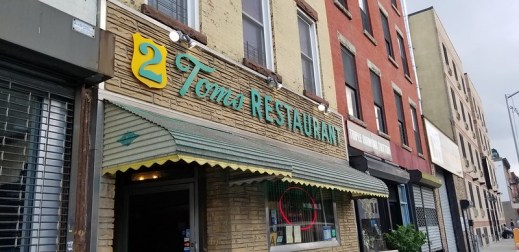
Two Toms Restaurant in the Gowanus section of Brooklyn announced in October that after more than 70 years in business, it is going to close its doors at the end of this year.
Founded in 1948, Two Toms is an institution unlike any other restaurant that is open to the public. It’s a modest and understated very simple dining room in a relatively narrow space, with a street-facing entrance in the front and a kitchen in the back. The food is outstanding and often served family style in large groups, at least that is their specialty. I’ve seen regular tables order off a menu there. But every time I’ve been there it’s been a large meal with several courses.
An Italian restaurant with great pasta and shrimp parmesan among other dishes, it’s most famous for its pork chops, that are enormously thick and juicy and will count as one of the most memorable meals you ever have. I rarely take photos of food, but I had to stop and take a photo of my meal while I was working on one of the pork chops there last year.
I became aware of Two Toms after meeting a group of friends for dinner there several years ago. The restaurant then was known mostly to locals and has a distinct following among law enforcement. My friend Poppy knew of Two Toms from his time working in Brooklyn with the NYPD and it became a regular spot for people we worked with at JFK Airport to hold meet up.
The several courses are conducive to long dinner conversations, the perfect setting for families and old friends. Its unassuming décor adds to its appeal. You are at home there. You can help yourself to beer or soda or bottled water from the refrigerator that is there in the dining room. You knew there was going to be another amazing course coming soon. You didn’t have to worry. Everyone was going to have a good time, and no one was leaving hungry.
When Two Toms owner announced in October that the restaurant would be shutting its doors at the end of the year, its many fans were in shock and jumped into action. Loyal customers flooded the restaurant with so many reservations they began opening extra days and even still they were quickly booked through the end of the year.
My group of friends that took to meeting at Two Toms worked to get a gathering together, but by the time I called to make a reservation, all bookings were gone. I asked the woman I spoke with on the phone to please let me know if any openings at any time for any number of people would be available—if the usual group couldn’t make it at least a few of us would be able to give a final farewell to the place. Social media is alight with tributes pouring in, and legions of New Yorkers who managed to get a reservation are paying their respects.
Two Toms achieved a devoted following because it does what it does best simply and without pretention. It doesn’t boast a celebrity chef or change its menu to some trendy fusion to match the hip flavor of the month. It also refuses rest on its laurels and scream to the world about how long it has been around either. It has stayed true to its roots and has never let up.
New Yorkers will continue to search for the kind of honest authenticity embodied by Two Toms and we owe the legendary eatery a debt of gratitude.
Thank you, Two Toms!
 Matthew Sheahan
Recent Comments