
Camping in the Catskills: Chipmunks, Trout and Bear
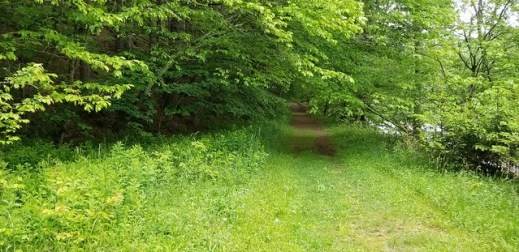
Two years ago my wife and I packed our small children into our van and drove to the Catskills for a camping adventure. Based on the success of that year, we chose to head to the mountains again for another vacation spent in the wild.
We chose the Beaverkill Campground, which is outside Roscoe, New York, about two hours’ drive north of New York City. It runs along the Beaverkill River, which is known as one of the country’s greatest trout streams. After turning off the highway, it’s maybe a twenty minute drive through some winding one-lane roads before you reach the Beaverkill campground.
One of the principal attractions of the campground is a one-lane wooden covered bridge that dates to 1865. It sits over the Beaverkill River at one of the most prime fishing spots, and the calm pools beneath the bridge are occupied during the day by fly fishers looking to hook a trout.
Because the bridge is one lane but serves cars in both directions, the proper etiquette is to honk your horn as you head into the bridge. A car coming the opposite direction should honk back to avoid a head-on collision.
Although rain was expected, we managed to arrive at the campsite when it was sunny, and owning to my wife’s expert organizational and general DIY skills, we had our tent up pretty quickly. That night we had our first s’mores of the season.
With small children, we are not in the market for deep-woods camping and gravitate towards campsites with bathrooms and access to showers. That doesn’t mean this was not a wildlife-filled week for us and the kids though. Our campsite had two chipmunks that were bold enough to jump up on our picnic table when we were a safe distance away and got closer to us than chipmunks are normally wont to do. They know campers can be messy and bring a lot of food and these cute rodents were well fed.
The restrooms had lots of bugs, and large beetles found themselves trapped in the sinks and urinals of the men’s room. I took pity on one beetle in the sink and scooped him out before thoroughly washing my hands, but did not attempt to rescue any of the insects trapped in the porcelain hell of the urinal, preferring to let the murderous indifference of nature take its course there.
Because there are bears in the area, there are strict rules regarding leaving food or garbage out overnight. The campgrounds has a garbage bin that it locks up after 8:30 p.m. and any food or garbage you have after that point has to be locked in your vehicle (tough luck if you backpacked in there I guess).
On our third night, I was making my evening journey to the designated garbage/recycling area when I saw a large animal coming down the road that runs between the check-in office and the campgrounds. At first I thought it was a large dog—we met several campers who had large dogs with them—but soon realized that this was in fact A BEAR!!!! It was walking at a slow pace with the mundane expression of easy existence in its (pun intended) bearing.
I thought maybe my eyes deceived me and I quickly deposited my garbage and recycling and started back towards our campsite.
The bear was still walking in my direction.
For a moment it looked as if it was two bears close together, in which case I may between a mother and her cubs, and that is bad news.
I remember reading somewhere that if you come across a mother and her cubs, you are to remain facing them and walk backwards calmly. I did that.
The bear—it was only one after all—saw me and our eyes met for a moment. It turned off the road and headed down a wooded hill. I moved quickly back to our campsite. “I don’t mean to be alarmist,” I told my wife, “but I am pretty sure I just saw a B-E-A-R.”
I sped packing up our campsite for the night, getting all of our food in the van and shut tight. There was no sight of the bear beyond that. I reported the sighting the next day to campground officials. We continued our camping as planned.
We were completely unplugged when we were camping. We had no mobile phone reception and no computers or laptops available. No television, no video games on tablets or anything else. It was good for a change like that, to spend time with family and nothing else. Our kids found adventure in going to the river’s edge and creating their own secret hideout on glacial rocks.
We had mobile phone reception on the few visits to the town or Roscoe, which consists of a few blocks of buildings with only one main street. The dichotomy of the Catskills is evident there. We bought fishing equipment across the street from a guns and ammo store before going to a farmer’s market to buy local honey. There is a railroad museum and several bed and breakfasts there, as well as a grocery store that was our lifeline for ice, batteries, and other necessities.
The real attraction in the Catskills is nature and the abundance of greenery. Being a city dweller, we become accustomed to concrete and glass as our natural environment, and there’s something inherently unhealthy in that. We should be spending more time close to grass and trees, or the green ferns that sprout ubiquitously in the country. I understand why New Yorkers escape to the Catskills and I am not ashamed to be among their number.
We plan to be back north as soon and as often as possible. See you there.
Dulce et decorum est pro patria mori

“It is sweet and right to die for one’s country,” wrote the Roman poet Horace in his ‘Odes.’ The Roman army still influences our world today; its conquests built an empire. But it could not stop Rome from rotting from within.
Monday was Memorial Day in the U.S. While we can hope to spend some time in quiet reflection of the people who gave their lives for our country, it mostly serves as the start of the summer season. There are many tributes to America’s fallen on my social media feeds, but the posts that feature barbecues and sunbathing are more abundant.
The American public is tragically disconnected from our own military. I count myself among the guilty. I know several veterans of the Iraq and Afghanistan wars. I wrote and sent them things while they were away. But had you asked me where exactly they were and when, I couldn’t tell you.
As the public flag-waving gets more fervent, the actual involvement with our military becomes more detached. We have had an all-volunteer military for several decades now. Not since the Vietnam War have Americans been called up in a draft. When I turned 18 I had to register for the Selective Service and I still have my card someplace. While still the law, draft numbers are lower; we don’t have reminders to register. The military is simply not a reality for wide swaths of our population.
It is easy to wave a flag and heap praise on people who are gone. It’s a lot tougher to turn that sentiment into real action that helps the living. As a country, we’re falling short on both grounds.
My brother knows people who live six hours driving time away from the Veterans Affairs hospital where he goes regularly. Some take hours-long bus trips to the VA only to find that their medical appointments were canceled without notification. Veterans have been known to commit suicide in the parking lots of VA hospitals; this phenomenon doesn’t surprise my brother one bit. He’s been negotiating the bureaucracy of the Veteran’s Administration for the better part of the last 20 years, with an increased intensity over the last 10. He was recently ordered to have an unnecessary EKG done so he could get a refill of medicine he needs. He knows his prescription regimen better than the rotating doctors and orderlies assigned to help him; and every so often he has to essentially retrain the people who should know how to help him.
We’ve trained soldiers who can survive poison gas and terrorist bombs but not our own healthcare system. This would be inexcusable in a second-world country, let alone the richest country in the world. And the VA didn’t suddenly collapse; it’s been infamously bad for generations now.
Let’s remember the people we’ve lost, but let’s also try to make time to listen to the living.
Our commitment to our country and our fallen veterans has got to spread far beyond the traditional ceremony and observances if our patriotism is to have lasting meaning. Let’s start today.
Taxi scams are born anew
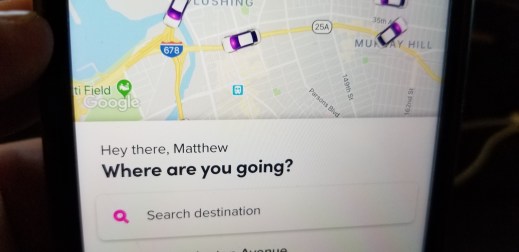
Technology continues to advance and change our world, human nature does not change. Technological advancement does not mean moral advancement. While we can summon a wealth of information in less than a second, the human race isn’t applying this knowledge in a way that makes our world any more just and fair.
And so it is with our taxi cabs. While technology enables us to hail cabs, it has not improved the ethical standards of drivers or riders. I have seen this illustrated across our city in several ways, but most vividly this past week.
It was after 6 p.m. and since I was out of work late I wanted to waste no time in getting home. I was in downtown Manhattan and the traffic looked painfully slow. I positioned myself near a street corner so a car could make a quick exit off of a bumper-to-bumper Broadway. I requested a ride from Lyft.
I got a call from the first Lyft driver.
“Hi this is your driver from Lyft, can I confirm where you are?”
“Yes. I am at Broadway and Worth Street. I’m a bit before Worth Street so you can make a left and get out of this terrible traffic.”
“And can I confirm where you are going?”
“Flushing, Queens,” I said truthfully.
A few seconds after our call ended. I saw that the driver had canceled my ride and the mobile app was searching for a new driver for me.
I also realized how I had made a terrible mistake. One of the features that is supposed to make ride hailing services better than hailing cabs on the street is that the application does not tell the driver where you are going until they confirm on their device that you are in their vehicle. This stops them from cherry picking rides the way yellow cab drivers do, asking passengers where they are going before they get in the cab, so they can avoid taking fares to destinations they don’t like.
Ride hailing drivers subvert this system in two ways: they will pull over and confirm on their device that you are in the cab when you are not, and then canceling the ride before you get to them. And, like they did with me, they call you and ask where you are going and then cancel the ride if they don’t like what you tell them.
The second Lyft driver called a few minutes later, doing the same thing. I didn’t tell them, but it didn’t help anyway.
“Can you confirm where you are going?”
“I’m on Broadway and Worth. I’ll see you soon. Are you nearby?”
“Yes. I am at Broadway and White Street. I will be there soon. … Can you confirm where you are going?”
“That’s a great question. I’ll confirm when I see you. And I’ll see you soon,” I said with the friendliest confidence I could muster.
My phone soon indicated that this driver had canceled as well, and now I had to start the request for a driver all over again. And guess what? The price for a ride was now about $20 more than when I was first looking for a ride. This made me livid but I was too tired to get worked up about it, and besides, I would have been mistaken for a crazy person, shouting at my smartphone in the middle of Broadway as downtown traffic slowly crawled by.
The third driver arrived and completed the trip. With all the shady driver shenanigans, I probably saved no time in getting home and would have been better off taking a subway or express bus.
A friend who is a yellow cab driver broke down the one issue he may have with taking fares to the outer boroughs: if it’s towards the end of his shift, he faces late fees if he brings his cab back to the garage late. That’s the only time he picks and chooses his fares, and he recommends reporting those drivers that won’t take customers where they want to go. My friend is exceptionally good at what he does, and even lets passengers know when they can get somewhere faster using public transit. I had one Lyft driver tell me that in Maryland recently, and I much appreciated it.
In a few short years, the drivers at ride-share services like Uber and Lyft have perfected many of the repugnant practices that sent riders away from yellow cabs to begin with. Ride-hailing service drivers are known to cancel rides in time to take advantage of surge pricing times. No-show cab drivers can still saddle would-be riders with $5 cancelation charges which are difficult (though not impossible) to fight through the companies’ Web sites. And yellow cab drivers are left in the lurch, many of them deeply in debt with loans for medallions that they may never be able to pay back, a situation regulators ignored.
At the same time, ride sharing services are in greater demand, since our public transit system is so rotten to the core the subways lines can be delayed even by an overflowing toilet.
As with yellow cabs, remain vigilant when you are taking one of the raid hailing services. What looks like a minor inconvenience could be another scam.
Losing our matriarch

At the start of April, some of my aunts and uncles mentioned to my Grandmother, Mary Sheahan, that her birthday was coming up, reminding her that her birthday is April 10.
“Oh,” she said as casually as if she were discussing the bus schedule. “I’m not going to make that.”
She passed away less than a week shy of her 95th birthday. Her death was not a shock, and we were as prepared, at least bureaucratically, as a family can be.
My Grandmother was born Mary Fogarty in 1924 in Roscrea, Tipperary, in what was then the Irish Free State. There were only 48 United States at that time, and Calvin Coolidge was President. Prohibition would last another nine years in America.
Her father had been in the British Army, enlisting in the early 20th century when all of Ireland was under British control. He had spent time in India and had fought in the First World War, including the fierce Battle of the Marne. When he came to the U.S. he worked as a janitor and had fought for the right to organize a union, winning a court battle to form a union. This sense of right and wrong, and fighting for your principles is one that runs strongly in our family to this day.
My Grandmother married my grandfather, John Sheahan, in 1948 and their first child was born in 1949. At one family barbecue, her oldest son, my uncle Tim, pointed out to her that his birthday was exactly nine months and one day past her wedding date. She giggled and, noticing me observing this conversation, instructed me not to comment. Tim smiled and said, “It was Bear Mountain,” referring to where my grandparents had honeymooned.
I doubt I will ever know anyone who embodies unconditional love and the joy of living the way my grandmother did. Her world centered around her family and with seven children, nine grandchildren and four great grandchildren, she had a lot of love to share and names to keep straight. Hers was always the voice of kindness and love, and her generosity of spirit never waned. Whether it was caring for my Grandfather through decades of debilitating health problems or facing her own mortality years later, she was always an example of great strength. It was she who went about my Grandfather’s wake comforting others who were weeping, even though it was her moment to mourn more than anyone’s. We would have easily forgiven her a moment or two of self pity, having lost a husband, a daughter, and son-in-law along the way and dealing with difficult health issues in her final years. But she was a rock of strength, sustained by a strong religious faith and a dedication to her family that went beyond what anyone could ever ask.
My Grandmother’s life was her family, and she showed us that the greatest joys are often the ones of simply being present and investing time and care into the lives of the people around you. Her power stretched far beyond her blood relatives and her wake and funeral saw visitors from every part of her life, including people she had worked with decades ago or knew her as a neighbor for only the last few years.
If there is any available measure of the amount of love my Grandmother brought into the world, it was reflected in the care and hard work her own children did during her final months and years. My Father and aunts and uncles worked around the clock taking care of her and navigating through our Byzantine and often inept healthcare system. When her final course was set, relatives flew to New York from all over the country to be with my Grandmother at the end.
When my Grandmother passed, our family became a team effort yet again. My Aunt Patty’s house became a central gathering place, my cousins gave readings at the funeral or served alongside me as pallbearers. My Aunt Peggy arranged for the Ridgefield Chorale to sing at church and they did beautifully. My Father delivered a beautiful eulogy that left not a dry eye in the house and had both humor and inspiration.
One thing that my older relatives taught me is that the work you have to do during a wake and funeral is helpful, in that it keeps your mind occupied on something else other than the loss of your loved one. I was honored to be a pall bearer, and focused on making sure things went smoothly at what is the most heart-wrenching part of the funeral.
In the years after my Grandfather died, my Grandmother described a dream she had. She sees my Grandfather, appearing as he had when younger, dressed sharply in a suit and hat. He strides through the lobby of a building and gets into an elevator. She goes to follow him in but he puts his hand up, signaling this was not her time. The elevator doors close and the car begins its climb without her. I hope this dream replayed again for my Grandmother, and she joins my Grandfather on the elevator this time. The doors now close on the rest of us.
We are without our matriarch, but she has left us with loving instructions in the way of her example. If we live our lives with a fraction of the love, dignity and grace that Mary Sheahan had, we will have earned our rest.
Congestion pricing will not fix our subways

New York is a city of many firsts. It was the first capital city of the United States; it had the first hot dog, first American public brewery, ATM, mobile phone call, and children’s museum.
It also promises to be the first American city to institute congestion pricing on cars driving into its busiest areas. Although these fees are not expected to take effect until 2021, it could cost motorists up to $10 to drive into Manhattan below 60th Street according to a plan expected to be passed April 1 as part of the New York State budget.
It could mean as much as $14 for a car and more than $20 for a truck going into Manhattan. That’s likely going to be on top of heavy tolls already paid to take the bridges and tunnels needed to get into Manhattan in the first place. Cities such as London and Stockholm have instituted congestion pricing and it’s considered a success there, but those cities have more viable public transportation.
New York City has one of the most comprehensive public transit systems in the country, and that’s more of a statement on how sorry the U.S.’s transit system is than a compliment to New York.
The politicians that are advocating for congestion pricing are doing so because they don’t want to do the hard work it would take to fully fund the M.T.A. It means possibly raising taxes and definitely raising fares. It means significantly reforming construction policies to reduce exorbitant costs. Governor Andrew Cuomo and Mayor Bill de Blasio, who despise one another, agree 100% that this is a good idea, which is as good a reason as any to oppose it.
People are turning more to cars because public transit is so unreliable and unpleasant. I once worked with a man who had health issues and had to go to the Bronx every other day from work in order to have kidney dialysis done. He took a cab there because he couldn’t be late and his health issues meant he couldn’t be wedged into a subway car with a few hundred of his closes friends. He was able to get some of his cab fare subsidized, but that’s money that could have been spent elsewhere if we had a reliable transit system, and it’s on the backs of people like my former coworker that this new tax is going to be balanced.
I would rather not spend about three times the regular fare to get to work, but I know I need to be on time to work and not on the cattle car that passes for the 7 train these days, so I splurge for an express bus. It’s still a lot less than a cab but more expensive than a regular subway or bus fare.
Congestion pricing is going to cost the people who can afford it the least: cab drivers or people who have their spouses or friends drive them to work or who are carpooling like good citizens. There will be a significant portion of people who will avoid paying it using the same schemes that work with the now toll-booth-free tolls and red light cameras.
We will fight this out in the press and in the courts until congestion pricing becomes the law of the land or not. But all that will be time wasted building the political capital, civic will, and thoughtful plans needed to truly fix our transit system.
The mystery commuter on the QM20 bus

For about a year and a half, I have commuted to and from my job in Manhattan using an express bus, a more expensive but comfortable coach bus run by the Metropolitan Transit Authority.
Most of the bus drivers who drive these buses hustle to get us through traffic and make good time getting into Manhattan from the Eastern reaches of Queens. A meek or extremely defensive driver is going to fail at driving and express bus, and fail hard.
And that’s been happening recently in the early morning on the QM20 line. One driver I have not seen but only heard about, an older gentlemen, is a slow-paced driver that is content to hang in the slow lane of early rush-hour traffic while his passengers fret about reaching work on time. I have spoken with people who have stopped riding the 6:45 bus because they cannot get to work on time if they ride it. In fact, the 7 a.m. bus routinely reaches Manhattan sooner.
Because the driver of the 6:45 a.m. bus is such a pathetic slowpoke, passengers that used to take that bus now flood to the 6:30 bus. There are now at least three times as many passengers waiting at the bus stop for the bus I take, which means the other stops are all more crowded as well. I used to be able to find a seat all to myself with regularity, now it’s nearly impossible.
Yet still people insist on putting their bags on seats, even knowing that they’ll have to move them at some point. It’s a gamble on their part, they’ll possibly get the seats to themselves if enough passengers decide not to ask them to move. I usually make it a point to make these rude people move their bags, though if they are an exceedingly large person then I will often pass them by because I’m a large person also and then we’re both crammed into our seats seething and miserable. There is one rude fat bastard on my bus line who does this without fail and sits in corpulent luxury every day.
Sometimes I’ll choose people who are polite and thin because I’ll have more room. There’s a man who uses his time on the bus to sketch drawings and I feel camaraderie sitting next to someone interested in the arts, even if I never talk to him.
This past Monday however, there was a mystery man and I felt I had to sit next to him. By mystery man I mean someone who had a black wool hat pulled down all the way over his face. This was not a ski mask (aka balaclava), but just a hat that normally sits on top of the head and over the ears. He had it pulled down all the way over his face, so that his head was just one monolithic orb of woolen darkness.
I was appreciative of the aesthetic and felt a kinship to it. I often wear a ski mask when I perform in bands, and have enough ski masks at home to clothe a paramilitary battalion for a decade. So I sat next to this man. He was a bit spread out but I managed to get comfortable enough and read the news on my work phone. I didn’t want to see the man’s face, wanting his mystery to be kept for all eternity or at least until the weather was warmer and one would have to be psychotic to wear a winter cap. But no, soon after we rolled into Manhattan the man woke up and pulled up his hat revealing the countenance of a middle-aged commuter.
I don’t know where the man departed the bus. I got off at my usual stop at Herald’s Square and made my way downtown, hoping to engage with more of life’s mysteries as the day wore on.
The universal benevolence of a snow day

This winter has been a strange one for the Northeast and New York in particular. We’ve been absent the traditional snowstorms that usually blanket our area a few times each season. We had a slushy sleet in November that snarled traffic and quickly dissipated and a few snowfalls that failed to bring much snow volume.
This past Sunday night we had our most commonplace snowstorm yet, and the predictions were serious enough for New York City to cancel its public school classes that following Monday.
That Monday morning, with the full weight of a snowstorm having made its mark on our city, I decided to not have a snow day and went to work. The snowpocalyspe that had been predicted did not come to pass, at least not on the roads in Flushing. They were clear at 5:30 in the morning and I went through my normal routine and got to work in great time.
So many were taking a snow day, it served as extra motivation to make it into the office. I could have likely remained at home and few would have blamed me. The buses and subways were less crowded than they usually are.
Enjoying the relative quiet of the hushed urban snowscape, broken by the crunching of my office-appropriate rain/snow boots on the un-shoveled sidewalks, it was a harder walk to the bus stop through the crusted sludge.
A few years ago, a snowstorm that was raging through the night and into the commuting time of the morning meant that the office where I worked declared a “work from home” day. It was one of the most productive work days I have ever had. I managed to draft an 800-word op-ed that morning on top of all my usual work, and the lack of commuting hell made everyone generally happier.
The greatest snow day I ever had was in an April of my elementary school years, when there was a spring snow storm in the Northeastern U.S. and I got to take the day off from Catholic School. No more stifling white shirt and blue fake tie with the stenciled sEs (Saint Eugene’s School, Yonkers, New York) for the day. I waged war against my own blood kin and neighbors through snowball fights, barricaded into a snow fortress that numbed my hands and feet, and cherished respite in the warm caverns of our two-bedroom apartment.
Making it into work during a snow day is an easy way to prove dedication to your job without doing any extra work. There’s a saying attributed to Woody Allen that 80 percent of success in life is showing up. On a snow day that jumps to 95 percent. It feels good to be one of the few and the brave at the office when things are quiet. In a city as crowded as New York, you take your quieter times whenever you can.
With today’s technology, the central office as we know it is due for an overhaul. With public transportation unfortunately on the decline, people who live only a few miles from their job commute for more than an hour. That hour can be spent more productively at home, and employees will be happier. We can’t say the same for schools.
What I fear now is that a deep freeze coming later this week will create an icy menace on sidewalks and roads, including black ice that can be harder to see and prepare for.
But no matter what shape our school and office lives take, the allure of the snow day will not be completely gone. Whether you take it at home or elsewhere, enjoy the snow day.
Come to the Flushing Eco-Fest

Sustainability and the environment are not just for hippies anymore.
Although when you think about it, hippies were late to the game on wanting save the Earth. The greatest environmentalists in American history is most likely the 26th President of the United States and great New Yorker, Theodore Roosevelt. Roosevelt used the power of his Presidency to create national parks and other public lands. And when you think about it, accomplished hunters like Roosevelt are among the best environmentalists.
Ask yourself what would Theodore Roosevelt do? If he were still with us today, he would probably be bold enough to bicycle from Oyster Bay to the Flushing Quaker Meeting House (a trip of only 25 miles, an easy two hours for T.R.) and find common cause with the many diverse people working for the preservation of our natural world at the Flushing Eco-Fest on Saturday, March 23.
The festival is being organized by Flushing C.S.A. (Community Supported Agriculture), a local farm share group (full disclosure: our family is a member of the Flushing C.S.A. and my wife is a core member and Eco-Fest organizer) and being cohosted by the Flushing Chamber of Commerce.
The Eco-Fest is free and offers free workshops, eco-friendly kids’ crafts sponsored by Macaroni Kid, and a host of vendors with locally grown and organic goods. There will be well over a dozen vendors and groups there, each one is in some way working towards making things on the planet more sustainable.
There is guaranteed to be something to appeal to everyone. My personal favorites are some of the local food businesses such as Spice Tree Organics and Astor Apiaries. You will be doing something good for the environment when you attend, even if you just stick around to learn something about watersheds or how to compost or get a few cycling or energy-saving tips. There will also be environmentally-friendly soaps, home décor, seedlings, and baked goods for sale. And a raffle. Nothing is too small to do to make a difference.
You will also meet an interesting group of people there. Events like this can give you a great cross-section of this part of Queens. The Flushing Quaker Meeting House is the oldest, continually-used house of worship in New York City, and Flushing has several important landmarks in the cause of religious freedom in the U.S. Inside the Meeting House, you will be surrounded by history older than the United States. And whatever you think of the current trajectory of the U.S. or its politics, there is no disputing that this is an interesting time to be alive.
And it is a perfect time to increase your civic and conservationist involvement. Don’t let cultural stereotypes about environmentalists dissuade you from joining with those who want to keep our nation’s land strong. Everyone has a part to play.
Teddy Roosevelt promoted national greatness, and he understood that a nation that depleted its natural resources and did not invest time in strengthening its land and future could not sustain itself. In Flushing, people will gather and, consciously or not, help build on Roosevelt’s vision of a great America that treasures its natural resources and strives to be a unified community.
Postcards to the future

An annual tradition in our family is to go to Mohonk Mountain House on President’s Day weekend. It’s a tradition started by my wife’s father and stepmother and we are happy to take part in it.
This year Mohonk Mountain House is celebrating its 150th anniversary (called a sesquicentennial if you want to use a big word and impress yourself). As part of its observation of this milestone, the historic resort plans to create a time capsule to be opened in 100 years. They invited all of their guests to fill out postcards to be sent 100 years into the future, presumably to be poured over by historians or glanced at by bemused guests in the next century.
One hundred years ago, much of the Western world was still recovering from the First World War, though no one would have called it that at the time because another 20 years would pass before the next World War would start. World War I was called simply “The Great War,” and Western civilization had not seen anything like it. Technology had helped nations create weapons that had not been used in large scale before and casualties were enormous. In fact, there are still areas of France off limits today because of the plethora of unexploded ordinance from the First World War.
Today our world is not in the after math of a great war but rather adjusting to the dissolution of the world order that was began after the Second World War. We have a new dominant world power in China and the world’s greatest superpower, the U.S., deeply divided. There is no shortage of conflict in the world that is taking a drastic human toll.
The world is still a scary, violent place, just in different ways than it was in 1919. We didn’t have mass school shootings in the U.S. in 1919, but we had a flu pandemic that killed more than 180,000 people. We didn’t have MS-13 gangs, but we still had anarchist bombings and labor and race riots. It’s not a bold statement to say that the world of 2119 will be frightening to the historical researchers who read our Mohonk postcards. Between now and then the world will change dramatically in ways we can’t predict, but human nature and the existence of conflict will remain.
But what is also constant, and what I tried to convey in the card, is that while conflict is never ending, so is hope and the human drive for improvement. As long as people have killed one another and destroyed past civilizations with sloth and greed, they have also constructed new communities and sought out the better angels of their natures.
In the postcard we left for the 100-year time capsule at Mohonk, I wrote to a future that would be as conflicted and fearful as our own. I conveyed to them that now, as will be the case then, people gathered to see the beauty of nature and share good times with the people they loved.
I added our postcard to the gathering mass of missives to the future, hopeful that maybe one of my great grandchildren will be enjoying some time at the Mohonk Mountain House and get to read our note from the past.
Year of the Pig

This week begins the Year of the Pig according to the Chinese zodiac calendar. All New York City public schools are closed for the celebration. There will be a big parade in downtown Flushing this weekend and there is no shortage of family-friendly events in the city to celebrate.
We commonly called this Chinese New Year but that has dropped out of fashion and Chinese New Year is now called Lunar New Year. Koreans and other Asian cultures celebrate this as the New Year, not just the Chinese. But the Chinese originated this festival. Sure, it’s set by the lunar cycle, but so are Jewish holidays. If Chinese New Year is Lunar New Year, then so is Rosh Hashanah.
Chinese New Year is a holiday that’s quickly moving out of its original ethnic boundaries, like St. Patrick’s Day or Cinco de Mayo. Chinese New Year is an opportunity to sample some compelling Chinese cuisine and light of firecrackers if you have them.
It’s a shame that celebrants in New York City cannot legally set of fireworks for the Chinese New Year. The Chinese invented gunpowder, damn it, they’ve earned the right.
In our house, the upcoming holiday was a reason to feast. My wife made delicious Coca-Cola Pulled Pork sandwiches on the eve of the Lunar New Year. They have the day off from classes and received some decorative paper lanterns from their school.
People born in the Year of the Pig are said to be intelligent, well-behaved, and artistic. They are among the calmer signs of the Chinese zodiac. It’s the sign we need for the world we have now. Some enlightened refinement and well-mannered artistry would go a long way to improve the state of things.
The pig is the last of the 12-part cycle of the Chinese zodiac, owing to legend that it was the last animal to arrive at a gathering summoned by the Chinese emperor, or by Buddha, according to a different legend. It is a stout animal known for its intelligence. In the United States, feral pigs that have escaped from pig farms are amazingly adept at surviving in the wild and can grow to enormous sizes.
There are five different versions of the Year of the Pig, based on the different elements (metal, water, wood, fire, earth). This is the year of the Earth Pig. It is the least fanciful and most real of the elements – our planet in its rawest form, the pure soil that is the basis for our lives here. It’s where we grow our food and the patch of land we seek to keep and defend.
So take whatever pleasures you can in this Year of the Pig. Survive and thrive no matter what slop is thrown your way. You owe it to yourself.
Happy Chinese New Year.
A tribute to Burns Night and the Brooklyn of Old
Fifteen years ago, it was a cold night in an apartment in Prospect Heights, Brooklyn where maybe two dozen people gathered for a Burns Night party. Burns Night is January 25 and celebrates the birthday of Robert Burns, the Scottish poet who lived in the late 1700s.
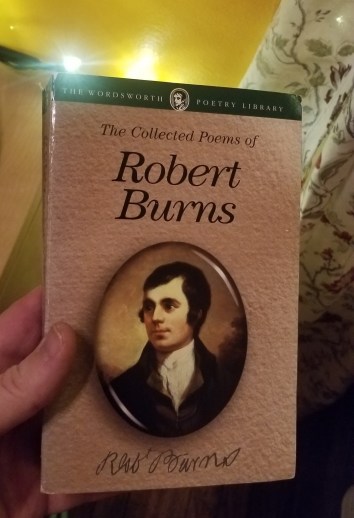
Several of us had brought our volumes of Robert Burns’ poetry, and at any point during the party, a partygoer would shout “Poem!” and silence the festivities for a reading of Burns poem.
The host had traveled to a meat distributor in New Jersey to obtain authentic haggis, a traditional Scottish dish comprised of a sheep’s offal and other ingredients served inside an animal’s stomach. A central ritual of the Burns Night party consisted of our host cutting open the haggis while someone read the Burns poem ‘Address to a Haggis.’
These Burns Night parties were a testament to the greatness of New York City and to the promise and meaning of Brooklyn to so many people. These were eclectic gatherings that showed the power of art to transcend time and place. Here were people of a variety of ethnic backgrounds celebrating a Scottish poet. The host, Roger, is a Peruvian Jew who grew up in Detroit. There was at least one real Scotsman at these parties, or at least he looked the party with a kilt. Maybe none of us had a drop of Scottish blood. Who cares? The power of Burns’ poetry transcends.
Among the guests at Roger’s parties were his frequent music collaborator Scott and Scott’s wife Diane. I once got to dog sit for Scott and Diane’s amazing dog Connolly (full name: Satchel Connolly X) – I picked up their house keys at a local diner where they knew the owners, walked their dog and explored Prospect Heights, which was a real neighborhood.
They were among the most active voices opposing the Atlantic Yards Project, a corrupt boondoggle that forced people out of their homes and businesses to construct luxury housing and a sports stadium. That fight was lost and the Barclays Center now sits on what used to be the part of the vibrant and eclectic Prospect Heights neighborhood. To this day I have not set foot inside the Barclays Center.
Roger returned to Detroit and Scott left Brooklyn and ended up in New Orleans. Diane remained in Brooklyn for a while after their breakup but she later moved to Westchester. All these people are doing well. Roger continues to write brilliantly, Scott has had his photos exhibited and Diane is a Fordham professor who recently published a book.
Those parties and those three people in particular represented Brooklyn to me like nothing else. They had each had come to New York and conquered it on their own, leaving great music and art in their wake. When those three people left Brooklyn, it was a sure sign that the things that made Brooklyn special were gone forever. If the people who embodied the spirit of Brooklyn more than anyone I knew were had left, then Brooklyn had outlived its usefulness.
That’s not to say there is nothing good about Brooklyn. I still go to Coney Island and Prospect Park and there are still music venues in Brooklyn worth your while. But for the most part when I think of Brooklyn I think of overpriced real estate and the hordes of well-off people who are driving up the price of everything.
But people who attended Roger’s Burns Night parties years ago have not forgotten them. A friend recently spent Burns Night at Peter Luger’s Steak House and recited some Burns poems to his family and friends. Diane mentioned Burns night in a school lesson about ethnic foods and culture; sadly her students had not heard of Burns Night.
Roger posted his memories of Burns Night online, noting how he first came across a reading of Burns poetry inside a pub in New Jersey, and woke up the next day in New York determined to be one of the people who would recite Burns poetry.
I stayed up late with my volume of Burns poetry, and read The Bonnie Wee Thing to my wife while holding her hand. It was not the happening party of years ago, but I could not go to bed on Burns Night without reading a Burns poem.
The Burns Night parties in Brooklyn of long ago are gone, but as long as I live I will keep them alive in spirit, and I am not alone.
Aye.
Five years a parent

It is five o’clock on a January morning in 2014 and I’m driving a pickup truck on the Grand Central Parkway. My pregnant wife is in the passenger’s seat. It’s dark and the roads are nearly deserted.
“In a few hours we’re going to be parents,” I tell her. “Isn’t that crazy?” She agrees.
This week our older girls, fraternal twins, will turn five. That’s a half decade of parenting in the can. We have three now, the youngest will be three in June, sharing a birthday with one of her uncles.
Having kids is a definite turning point in everyone’s life, and it brings a kind of happiness that is hard to achieve in other places. But it’s not panacea where unicorns and rainbows to replace the regular sturm und drang of life. All the same stresses and difficulties are there, and now they are there with new mouths to feed and diapers to change. Kids won’t turn you into a better person. You’ll still be an angry curmudgeon if you were one before their birth. But as miserable as your life may get from that point onward, your children will be a consistent reason to be happy, even when they are throwing up on you.
I am extremely fortunate that I went into parenthood with a very wide support network, a steady paycheck and a happy marriage. Not everyone has that. When I was born my parents were half the age I was when I had kids. Neither one had a college degree at the time. I started out way ahead; I have no excuses if my kids become serial killers.
Luckily, our kids are great and continue to inspire us to be better people. I see how bright they are and how they enjoy learning and I want them to never stop loving life or the pursuit of knowledge. Despite the many stresses and strains; my wife and I enjoy our molding, shaping and unconditionally loving these impressionable young lives. It’s an awesome responsibility but also one of unlimited potential.
I vowed not to be the kind of parent that gauged someone’s worth by whether or not they reproduced – I faced enough of that before I had children.
“So do you have a family?” someone asked me at a business reception years before I met my wife. They meant to ask if I was married and had kids, but the question seemed like they were checking to see if I had hatched out of an egg. Well I was raised by wolves and since I’m not biologically wolf I can’t track down the pack that raised me by my sense of smell, so no I guess. —was how I should have answered, but I mumbled a simple ‘no’ and noted I wasn’t married and changed the subject.
And while my kids are crushing life, we must refuse to put their accomplishments in place of our own. No one outside a tight circle of family and friends care how awesome your kids are, and having children is no excuse to fall on your face in every other aspect of life. No slacking.
This weekend we’ll be hosting a kids’ birthday party for the twins with pizza, cake and animals. It will be a big, tiring, stressful day but one that will have a happy ending because we get to spend it with our children.
Five years have gone by fast. Wish us luck on the next fifteen.
Demanding a better 2020

As the presidential race of 2020 is already underway, before the office-holders elected in the mid-terms have even taken their oaths of office, it would be a great time for Americans to demand that the level of conversation be switched permanently to ‘grown up.’ The stakes are very high with the looming possibility of a recession, a bitterly divided Congress and an executive branch in a constant churn. It would be a real treat for a few brave candidates to insist on taking the high road and talking about how their policies will benefit the citizenry.
This will run afoul of the zeitgeist of contemporary politics. Rampant partisanship has created a knee-jerk politics where not only is everyone expected to wear their allegiances on their sleeves, but to be at the most ideologically pure part of the spectrum with blind obedience. Facts that may run counter to one’s argument are “Fake News” or “Hate Facts.” Serious adults don’t use terms like that except to mock those that do.
We’re seeing the worst in tantrum politics and mental gymnastics among both major political parties as the current budget impasse over a border wall continues. Trump’s insistence on a border wall is a clear sign he doesn’t understand the issues, and Democrats are hard-pressed to demonstrate any serious commitment to increased border security or give lie to the notion they want open borders.
Both parties once were able to function and understand nuances of policy. Sovereignty and human dignity are not mutually exclusive. It is inexcusable for Americans to support a porous border and deny our right to a sovereign nation. It is also inexcusable that children would die preventable deaths in the wealthiest country in the world, no matter their circumstances. We are a better country than to let people die of common disease or dehydration in detention centers; we also won’t be a country without strong, enforceable borders—there is no contradiction in those statements.
Let’s all admit that our political opponents are not monsters and that seeing the logic in the other side’s argument is not a betrayal of our own ideals. No, people advocating for stopping family separation at the border are not doing so to create some kind of socialist global utopia just as people advocating for tougher border controls are not trying to reproduce the Third Reich on American soil. These are not staggering revelations to the worlds of adults, but these are gut-punching concepts to hyper-partisan audiences that tend to dominate the public conversation these days.
Future generations will look upon these times as days of decay and decline, when a vacuum in leadership and long-standing myopic public policy exacerbated a fractured society. The values that make our society great can endure even if our institutions crumble, but it means a conscious effort to build new communities for those of us with clear vision and willingness to see beyond the outdated prism of our fraying standards.
We can rebuild communities if we leave the echo chambers of media and engage with the world around us. If we can take anything constructive from the Trump candidacy and record in office, it’s that people respond to frank dialogue and people who stick to their guns. Trump trampled several political sacred cows in his road to the White House—I thought his candidacy was dead when he insulted John McCain before the first primary was held. Have no doubt: Trump’s success in winning office came from his being rooted firmly outside the political establishment. You don’t have to be a fraudulent, vulgar ignoramus to break out of the mold and effectively challenge that status quo. Let the barriers Trump broke down let in a better slate of candidates and activists. There are decent people who hold all kinds of political opinions. Hear them out and be one of them.
Let this be the year you speak your mind and demand honesty and understanding from candidates within your own party. The first step of breaking out of our political rut is to embrace the politics of honesty and change on our own terms.
Demand more from the election of 2020 than we got in 2016. We (hopefully) can only go up from here.
2019, a year for bold adults

New Year’s goals are familiar to most. We vow to exercise more and eat better, travel more, and read more books. Yes to all of those things. But there’s an important resolution that is more important and helps spur others. Let this year also be the year we embrace being bold adults and demand those around us be the same.
Being a bold adult means being willing to face hard truths and decipher realistic perceptions into coherent action, in repeated situations.
We see the division between these true adults and the rest of society when a violent incident occurs in public. Invariably, there are several videos of the incident made by bystander who could have made a difference but chose not to instead. If only half of the mobile phone zombies we see on our sidewalks and subways actually took some meaningful action when these incidents occur, we’d be in a much better position. The true, bold adults are the ones who step in to stop the fight, or help the injured person or even call the police. Sure, having a dozen cell phone videos of a subway stabbing will help police solve the crime, but my gut tells me most of these on-the-spot auteurs are not planning to aid law enforcement but instead contribute to a viral spectator culture that is hollow and shameless.
There are too few people willing to be the adults in the room. This lack of maturity even spawned the term “adulting,” which is used by grown people amazed that they are behaving appropriately for their age groups. I can’t hate on these people too much though. I was still living in my family’s basement at the age my parents had two kids. I like to think I have made up for lost time.
Earlier in the evening on New Year’s Eve, my wife and I took our children to a small party thrown by people in our neighborhood. My wife noted that even though many of the people at the party lived within a few short blocks of each other, few of us had ever met. And here was a hopeful sign. People breaking out of the rote functions of surface celebration to have a meaningful interaction with neighbors. It’s a much-needed reaction to a culture that increasingly exacerbates the superficial and exploits the chasms between identity groups: new tribes form communities that work for them.
The parents gathered their children in a circle to help count down and ring in the New Year a few hours early so we could get our kids to bed at a decent hour. Then the adults cleaned up and went home, to welcome 2019 after the children were asleep.
I rang in the New Year while lifting weights, not because I’m a roid-raging meathead determined to inflate myself to grotesque proportions, but because I’m planning to make this year one of continued self-improvement. I have been a mobile phone zombie myself at times, and the staid and stressful routines of a middle-aged office worker have taken their toll. I have no one to blame but myself for being generally out-of-shape, but I wanted to set the tone right for the New Year in that this has to change.
Being the bold adult in the room can be a scary prospect. No one wants to be the one to put their head out, to risk ostracization or attack. But you will be glad you went forward and did what needs doing, turned away from what the herd is doing and tackled the business of life head-on.
2019 is going to be a great year. Make it so.
 Matthew Sheahan
Recent Comments