
The Lemon Ice King of Corona
Weekends during the spring and summer are crowded in Flushing Meadows-Corona Park. You can tell how bad the crowds are when you pull off the highway and every inch of available parking and then some is taken up on 111th Street. Keep in mind that a minority of people arrive by car too. When you get there on the 7 train and look down 111th Street towards the park you can see a sea of humanity clogging the sidewalks and moving toward the park.
Still, despite the crowds, Flushing Meadows Corona Park is not a bad place. It can be crowded, for sure, but you can still have a pleasant stroll through it on a busy Sunday.
This past Sunday the wife and I went to the Queens Zoo to visit with my friend Jay Levitz and his wife and infant son. Jay is an awesome musician and plays lead guitar for Endangered Feces, one of my favorite bands of all time. Small world: ace punk rock drummer Chris Ara, freshly graduated from the New York Fire Academy, was also in the park that day and it was cool to offer my congratulations to him in person.
After the walk through the zoo with children, we were tired, and my wife thought it would be nice to stop by the Lemon Ice King of Corona on the way home. It was a great idea.
This modest ice store is an essential place to go during the warmer months.
The Corona neighborhood is dominated by Hispanic immigrants from a multitude of Spanish-speaking countries. That brings with it teeming crowds, obnoxious music and bad traffic with worse drivers but it also comes with some awesome food street vendors. Walking down 111th Street you can encounter some delicious empanadas or roasted corn on the cob that’s out of this world.
The celebrated lemon ice store—it is officially named Benfaremo – The Lemon Ice King of Corona—is on 108th Street and the 111th Street stop on the 7 train is the best way to get there via public transit.
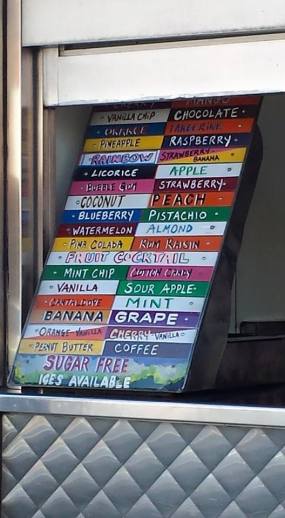
The Lemon Ice King of Corona offers flavored ice. Would you like to have some ice cream or a shake too? Too bad. The Lemon Ice King has a lot of flavors to choose from (but won’t mix them).
My wife went and stood in line while I found a place to temporarily park the truck and wait. Our babies were sleeping after a long day at the zoo (a long day for a 15-month-old can be about two hours when you let them walk most of the way). The line was long but moved quickly and my wife soon returned with our ices. I went with the classic lemon flavor and my wife had strawberry banana that had pieces of real strawberry in it. Our babies got nothing; you snooze, you lose, girls.
I ate my first lemon ice of the year sitting in my truck parked in front of a fire hydrant. I powered through the large lemon ice, pausing only to wait out some brain freeze. It felt like I was starting the New York summer on the right foot.
One place I feel I should mention is Uncle Louie G, which operates a chain of stores in the five boroughs and Long Island. They have some of the best ices you’ll ever eat as well, but they also have regular ice cream.
Either way, it is going to be a long, hot summer (it always is in New York City), so don’t forget to treat yourself to a refreshing ice.
A Bronx Zoo Tale

The Bronx Zoo is not on everyone’s to-do list but should be. No year in New York City is complete without at least one long visit to this great zoo, which insists on calling itself the Wildlife Conservation Society.
The Wildlife Conservation Society has a Run for the Wild 5K run/walk every year to help raise money for its conservation efforts. Each year has the theme for some endangered animal and this year it was gorillas. In the past it was fun to run the 5k and then spend the day at the zoo. Nowadays the wife and I walk the 5k with our babies in a jogging stroller and then spend as much time as possible at the zoo until our offspring become too tired and cranky to make the zoo pleasant.
So it was a fun family trip to the zoo and we of course got there much later than we expected. We parked in a field farther away from the starting line of the 5K than we had hoped but in the process of finding our way to the 5K starting line, we happened to walk on the Mitsubishi Riverwalk, a nature walk with a lot of informative displays about local wildlife. It opened in 2004 and totally free and open to the public every day.
It’s a rarer thing to find stuff to do in New York that is both family-friendly and free. It was nice to see waterfalls and woodlands and know that you are in the Bronx.
We did a brisk walk for the 5K though there were lots of slow-moving people, parents and grandparents seriously lacking in stroller-parking etiquette, and mobs of people stopping to gawk at the animals.
We still finished the 5K walk in good time (I assume, who really gives a shit) and we collected our prizes, which included stuffed gorillas for our girls. Then we began traversing the zoo and seeing as much as we could while letting our 15-month old girls walk. Walking with them while also steering a double-wide jogging stroller is a new and unique challenge. It is like other parenthood skills in that you will master it just in time to not need it anymore.
The Bronx Zoo now kind of nickel-and-dimes you at every turn though. Lots of the cool exhibits cost an extra three or four dollars, which can all add up if you want to see the more popular animals. We were lucky in that we got a zoo membership as a gift, but also running the 5K gets you discounts during your zoo trip.
There were long lines at the World of Asia Monorail line, and you get to know people waiting in line just because your kids are interacting with one another and you have to be minimally sociable. A couple of parents with very well-painted faces were asked a half dozen times where they had their faces painted. A bald father with tattoos on his head berated his children and joking (I hope) offered to exchange his daughters for ours, although his daughters weren’t behaving badly at all. An Asian grandfather in the family ahead of us shot me a look of insulting contempt every time my crankier daughter cried and fussed. I hope my devil baby put his panties in a bunch. Full disclosure: his infant grandson was an absolute angel.
For all her fussing, my older daughter became quiet and seemed to be enjoying seeing the animals on the monorail, but that was because she fell asleep. That was our signal to head home after the monorail ride.
Luckily we got to swing by the bison on our way out. After viewing animals from every corner of the globe, it feels right to visit the bison, the great and very American animal that we have here in our own land. They are not native to New York, of course, but I vow that one day I will travel west and see buffalo in the wild. Until then I will be happy to conclude my Bronx Zoo visits with them.
New York Means Expected Excellence
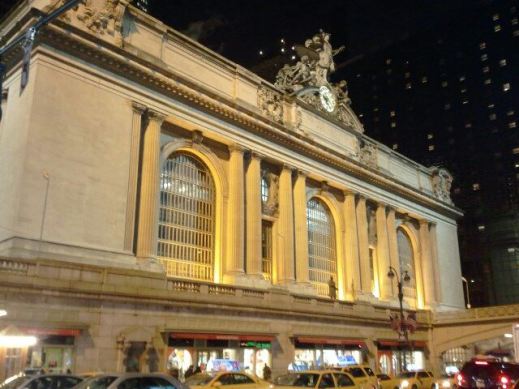
A recent report from the New York City Comptroller found that New Yorkers work the longest weeks and have the longest average commutes in the U.S. What makes the report so disturbing is that the two top cities with the longest commute times: New York and San Francisco, are cities that have some of the most extensive public transportation infrastructures.
And not only do New Yorkers have long commute times for the many millions who live outside the five boroughs and commute in every day, New York City residents who live and work in the city have long commute times.
I am one of those New York City residents that have a long commute. I live 12 miles from where I work. Google Maps tells me it takes 24 minutes to drive that distance without traffic. It takes me over an hour to get to my office each day even when things are running properly (which is rarely).
New Yorkers tolerate these long commutes (which are getting worse and more expensive at the same time) not because we are suckers for punishment but because New York is worth it.
We expect a certain level of excellence in New York. Things that are acceptable or even considered excellent in other parts of the country just don’t make the cut here. That’s not being snobby or cruel, it’s just the cold hard truth. New York excels at smashing people in the face with cold hard truth at every opportunity.
I definitely notice that borderline New York snobbery creeping up on me in certain circumstances, especially at restaurants when I’m traveling. I’ve been to enough good restaurants in New York that when I go outside the city and stuff just isn’t right I notice right away. I know I wouldn’t have noticed if I had been living elsewhere.
The reputation for New Yorkers as being rude is tired and not entirely true. There are plenty of rude people in the city, absolutely, but what many people take for rudeness is actually just a brusque sense of not having time to waste. As the numbers show, New Yorkers are in a hurry and have less time to dawdle. That’s a testament to people being at the top of their game and playing for keeps.
There are reasons the city is teeming with people, many of whom were born elsewhere. It’s because New York is a symbol of the very top of everything: music, art, culture, dining, literature, you name it. If you can make it here, you can make it anywhere—the adage holds as true today as it ever did. Our homeless are even better than other cities if for no other reason than they have to be smart enough to survive the cold weather and that weeds out the extremely feeble-minded.
And, while it certainly is not justified, city residents almost always feel a twinge of schadenfreude when a friend or acquaintance leaves the five boroughs. Just the act of staying and surviving in the city gives you a feeling of accomplishment all on its own, no matter how dreary the circumstances of your life might be. That can be a destructive attitude as well – staying in one place at all costs just to prove a point can be just as harmful as habitually moving all the time. No other city carries that same emotional baggage with it. No one pats themselves on the back for eking out a living in Jacksonville, Florida.
Which is why the public transit system is going to have to change. It has never run well and it has run with minimal competence for decades. This latest report by the New York City Comptroller illustrates in raw numbers the fact that New York’s transit system is operating far below New York standards.
The latest data is proof that New Yorkers are getting the shaft (again) from our own transit system. The silver lining is that New York is too good a city to let this slight go unchanged.
Brooklyn Isn’t Safe for Rock & Roll
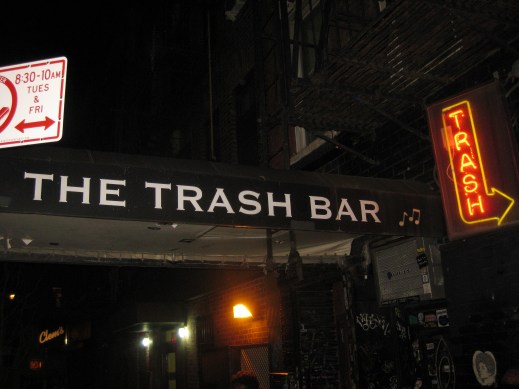
Last Friday, my band Blackout Shoppers was fortunate enough to be one of several bands to play for the last time at The Trash Bar. A great music venue, The Trash Bar has been a great place to see a show. They have a great sound system and manage to bring a wide array of music there.
Trash Bar is the kind of live music venue that used to thrive in Manhattan, and now it’s found itself priced out of Williamsburg. It’s the latest victim of the city’s own success and Brooklyn’s transformation from downtrodden borough to one of the most expensive places in the world to live.
The Williamsburg section of Brooklyn used to be a bad place. Frank Serpico was shot not far from the Williamsburg Bridge. Apartments in that building are now listed for sale at up to $1 million.
Williamsburg is where young artistic types began moving to at the end of the last century because space was cheap and the area was close to Manhattan. But creative young people can’t afford to live in the popular parts of Brooklyn anymore. The kind of people more likely to move to these areas now are wealthy people who had traditionally occupied the more upscale parts of Manhattan. A recent episode from the TV show Broad City captured this perfectly. One of the show’s main characters is chatting with three high-priced lawyers. They all tell her that they currently live in Murray Hill (a high-priced part of Manhattan) but that they are all moving to Williamsburg.
It follows a familiar pattern, a pattern we saw in the East Village and Lower East Side of Manhattan: A run-down area attracts enthusiastic artists and musicians because living is cheap. Those artists make the area desirable, which raises property values. Those property values drive away the artists and their venues that began the rejuvenation.
While it was the place that music venues fled to when Manhattan became too overpriced, Williamsburg is losing the art and music that made it attractive.
Bushwick has become the new Williamsburg, although the pace of gentrification seems to speed up in some respects. Prices on apartments start to rise in advance of the vanguard of gentrification that makes a neighborhood safe. Williamsburg has been relatively safe for a while now, but Bushwick is still more dangerous with higher crime.
This kind of gentrification has been going in the city for years. Since the time of the Dutch settlers, this has been a city in flux. Nothing stays for too long. The churn of commerce and change is constant. The city wouldn’t thrive otherwise.
It’s true that the city is losing some of its trademark characteristics and grit. No doubt part of Big Apple lore is lost forever. It’s not all bad though. I’m glad I can walk down the Bowery without being afraid for my life, though I’m sad that there aren’t as many music venues there.
Williamsburg been overpriced for years, but I didn’t think that Trash Bar would get priced out of existence in a decade. It brought in big crowds and even catered to the obnoxious yuppies and hipsters with some of its live music and its karaoke. The show we played Friday night was well attended. The bands played great and it sounded excellent. Everyone left it all on stage and we walked out with our heads held high.
And that’s all you can do as a New Yorker. Change is never going to stop, so don’t let it stop you. There will be new places to make and see music. The pioneer spirit that brought the Dutch to the New World and brought rock clubs to formerly desolate and dangerous parts of the city can’t be killed off, it’s just moving to a new neighborhood.
The MTA Has Snow Excuses
The Metropolitan Transit Authority (MTA) is the blessing and the curse of life in New York. Our transit system makes the city a livable place considering its population density. If everyone who works in New York City drove to work, we would be in a state of surreal permanent gridlock.
What the city has seen over the last several weeks has been the MTA at its worse. While the weather has been cold with a lot of snow and ice, nothing we’ve seen this winter is without precedent. It snows in the Northeastern United States. A winter without ice and snow is a rarity. We can understand a lot of traffic delays in the ice and snow, but the train lines should not seize up the way they have over the last several weeks.
We can’t blame the city and state for the steps they took in the face of the January 26 blizzard. The authorities have to go with what the weather forecasters say and err on the side of caution. The forecasts were dire and while the storm didn’t amount to the “snowpacalypse” that was predicted, better safe than sorry. I managed to catch one of the last express trains anywhere in the system on the afternoon of the 26th apparently. The city banned all but emergency transit, including car traffic, after 11 p.m. that night.
Where I live in Queens, on Union Street in Flushing near where it becomes Willets Point Boulevard, is usually a heavily trafficked street. It is close to the Whitestone Bridge, near a shopping center and along three or four city bus routes. Even in the quiet of the early morning hours, it is usual to see regular traffic on the road. The night of January 26th saw the streets deserted in a very strange yet beautiful snowscape. I walked right up the middle of the street and stood right in the middle of the usually busy intersection of Willets Point Boulevard and Parsons Boulevard and so no cars moving anywhere. I did see two cars driving during the time I was outside, whether they were violating the travel ban or were emergency workers I couldn’t tell. They were civilian cars risking a fine and having an accident on roads that were by then heavily snowed and sparsely plowed.
But while the travel bans were quickly lifted, the transit system is still seizing up at the slightest hint of bad weather. The MTA operates in New York City with maddening inefficiency and malfunction. Commuters’ hearts regularly break when they arrive on their train’s platform to find it mobbed with people trying to board much-delayed trains.
I must take two of the most congested and delay-prone lines in the system: the 7 train and the 6 train.
The 7 train is actually among the higher-rated train lines by the Straphangers Campaign, which is a commentary on the MTA. The 7 train can only handle express service in one direction at a time, and that express service is often canceled or delayed. Every train is standing-room only when it leaves the Flushing-Main Street stop on weekday mornings. Trains on the 7 local line often pull into local stations so packed that no one can get on them. People try to push on anyway, passengers argue, and trains are delayed further. Conductors make obnoxious announcements blaming passengers for the delays the MTA caused.
During one of the more recent abominable mass delays on the 7 line, an umbrella on the tracks caused the entire line to go into mass chaos. An umbrella. I’m sorry, but if the worst thing that falls onto the tracks in a day in an umbrella, we should be lucky. Unless this was some kind of James Bond-type bomb umbrella that Al Qaeda managed to toss onto the tracks, there is no excuse for this. A neighbor of mine was stuck on a 7 train with no heat for two and a half hours.
And it’s not just the 7 line. That same evening almost all of the subway lines were facing massive delays. Other rail systems like the LIRR and Metro North were delayed as well.
This recent winter weather should not have wrecked our transit system, but it did. New York is in need of a massive transit overhaul. We can’t shut down at the first sign of snow.
New York at Christmas Time
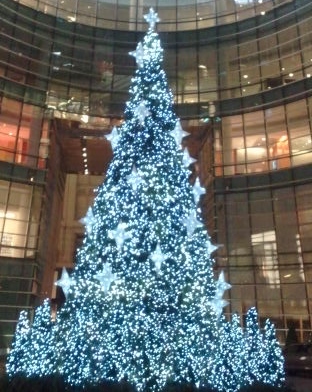
The holidays are a time when many of us are reluctantly pushed into public places to go through the motions about being happy about the holidays. Sometimes the very happiness of the holidays are mocking and angering. Sometimes the very image of others’ happiness is a slap in the face, and the holidays give other people’s happiness a particularly cold sting.
There’s no reason for the holidays this year to be any different. A cursory glance at the world at large doesn’t give the impression that there is much to celebrate.
It is my goal again this year, as in previous years, to not go into a single store to buy a Christmas present. I would rather be an antisocial Grinch and do all of my shopping online.
I get enough of the horrendously-behaved crowds in my everyday life. The holidays are a time to reflect on the blessing we have. While living in New York City is one of those blessings, living cheek-by-jowl with millions of other human beings is not. It’s an odd conundrum: We love New York, which wouldn’t be what it is without all of its people, yet a good many of those people are detestable.
But what else are we to do? We can’t live life as disgruntled hermits. We are social creatures and the people who are successful in living outside of society don’t live very good lives.
And besides, New York is beautiful around the holidays. Even the most jaded New Yorker can appreciate how beautiful things can become around this time of year. I embrace the “bah-humbug” aspect of the holidays in every way possible, and even I feel pangs of civic pride to see our city landmarks decked out in their holiday finery.
Here are five things you can do to experience New York City at its Christmastime best:
Gingerbread Lane at the New York Hall of Science consists of record-breaking gingerbread houses and you even get a chance to take home some of the gingerbread once the holidays are over. And the New York Hall of Science is a good place to escape to from the holiday scrum of Manhattan. It is in Queens, the greatest and most American New York City borough.
The Holiday Train Show at the New York Botanical Garden has been running for over 20 years and runs until January 19. It features trains that run through beautiful models of some of New York’s greatest landmarks. The models are all made from plants. It’s like a New York-centric Rose Bowl Parade that doesn’t suck. It’s in The Bronx, and if you take some time to stroll through the Botanical Gardens, you will be amazed that you’re in a big city. It will be much less crowded after the holidays.
The Grand Central Terminal holiday light show is going to be crowded. Grand Central Terminal is always horribly crowded but it’s so beautiful that it’s worth it. The holiday light show will make you glad you went there.
Free reading of A Christmas Carol at Housing Works Bookstore Café. More than two dozen writers take turns reading from the Charles Dickens classic at this event. The book store raises money for Housing Works, an AIDS charity. Some free literature will make you feel better about yourself over the holidays.
Time Warner Center’s Holiday Under the Stars is a display of large lighted stars at the Time Warner Center’s large great room and are specially lit in a display that is set to music. The Time Warner Center does not have much to offer the non-millionaire shopper, so here is a chance to enjoy some nice holiday spirit at the center’s expense and maybe avoid some of the horrific crowds that clog other venues.
Holiday markets also abound. Union Square has one, as does Bryant Park, Grand Central Terminal and Columbus Circle. Here is your chance to buy last minute Christmas things or feel OK about doing some real retail non-online shopping this year. These may be crowded but there are enough of them and these are large enough that you should be able to find a nice place to shop among these many markets. They also usually feature local artists selling their work.
Whatever you do, get out there and see the holiday sights. Even if you hate the holidays and want to piss on everyone’s parade, it only counts if you do so in person.
Our Divided City

As we head into the holidays, New York is a city divided. It has always been a place of vigorous debate and contested policies, but the latest controversy over race and policing has dialed up the vitriol and indicates a further departure from civilized debate.
The past summer Eric Garner, a black man on Staten Island died in police custody after being arrested for selling loose cigarettes. A video of his arrest and scuffle with police was widely broadcast. A grand jury declined to indict the police involved in his arrest and the finding was met with instant and widespread protests throughout the city.
Some of my friends are out on the streets getting arrested or leading protests against the police. Some of my friends are in law enforcement or are retired cops who question the motives and the tactics of the protesters.
The Eric Garner grand jury findings came only a few days after a grand jury in Ferguson, Missouri declined to indict a white police officer for the shooting of a black teenager there. In Missouri, the grand jury’s decision not to indict the officer in the shooting of Michael Brown has resulted in several nights of looting and rioting and at least one blatant and under-reported racial killing.
The question is whether protests are going to hobble travel too much. The police are determined not to let that happen, but when thousands and thousands of people take to the streets at once, it’s usually the best the cops can do to try to steer them in a direction that doesn’t clog things up too much.
New York has had its race riots in the past but is less likely to have them today despite being one of the many epicenters in the country for racial disharmony. While we have the same constant churn of racial and ethnic distrust and ill will as the rest of the country, we don’t have the critical mass of complete hopelessness and depravity in large areas that usually act as a crucible for riots. And while our population of professional protesters helps promote a climate of racial grievance, it also knows it has to keep things from getting too violent if it wants to stay in business.
There used to be a gentlemen’s agreement between police and protesters. Years ago, protesters would sometimes block streets or buildings and get arrested. They wouldn’t get too aggressive and the police in turn would process their arrests on the spot and then let them go. Under Giuliani that changed. Police started putting protesters through the system, which can often mean a night in jail or at least several long hours in a police holding cell. Mayor Bloomberg generally kept to those policies.
I urge protesters not to attempt to stop the subways and busses from running; however just you think your cause is, when you throw a monkey wrench into the fragile works of the New York City mass transit system, you are playing with fire. Hell hath no fury like a New York City commuter purposely delayed.
The protests will continue and no minds will be changed by them. The divisions that existed before these latest incidents will remain and people’s views will only be intensified by what they see as the excesses or the ignorance of the opposition.
Back in Skel Country
Circumstances have smiled upon me and I found myself with new and more gainful employment. I made the move from journalism to “the dark side” of public relations. My days are still filled trying to understand the minutia of financial terms and technological jargon, I’m just writing for a different audience.
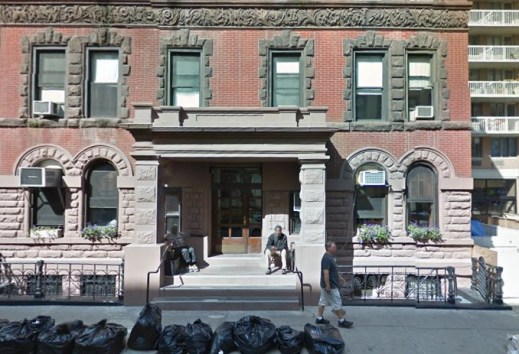
The new job is a shorter commute and is in the Flatiron district of New York. It’s less than two blocks from Madison Square Park and only one block away from the 6 train. The office is in a small building on 24th Street. It’s convenient to both a 7-Eleven and a deli, and near a Baruch College building.
The new office is also only a few doors down from some kind of halfway house or rehab center. There’s no sign on the building indicating this, and a cursory web search of the address revealed nothing about its current use. You can tell what it is by the people who congregate outside and can be seen coming and going. Even before I discovered its location, I knew there was some sort of facility in the area because of the skels I would see on the street.
Skel is an antiquated term meaning street criminal but it’s a catch-all word that is used to include any kind of troubled sort given to criminality, and the homeless and mentally ill seemingly fit into this category.
It’s easy to pick out the skels on the street. They are dirty and wrinkled. They are not homeless-level dirty and don’t have the mile-away stink that typical street bums do. They do not carry around excessive luggage or tons of crap in shopping carts; they have a place to live. But street people have a way of standing out, at least in today’s less crime-ridden city. Twenty years ago things were different and many parts of the city were blanketed with homeless and other skels. Today Manhattan does not have too many poverty pastures. There’s still plenty of poor people in New York, but the space allowed for skels has diminished significantly.
When I worked in the lower part of midtown Manhattan about 12 years ago, the area was populated with a lot of street people. There was a methadone clinic across the street from the building where I worked and some kind of halfway house was not far either. One time I was on my way out of a Duane Reade drug store after buying a few things when a man and woman rushed up to the counter. The man was holding a $10 bill.
“I need change right away! I have to pay the taxi!”
“They’re going to send him to jail if he doesn’t pay!” his female companion said.
The clerks behind the counter shook their heads lazily.
There was no cab outside with an angry driver waiting.
Another time I was walking around on my lunch break and I saw a two men approach a man from behind, one flashed a badge and the two plainclothes cops took the man by the arms and pinned him against the building where I worked.
“Where’s the weed?” one of the cops asked him. I didn’t bother to stick around to see how this encounter ended. When I returned from my lunch break, they were gone.
There is both a Taco Bell and a White Castle on that block of 8th Ave. and 36th Street, which is heavenly unless you are so poor you really can’t afford either. I was coming off of more than a year of unemployment and I was so poor that my lunch sometimes consisted of the free snacks that the failing company offered. Still, the kinds of human abominations that frequented the area were seemingly from a different era. A woman complained to her friends about not getting what she needed from the methadone clinic. Random skels shouted their opinions for the world to hear.
Despite the improved conditions in the Big Apple over the last 20-plus years, New York is still famous for its seedy element. Before it was populated with fancy hotels and trendy restaurants, The Bowery was famous for its many flop houses, where people paid low rent to live in rooms no bigger than a jail cell. It was a world-famous refuge for drunks, drug addicts and criminals and there are still some homeless charities left on The Bowery, which is also known for its stores that providing lighting and restaurant supplies.
The residents of the nearby halfway house are easy to spot. They are dirty and disheveled. But even if you cleaned them up and dressed them in tuxedos and ball gowns, they would still stand out because they’ve acquired such gaunt features and acquired the mannerisms of the permanently destitute.
People often wear their desperation outwardly, and for the lifelong criminal and drug addict these are impossible to hide. Despite all of their efforts, you can hear the junkie quavering in their voice, sense the hurting shiftiness in their eyes, and know to avoid them.
Sometimes you can get fooled, but not for long. One time a man in a suit waved to me and held out his hand to shake mine. He looked a lot like someone I knew so I assumed I knew him and that I had forgotten his name, which I do all the time. Once he started talking though, he started blathering on about his wife being somewhere and he needed money for a cab etc. Damn, I got suckered into listening to a panhandler. I didn’t give him any money but felt like a sucker anyway.
No matter how real or sincerely someone may seem, you’re a damn fool if you give one cent to a panhandler. Even the most bleeding-hearted skel lover admits that the overwhelming majority of money you give to panhandlers goes to purchasing drugs and/or alcohol.
For some reason we allow people to live worse than animals on the streets and subways. If a dog looked and smelled like that, they’d be taken away and given shelter. Somehow it’s deemed liberating to watch people wallow in their own filth, but there’s nothing progressive or enlightening about it at all.
Eventually gentrification will continue and the city and private charities will realize they can generate more revenue for their cause by selling the valuable real estate they hold in Manhattan and move their services to less expensive neighborhoods.
There’s a belief among many artists and poets that the destitute and poor some kind of unique insight or soulful legitimacy. Since they are not blessed with American success they are not cursed by it, or so the logic goes. But you’ll find that most bums on the street are just that: bums. They’re every bit as shallow and ignorant as the douchebag financier or the fashionable hipsters we love to hate.
The world will never be rid of street people. New York’s dwindling clans of them are still around, but their roaming grounds have been sharply reduced and can’t support as large a population.
Avoiding the Poison of Excessive Nostalgia

The once-celebrated East Village bar the Yaffa Café announced that it is closing its doors for good. It was initially shut down in September by the Department of Health for health violations. The coverage sent up its standard lament; another “iconic” landmark crushed by cruel fate.
It’s a familiar pattern now. A well-known music venue, bar or restaurant announced its closing and there’s a chorus of objection to it, a scolding clucking about how shameful it is and how the city isn’t what it used to be. But this is a pattern that’s been going on since the 1600s.
Many friends and colleagues are correct when they say that small businesses closing represents a danger to the soul of New York. But let’s also remember that constant change and reinvention is also a part of the soul of New York.
While we ought to make sure small businesses have a fighting chance, we also must be careful not to fall victim to the poison of excessive nostalgia.
Nostalgia is deadly because it leaves people to believe that the best part of their lives are behind them. I don’t care if your eight or 80, if you’re not looking forward to something in the future, you’re not really living life. The promise of something in the future is what keeps people alive.
If any place can’t maintain its relevance for its ever-changing clientele, then it’s simply running on the fumes of nostalgia. The fumes of nostalgia may start off smelling sweet, but are composed of an underlying rot.
New York exists in its current form today because it is unforgiving and values nostalgia very little. The constant churn of commerce is always inquiring: ‘What have you done for me lately?’
I was among the chorus of voices that bemoaned the loss of CBGB’s seven years ago. The famous club helped birth punk rock and when I played there with Blackout Shoppers at our very first show in 2004, it was a dream come true. I saw many great shows there and had many good times and memories. But CBGB had not kept up with the times or even lived up to its own history. Bands who got their start there chose not to return and played other clubs in the area. The Ramones played their last New York shoes at a venue called Coney Island High, also long gone, which was a few blocks away from CBGB. The throngs of people who crowded into the club during its last days were curiosity seekers and tourists, people seeking to tap into nostalgia for its own sake, darkening its doors during its death throes so they could boast that they had been there.
So let it be with the Yaffa Café. I went there once when I was younger and I thought the place was overwrought and pretentious, and this was a time in my life when I was happy to put on airs as a hopeful young writer and therefore had a higher threshold for overwrought pretension.
Places like the Yaffa Café attract people who don’t so much want to live the life of a writer or artist as much as they want to play-act being a writer or artist. Ernest Hemingway went to the cafes of Paris because he was dead-broke and those cafes were dirt-cheap. Hemingway is celebrated today not for the time he spent time at a café but because of the time he spent at his typewriter.
I enjoy sidewalk cafes to a certain point, but squeezing my overweight frame into a tiny, crowded space so I can imagine I’m F. Scott Fitzgerald is a ridiculous idea. A writer or artist is too busy writing or making art to invest a lot of time on nostalgia.
The White Castle in Williamsburg has done a greater public good than the Yaffa Café in my opinion. Its demise is the one that ought to be mourned. I’ll indeed miss filling up on delicious White Castle burgers when I am in Williamsburg, but I can’t begrudge the decision by the owners to sell the place. They knew that they’d make more money selling the land to condo developers than they’d make selling burgers, and it followed that it made more sense. It’s a for-profit business; they weren’t giving away burgers for free.
I’m sure the Yaffa Café had its strong points. If I remember correctly the coffee wasn’t half bad. But the past is littered with better businesses that could not stand the test of time. Let them all rest in peace.
The Horror That Is The 7 Train
Speaking in 1999, Atlanta Braves pitcher John Rocker said the following about New York City:
“Imagine having to take the 7 Train to the ballpark looking like you’re riding through Beirut next to some kid with purple hair, next to some queer with AIDS, right next to some dude who just got out of jail for the fourth time, right next to some 20-year-old mom with four kids. It’s depressing…”
Saturday Night Live’s Colin Quinn, doing the weekly news spot, said this about Rocker: “He might be a bigot, but he’s definitely been on the 7 train.”
Despite all the romantic notions you may have in your head about New York, there are some traditional New York experiences that are never pleasant no matter how much you romanticize them. Being mugged is never fun; neither is stepping in dog shit or having to smell a homeless person.
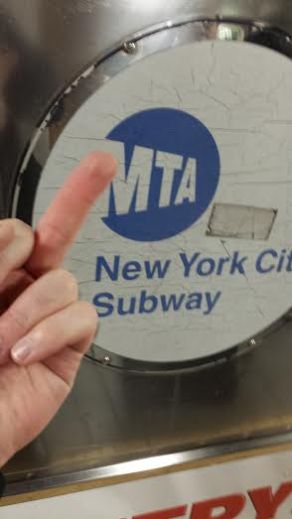
Another old New York tradition that is no fun is the 7 train. The 7 train is a human cattle car of endless misery and inconvenience. It perfectly combines all the incompetence of New York’s Metropolitan Transit Authority with the rancid overpopulation of our city that makes New York the cultural calling card of the dying American empire.
I live in Flushing, Queens and work in lower Manhattan. I have an hour-and-15-minute commute each way when things go well, but things rarely go well. I take a bus to downtown Main Street Flushing, which has a crowd density similar to that of Times Square, and board a 7 train that takes me to Grand Central, where I take either the 4 or 5 train (also no joy) to the Bowling Green station near where I work.
Today I managed to get down the overcrowded stairs to the train platform only to miss the closing doors of a not-very-crowded 7 train by seconds. The next express train arrived soon but sat on the platform for 10 minutes and didn’t leave the station until it was wall-to-wall people.
Sometimes the 7 train likes to quit on you and dump all of its passengers out a random stop. “This train is out of service! No passengers!” the conductor will announce. Sometimes the express 7 train decides to go local, sometimes without telling its passengers until they’re at a stop they didn’t plan on making. On the weekends, the 7 train doesn’t run any express trains at all and often will have large service gaps that will leave its passengers scrambling to shuttle busses or trying to find alternate trains to take.
In September, when the U.S. Open is happening at the U.S. Tennis Center, the 7 train is flooded with tennis fans who are clueless as to where they are going and completely unschooled in subway etiquette. Sometimes a perfect storm of passenger clusterfuck will happen and you’ll have Mets fans and U.S. Open fans cramming the same trains heading to the Willets Point station.
The 7 train will often stop service entirely or delay service torturously or decided it doesn’t want to run express trains at the height of rush hour. Often the reason the MTA gives passengers for this is “signal problems.” One winter I asked an MTA worker on the platform why express service was abruptly canceled and he answered, “It’s cold outside, sir.”
I don’t bother trying to get a seat on the 7 train. Those are the dominion of sharp-elbowed Asian women who push their way onto the trains before the unfortunate souls who have to commute to Flushing can exit. I actually prefer to stand. I’ll actually have more room standing and the ride isn’t that long. Besides, I sit on my ass for eight hours at work. I usually try to position myself directly between two car doors in the center of the car, where the crush of passengers will be slightly less.
It is often standing-room only before the trains leave its first stop, but that doesn’t stop people from trying to cram themselves on to the train at later stops.
The 7 train is one of the oldest lines in the city, so its rails are close together and the cars that fit on the tracks are narrow and without as much room as other trains. It is also the only subway serving some of the most densely populated parts of the city and it terminates (for now) in Times Square.
And the 7 train is about to get worse. The geniuses who run our transit system decided it would be a good idea to cram 15 pounds of ham into this 5-pound bag instead of 10, so the 7 line is being expanded all the way to 34th Street and 11th Avenue. This means more crowding on a subway line that can barely handle what its current ridership. Joy.
There are some upsides to the 7 train. Most of it is above ground, so you can see some beautiful views of Queens and Manhattan that you won’t see from any other train line. Also, while it is regularly packed to the gills, most of the riders are working New Yorkers who are not there to cause problems; you don’t have the thug element of the A train or the hipster abominations of the L line. Because the trains are so crowded all the time, you have fewer homeless and crazies. I have never seen a “Showtime!” subway dance troupe try to ply their obnoxious trade on the 7 train.
For all its faults, the 7 line has stood the test of time, and if overcrowding doesn’t bring it crumbling to the ground this year, someone will be bitching and moaning about it 100 years from now.
Head to the New York City Woods

Summer is a traditional time to go to the beach and be near the water, and New York City has 14 miles of public beaches where you can contract skin cancer while being eaten alive by horse flies. I never understood why people would want to go to a sunny place and let the sun burn them during the hottest time of the year.
But believe it or not, New York City also has woods and you would do well to spend some time in the shade this summer. There’s something immensely satisfying about going for a walk in the woods and knowing you are still within the five boroughs of New York City.
For more than 10 years I lived in Inwood, the northernmost neighborhood in Manhattan. I was lucky enough to live right across one of the wooded sections of Inwood Hill Park, which contains the last piece of natural forest in Manhattan as well as Manhattan’s last surviving salt marsh. It is also the highest natural point of elevation in the city.
I moved into Inwood on a Saturday in the summer and the following Monday went on a jog in the park before going to work. Not familiar with the park and its paths yet, I became lost. I couldn’t believe it that I was lost in the woods in Manhattan, but I was. I eventually found my way home and wasn’t too late to work, but Inwood Hill Park remains a treasure with lots wooded paths to walk. Even on weekends in the spring and summer when the park is typically crowded, you can find some solitude in the woods.
Be careful though, there are no shortage of shady characters who know this as well, and while I was living in Inwood a young Julliard student named Sarah Fox was murdered in a wooded part of the park one afternoon while she was jogging.
Inwood Hill Park may be one of the best and most overlooked wooded parks in the city but it’s not the only place to cool off in the shade.
Now that I am in Queens, I live not far from several parks that have real woods and wooded trails.
A few weeks ago, my wife and I decided we would go to Alley Pond Park. My wife, who grew up in Queens, knew it as a place high school students would go to drink alcohol under the cover of darkness. The park is the second largest public park in Queens (Flushing Meadows Corona Park, which doesn’t have dense woodlands, is the largest).
Alley Pond Park would be difficult to reach via public transportation as it is not near any subway lines; you’d have to take the bus if you don’t have a car or can’t walk or bike there. We found a parking space in a small parking lot that looks like it overflows during busy times. We put our twin daughters in a jogging stroller and managed to navigate it through much of the wooded paths in the park. Of course, being in New York City, the paths in the park were sometimes paved and sometimes led to steep staircases that we dared not traverse with a stroller, but we were always able to turn around and find another suitable path that would let us enjoy the woods a little more.
We saw lots of birds and even a rabbit. There were plenty of mosquitoes as we got near swamp areas of the park. We came across other strollers in the woods but like Inwood Hill Park, one can achieve a certain solitude in the woods even on days that the park is crowded.
No matter what borough you reside in, there is no shortage of wooded parks in New York. It will be cooler and less crowded in the shade.
A Bridge Adventure Near 59th Street
Since four out of five New York City boroughs are on Islands, living in New York means dealing with bridges (and subway tunnels) if you want to get anywhere. Since I became a driver in New York a few years ago, I have mostly driven over the Whitestone Bridge, which is closest to my home.
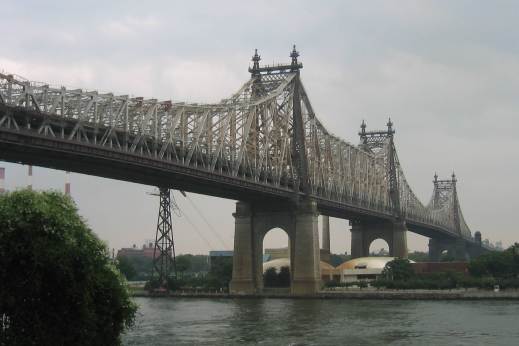
Lately the authorities have gotten into the nasty habit of adding or changing names to some of its bridges. The 59th Street Bridge was officially called the Queensboro Bridge until a few years ago when they decided to also name if after former New York City mayor Ed Koch. It’s now the Ed Koch/Queensboro Bridge. The Triborough Bridge has been renamed the RFK Bridge after Robert F. Kennedy, who was a U.S. Senator from New York when he was gunned down. This has been aggravating. I don’t want to call the Triborough the RFK Bridge. Triborough works better – it connects three boroughs and the name sums that up nicely.
The 59th Street Bridge is a depressing and aggravating bridge for drivers. It has all of the congested traffic of midtown Manhattan with the sooty industrial character of the more neglected parts of Queens. But it is free, so people will stew in hellish traffic to save themselves the $7.50 it now costs to take the Triborough Bridge. (Public policy experts note that the systems of tolls we have on bridges in New York is backward, that we should charge tolls for bridges over the East River that cause more traffic congestion and instead encourage people to use the larger, highway-connected bridges, which now charge tolls).
This past Saturday I was driving home after dropping off some good friends in midtown Manhattan. I made my way east from Times Square and seriously considered taking the Triborough home. No, I thought to myself, I must overcome my apprehension about taking the 59th Street Bridge and make a success of it this evening.
I found myself on First Avenue but did not make the first turnoff I saw for the bridge. I came upon another turn for the bridge and took it, following behind another pickup truck. I saw a sign saying that the outer roadway of the bridge was closed between 9 p.m. and 6 a.m. I thought nothing of it; I hadn’t planned on taking the outer roadway of the bridge, which I had never heard of anyway, and those signs usually referred to weekday construction.
The truck ahead of mine came to the entrance of the bridge, which was closed. It was blocked off with orange traffic barrels. The man got of his truck and just moved some of the barrels. He looked at me as he got back in his truck and his face wore the expression of someone who just did not give a fuck about closed roads. For all I knew he was an off-duty cop. I paused for a minute, not sure if I should follow this driver to a new illegally-opened section of the bridge. Fuck it, I thought. If the cops stop me then I’ll play dumb and just say I didn’t know the bridge was closed because the roadway wasn’t closed. That was technically true.
I could have been driving into a dangerous construction zone or have been tailgating some kind of undercover police operation or been intruding on some other kind of high crime or misdemeanor taking place over the East River. All of those unfortunate circumstances still sounded a lot more fun than contending with the convoluted traffic that would have been required to stay law abiding. I drove up the closed ramp of the bridge.
The outer roadway of the 59th Street Bridge (a.k.a. the Queensboro Bridge a.k.a. the Ed Koch Bridge) is one narrow late separated from the lower roadway by bridgeworks and thick concrete walls. Every once in a while there is a break in the wall and someone driving a smaller vehicle than my pickup truck could probably get away with maneuvering in and out of the lane. I was stuck on the outer roadway until the bitter end.
I drove on the closed outer roadway as quickly as I could while trying to look normal and blend in with the traffic, though there was no other traffic in my lane at all, except the daring barrel-mover, whose tail lights I could dimly make out far ahead of me. I drove on expecting the law to come bearing down on me any minute or to dead end into an impassable construction site. None of those things happened. I drove over the bridge with a paranoid mania until the regular traffic patterns of the bridge shunted me into a lane that didn’t help me get home.
The worse thing about it for someone driving home from Manhattan over it is that it is very tough to find your way when you reach the other side of the bridge. Whether you take the upper or lower roadway and what lane you take on either roadway can quickly determine your options when you reach Queens. Driving eastbound, it transports you from an anger-fueled Byzantine knot of Manhattan streets to a clustered maze of impossible roadways of Queens.
I eventually disentangled myself from whatever unappealing part of Long Island City I was in and found my way to Northern Boulevard and a more pleasant drive home.
A Night at White Castle
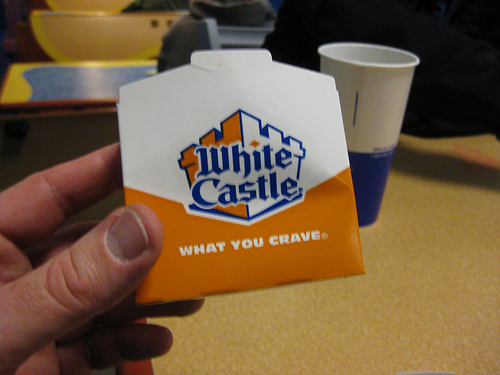 Sometimes when I am in Manhattan late, either for a work function or some other reason, I will treat myself to a meal at White Castle and a more luxurious ride home to Flushing, Queens on the Long Island Railroad. Last night was one such night.
White Castle holds a unique place in the sphere of American fast food. It is a small chain that is not widely franchised like McDonald’s or Burger King, and so enjoyed a cult status among greasy food enthusiasts long before the Harold & Kumar films brought the restaurant wider notice. It popularized “sliders” or miniature burgers that many restaurants have emulated.
The low cost of the small burgers brings lots of poor people there, and because of this and the fact that many or most White Castles are open 24 hours a day, there’s often an element of danger associated with the chain. My father grew up in the Bronx in the 1950s and 1960s and said when he was a teenager, his friends would dare one another to eat at one of the local White Castles on Fordham Road.
White Castles are mostly in the Midwest and the Northeast. New York City has at least a dozen spread throughout its boroughs, but only two listed in Manhattan. The more centrally-located one is the one on 8th Avenue between 36th Street and 37th Street. This is very close to Penn Station and a moderate walking distance from Times Square by current American standards. And this part of the city is where many of the seedier elements that were once comfortable in Times Square have been chased. I had come from a fancy restaurant where I had gone for an event for work, and after chatting pleasantly over fine finger foods for a few hours I needed some balance. So there I was.
Entering this White Castle, I saw that there was a man in a wheelchair who was slumped over one of the side counters, passed out. He had the dirty appearance and slumped look of a vagrant, but luckily didn’t smell as bad as he looked. A few people stood near the counter waiting for their food, and a few diners sat in the small booths.
I placed my order and noticed a couple by the soda machines having an animated conversation. After several attempts, the man finally extricated himself from the conversation and bid the woman a hopeful farewell. With the man gone, the women kept up her end of the conversation with no one and everyone. She noted that she had warned people about other people and made good on her commitments to things, as much as I could gather.
While I was waiting for my food, the staff at White Castle decided that the man in the wheelchair had been passed out on the side counter long enough and that it was time for him to go. Staff at the White Castle are usually friendlier and more competent than their counterparts at other fast food places. Maybe they pay better or maybe they have better or more interesting clients. Anyway, the White Castle worker very gently started to move the man in the wheelchair, who woke up and started making noise.
“Beep! Beep! Beep! Beep!” The guy in the wheelchair was making noises like a truck backing up as his wheelchair was moved back. “Beep! Beep! Beep! Beep!”
Once he saw he was headed for the door and out of the restaurant. He began to protest. “Hey! Hey! Hello!? Hello!?”
At this point, we heard from the disembodied voice of White Castle’s remote security. They monitor White Castles through security cameras at remote locations and will sometimes remind you that they are watching and recording all proceedings. One time at this White Castle a man was there with Wendy’s food and the voice told him to leave and threatened to call the police. He didn’t leave.
Now though, the voice wanted to remind the wheelchair guy that they were there. “This is White Castle security monitoring, recording all proceedings at this location,” said the voice over the public address system. “All proceedings are being recorded by White Castle security.”
A helpful customer ran ahead and opened the door for the man in the wheelchair, who mumbled and complained until he was outside on the sidewalk. He later recruited a departing customer to push him around and I saw them going up and down 8th Avenue.
After a wait I got my food and sat watching people walk by outside. Every once in a while someone will do the White Castle Peek, the act of carefully looking inside the White Castle to see if it’s safe enough to go inside. One nervous woman doing this decided to come in and order food, but she never lost her nervous demeanor. She moved around frequently as if to throw off the chances of some unseen assassin ready to shoot at her from somewhere outside.
I sat in a small booth, methodically making my way through my too-large order of burgers. I had an outside soda on the seat next to me, lest the disembodied voice of White Castle security call me out on it and tell me to leave or buy a soda from White Castle (White Castle offers Diet Coke, which tastes like ass; I smuggle in some Diet Pepsi for taste and sanity).
I finished my meal, threw away my garbage, and headed out the door. On my way out a staff member wished me a good night and I wished her the same, a rare moment of fast food camaraderie not available most places. I walked on into the New York night, sated and satisfied.
The U.S. Open is Dumb and Depressing
 The U.S. Open is getting underway not far from where I live in Queens, and it means that life for some subway commuters is going to get more difficult for the next few weeks.
There’s not much of a reason to watch tennis except to gawk at women in short skirts, and you can do that anywhere for free. I’m sure for fans of the sport in New York, the Open is a great opportunity to see some great masters of the game up close, but it’s not an interesting enough game for the price you pay. You can watch it on TV for free.
What the U.S. Open does for the many riders of the 7 train is flood our already overburdened subway with gaggles of U.S. Open attendees who do not know how to ride the subway.
I’m sure you’re thinking, ‘Riding a subway is easy. How can someone mess that up?’ Well, they manage. The tennis fans headed to the U.S. Open are easy to spot on the 7 train. Whereas the afternoon and evening 7 train is usually filled with haggard working people tired after a day at work and quietly waiting to get home, the tennis fans move as gaggles of cheery chatterboxes, filling the air with their inane conversations.
Tennis fans have every right to their inanity of course, but they are thoroughly unversed in the concepts of being courteous to others in a public space. Riding the subway is a quaint slumming experience for them, and their mannerisms betray them at every turn. They constantly lean on subway polls or spread out over spaces meant to accommodate several people. They constantly delay trains by hesitatingly getting on and off of a subway as they are unsure if they are on the right train or at the right stop.
On Main Street, Flushing the other day, I made my way to the subway for the second leg of my three-leg commute to work. A pair of older gentlemen made their way down the sidewalk among the throngs of Asian immigrants. They wore overpriced athletic gear though they looked like they had not exercised in years. One of them was bald but had hair around the edges of his head, and that hair had been dyed the color of a tennis ball.
Something about the soul-deadening luxury of the event and the blank eyes of many of the tennis fans that makes me vow that if I ever have enough money to attend the U.S. Open, I still won’t. I’d rather not be among people who can’t figure out how to use public transportation.
 Matthew Sheahan
Recent Comments