
Second acts are American lives

“There are no second acts in American lives.”
- F. Scott Fitzgerald
Fitzgerald scholars are rightly irked that the line about no second acts in American lives is often quoted by itself and attributed to “The Last Tycoon.” The line was first used in a 1932 essay titled “My Lost City,” which documents the resilience of New York in the aftermath of the stock market collapse that helped launch the Great Depression.
The original Fitzgerald quote from “My Lost City” is:
“I once thought that there were not second acts in American lives, but there was certainly to be a second act to New York’s boom days.”
Fitzgerald’s own life contradicted the idea that there are no opportunities for renewal in America.
He was preparing to dominate his own life’s second act when he died at the age of 44. And true to his 1932 essay, New York has shown its resilience multiple times and survived more crises and disasters in the decades since 1929.
Fitzgerald is one of the giants of American literature. While his writing celebrates the Jazz Age and the promise of American prosperity, it also pulls back the curtain on the dark side of the American dream. His most celebrated work, “The Great Gatsby,” is a great example of the ability to make a new life for yourself, but also the pitfalls and dangers of the heedless pursuit and indulgences of wealth.
Jay Gatsby’s material success is undermined by his need to be something he is not. He cannot accept that the material rewards of his life are not the trappings of noble lineage. In America, we don’t care who your father was. We care about what you can do now, not what someone in your family tree did 100 years ago. That’s the essence of the American experiment—be judged by what you do and where you are going, not where you came from.
America was founded on the premise of second acts. From New England’s pilgrims to the hardscrabble pioneers who settled the American West, our country is one big series of second acts and new beginnings. Second acts are as American as a bald eagle eating apple pie.
I find encouragement in this as I look for a new job. I have been out of work for several months and have cast a much wider net than in previous searches. I no longer feel the need to go back to the same industry or seek the same salary. I’m old enough that I can be honest with myself about the things I would like to do and prioritize things that will lead me to enjoy the everyday more than how things read on a resume. This is well beyond my second act, and I’ve lost count of the new beginnings I’ve had to carve out. But that’s no matter. It is never too late to start again or become something new.
This year, as the United States celebrates the 250th anniversary of its founding, remember that our country was born from one of the bravest second acts in world history.
And remember that second acts are rewarding to the extent that they allow you to be who you really are, and not what others expect of you. Part of having a successful second act in life means not caring about what others think. Your life exists to make you and your loved ones happy.
Here’s to second acts in American lives—one of the things that makes America great.
Snowbound NYC feels the filth of winter
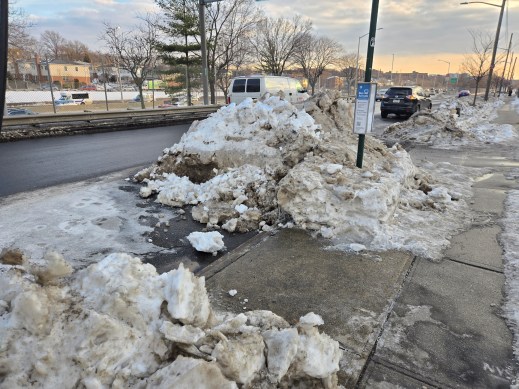
The Northeastern U.S. has become accustomed to mild winters over the last decade. Prior to the latest snow blizzard that pummeled much of the country, online newsreels were commemorating the 30th anniversary of the blizzard of 1996. Now we have a new milestone to mark in the history of the five boroughs’ struggles with snow.
The Northeastern U.S. had weeks of below-freezing temperatures immediately following an exceptionally large snowstorm. The usual melt that happens in the days after a storm hasn’t happened. I can’t remember any time in my life that so much snow sat around for so long afterwards.
While the roads may be cleared in theory, large snowbanks have turned two-lane streets into one-lane streets. Slippery snow and ice patches make driving in the city more dangerous than usual.
The sidewalks and crosswalks are in an even more dismal state. Plows push large quantities of snow into icy walls that solidify into chunky walls of hard-packed ice and snow.
The city’s Department of Sanitation continued to plow the same roads and did little or nothing about freeing up sidewalks, bus stops, and crosswalks. I recently stood behind a plow wall at a bus stop and watched a snow plow drop loads of salt on an already dry road while piles of filthy, frozen snow sat nearby untouched.
Even with the understanding that this was an unprecedented storm, the city’s response rates poorly. Long stretches of sidewalk, including those abutting public parks and city-run spaces, remain largely inaccessible weeks later, thin paths cut by the feet of harried pedestrians the only things working to clear any walking space.
Snow makes New York City look beautiful for about three hours. Snow in NYC quickly turns into a mosaic of street and sidewalk filth, collecting dog urine, car exhaust, and the varied effluvium that regularly pulses across our sidewalks and curbs. After several weeks, the hardened snowbanks sport a spattering of grotesque shame, rife with collected bacteria.
New York’s sidewalks and crosswalks, already a crowded place of give-and-take silent negotiations of movement, have become more challenging to navigate. Having a good pair of waterproof boots is paying big dividends, and I am trudging through frozen sidewalk tundra like an over-the-hill urban sherpa.
Warmer temperatures in the weeks ahead promise relief through melting snow, but city authorities should take stock of this storm and improve their response. In the meantime, New Yorkers are waiting for the Great Snow Melt of 2026.
Lotto Dreams
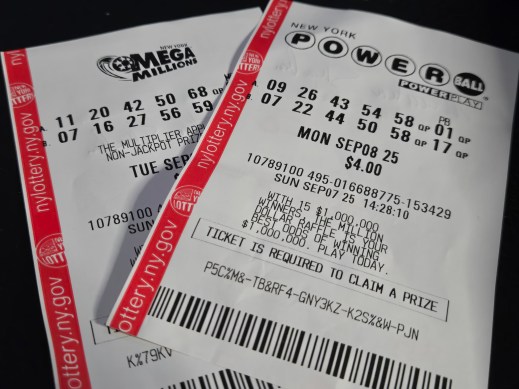
The Powerball lottery game recently reached a jackpot close to $2 billion. Those jackpots spur people who don’t normally buy lotto tickets to shell out for a big win, and I am guilty of being one of those people.
Compared to some of my family and friends, my investment in lotto tickets is pretty low. With that weak justification, I forgive myself for this vice. I am not sure what else $2 will buy you today, and sometimes a hopeless dream can get you through the day.
The odds of winning the lottery are massively stacked against us. Still, I have a go-to lotto buy that I repeat to the tired clerks at my local drug store:
“Two Powerball, two Mega Millions, please.”
They have raised the price on some lottery games recently, so this minor vice is now more expensive. I buy two kinds of lottery tickets because it increases my chances of winning by a minuscule amount and I can pat myself on the back with the illusion of being a smart tactician, when I am really a hopeless dreamer like everybody else.
The news cycle surges around big lotto jackpots have been going on for as long as I can remember. Lotto was ubiquitous growing up in the New York City area in the 1980s, and my parents played it semi-regularly. I remember buying a lotto ticket soon after I turned 18 as a rite of passage, similar to registering to vote or getting your draft card.
When I moved to Georgia in the early 1990s, there was a statewide referendum on the ballot over the question of whether there would be a lottery. I couldn’t believe the lottery didn’t exist in Georgia. What was wrong with these people that they didn’t have lotto? It was a mark of civilization in my mind.
It was actually a close vote; the lottery ballot initiative passed, but barely. Churches and religious organizations had organized against the lottery, and people were divided over the issue.
In retrospect, the church groups and religious activists who oppose lotto raise good points: Lotto preys upon the poor; it exacerbates gambling problems and gets the bulk of its cash from those who can least afford to give it. It promotes a ‘get rich quick’ ethos and encourages the illusion of wealth without work.
My daughters will ask me to promise them things if I win a big jackpot. I have promised them a home where they can each have their own bedroom, a trip to Paris and other travel adventures, and adopting a dog to live in our new house. I won’t make a big announcement, but if you see me wearing a cowboy hat and a fur coat like Dusty Rhodes, I’ve won.
I would spend my days writing and playing music, traveling, and sitting on a lawn to feel my own grass under my feet. I would have time to read all the books I want, see all the movies my friends talk about, take my friends to lunch, and plan my next trip with my daughters.
Lotto is not a viable path to changing our lives, but it’s a chance to dream aloud with the ones we love, and in that it serves a purpose.
Wish me luck.
Lessons of strength from September 11
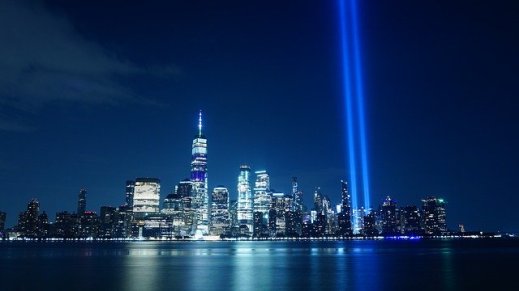
For New Yorkers who were out of town on September 11, 2001, the horrors of that day were accompanied by a feeling of horrific impotence. I was at a conference for work in California, and I was awake in time to watch the North Tower collapse on live television. I could do little but make phone calls to make sure some of my family who lived and worked in lower Manhattan were still alive (they were).
There is no way to fathom the extent of the loss the world suffered that day; our city and country (and world) have never been the same. But there are positive lessons we can take from that day that give us strength in the face of lingering darkness:
New York City will be here forever, and our Gotham can survive anything. In my lifetime alone, New York City has survived bankruptcy, riots, the worst-ever terrorist attack on U.S. soil, an East Coast blackout, and a deadly global pandemic. “Tough” doesn’t begin to describe New York. New Yorkers are both tormented and inspired by our city every day, but we love it and will defend it to the death.
Americans will rise to the occasion, no matter how dire or dangerous the mission. The heroism of the passengers of Flight 93 and the sacrifices of the first responders and others who helped people to safety during the attacks is an enduring legacy that gives us hope in dark times. The blood of revolutionaries and pioneers still courses through our veins. At times of our worst traumas come opportunities for greater good, and the mettle America showed in the wake of the attacks is alive and well.
Everyone has a role to play, and life is too important to sit on the sidelines. The heroes of the September 11 attacks include not only the first responders and the Flight 93 passengers, but the train and ferry operators who got people to safety, doctors and nurses who tended to the wounded, and even everyday people who did whatever they could. Those kinds of opportunities to be a part of making our city, country and world better are still present. Don’t be a spectator.
Take a moment to remember those that we have lost. Remember, too, the resilience and character of our city and country—qualities that carried us through and continue to endure.
Embracing the Cringe
Children who call their parents “cringe” today will thank them tomorrow.
My daughters often seek to remind me that I am “cringe.” I may get the occasional compliments for buying the right kind of veggie nuggets or for doing a better-than-expected job with dinner nachos, but unless I win the lottery and can afford Taylor Swift tickets, I’m officially “cringe” for the foreseeable future.
But one thing I have learned about being a good parent, or at least a good father, is to embrace the cringe.
Just as Machiavelli said it is better as a ruler to be feared (respected), than loved, so as a parent it is better to be cringe than cool.
“Cool Dads” are cool only in their own minds; their children exploit their parents’ insecurities while quietly resenting the acquiescing of authority. Children need parents that exhibit mental and emotional strength: calm in their authority and stoic in the face of conflict.
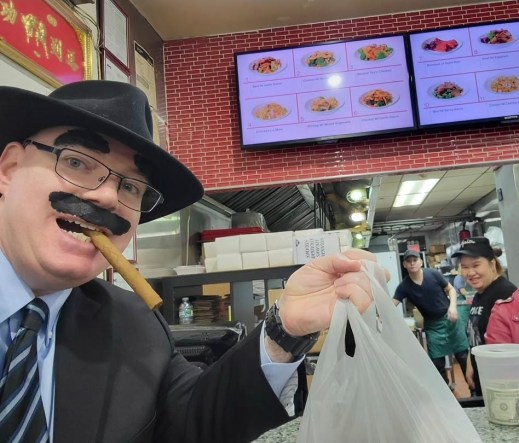
I am older than the average Dad in my children’s grade school, actually older than most of the teachers and administrators there also. I went to a school Halloween party dressed as Groucho Marx and I was crestfallen that no one—not even any of the other parents—knew who Groucho Marx was (I vow to make my children watch Marx Brothers films when they are a bit older). But this awkward incongruity is a secret source of strength.
When you are young, anyone from previous generations just looks “older” or “old.” If you were born in a year that starts with the numbers ‘1’ and ‘9,’ you will never qualify as young in the eyes of my children; sorry. But not to fear, being older has its place, and maturity is a quality that is much-needed in the lives of youth.
Because we are not of these times and do not bend to these times, we are a bulwark against uncertainty. My children were born with many good privileges, but they are growing up in a time of great volatility and fear, and children need their parents to be beacons of soundness amidst chaos. I can be that beacon. I can note that the chaos of our times has been here before and our world has seen much worse.
One of the benefits of parenthood is that your place in the order of this universe is set. You are the parent. By the sheer massive need of responsibility, you know your role. You have to provide, you have to protect, you have to pass on knowledge.
While it won’t be fashionable to acknowledge this for several decades, children are grateful for parents that are uncool and provide stability and wisdom to growing minds. They will benefit from getting the right answer and the right amount of discipline, even if they stay too cool to say, ‘thank you.’
I have not always been the stoic my children have needed. I can be quick to anger when they do something they know better not to do, or show outrageous insolence in vital times. I remind them that I love them often but I do not pretend to be their buddy or their friend. I’m their father and while I listen to respectful arguments, my word is final. They begrudgingly obey, and they’ll thank me later.
America’s greatest tennis hero is a pro-wrestling manager

The U.S. Open has recently concluded here in New York. It is one of the tennis world’s grand slam tournaments and makes dreams come true for thousands of fans. Tennis discovers new heroes and heroines and celebrates the champions crowned on the court of Arthur Ashe stadium.
Despite being exposed to tennis on a grand scale every year, I never think of a tennis player when I see a tennis racket. I think of Jim Cornette.
Jim Cornette is a professional wrestling personality who has been an inside player at the top of the pro-wrestling world for decades. I became a fan of Cornette’s watching wrestling on TV as a kid in the 1980s. Cornette was a terrific heel (bad guy) manager, and his character was that of a spoiled rich kid who brazenly bragged about the support he got from his momma. His principal prop was the ubiquitous tennis racket he always carried.
The tennis racket in Cornette’s hand was not just a totem of perpetual un-earned wealth that flaunted his status above the rank-and-file working-class wrestling fans, it was also a constant threat of illicit violence, and Cornette didn’t hesitate to use it against opponents of his wrestlers.
Cornette, like other great heels of his day like Rowdy Roddy Piper (my personal Greatest of All Time), got audiences to hate him passionately. When Cornette was eventually smacked down by one of the baby faces (good guy wrestlers), the crowd cheered loudly. Cornette made being hated look cool, and wrestling fans love him for it.
In addition to his career as a wrestling manager, Cornette served as a promoter and creative director, working behind the scenes during some of the most historic events of pro-wrestling history. He still has a hand in the wrestling world, and hosts podcasts.
As a commentator, Cornette combines a folksy Southern persona with a razor-sharp wit, and levels devastating criticism with an inside knowledge of pro-wresting that would shame most fans.
Pro-wrestling was born from the world of the traveling carnival circuit, and retains a patina of carney culture. Fans are “marks” and wrestlers stay in character by “keeping kayfabe.” A truthful interview or a real fight is a “shoot.” Despite the millions of dollars spent on production values of today’s top wrestling promotions, wrestling has never party with the shifty underworld of the carney life.
Almost every behind-the-scenes documentary about pro wrestling involves shady business deals, rampant substance abuse, broken bodies and early death.
Cornette serves as both pro-wrestling’s greatest source of inside insight while being one its most stalwart defenders. He lets us in on how the sausage is made, while also advocating for its more old-school customs and traditions. He has little patience for the tabloid, lowest-common-denominator approach that became popular a few decades ago.
Cornette will not hold back if he sees something wrong, and some of his real-life feuds have become more famous than any scripted in-ring storyline. Do an internet search for “Jim Cornette shoots on…” and you’ll find a trove of strong opinions dished out with well-said sarcastic aplomb.
Jim Cornette continues to be a great asset to pro-wrestling, and because of the boundless joy he brought to fans as a classic bad guy, the tennis racket will always mean Jim Cornette to me.
The design of decline
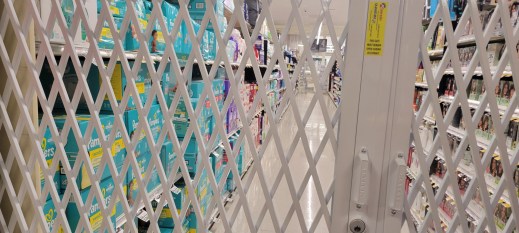
I was grocery shopping on a Friday night—I’m at an age when not only is that normal but admitting to it doesn’t bother me—and I noticed something new.
There were gates on a few of the aisles. Posted signs mentioned that the aisles would be closed after 7 p.m. and that customers could request they be opened. I was sure I knew why the gates were there, but I asked a store employee anyway. As I expected, he answered, “Too many people stealing.”
These kinds of gates are old news in many parts of the country. In most drug stores and convenience stores, high-theft items are already under guard, with alarm-trigger glass cases housing razor blades and cold medicine.
Over the past year, I’ve seen more shoplifters apprehended at this store than in the previous 10 years combined. In one case, there weren’t enough store security people to apprehend two men who had massive helpings of chicken hidden under their clothes, so the one lone guy made sure they dropped what they were stealing before letting them walk away. The would-be thieves sauntered through the parking lot, completely unconcerned that they would be arrested, not caring who saw them.
Across cultural and political divides, there is a sense in the U.S. that as a society, we are going out of our way to tolerate the intolerable. The percentage of the population that commits crimes may be small, but the gates on grocery aisles is a way that we all pay.
Everywhere the world around us bears the marks of our acceptance of the unacceptable and designing our environment in ways that are an acquiescence to societal problems. Park and subway benches have awkward dividers and ridges to prevent homeless people from sleeping on them rather than allowing people to sit on them comfortably. Many fast-food restaurants have no public restrooms, lest they attract homeless
In many ways, these elements of design indicate that we’re failing collectively. We are accepting the unacceptable because we don’t see a way out and we don’t feel a collective responsibility to the world around us. A collection of forces has chipped away at the collective “us.” When there is no “us,” no “we,” there’s not a common glue to the everyday world.
When we don’t feel connected to the community around us, we don’t take action to improve that community. People aren’t working together to solve their common problems; they are doing what they can to keep themselves away from the worst parts of the herd. They are covering their asses, and doing only their part.
People are starting to resist this spiral of decay. Customers are stopping shoplifters on their own when store employees are not allowed to. Even at my local grocery store, the last time I asked for the gates to be unlocked so I can buy some soap, the store employee told me that the gates were already unlocked, and that I should just close them behind me when I left.
Slowly but surely, if we regain our collective will, we can reverse our decline and make this design of decline a thing of the past.
New York’s most punk band leaves the stage
In the early 2000s, I picked up a copy of the punk rock newspaper The New York Waste, and paged through the show listings, record reviews and other articles. I came across a comic strip, ‘Last In Line for the Gang Bank, the GG Allin Story,’ a comic biography of late punk rock musician GG Allin.
GG Allin was a legendary punk rock performer known for his obscene and violent performances. His posthumous notoriety has grown in recent years but at the time his legend was more restricted to a smaller circle of punk rock die-hards.
Holy shit, I thought, someone is writing a comic-strip biography of GG Allin’s life and that is the coolest thing ever!
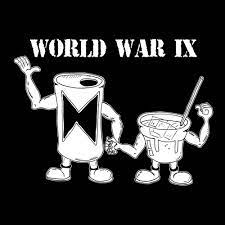
I read this comic strip religiously in every issue of the New York Waste. At the bottom of every comic in a small banner or border was a web address that looked somewhat cryptic. Unable to resist, I fired up my large desktop computer at home (this was several years before smart phones became publicly available) and visited the web address to find it was for a band called World War IX. Their guitar player, Justin Melkmann, was the man behind the GG Allin comic.
Based on the strength of this awesome comic alone, I made a mental note to see World War IX play at the earliest opportunity.
I first saw the band play at CB’s Basement, a smaller, downstairs venue attached to the legendary CBGB’s. They were the kind of raw, no-frills garage punk rock that I can never get enough of. They brought a loud punk sound with catchy tunes and, importantly, a sense of humor.
After their set, I found their guitar player, Justin, and told him that I liked his comic, and that World War IX was playing great music. I was in the process of getting my band Blackout Shoppers off the ground and we promised to stay in touch.
Fast forward a few months, and Blackout Shoppers and World War IX were playing shows together frequently, and the first recordings that Blackout Shoppers ever had for sale was a split 7-inch record with World War IX called ‘Larceny Armageddon,’ playing off the names of our bands.
People have been arguing over what constitutes “punk” since 1975. If you ask 100 punk rock fans for a definition of punk, you will get 100 different answers. We can agree maybe on two key attributes that make a band punk: an aggressive, often purposely offensive style of rock, and a base level of honesty with its fans and the general public.
Many punk bands try to act as if they are completely above the fray, that because they play this style of music they exist on a higher moral plane than those that play more lucrative genres. I can tell you first-hand that punk musicians harbor all the same egos and insecurities that the rest of the rock world has. As much of a joy as it is to play music, there comes a time in every band member’s life when they look at other bands and say to themselves, “Why can’t we have what they have?” or otherwise questions or gripes about their position in the entertainment industry food chain.
World War IX has a case for being New York’s punkest band of the last few decades. It played a raw, aggressive punk rock style that evolved but never mellowed, and it was very honest with its fans. Especially as told through Justin’s comics, World War IX narrated its own journey with all the pitfalls and aggravations that come with keeping a band afloat for years. Lineup changes, issues with drugs and alcohol, job worries and marriages and the weight of the world that is crushing at times have all been illustrated with humor, grit and ultimately gratitude.
As World War IX embraced its creativity, I had the opportunity to share the stage with them as a member of Blackout Shoppers and other bands, and I also had the chance to play villains in several of their music videos for Cutlass Supreme, Carrera con el Diablo and Bender Royale. I cannot think of an instance when I had a bad time at a World War IX show, or had a bad time with a member of World War IX.
I felt great joy when my friend Philthy Phill became their singer. A super-creative soul who has embraced the arts of writing, stand-up comedy, and music while surviving in New York, Phill was a natural choice when the band was looking for a singer once more. It was a sign that the forces of the world had brought on a confluence of punk rock perfection when Phill was on the mic. His departure from New York is what got Blackout Shoppers back on stage and playing again regularly after a few years on semi-hiatus.
Phill was replaced on singing duties by Johnny C., previously of the band Citizen Blast Kane. A few years later, World War IX decided to call it quits. There wasn’t any big drama or dispute over money (there is no money in punk rock!), but there comes a time when a band just feels it has run out of road and needs to move on and do other things. That time came for World War IX, and the band decided last year that they would play a final show this January at Otto’s Shrunken Head.
World got out that WWIX was breaking up and having a final show. People from all over the country made plans to fly to New York for the event. The band invited all their former members to return to play one last time. Most importantly, Philthy Phill would be coming in from Indiana.
The night arrived for World War IX to say a loud farewell. Otto’s was packed and first on the stage was Cash Bribe, featuring WWIX bass player Brian Jackson on bass. Cash Bribe kicked things off with hardcore fury that blended old school Black Flag with heavier distortion and more metal-sounding riffs, truly a modern hardcore band building on gritty, guitar-fueled punk.
All but one of Dr. Ex and the Break-Ups are World War IX alumni, and Dr. Ex took the stage next to play classic garage rock with a more punk rock treatment; imagine Question Mark and the Mysterians after an all-night drug orgy with The Kinks. The jean jackets, white-frame sunglasses, and keyboard-infused rock set them apart from the rest of the night’s entertainment.
Philadelphia’s Loafass was next, and beer flew everywhere as things were getting heated up. Loafass brings a funk-influenced punk-hardcore sound and their work is a testament to the longevity of music that is made with the intention of having a good time. Loafass has been around for more than 25 years; and they are the same intense fun they were when I first saw them in 2003.
My band Blackout Shoppers were next, and before we started, I mentioned to the audience that while the four of us as a band have nearly 200 years of bad decisions under our belts, one of the soundest decisions any of us have ever made was befriending World War IX. “World War IX, you are the best, we are Blackout Shoppers.”
Then it was time for World War IX to take the stage. What followed was a chaotic masterpiece of a punk rock sendoff. It was a loud, demented family reunion that was extremely energetic and sweaty, and amazingly raucous fun. The songs were delivered with the kind of energy punk rock is famous for. It was a sweet relief to see one of my favorite bands of all time go out with a the kind of impressive roar that its history deserved. World War IX left the stage a battered, beer-soaked mess. It left the New York punk scene better than it found it. We are grateful for having been there to listen.
Twitter is worth saving

Amid the implosion of one of the world’s largest cryptocurrency exchanges (I am far from the only one but I told you so) and the mid-term election vote counting, Twitter has become a bigger and more chaotic donnybrook under the leadership of Elon Musk. Many friends on the platform object to Musk’s policies and are searching for an alternative platform to go to, but I think we should all stay. It is better to save Twitter than to try to sink it.
Upset with Twitter’s policies, Musk seemingly trash-talked himself into buying the company for $44 billion, a terrible deal that he quickly started trying to back out of.
Now that he’s been forced to go through, he’s quickly trying to turn it around. One of the chief means he’s looking to make money is in selling the blue checkmarks that denote officiality for $8 per year. While there’s a sound logic to it—Stephen King is a millionaire and utilizes this platform to make money, why shouldn’t he pay a measly $8 per year—the results have been absolutely bonkers, with armies of would-be Elon Musks, George Washingtons and even Jesus Christ paying for a blue checkmark and creating outrageous content from newly “official” sources.
This chaos of renegade officialdom has got to be reined in first in order to save the platform. One of the chief appeals of using Twitter is that you can find first-source information quickly and know where it was actually coming from. His torpedoing of that in pursuit of $8 per year subscriptions undercuts a key strength and jeopardizes the ad revenue it needs.
The Internet was better in some ways when it was more of the Wild West. I didn’t want to watch Chechen rebels beheading Russian tank operators, but I was glad that no one was stopping people who did. The gruesome and the pornographic was a small price to pay for being able to read newspaper articles from every corner of the world, and knowing the news before the cable channels had it.
To a large degree, social media users agree to a certain level of curation and control that stops short of censorship. Pedophiles and murderers, hateful mobs, scam artists and criminals ought to be shut down, but the policing of “hate speech” and the folly of trying to filter conspiracy theorists has led to a large segment of otherwise decent users questioning the judgement of the online gatekeepers. Fully conceding the worst anyone has to say about Donald Trump and fully agreeing to his culpability in the Jan. 6 attack on the Capitol, it was still a mistake to kick Trump off of Twitter. There was other outcome of that move than to be interjected into the partisan political divide that has cleaved public discourse in the U.S. Erring on the side of free speech, even for sleazy charlatans, is better keeping with the promise Twitter makes to its users.
The pendulum that’s been swinging on the management of Twitter needs to be stabilized; Elon Musk should hand over management of the platform to people better versed in its management. Musk as the face of Twitter invites more trolling for sport. Re-institute a meaningful verification strategy and get advertising dollars to return. Institute better policies that value free speech. Crack down on scam accounts (an early sticking point that Musk used to try to back out of the deal).
Twitter can be saved and is worth saving. If you rebuild it, they will come back.
2021 New Yorker’s To Do List
Happy New Year from New York City, where neither the Coronavirus, incompetent leadership, nor burgeoning crime can kill us. We have been through a lot over the past year and will go through much more before our current pandemic is over. Things may never return to pre-pandemic “normal” again and that’s not all bad.
We will not let the stressful state of our world stop us from listing some priorities for the New Year. Here are what I see as our guiding principles for 2021:
Stay frosty. I am fortunate that I live in a region where facemasks and social distancing are both the law and the social norm. That is fragile even here and even more difficult in areas where anti-maskers/science deniers have a greater dominance. There is no such thing as being too careful about your health when there is a once-in-a-century pandemic happening. Seriously, no matter your political proclivities, do you really feel the urge to be closer to your fellow man right now? I hope not. Keep your distance and wash your hands. Here is your chance to mouth a hearty “fuck you” to half the people you meet behind your fashionable mask. Stick to it because this is not over yet.
Read more poetry. This oft-ignored form of literature is much more diverse than it gets its due. We need poetry and the madness of literary dreamers now more than ever. You could do worse than perusing Impolite Literature or Outlaw Poetry.
Pursue the things you miss most. This pandemic has left us hungry for things that we miss. It’s has shone a big spotlight on things we love and hate. Remember the things you miss the most and chase them with dedicated abandon. I plan on spending more time making music than I have in recent years. I could never tear myself away but having played only two shows in 2020 has left me with a fever for being back playing shows, no matter how small the stage or the crowd. Some people need to be loud. Maybe you rediscovered a passion for painting pumpkins or making weird videos or trying to grow ghost peppers in your garden. Go for it all.
Chasing normal for normal’s sake won’t work. I miss the benefits of the non-pandemic life but working 12-hour days without seeing your family is bullshit, no matter how much money you make. Just because it bears that pre-pandemic shine does not mean it’s Shinola. Some of the stuff that COVID kicked to the curb belongs there. Leave it.
Don’t wait for the pandemic to be over to reach out to family and friends. You do not have to do a Zoom call or a Skype call for everything. Use your telephone the old-fashioned way and call people. You will find it be a refreshing exercise. Convert the tiresome Zoom calls into regular visits; we can build better rituals in the flesh when that becomes possible again.
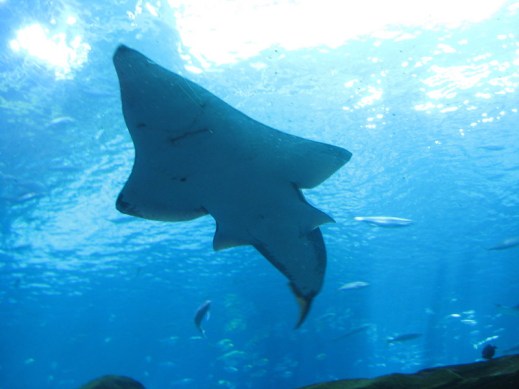
Order as much takeout as you can eat without becoming obese. Our favorite local diner cannot let us sit inside, so I brought my girls there this morning and we ordered takeout and had a car picnic in our mini van before driving to an aquarium. Those restaurants that are able to stay open are hanging on for dear life. If you can afford to give them your business, please do, and tip generously.
Time is getting shorter for everyone; and we have put enough of our lives on ice. Grab the New Year by the lapels and make it dance with you.
Ars longa, vita brevis

What grinds us down most is not the presence of stress, but the absence of joy.
Even during the darkest times in human history. People survived not just on food, water, and medicine but on jokes, songs, and stories. It’s not a coincidence that in addition to our stockpiling cleaning supplies and toilet paper, the COVID-19 pandemic launched binge-watching of entertaining shows. I’m not sure I would have been as riveted by Tiger King if the insanity of private tiger parks was more cheerful than the insanity of the outside world at the time.
The present and resurgent health pandemic that has made havoc on our world, we remind ourselves that this too shall pass, and most of us will survive and be able to learn from this time to create a better tomorrow. I also must remind myself how lucky I am: I and my family are healthy, I have a job, our building has been safe from looting, arson, and teargas.
I live most of my days now in front of my work laptop at home. Even when the work-from-home life does its worst to my day, I’ll manage to feel some immense relief if I can scratch out the draft of a poem, or poorly play a few Misfits tunes on my guitar.
Creating something, even if it’s something small that no one else will see, is good for your health. The theory of cognition holds that creativity is a central aspect of human. It improves our brain function and therefore our health. So even when I’m dead tired from working all day and then move from the desk to the dinner table to putting the kids to bed; I know I can salvage what remaining time I have left before I fall asleep if I do something creative.
I’m working on getting better at playing guitar because I had the privilege of playing the six strings on stage earlier this year with Beer Drinking Fools. Now I’ve been bitten by the six-string bug and want to subject innocent eardrums to blistering crossover hardcore punk and thrash metal that will sound like S.O.D. having a blood orgy with Bad Brains and The Lunachicks.
Our current crises are beset with ignorance and villainy on all sides. History will condemn civilized societies that let their people die needlessly and found it virtuous to let their cities fall to ruin. It is difficult to feel hopeful, but even amid hopelessness, one can find solace in creativity.
A surge of creativity is not a cure-all for what ails our society. While the current politics and pandemic are new, it was a long time getting to where we are now, and it will take a long time to get to something better. But the seriousness of our times doesn’t negate the need for creative joy; it makes such creativity more necessary than ever.
During these times of pandemic, our creativity will sustain us and endure. Amid so much destruction and despair, creativity is a revolutionary act.
What is still beautiful about us…
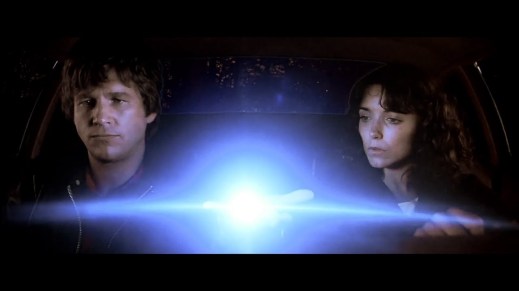
In John Carpenter’s 1984 film “Starman,” Jeff Bridges stars as an alien who is stranded on Earth, and goes on the run from U.S. government agents with the widow of a deceased housepainter, whose body he has cloned as a disguise. They have misadventures while eluding the authorities and the widow (Karen Allen) falls in love with this alien in the body of her dead husband.
In retrospect the plot summary makes this sound like a ludicrous B-film, but it works. One scene and one line from the film has stuck with me since I watched it in a movie theater as a 12-year-old.
The couple are finally cornered in a restaurant by the authorities and the federal agent who has been leading the hunt for them comes to confront them. He asks the alien about his journey and learns he is here to study Earthlings.
“You are a strange species, not like any other, and you would be surprised how many there are, intelligent but savage,” the Jeff Bridges/alien tells his pursuer. “Shall I tell you what I find beautiful about you?”
The federal agent nods yes.
“You are at your very best when things are worst.”
That line has been etched in my mind for more than three decades now, and it’s a fitting mantra for the times we are in.
“You are at your very best when things are worst.”
It can be hard to imagine things getting worse. We are still in the midst of a global pandemic that has hit the U.S. harder than any other country, followed by widespread civil unrest over the death of George Floyd in Minneapolis police custody, poisonous politics in an election year and unemployment levels not seen since the Great Depression.
These are times that try our patience and our resolve. It is easy to want to withdraw and bunker down, to tune out the outside world and lapse into a fatalistic nihilism, a hopeless sloth of withdrawal.
The pandemic reminded us that contact with others is an essential part of life. Human contact is something we took for granted, or even came to resent in New York City, where everything is too crowded and the inconsideration of others is amplified by proximity.
But the need to interact with others is more important now than ever, and despite the myriad conflagrations boiling over in our society, we can still find common ground with decent people of differing ideas.
Human life is inherently tribal, and America has forged tribes along lines of culture and character in ways other societies cannot fathom. These cultures appear to be irreconcilable, but basic human decency and goodness can transcend even our deepest chasms. The past few weeks have shown the extent of our divisions but also the depth of our decency and resolve.
“You are at your very best when things are worst.”
It is time to be the best person you can be and play some part in making our world a better one. You may be at odds with your friends and family, you may be subjected to hatefulness from smaller minds, but the things most worth doing are often most difficult. Keep going.
We can look back at this time and be proud we were at our very best.
FNO Flushing Fantastic, daytime festival edition
Despite the popularity of some parts of Brooklyn, our collective dialogue around New York City remains excessively Manhattan-centric. New Yorkers will still say “the city” when they mean Manhattan, even though the five borough boundaries of our city have been in place since 1898.
And New York City is so large that telling people what borough you are from will not cut it. No one actually from Manhattan would introduce themselves as being from Manhattan unless they were in a very borough-specific conversation. Each of New York City’s boroughs is a tapestry of neighborhoods, and it is these neighborhoods that are the lifeblood of life in NYC.
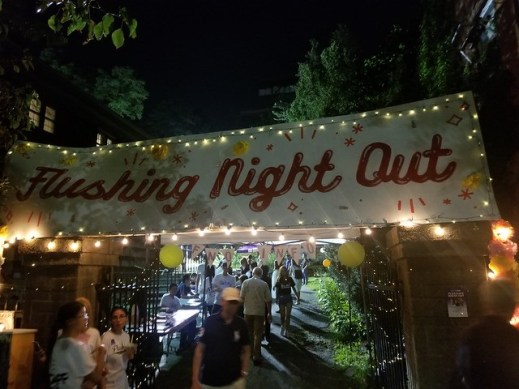
Queens is New York City’s largest borough and among its most well-known neighborhoods is Flushing. This weekend, local residents are showing off the neighborhood’s many attractions Saturday at FNO 2019: Flushing Fantastic.
FNO stands for “Flushing Night Out” as past events have been held at night, but this festival is going to run from 12 noon until 6 p.m. and is going to be at historic St. George’s Episcopal Church, right in the center of downtown Main Street a short walk from both the 7 train and the LIRR.
Flushing is known as a destination for Chinese cuisine, and people will come from all over to sample some of the great restaurants, food carts, or food court stalls that make this neighborhood unique. But there is much more than Chinese food, and the Greater Flushing Chamber of Commerce is promoting the neighborhood as an international melting pot, though admittedly one that is heavily Asian. I often point out to people that among the best dining attractions in Flushing are 24-hour Korean restaurants such as Kum Gang San and Noodle Flower, where you can barbecue an awesome assortment of meat right at your table at two o’clock in the morning if you are so inclined.
The Greater Flushing Chamber of Commerce also notes that the event is designed to give a boost to local businesses and entrepreneurs that are competing with large franchises. Downtown Flushing has seen a boom in construction of high-rise condominiums and the rising price of real estate has made life harder for small businesses throughout Queens and five boroughs.
“Flushing, NY is the crossroads of the world — where you can find amazing culture and people from around the globe,” the chamber says in its event notice online. “We want to celebrate the unique food, fashion, and music found here as well as help the small businesses and entrepreneurs who are struggling to make ends meet. Over the past decade, rising rents and major development projects have threatened to displace the small mom-and-pop stores who invested their blood, sweat, and tears into making our neighborhood prosperous.”
Flushing Night Out has been held at various locations, centered on the downtown area. The first one I attended was on the campus of Flushing High School, and it was a memorable event, even for cynics like me that hate crowds.
It was at my first Flushing Night Out that I was introduced to Karl’s Balls, a food stand of traditional Japanese takoyaki balls—those are octopus balls inside a doughy sphere that are cooked on an egg-shell like grill. Go to Karl’s Balls because it’s an ingenious name and you may never stop joking about wanting to put Karl’s Balls in your mouth. But all joking aside, the takoyaki balls are extraordinarily delicious and Karl himself—Karl Palma—is a celebrated chef who has been featured on the Cooking Channel among other accomplishments.
While Karl’s Balls may not be at this FNO event, there is going to be a smorgasbord of amazing food, from Ecuadorian cuisine to Japanese ramen to craft beer and gourmet ice cream. You have no excuse to leave hungry. The organizers require all the vendors there to have items that start at $5 or less.
FNO also features live music, crafts, and other cultural interests. This Saturday will feature Harmonyc Movement, a city-based dance troupe steeped in K-pop and Korean culture.
And at the Flushing Queens Macaroni Kid booth, they will be giving away protein bars for free (full disclosure, my wife Emily Griffin Sheahan runs our local Macaroni Kid web site and will be manning the booth at the event – tell her I sent you!).
Ready for a Comeback

The occasion of one’s birthday is always a time, however brief, for reflection and taking stock of where you are. This past weekend saw the start of my 46th year on this Earth, and I have a lot to be happy about and celebrate but it’s also the start of a comeback.
There is always room to improve and make better. If you’re not striving for something better at all times, then things fall into disrepair and a sad, atrophying stasis. The search, the striving is the goal and the state of being everyone needs. Merely getting by doesn’t cut it.
That’s not to say you shouldn’t enjoy some time to relax and be grateful for what you have, but if you’re not happy about something, then change is a must.
And like everyone else, there are things I am not happy about. I am very lucky in that I have my health and a lucid mind and can get a start on turning things around. But things have been in a bit of a rut: I go to work, I come home and eat and put kids to bed, I answer more work emails and fall asleep trying to get something done. I wake up early the next day and do it again.
One glimmer of light in all this is creativity. If I can get something creative done, I can have some peace of mind, and right now I am preparing for a show at the end of October.
Having young children and seeing how quick life can move can be both terrifying and encouraging. It seems like just yesterday I was welcoming the first of our children into the world; the older of our kids will be five in January and they are well versed in navigating the parental politics of our household for their own advantage.
But seeing how fast life moves doesn’t just mean that our youthful days are left in the dust, it means we can create new things for ourselves quickly as well. Less than a decade ago I was living alone with not many prospects for career advancement or a family life. Now I have three children and a well-established career in public relations. In a few years, I can be in a different place; the pace of change is fast, which means we can put ourselves on a better path quickly.
So often we look back on things with regret, and I’ve been as guilty of that as anyone. We will always, and I can tell you million times of how true this is: we will always regret the things we don’t do more than the things we do.
So no matter where you are or how bad things seem or how off the rails the life you imaged is, don’t worry or spend too much time looking back on past mistakes. Start doing things to set things right again. You won’t be sorry. It’s never too late.
Go for it.
 Matthew Sheahan
Recent Comments