
Book rescue in Queens and its vortex of unknows

I was cleaning out my motor vehicle, disposing of a handful of parking meter receipts that accumulate on the dashboards of cars in large American cities. As I deposited my trash in a receptacle, an open book nearby caught my eye.
Someone had dropped or thrown a book, and it had landed open against a curbside trash shed outside a co-op. It was an odd place to see a book, and it looked like it was thrown from a moving car or dropped out of bookbag that was being kicked down the street. I retrieved it.
The book, “Who Put This Song On?”, by Morgan Parker, was in good condition considering its rough treatment. Upon inspecting the book further, it bore a label on its back cover that read “FLUSHING HIGH SCHOOL LIBRARY.”
Flushing High School is a mile away from where I found the book. I made a note to return it. No book should be homeless, and someone may be looking forward to reading that, or may not be able to afford whatever fine may be levied for losing it.
A host of possibilities flooded my mind regarding how the book came to rest upon the sidewalk a mile away from its library home. Did someone steal it and try to throw it in the trash bin? Was a student carrying this when they were attacked by a kidnapper or serial killer, and the page was open to a passage that would reveal the whereabouts of the victim or give a clue as to the motive of a brutal killing? Am I now a suspect in a kidnapping or murder that has not been made public yet? Or will I be considered a cringeworthy thief, found with a book stolen from a local high school?
I made it my mission to return the book as soon as it was convenient, lest I be unwittingly caught up in these mysteries, but more likely, that the book can continue to be enjoyed by students. I was prepared for whatever grilling I would receive when I brought the book back—I can explain my fingerprints on the book were from finding the book, not stealing it or doing anything untoward to whatever student checked it out.
I set about my task taking a public bus to the high school, arriving in the afternoon after classes were over for the day. I tried to look as assuming and non-threatening as possible while carrying a book clearly geared toward young women.
Flushing High School is on a nice green campus surrounded by the dense vertical sprawl of downtown Flushing, Queens. It’s an oasis of beautiful architecture and calm grass and trees amid the rapid overdevelopment of a city fueled by commerce without a thought for beauty and cohesion. I hope it fights to the death to stay the way it is.
My returning the book was anticlimactic. I stepped into the front entrance of the school and handed the book to a school safety officer behind a desk, who thanked me for returning it. I walked out of school and enjoyed the walk home, having done my good deed for the day and rescued a book from oblivion.
Lessons of strength from September 11
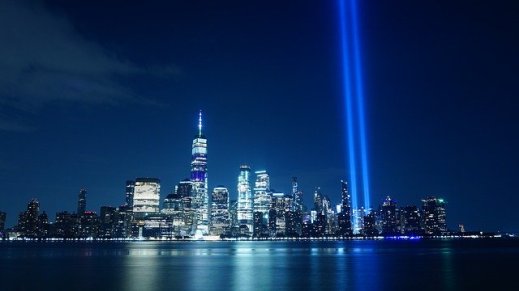
For New Yorkers who were out of town on September 11, 2001, the horrors of that day were accompanied by a feeling of horrific impotence. I was at a conference for work in California, and I was awake in time to watch the North Tower collapse on live television. I could do little but make phone calls to make sure some of my family who lived and worked in lower Manhattan were still alive (they were).
There is no way to fathom the extent of the loss the world suffered that day; our city and country (and world) have never been the same. But there are positive lessons we can take from that day that give us strength in the face of lingering darkness:
New York City will be here forever, and our Gotham can survive anything. In my lifetime alone, New York City has survived bankruptcy, riots, the worst-ever terrorist attack on U.S. soil, an East Coast blackout, and a deadly global pandemic. “Tough” doesn’t begin to describe New York. New Yorkers are both tormented and inspired by our city every day, but we love it and will defend it to the death.
Americans will rise to the occasion, no matter how dire or dangerous the mission. The heroism of the passengers of Flight 93 and the sacrifices of the first responders and others who helped people to safety during the attacks is an enduring legacy that gives us hope in dark times. The blood of revolutionaries and pioneers still courses through our veins. At times of our worst traumas come opportunities for greater good, and the mettle America showed in the wake of the attacks is alive and well.
Everyone has a role to play, and life is too important to sit on the sidelines. The heroes of the September 11 attacks include not only the first responders and the Flight 93 passengers, but the train and ferry operators who got people to safety, doctors and nurses who tended to the wounded, and even everyday people who did whatever they could. Those kinds of opportunities to be a part of making our city, country and world better are still present. Don’t be a spectator.
Take a moment to remember those that we have lost. Remember, too, the resilience and character of our city and country—qualities that carried us through and continue to endure.
Embrace being politically homeless

I remember standing in the Atlanta airport the day after Election Day in 2004, watching John Kerry and John Edwards give concession speeches. I was dumbfounded that America could vote for a second George W. Bush administration. How could any thinking person cast their ballot for such a vacuous disaster as that?
George W. Bush had neither the intelligence nor the dignified manner to hold the office of president. He was tested in his first term by the enormous events of September 11, 2001 and failed miserably by falling prey to his coterie of ambitious and careless advisors. His invasion of Iraq got thousands of Americans killed needlessly; it further destabilized the Middle East and made the mullahs of Iran more powerful.
Four years later, John Kerry was not a perfect candidate, but he wasn’t George W. Bush, and that was all that mattered. The infuriating absurdity of the George W. Bush presidency was compounded tenfold by a public that took this empty suit seriously; many even thought it was some kind of patriot duty to vote for him.
So when Donald Trump won re-election earlier this month, I felt like I understood people who were morally outraged and angry at their fellow Americans. When your opposition candidate is an unqualified absurdity, a high level of moral outrage is natural. I’ve been there.
But I no longer rank among people emotionally swayed by election results. I’ve embraced political homelessness, and with that comes great freedom.
Maybe it’s a certain level of age and experience, or a knowing cynicism that has crept into my worldview, but I don’t see the world in the same black-and-white landscape of good and evil that I did in 2004.
Maybe it is my background working as a financial journalist that allows me to look at issues and policies more clinically and with a sense of emotional detachment. I’ve learned to look at what people actually do and what facts on the ground are, and pay little attention to rhetoric.
I’ve come to expect the worst from everyone and so I’m rarely surprised or disappointed. Of course, the government is going to abuse its power, it wouldn’t have attained power if they hadn’t planned on using it. I’m often saying to my friends, regardless of their political affiliation, “Your side did this too.”
So I went into the presidential election predicting that Donald Trump would win and confident that I wouldn’t be happy with either outcome. I’ve seen Democrats and Republicans sacrifice principles for political advantage repeatedly, over multiple election cycles, to the point that I know neither is capable of keeping its word or staying grounded.
But while I have lost whatever faith I had in the American political system, I have not lost faith in America. If anything, our country shows us over and over again that it is resilient and capable. America exists in a superior plane far above our wretched politics. George W. Bush and his cabinet of incompetents deserve to smolder in the ash heap of history, but the people who voted for him were mostly decent people who loved their country and felt wounded by being attacked. The Trump supporters who put him back into office have seen their grocery bills triple.
There is so much more consensus on vital issues than we’re led to believe, and in the real world, if people are able to meet on their own terms, they can build meaningful bridges with neighbors and political opponents. It’s being done on the local level around the country every day.
So, if you’ve become frustrated and disillusioned, political homelessness may be for you. It won’t cure all frustration and aggravation with American politics, but you won’t blow a head gasket when the next unqualified hot mess takes the Oval Office.
America’s greatest tennis hero is a pro-wrestling manager

The U.S. Open has recently concluded here in New York. It is one of the tennis world’s grand slam tournaments and makes dreams come true for thousands of fans. Tennis discovers new heroes and heroines and celebrates the champions crowned on the court of Arthur Ashe stadium.
Despite being exposed to tennis on a grand scale every year, I never think of a tennis player when I see a tennis racket. I think of Jim Cornette.
Jim Cornette is a professional wrestling personality who has been an inside player at the top of the pro-wrestling world for decades. I became a fan of Cornette’s watching wrestling on TV as a kid in the 1980s. Cornette was a terrific heel (bad guy) manager, and his character was that of a spoiled rich kid who brazenly bragged about the support he got from his momma. His principal prop was the ubiquitous tennis racket he always carried.
The tennis racket in Cornette’s hand was not just a totem of perpetual un-earned wealth that flaunted his status above the rank-and-file working-class wrestling fans, it was also a constant threat of illicit violence, and Cornette didn’t hesitate to use it against opponents of his wrestlers.
Cornette, like other great heels of his day like Rowdy Roddy Piper (my personal Greatest of All Time), got audiences to hate him passionately. When Cornette was eventually smacked down by one of the baby faces (good guy wrestlers), the crowd cheered loudly. Cornette made being hated look cool, and wrestling fans love him for it.
In addition to his career as a wrestling manager, Cornette served as a promoter and creative director, working behind the scenes during some of the most historic events of pro-wrestling history. He still has a hand in the wrestling world, and hosts podcasts.
As a commentator, Cornette combines a folksy Southern persona with a razor-sharp wit, and levels devastating criticism with an inside knowledge of pro-wresting that would shame most fans.
Pro-wrestling was born from the world of the traveling carnival circuit, and retains a patina of carney culture. Fans are “marks” and wrestlers stay in character by “keeping kayfabe.” A truthful interview or a real fight is a “shoot.” Despite the millions of dollars spent on production values of today’s top wrestling promotions, wrestling has never party with the shifty underworld of the carney life.
Almost every behind-the-scenes documentary about pro wrestling involves shady business deals, rampant substance abuse, broken bodies and early death.
Cornette serves as both pro-wrestling’s greatest source of inside insight while being one its most stalwart defenders. He lets us in on how the sausage is made, while also advocating for its more old-school customs and traditions. He has little patience for the tabloid, lowest-common-denominator approach that became popular a few decades ago.
Cornette will not hold back if he sees something wrong, and some of his real-life feuds have become more famous than any scripted in-ring storyline. Do an internet search for “Jim Cornette shoots on…” and you’ll find a trove of strong opinions dished out with well-said sarcastic aplomb.
Jim Cornette continues to be a great asset to pro-wrestling, and because of the boundless joy he brought to fans as a classic bad guy, the tennis racket will always mean Jim Cornette to me.
The coming crypto reckoning
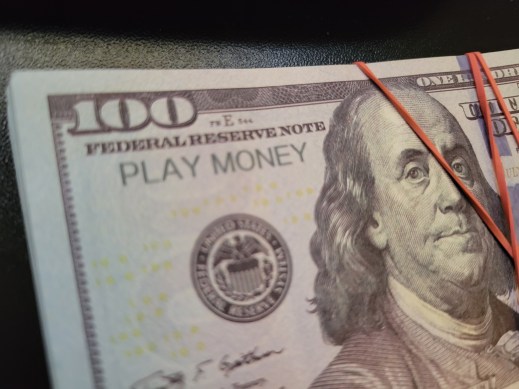
The lure of being lucky and striking it rich is a powerful opiate in America. From our very foundation as a place of refuge for the unluckiest of Europe, the self-made millionaire has a place of reverence in American lore. Very few attain that status, but millions have exhausted that dream and put themselves in an early grave working to attain it.
The chase for American riches has taken many forms, from the California Gold Rush to endless swindles, and the latest destination is cryptocurrency. Cryptocurrency is digital currency that can be exchanged for other currencies. Bitcoin is the most famous but there are more of them than I care to count.
There is absolutely a place in the world for a digital currency, but many of the current crop of these currencies defy what a currency needs to be: a stable unit of value measurement. If Bitcoin can lose 22% of its value in the matter of days, or drop precipitously in the course of a morning based on the whims of Chinese regulators, it is missing an essential element of being a usable currency.
And there will be a time when crypto currencies are real and have real value and usefulness. It’s important to note that in some totalitarian countries like China, the use of crypto currencies have been a force for good, enabling people to do business without oppressive government interference. But we are in such early days of the cryptocurrency world that the safe and regular use of cryptocurrencies is still years away.
There are cryptocurrencies pegged to regular currencies—such as Tether, which tracks the U.S. dollar—known as Stablecoins. In the future, some kind of Stablecoin may be used globally that would enable secure, anonymous use with the kind of stability that a currency needs.
But that kind of legitimate use is a long way away from the rampant speculation that is captivating the imaginations of get-rich-quick investors. What’s worse, the same kind of faux populism that gave us the GameStop rush of a year ago has been de rigueur in the crypto world.
And this rampant, pure speculative increase in value is based on hopeful dreams and nothing more. Even stocks that are widely overvalued are supported by an understandable business model. With crypto, you can lose your shirt in the course of an afternoon and have no one to blame but yourself. Most world currencies – U.S. Dollars, French or Swiss Francs, Euros, British Pounds—are backed by powerful governments that have a vested interest in maintaining a stable currency. You can argue that U.S. Dollars are propped up by the Federal Reserve Bank or even an Illuminati conspiracy, but they are doing a better job than they keyboard commandos, Russian bots and other shady characters running the crypto world.
What is so shameful about the current state of crypto is that people are being drawn in who otherwise would invest in something more constructive. Hard-working people who find it hard to get ahead and save for their kids’ college tuition are plowing money into the latest online toy money when they could be investing in something real. At this point I’d be happier with these people stuffing money into mattresses rather than putting it into the latest cryptocurrency that’s being talked up by social media shysters.
But like major speculative rushes of the past, the crypto world will experience a “shakeout,” where those that don’t have real values drop quickly and investors lose money. It could be quick and violent. There will be stories of people losing their life savings because they were told they could double their money in months.
Crypto currency speculation is going to be one of those things future generations read about and ask why people of our generation didn’t do something about this global boondoggle. The reckoning is coming; please don’t get burned.
Strength and creativity in 2022
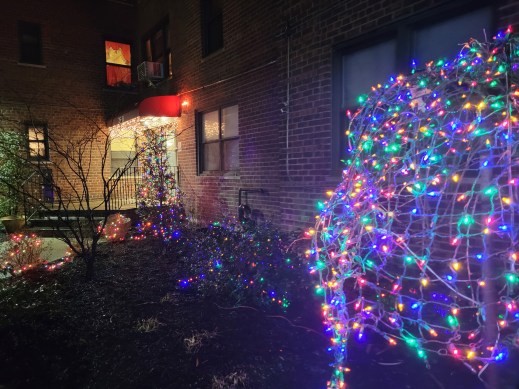
We entered 2022 in a state of sickness but also with a determination to reenter life with meaning and determination.
I sat on a couch with a plastic cup full of soda and a non-alcoholic sparkling grape juice as the giant Waterford crystal ball dropped in Times Square on television. The children that wouldn’t to go sleep were there, getting to see the real ball drop and real New Year’s Eve countdown despite our efforts to get them to bed at a decent hour.
What would have normally (is there even a proper normal anymore) been an easy, low-key get together took several rounds of COVID testing across three or four households to make happen. So many events were canceled and postponed I didn’t think our small gathering was going to happen until we were on the road to upstate New York (update New York as defined anywhere north of the Bronx-Westchester border).
Good food and good conversation made for a fitting end to 2021. Everyone’s other plans were canceled, and this was what we could do, but we pulled it off anyway. All of my Double Satanic Deviled Eggs were eaten, and everyone survived the night.
Having left the drinking life many years ago, I missed out on some of the revelry but also missed out on all of the danger and hangovers. But the next day, the first day of the year, was spent eating, driving home, and unpacking from a brief overnight stay.
The year may see things get worse before they get better, and with so many false ends-in-sight to the global COVID pandemic, anyone who ventures a guess is foolish. But…
Between fatigue at the length of this pandemic and disgust at the lacking leadership in fighting the Coronavirus plague, people are determined to live again in 2022.
This year will be one of continued challenges and changes. No one knows what the dawn of 2023 will look like, but the next 360+ days are going to be busy getting things settled and starting new chapters.
There is new music to be made, new books to be written, new lives to rebuild.
The holiday lights are still shining throughout New York City; we will let them burn as long as we can. We need reason to celebrate, and we’ve been cheated out of a second holiday season.
And so, we are ready to get living again and forge into whatever new normal we can shape. There is no time to waste; we’ve lost too much time already.
Let’s start.
Quarantined for Christmas
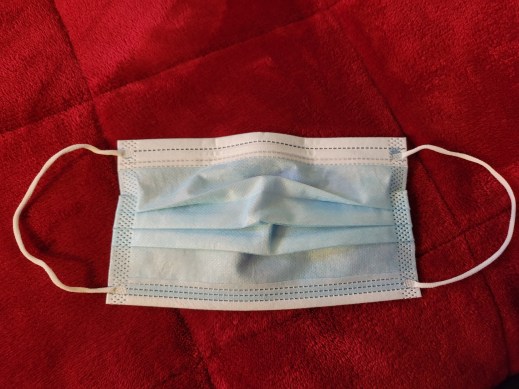
New York is aglow in holiday glory. Within walking distance of my home are houses and apartment buildings adorned in beautiful lights and holiday displays. Midtown Manhattan is deluged with the stunning accoutrements of the holiday season, and parts of the outer boroughs and the suburbs have homes that take yuletide cheer to new heights.
And New York and the world are in the throes of another pandemic surge. Despite being vaccinated and still generally cautious, I’m quarantined in the bedroom of my apartment as Christmas approaches, testing positive for COVID-19 for the second time this year. The whole family had it in February, luckily the rest have tested negative. I’m sequestered in my bedroom and my 10-day Coronavirus quarantine ends two days before Christmas.
This is the second holiday season in a row, at least here in the Northeast, that has been disrupted by this global pandemic, and I share in the fatigue of constant waves of variants, surges, and arguments over masks and vaccines. The COVID pandemic has become a pathetic Greek alphabet soup with everyone going through the motions until the next surge or the next new variant.
For most of the country, COVID doesn’t impact daily life until it does. A few months ago, hospitals in Georgia were so flooded with unvaccinated COVID patients that one of my stepbrothers had a tough time getting non-COVID-related hospital care he needed. The Delta variant surge failed to convince the population that won’t get vaccinated to get vaccinated. Much of the U.S.A. is already mentally past the pandemic, and rightly or wrongly, looks at our continued precautious and inoculations as a form of cultural snobbery.
Getting COVID a second time is frustrated, as I’m doing things by the (often changing and hastily re-written) book. I am fully vaccinated and have been going to places in the city that require full vaccination. I had a few cold symptoms and some general weariness, nothing I thought could not be knocked out with more rest and vitamin C. Then a coworker I had seen recently informed me he tested positive for COVID, so I took a home test that came back positive. The rest of the family got COVID tests at a clinic and tested negative.
I went online and scheduled a COVID test at a local clinic.
Arriving early to check in for my 1 p.m. appointment, I waited behind a woman boasting of her position as a pharmacist and carrying on an extra-long and unnecessary conversation with the desk attendant at the clinic; she kept asking the same questions and laughing and looking at the growing line behind her for some kind of validation and camaraderie. “I fill Z-Pack prescriptions all the time…”
The desk clerk was very patient and kept telling her they couldn’t register any more walk-in patients; there were people who had been waiting there since 10 a.m.
Once the verbose pharmacist moved on, I gave my name and my insurance card and ID, and signed my scribble on an electronic pad without seeing any version of what I was signing—the clerk told me what it was and to be honest, I rarely read these documents anyway—and I was told I would be called when my time comes.
I waited in my car for 45 minutes before I had to go back inside to use the restroom. While I was waiting for the restroom, more people showed up, looking for COVID tests. One man said he had driven in from Long Island, that this was the fourth clinic he had visited today, and that one clinic had told him to arrive at 4 a.m. He was going to travel soon for the holidays and needed travel clearance.
My call finally came, and I got my test in the forms of swabs up the nose; not as intrusive as the one I had in February, we’ll count that as progress. The doctor came in a few minutes later with my results. He was thorough but harried; he had seen about 50 patients before I got there and would see at least that many more before he left for the day. He confirmed my home test and gave the information I needed. I was soon on my way home, walking through a small crowd of people who had arrived at 3 p.m. to try to put their names on the new walk-in waiting list.
This isn’t the holiday season we wanted; we were supposed to be through this by now. When the initial outbreak happened in early 2020, we thought the upcoming spring and summer would spell an end to the lockdowns. After all, this wasn’t 1918, we have advanced technologically very much since then. But human nature does not change, and a deadly combination of partisan theatrics, bureaucratic ineptitude, and general boorish ignorance have kept this going.
I’m not sure what relief 2022 will bring. I have lost count of the number of times that I thought we were on our way to being done with the Coronavirus pandemic. I’ll remember to be thankful for the good health that I have—my symptoms are mild, and I will be through it before Christmas.
I’ll look ahead to the New Year with hope and the resolve to keep living life, no matter what the world puts in the way. See you there.
Happy holidays.
Hellish punk anthems for a decidedly sinful New York

This Halloween season finds New York City in a state of awkward transition to whatever post-pandemic world will eventually be shaped by the COVID outbreak, which continues to strut and fret its prolonged hours on the world stage.
Our city, the epicenter of the Coronavirus outbreak, is setting a template for recovery and establishing post-pandemic standards that make sense. It’s still a struggle in a lot of ways. Companies are struggling to hire enough workers to keep business going, while also struggling with return-to-office plans for a workforce that does not want to work in an office five days a week. “The Great Resignation” continues to churn as companies compete for workers at all levels and even entry-level positions can become bidding wars.
Public transit is far from being able to handle a return to normal. Our transit system was falling on its face before the pandemic, now bus and train routes are regularly canceled for lack of drivers and train operators. Crime and quality of life continue to be a persistent problem.
New York has always been a place where sin is welcomed and the need for law and order is informed, if not restrained, with the libertine permissiveness that has characterized our Gotham since Dutch times. But there is a need for balance. A law-abiding person should be able to walk down the street with an open can of beer, they shouldn’t be stepping over piles of homeless people and their rancid detritus on every corner, or robbed or worse on their way home from a night out.
New York has reached an imbalance; the tolerance for the night life and marijuana has been accompanied by a very real and dangerous rise in real crime. People find themselves being robbed by criminals that a few years ago would not have been back out on the streets from their previous arrest.
But amid this tumult, New York is working to return. While people are understandably in no hurry to return to offices, people want music, and theater, and art, and even want to watch sports teams like the New York Jets. These regular joys have been forcibly dormant by a historic pandemic, and should return with a historic vengeance.
So good news comes this Halloween season with the return of Green Hell, New York City’s Misfits cover band that has entertained dozens of people since 2004 (full disclosure: I have served as Green Hell’s bass player since their second show in 2004, giving me more rights to claim “Original” membership than Doyle of the Misfits). Green Hell has two shows lined up on Halloween weekend: one at Manhattan’s excellent Otto’s Shrunken Head and the other at The Shillelagh Tavern in Astoria Queens.
Misfits songs are fantastic anthems for any Halloween, and it feels very fitting that our modest band of middle-aged punk rockers get the band back together as the Coronavirus is (hopefully, for real this time) on its way out. They are fun to sing along to and not difficult to learn how to play. And no matter what nonsense the “Original” Misfits get into, these songs have stood the test of time.
Green Hell was last seen in 2016, and two members who live far out of town are braving the skies to fly back to New York for two shows. In true Green Hell tradition, we will have time for only one rehearsal, and in true Green Hell tradition I can guarantee that absent of someone’s on-stage death, we will play a tighter set than the Misfits.
We’ll be in excellent company both nights with some of the best bands one could hope to share the stage with, and I will not be satisfied until Green Hell singer Marc Sucks shouts “Fuck the MTA” with Shillelagh owner Russ.
New York continues to suffer the effects of a global pandemic and domestic neglect. This Halloween, as it resists both the death dirge of disease and the growing savagery of its streets, it will have the sounds of raucous horror punk rock to voice its orgiastic rage against an uncaring world.
Whoa!
Vaxxed to the max

We’re approaching the end of the biggest global pandemic in more than a century, and New York is ready to dive into Spring and Summer with renewed fervor.
Much of America is reopening prematurely, with some states flouting mask mandates and common sense the way they have for the past year and a half.
In New York City, Mayor de Blasio declared we would be fully reopen on July 1, which is about eight weeks from now. Not to let a deadly pandemic stand in the way of a pointless pissing contest between awful lame-duck officials, New York Governor Andrew Cuomo is hoping for a full state reopening before July 1.
People can’t wait to do normal things again and I can’t blame them. Recently, a large free concert was held in Tompkins Square Park featuring popular New York Hardcore bands Madball and Murphy’s Law. It was a crowded and largely mask-less affair, with the usual mosh pit and stage diving and a crowd that would not have been able to socially distance within the confines of Tompkins Square Park and still see the stage. Videos of the concert were shared widely online and there was a lot of heavy criticism of the event. No way were any reasonable COVID protocols observed, and in a group of that size at this stage its unlikely that there was a 100% vaccination rate among participants.
The Parks Department gave a permit for this event, and then declared it was investigating it and pulled permits from upcoming shows. I’m not sure who the Parks Department would investigate besides itself—it gave a permit for the event and then was shocked that people actually showed up for it after a year devoid of public concerts. The most rudimentary Google search would have informed the powers that be that these are popular bands, and this was likely to have a large turnout.
And worse, the upcoming concerts that the Parks Department canceled are likely to be smaller events with greater likelihood of social distancing.
But despite this malarkey, this is a good sign. It means we’re in a transitional period and moving back to a time when having public gatherings and concerts will be commonplace again. People are aching to make music again, yearning for the New York City Spring and Summer of outdoor drinking and music and fun.
Living in Eastern Queens and having a car made things easier to schedule, and my wife used the TurboVax Twitter feed to learn of openings at SUNY Old Westbury, and she let me know. Within a few minutes of her telling me, I had my appointment, though the time slots all near hers had been filled and I had to go hour later. Still, I grabbed it.
The early days of the vaccine rollout were rough, but by early April things were running very smoothly in New York. I was seated and ready for my shot within a few short minutes of arriving at the mass vaccination site. When I returned for my second shot three weeks later, I was given the dose even faster.
It’s been two weeks since my last shot, and I’m vaxxed to the max and ready to rock and roll. I’m still making up indoors and keeping one ready if I get close to people outdoors. And honestly, I’d like to stay six feet away from everyone else forever.
But life won’t stop and clawing our way out of the pandemic means getting vaccinated and keeping with some of the habits we developed during the past year. It’s gotten easier to do.
Get vaccinated, you filthy animals.
Truth and civilization
More than 30 years ago now, I was selected as my high school’s intern for our local Congressman. I spent a week working from the Capitol Hill office of Representative Bruce Morrison, a Democrat who represented the third district of Connecticut.
Though he was running for Governor of Connecticut that year, he still kept a very full schedule, and as Chairman of the House Immigration Subcommittee he was working on a bill that was instrumental, for better or worse, for bringing in tech workers from outside the U.S.
Bruce Morrison did not win his contest for governor, though I turned 18 that year and I am proud to say that the very first vote I ever cast that year was for him. The winner, Independent Lowell Weicker, instituted a deeply unpopular state income tax, was hanged in effigy in Hartford and did not run again; the Republican candidate, John Rowland, later became governor and wound up serving time in federal prison for bribery and campaign fraud, so Connecticut judged extremely poorly that November. Rep. Morrison did not run for political office again but left a lasting legacy. Among his many credits is that he was instrumental in helping bring about the Irish Peace accords by normalizing relations between the U.S. government and Ireland’s Sinn Fein.
I was only working in Congress for one week, but it was thrilling to be at the center of our country’s government, being part of what was making the news and seeing the workings of government up close. I helped write a letter to a woman in Mystic about the Women Infants and Children program, sent faxes to other Congressional offices, and did tasks that were menial office tasks but felt like they carried the gravitas of democracy nonetheless.
I would spend hours after work in the visitors’ galleries of the House and Senate, watching the debates. It was thrilling to see Senators and Representatives argue their positions with eloquence and mutual respect. The formality of how they addressed one another, as “Senator” on the Senate and “Gentleman” or “Gentlewoman” in the House, lent grace and dignity to the proceedings, even amid what counted as partisan rancor in 1990.
Among the tasks was going around to various offices collecting signatures on a letter to the Secretary of State in the wake of army killings of students in Zaire, which later resulted in Congress cutting military aid to that country (their dictator would be overthrown in a coup seven years later). I walked the halls of the House office buildings, finding my way to the various offices and sometimes meeting the different Representatives along the way—I usually only handed the letter to a staff member who would go into the inner sanctum of the office and return with the signature of the Congressperson, but chatted with a few in person. At one point while gathering these signatures, I ran into my sophomore year English teacher, Mr. Degenhardt, and my high school’s former Principal, Gilbert Cass, and showed them to our Congressman’s office.
At another point, a Congressman who pledged to sign the letter was on the floor of the House. I was not allowed to go there. Only Representatives, pages, and certain other staff were allowed. Luckily, someone—I think it was another Congressman—ran the letter to the floor and back for me.
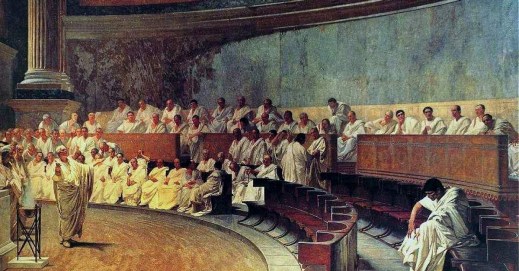
The floor of the House of Representatives was a kind of sacred ground; it was for people who got elected, who entered by the will of the people. It is not another part of the office, or a fancy perk Congress gave itself. People died to keep it free. In fact, the British burned the U.S. Capitol and the White House during the War of 1812.
So last month when Trump supporters stormed the U.S. Capitol, it took on a kind of unfathomable horror. There was an element of watching something we didn’t think could happen here. Even in the most depraved days of Trump’s two presidential campaigns, I had a higher level of faith in his rank-and-file supporters than to think they could be led so far astray from reality.
The past several years have shown us that the fringe elements of our politics have gained traction among the mainstream and have no allegiance beyond their own ideas. The history and honor of our country mean nothing to them, as they see themselves as elite warriors correcting injustices rather than as citizens with obligations and responsibilities. Whatever destruction they or their allies cause is considered justified by the morality of their cause.
What the last four years have laid bare is that both political parties are broken, with great swaths of voters and activists that will be led to violence based on misinformation and propaganda.
Overwrought self-styled patriots, who thought Donald Trump was the last bastion of defense of law and order and America itself, stood with crowds that attacked police officers in an attempt to thwart a democratic election. Self-indulgent social justice advocates, who looked the other way as mobs burned down police stations and created “autonomous zones” in major cities, posted tributes to fallen Capitol police offers and talk of meting out punishment for sedition.
The partisans stuck with extremists in their midst want to blame someone else. Trump supporters claim these were really Antifa activists in the Capitol on Jan. 6, and Black Lives Matter supporters would have us believe it was secret Trump “Boogaloo” militia burning and looting U.S. cities last summer.
Two central tenets can guide us forward out of this decades-long quagmire:
- There must be an absolute and unwavering respect for and obedience to the truth.
- American institutions deserve our utmost care and protection, not because they are perfect but because they are ours.
The truth knows no political allegiances and always disappoints dogmatic partisan politicians. Our institutions were created in different times by different people than comprise America today, but they were made to last and have survived multiple wars and upheavals. If we respect them, they can thrive again.
Dispatches from the Secret Playground

Thanksgiving came and went with still much to be thankful for in New York, at least for my family. While a second or third Coronavirus raged through the city, our immediate family remains healthy and those in our larger family circle that have been ill have recovered.
Everyone in our family has food in their stomach and a roof over their head. Even before COVID-19 rampaged through the world there were billions of people who could not say that much, and that’s getting worse now. I am gainfully employed and have not been sick and have more than enough food; I am thankful.
New York perseveres, but suffers a crisis of confidence. While we were the first place in the U.S. to see widespread COVID infection and death, we were the first to “flatten the curve” with social distancing and masks. Now we’re having a critical relapse with a spike of infections. Schools closed, now are reopening again in a swift reversal of policy. Crime continues to surge.
And all the while, we see thousands of our fellow New Yorkers not taking their own lives seriously. A Hasidic group worked secretly to arrange a large indoor wedding, sans facemasks, and was given a slap-on-the-wrist fine. I go food shopping and see people who can’t wear a facemask properly going about their business in blissful, entitled ignorance.
Yes, we’re not supposed to be judgmental during these difficult times, but this pandemic has revealed just how many of our fellow human beings are unfit to breath the same air.
Having children in a city apartment can be trying during good times; it has been especially trying during this extended pandemic. What we have though is a place we call the secret playground. It’s not really a secret playground, but a little-used playground in a neighboring co-op that we’re not really supposed to use. The old fogeys that run the board where we live did away with the playground for our building years ago, so to use a local playground is to be an automatic scofflaw.
But I take my girls to the secret playground as often as I can. There are rarely other children playing there, so I can let my kids take down their facemasks, if our family is alone. Usually a few residents will walk through on their way to and from their homes, and we’ll put our masks back up as they come through; they are still almost always more than six feet away. It is an oasis that the unseasonably warmer November weather has given us access to and I don’t want to let a single good weather day go to waste as we endure another lockdown.
Sometime next year, we will hopefully begin adapting to a post-COVID world, and some things we will want to stay the same. I’m not alone in hoping that the world remains one where we’re given more personal space and take extra steps to reduce indoor crowds and make spaces safer, with better ventilation and more protections. These are good ideas outside of pandemics.
And therein lies the appeal of the secret playground: it is a respite from the current world and a model for how to best rebuild when we emerge from our currently dismal state. We cannot live in a bubble world, but we can look at our better adaptations of today to keep our joy and our priorities in line with where we need to be.
Vote

I will spare you the regular gibberish about this being the most important election ever and the dire warnings that we will descend into civil war. I think all Americans of voting age should vote because it is our patriotic duty no matter who is on the ballot.
I endorse Joe Biden for President and hope you vote for him. But even if you support Trump or a third-party candidate: go vote. This is your country, and you owe it to yourself to be counted.
My history of picking winners is pitiful. I volunteered for the Bill Bradley campaign in 2000 with zero regrets. Bill Bradley was a Rhodes Scholar who became a basketball superstar and served as a U.S. Senator from New Jersey for three terms. He was the kind of intellect we need in public office but also had a breadth of life experience that made him rise above the pack of regular career machine politicians. He opposed the establishment favorite: Vice President Al Gore.
At his campaign event on the night of Super Tuesday, I noticed none of the big screens in the hotel ballroom were showing any primary results. The party swelled and Bill Bradley came through the crowd toward the stage. Bradley towered above everyone else. He gave a brief speech where he mentioned that he would assess the future of his campaign over the next several days but also made us proud to have been part of the campaign and focused on important issues facing the country. The party wound down and I saw various political and intellectual celebrities there. Professor Cornel West was on the stage close to Bradley and I was glad to see former New York City Mayor Ed Koch (who for me is the one person in the world who will always embody New York City) giving interviews in support of the former Senator.
It wasn’t until I got home and clicked on the TV news did I see the actual results and Holy shit, we got killed! Al Gore’s political machine had made quick work of the Bradley campaign, and Super Tuesday was the coup de grace. Bradley dropped out of the race a few days later. I cast my vote for Al Gore that November with no enthusiasm for Gore but with the indignity that someone as much of a vapid empty suit as George W. Bush had no business getting the nomination of a major political party. I couldn’t believe Republicans could be so gullible to pick Bush over Sen. John McCain, who would have wiped the floor with Al Gore in the general election.
In 2004, former Vermont Gov. Howard Dean was the one who seemed to get it the most, who told Democrats that the people who drove around in pickup trucks with Confederate flags on them needed to be voting for Democrats too, because they needed healthcare and their kids needed an education. He was promising to take Democrats off the dangerous course of our own culture war. That promise evaporated with Dean’s campaign; I sent in my absentee ballot for John Kerry because he wasn’t George. W. Bush.
Both political parties are now broken. With Trump, we have the same incredulity that came with George W. Bush’s nomination: How could a major political party elevate such a fraud to the highest office of the land? With Biden, we have an establishment politician who had to embrace the excesses of the Democratic Party’s activist wing to secure the nomination.
But the disaster of the Trump presidency, especially in the wake of the COVID-19 pandemic, makes this election a no-brainer. Biden was not my first choice, but he is the best choice of the two main political parties, and we stand to lose too much ground as a country with another four years of Trump.
All I ask my Trump supporter friends is that they judge the President by his record of the past four years. Would you have forgiven a Democrat who talked big and delivered little on patriotic immigration reform? Would Barak Obama have been able to shrug off reports of Russians paying bounties for American troops killed in Afghanistan? Would even George W. Bush have had the delusional gall to tell the nation that we’ve turned the corner on the Coronavirus pandemic as the U.S. breaks its daily record of new cases?
Please vote.
Dispatch from an American vacationland
Long Beach Island, New Jersey
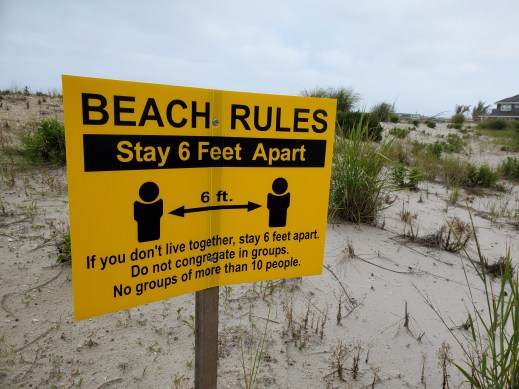
How does an area centered on catering to crowds of tourists manage to keep people safe during the heavy tourist season? Long Beach Island is coping in the time of the pandemic. It has been a family tradition to come to Long Beach Island for about a week every summer and we hoped since March that this year would be no exception.
Early in the pandemic my in-laws, who invite us down ever year, mentioned that there would be new social distancing guidelines for the beaches and restaurants, that LBI had moved quickly to adapt.
The beach is still too crowded on some days. While being outdoors is a help; it’s still not safe enough during the heavy morning hours to go there. I went to bring my kids to the beach and quickly turned around when we saw the size and density of the crowd.
One of the key tragedies of the COVID-19 pandemic is that things that were once routine now require serious decision making. Can my kids play with that little girl in the pool? Can I take my girls to the beach to build a sandcastle? Those were no-brainers in the past; not anymore. There won’t be easy answers for a while.
Whether or not people wore facemasks on Long Beach Island is random. Being from New York City, we feel naked without them, but people from this part of New Jersey have not had the same level of virus infection to make mask-wearing second nature and it’s not as real to them. Shortly before coming down to Beach Haven, we saw that lifeguards in nearby towns had an outbreak of the Coronavirus, not from their time on the beach as lifeguards but from partying together after hours.
You can hear people partying into the night and see them moving unmasked and in irresponsibly large groups everywhere. The island is full of visiting young people and people old enough to know better traipsing around as if there is not a global pandemic still raging across the country.
If you tried to lecture everyone acting foolish about how to wear a mask or distance, you would do nothing else. Calling people out or trying to deliver street justice would quickly evolve into fistfights or some other unproductive screaming match ripe for the viral internet montages of hostility that are already plentiful. Instead you do your best to lead by example; keep the mask on if you are near people, keep six feet apart.
There is not much you can do but do the right thing and keep away from people who don’t. It is easier to do here than in New York, so this still counts as a vacation. Things are not going to be back to normal soon and it would be a rancid lie to pretend otherwise.
Life in this vacation spot goes on; those businesses that have survived on Long Beach Island have adapted well. The Chicken or the Egg is still in high demand and they offer only outdoor seating and to-go orders; the Jersey Devil sandwich still provides a terrific serving of pork roll and I was able to feast on their Buffalo shrimp again. My wife and I had a date night at the excellent Artisan Café that made an amazing Italian mac & cheese and moved its dining outdoors as well. Buckalew’s created an outdoor beer garden and has very on-time pickup service.
The Surflight Theatre survives not only from the Coronavirus but from Tropical Storm Isaias that knocked over its outdoor tent. We were still able to enjoy a Frozen musical with the kids and a comedy night featuring Mike Marino and Sheba Mason—outstanding.
This past Saturday I walked the beach at night. There were a few other people walking about in the darkness, some with cell phone flashlights, and a patrol vehicle that drove back and forth. Only a few yards away from masses of humanity, I took comfort in seeing two shooting stars and a blood orange moon that looked like a nighttime sun.
I stood in awe of the moon, which was sitting low in the sky and casting its bright colorful light over the sea. The thunder of the Atlantic Ocean drones on, its waves crashing to shore in a powerful chorus When our world appears cracked, nature has a way of putting human civilization in perspective.
Ars longa, vita brevis

What grinds us down most is not the presence of stress, but the absence of joy.
Even during the darkest times in human history. People survived not just on food, water, and medicine but on jokes, songs, and stories. It’s not a coincidence that in addition to our stockpiling cleaning supplies and toilet paper, the COVID-19 pandemic launched binge-watching of entertaining shows. I’m not sure I would have been as riveted by Tiger King if the insanity of private tiger parks was more cheerful than the insanity of the outside world at the time.
The present and resurgent health pandemic that has made havoc on our world, we remind ourselves that this too shall pass, and most of us will survive and be able to learn from this time to create a better tomorrow. I also must remind myself how lucky I am: I and my family are healthy, I have a job, our building has been safe from looting, arson, and teargas.
I live most of my days now in front of my work laptop at home. Even when the work-from-home life does its worst to my day, I’ll manage to feel some immense relief if I can scratch out the draft of a poem, or poorly play a few Misfits tunes on my guitar.
Creating something, even if it’s something small that no one else will see, is good for your health. The theory of cognition holds that creativity is a central aspect of human. It improves our brain function and therefore our health. So even when I’m dead tired from working all day and then move from the desk to the dinner table to putting the kids to bed; I know I can salvage what remaining time I have left before I fall asleep if I do something creative.
I’m working on getting better at playing guitar because I had the privilege of playing the six strings on stage earlier this year with Beer Drinking Fools. Now I’ve been bitten by the six-string bug and want to subject innocent eardrums to blistering crossover hardcore punk and thrash metal that will sound like S.O.D. having a blood orgy with Bad Brains and The Lunachicks.
Our current crises are beset with ignorance and villainy on all sides. History will condemn civilized societies that let their people die needlessly and found it virtuous to let their cities fall to ruin. It is difficult to feel hopeful, but even amid hopelessness, one can find solace in creativity.
A surge of creativity is not a cure-all for what ails our society. While the current politics and pandemic are new, it was a long time getting to where we are now, and it will take a long time to get to something better. But the seriousness of our times doesn’t negate the need for creative joy; it makes such creativity more necessary than ever.
During these times of pandemic, our creativity will sustain us and endure. Amid so much destruction and despair, creativity is a revolutionary act.
 Matthew Sheahan
Recent Comments