
Second acts are American lives
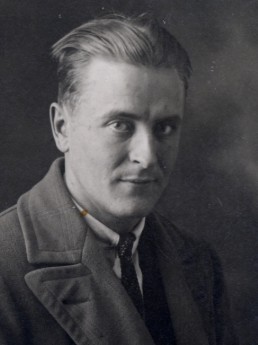
“There are no second acts in American lives.”
- F. Scott Fitzgerald
Fitzgerald scholars are rightly irked that the line about no second acts in American lives is often quoted by itself and attributed to “The Last Tycoon.” The line was first used in a 1932 essay titled “My Lost City,” which documents the resilience of New York in the aftermath of the stock market collapse that helped launch the Great Depression.
The original Fitzgerald quote from “My Lost City” is:
“I once thought that there were not second acts in American lives, but there was certainly to be a second act to New York’s boom days.”
Fitzgerald’s own life contradicted the idea that there are no opportunities for renewal in America.
He was preparing to dominate his own life’s second act when he died at the age of 44. And true to his 1932 essay, New York has shown its resilience multiple times and survived more crises and disasters in the decades since 1929.
Fitzgerald is one of the giants of American literature. While his writing celebrates the Jazz Age and the promise of American prosperity, it also pulls back the curtain on the dark side of the American dream. His most celebrated work, “The Great Gatsby,” is a great example of the ability to make a new life for yourself, but also the pitfalls and dangers of the heedless pursuit and indulgences of wealth.
Jay Gatsby’s material success is undermined by his need to be something he is not. He cannot accept that the material rewards of his life are not the trappings of noble lineage. In America, we don’t care who your father was. We care about what you can do now, not what someone in your family tree did 100 years ago. That’s the essence of the American experiment—be judged by what you do and where you are going, not where you came from.
America was founded on the premise of second acts. From New England’s pilgrims to the hardscrabble pioneers who settled the American West, our country is one big series of second acts and new beginnings. Second acts are as American as a bald eagle eating apple pie.
I find encouragement in this as I look for a new job. I have been out of work for several months and have cast a much wider net than in previous searches. I no longer feel the need to go back to the same industry or seek the same salary. I’m old enough that I can be honest with myself about the things I would like to do and prioritize things that will lead me to enjoy the everyday more than how things read on a resume. This is well beyond my second act, and I’ve lost count of the new beginnings I’ve had to carve out. But that’s no matter. It is never too late to start again or become something new.
This year, as the United States celebrates the 250th anniversary of its founding, remember that our country was born from one of the bravest second acts in world history.
And remember that second acts are rewarding to the extent that they allow you to be who you really are, and not what others expect of you. Part of having a successful second act in life means not caring about what others think. Your life exists to make you and your loved ones happy.
Here’s to second acts in American lives—one of the things that makes America great.
Book rescue in Queens and its vortex of unknows

I was cleaning out my motor vehicle, disposing of a handful of parking meter receipts that accumulate on the dashboards of cars in large American cities. As I deposited my trash in a receptacle, an open book nearby caught my eye.
Someone had dropped or thrown a book, and it had landed open against a curbside trash shed outside a co-op. It was an odd place to see a book, and it looked like it was thrown from a moving car or dropped out of bookbag that was being kicked down the street. I retrieved it.
The book, “Who Put This Song On?”, by Morgan Parker, was in good condition considering its rough treatment. Upon inspecting the book further, it bore a label on its back cover that read “FLUSHING HIGH SCHOOL LIBRARY.”
Flushing High School is a mile away from where I found the book. I made a note to return it. No book should be homeless, and someone may be looking forward to reading that, or may not be able to afford whatever fine may be levied for losing it.
A host of possibilities flooded my mind regarding how the book came to rest upon the sidewalk a mile away from its library home. Did someone steal it and try to throw it in the trash bin? Was a student carrying this when they were attacked by a kidnapper or serial killer, and the page was open to a passage that would reveal the whereabouts of the victim or give a clue as to the motive of a brutal killing? Am I now a suspect in a kidnapping or murder that has not been made public yet? Or will I be considered a cringeworthy thief, found with a book stolen from a local high school?
I made it my mission to return the book as soon as it was convenient, lest I be unwittingly caught up in these mysteries, but more likely, that the book can continue to be enjoyed by students. I was prepared for whatever grilling I would receive when I brought the book back—I can explain my fingerprints on the book were from finding the book, not stealing it or doing anything untoward to whatever student checked it out.
I set about my task taking a public bus to the high school, arriving in the afternoon after classes were over for the day. I tried to look as assuming and non-threatening as possible while carrying a book clearly geared toward young women.
Flushing High School is on a nice green campus surrounded by the dense vertical sprawl of downtown Flushing, Queens. It’s an oasis of beautiful architecture and calm grass and trees amid the rapid overdevelopment of a city fueled by commerce without a thought for beauty and cohesion. I hope it fights to the death to stay the way it is.
My returning the book was anticlimactic. I stepped into the front entrance of the school and handed the book to a school safety officer behind a desk, who thanked me for returning it. I walked out of school and enjoyed the walk home, having done my good deed for the day and rescued a book from oblivion.
 Matthew Sheahan
Recent Comments