
Lessons of strength from September 11
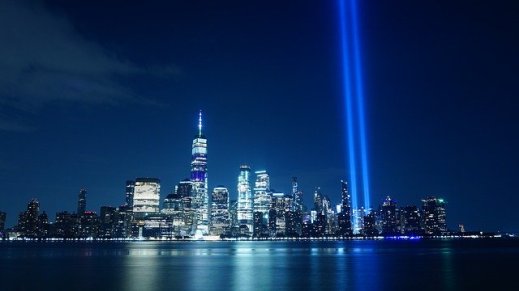
For New Yorkers who were out of town on September 11, 2001, the horrors of that day were accompanied by a feeling of horrific impotence. I was at a conference for work in California, and I was awake in time to watch the North Tower collapse on live television. I could do little but make phone calls to make sure some of my family who lived and worked in lower Manhattan were still alive (they were).
There is no way to fathom the extent of the loss the world suffered that day; our city and country (and world) have never been the same. But there are positive lessons we can take from that day that give us strength in the face of lingering darkness:
New York City will be here forever, and our Gotham can survive anything. In my lifetime alone, New York City has survived bankruptcy, riots, the worst-ever terrorist attack on U.S. soil, an East Coast blackout, and a deadly global pandemic. “Tough” doesn’t begin to describe New York. New Yorkers are both tormented and inspired by our city every day, but we love it and will defend it to the death.
Americans will rise to the occasion, no matter how dire or dangerous the mission. The heroism of the passengers of Flight 93 and the sacrifices of the first responders and others who helped people to safety during the attacks is an enduring legacy that gives us hope in dark times. The blood of revolutionaries and pioneers still courses through our veins. At times of our worst traumas come opportunities for greater good, and the mettle America showed in the wake of the attacks is alive and well.
Everyone has a role to play, and life is too important to sit on the sidelines. The heroes of the September 11 attacks include not only the first responders and the Flight 93 passengers, but the train and ferry operators who got people to safety, doctors and nurses who tended to the wounded, and even everyday people who did whatever they could. Those kinds of opportunities to be a part of making our city, country and world better are still present. Don’t be a spectator.
Take a moment to remember those that we have lost. Remember, too, the resilience and character of our city and country—qualities that carried us through and continue to endure.
Postcards to the future

An annual tradition in our family is to go to Mohonk Mountain House on President’s Day weekend. It’s a tradition started by my wife’s father and stepmother and we are happy to take part in it.
This year Mohonk Mountain House is celebrating its 150th anniversary (called a sesquicentennial if you want to use a big word and impress yourself). As part of its observation of this milestone, the historic resort plans to create a time capsule to be opened in 100 years. They invited all of their guests to fill out postcards to be sent 100 years into the future, presumably to be poured over by historians or glanced at by bemused guests in the next century.
One hundred years ago, much of the Western world was still recovering from the First World War, though no one would have called it that at the time because another 20 years would pass before the next World War would start. World War I was called simply “The Great War,” and Western civilization had not seen anything like it. Technology had helped nations create weapons that had not been used in large scale before and casualties were enormous. In fact, there are still areas of France off limits today because of the plethora of unexploded ordinance from the First World War.
Today our world is not in the after math of a great war but rather adjusting to the dissolution of the world order that was began after the Second World War. We have a new dominant world power in China and the world’s greatest superpower, the U.S., deeply divided. There is no shortage of conflict in the world that is taking a drastic human toll.
The world is still a scary, violent place, just in different ways than it was in 1919. We didn’t have mass school shootings in the U.S. in 1919, but we had a flu pandemic that killed more than 180,000 people. We didn’t have MS-13 gangs, but we still had anarchist bombings and labor and race riots. It’s not a bold statement to say that the world of 2119 will be frightening to the historical researchers who read our Mohonk postcards. Between now and then the world will change dramatically in ways we can’t predict, but human nature and the existence of conflict will remain.
But what is also constant, and what I tried to convey in the card, is that while conflict is never ending, so is hope and the human drive for improvement. As long as people have killed one another and destroyed past civilizations with sloth and greed, they have also constructed new communities and sought out the better angels of their natures.
In the postcard we left for the 100-year time capsule at Mohonk, I wrote to a future that would be as conflicted and fearful as our own. I conveyed to them that now, as will be the case then, people gathered to see the beauty of nature and share good times with the people they loved.
I added our postcard to the gathering mass of missives to the future, hopeful that maybe one of my great grandchildren will be enjoying some time at the Mohonk Mountain House and get to read our note from the past.
How to Do Spring in New York

Even though the first day of spring was officially several weeks ago, we are only now beginning to get real spring-like weather in New York. That’s fine by me. I hate the heat and like to keep as much distance between myself and summer as possible.
Spring is a great season to be in New York. The blanket of cold is lifted and the blanket of overheated humidity has yet to descend. The hum of outdoor social life returns and the parks become alive again.
I know that summer is coming and that it will be several months of sweltering misery, so let’s enjoy the spring while we have it here. Here are some ideas of how you can best enjoy the springtime in New York City:
Go to Coney Island before it gets crowded. Coney Island is a fun place to go and enjoy the amusements and atmosphere. It gets choked with people during the official summer season (though if you walk far enough along the boardwalk you can find your way away from the worst of the crowds. Ride the Cyclone, visit the freak show at the Coney Island Circus Side Show and visit its freak museum. Get a hot dog at the original Nathan’s. There’s even the New York Aquarium there.
Go bird watching in Inwood Hill Park. Inwood in northern Manhattan is one of the city’s great treasures of a neighborhood and central to that is Inwood Hill Park. Where else in Manhattan can you see eagles and hawks and get lost in the woods? Bird watchers get to see a lot of interesting birds in the park, and not just eagles and hawks. Eagles were hatched in the park years ago to increase their likelihood of returning as adults. Hawks are long-time residents of Inwood (and other city spots). So go and enjoy watching nature’s predation at its most beautiful.
Visit a botanical garden. The city’s largest botanical garden is in the Bronx near the Bronx Zoo, but did you know that Brooklyn, Queens and Staten Island all have their own botanical gardens also? Lots of abundant park land and plant life abound at the botanical gardens, plus they often have special exhibits.
Take a historic walking tour. No matter what your interests are, there is history in New York for you. Interested in learning about the American Revolution, gangsters, labor strikes, punk rock? There’s a walking tour for you. When you can walk past something and tell someone something interesting about it, that’s makes you a better traveling companion. You might learn something interesting and historic about spots you walk by every day.
Enjoy some free outdoor theater. There is free Shakespeare in many public parks throughout the city and it’s a shame not to take advantage of that. There is so much good theater, art and creativity to sample for free that you should never jones for your theater fix. The New York Public Theater, New York Classical Theatre and Hip to Hip Theater Company all do a great job bringing free theater to the people of New York.
Avoiding the Poison of Excessive Nostalgia

The once-celebrated East Village bar the Yaffa Café announced that it is closing its doors for good. It was initially shut down in September by the Department of Health for health violations. The coverage sent up its standard lament; another “iconic” landmark crushed by cruel fate.
It’s a familiar pattern now. A well-known music venue, bar or restaurant announced its closing and there’s a chorus of objection to it, a scolding clucking about how shameful it is and how the city isn’t what it used to be. But this is a pattern that’s been going on since the 1600s.
Many friends and colleagues are correct when they say that small businesses closing represents a danger to the soul of New York. But let’s also remember that constant change and reinvention is also a part of the soul of New York.
While we ought to make sure small businesses have a fighting chance, we also must be careful not to fall victim to the poison of excessive nostalgia.
Nostalgia is deadly because it leaves people to believe that the best part of their lives are behind them. I don’t care if your eight or 80, if you’re not looking forward to something in the future, you’re not really living life. The promise of something in the future is what keeps people alive.
If any place can’t maintain its relevance for its ever-changing clientele, then it’s simply running on the fumes of nostalgia. The fumes of nostalgia may start off smelling sweet, but are composed of an underlying rot.
New York exists in its current form today because it is unforgiving and values nostalgia very little. The constant churn of commerce is always inquiring: ‘What have you done for me lately?’
I was among the chorus of voices that bemoaned the loss of CBGB’s seven years ago. The famous club helped birth punk rock and when I played there with Blackout Shoppers at our very first show in 2004, it was a dream come true. I saw many great shows there and had many good times and memories. But CBGB had not kept up with the times or even lived up to its own history. Bands who got their start there chose not to return and played other clubs in the area. The Ramones played their last New York shoes at a venue called Coney Island High, also long gone, which was a few blocks away from CBGB. The throngs of people who crowded into the club during its last days were curiosity seekers and tourists, people seeking to tap into nostalgia for its own sake, darkening its doors during its death throes so they could boast that they had been there.
So let it be with the Yaffa Café. I went there once when I was younger and I thought the place was overwrought and pretentious, and this was a time in my life when I was happy to put on airs as a hopeful young writer and therefore had a higher threshold for overwrought pretension.
Places like the Yaffa Café attract people who don’t so much want to live the life of a writer or artist as much as they want to play-act being a writer or artist. Ernest Hemingway went to the cafes of Paris because he was dead-broke and those cafes were dirt-cheap. Hemingway is celebrated today not for the time he spent time at a café but because of the time he spent at his typewriter.
I enjoy sidewalk cafes to a certain point, but squeezing my overweight frame into a tiny, crowded space so I can imagine I’m F. Scott Fitzgerald is a ridiculous idea. A writer or artist is too busy writing or making art to invest a lot of time on nostalgia.
The White Castle in Williamsburg has done a greater public good than the Yaffa Café in my opinion. Its demise is the one that ought to be mourned. I’ll indeed miss filling up on delicious White Castle burgers when I am in Williamsburg, but I can’t begrudge the decision by the owners to sell the place. They knew that they’d make more money selling the land to condo developers than they’d make selling burgers, and it followed that it made more sense. It’s a for-profit business; they weren’t giving away burgers for free.
I’m sure the Yaffa Café had its strong points. If I remember correctly the coffee wasn’t half bad. But the past is littered with better businesses that could not stand the test of time. Let them all rest in peace.
 Matthew Sheahan
Recent Comments