
Snowbound NYC feels the filth of winter
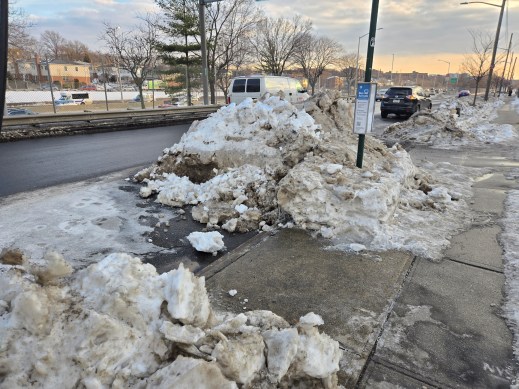
The Northeastern U.S. has become accustomed to mild winters over the last decade. Prior to the latest snow blizzard that pummeled much of the country, online newsreels were commemorating the 30th anniversary of the blizzard of 1996. Now we have a new milestone to mark in the history of the five boroughs’ struggles with snow.
The Northeastern U.S. had weeks of below-freezing temperatures immediately following an exceptionally large snowstorm. The usual melt that happens in the days after a storm hasn’t happened. I can’t remember any time in my life that so much snow sat around for so long afterwards.
While the roads may be cleared in theory, large snowbanks have turned two-lane streets into one-lane streets. Slippery snow and ice patches make driving in the city more dangerous than usual.
The sidewalks and crosswalks are in an even more dismal state. Plows push large quantities of snow into icy walls that solidify into chunky walls of hard-packed ice and snow.
The city’s Department of Sanitation continued to plow the same roads and did little or nothing about freeing up sidewalks, bus stops, and crosswalks. I recently stood behind a plow wall at a bus stop and watched a snow plow drop loads of salt on an already dry road while piles of filthy, frozen snow sat nearby untouched.
Even with the understanding that this was an unprecedented storm, the city’s response rates poorly. Long stretches of sidewalk, including those abutting public parks and city-run spaces, remain largely inaccessible weeks later, thin paths cut by the feet of harried pedestrians the only things working to clear any walking space.
Snow makes New York City look beautiful for about three hours. Snow in NYC quickly turns into a mosaic of street and sidewalk filth, collecting dog urine, car exhaust, and the varied effluvium that regularly pulses across our sidewalks and curbs. After several weeks, the hardened snowbanks sport a spattering of grotesque shame, rife with collected bacteria.
New York’s sidewalks and crosswalks, already a crowded place of give-and-take silent negotiations of movement, have become more challenging to navigate. Having a good pair of waterproof boots is paying big dividends, and I am trudging through frozen sidewalk tundra like an over-the-hill urban sherpa.
Warmer temperatures in the weeks ahead promise relief through melting snow, but city authorities should take stock of this storm and improve their response. In the meantime, New Yorkers are waiting for the Great Snow Melt of 2026.
The Final Skate for Two Man

Several years ago, my band, Blackout Shoppers, was setting up for our turn to play on the stage at a punk rock show. We were playing with one of my favorite bands of all time, Two Man Advantage. Two Man’s “Captain,” Jeff Kaplan, noted striking similarities between our two musical groups.
“We have an intro song,” he noted with a smile, “and you guys have an intro song.”
“We have a guy with a mask on stage,” he continued, “and you guys have a guy in a mask on stage.”
“Captain,” I replied, “we only steal from the best.”
No doubt, I count myself among many whose life would not be the same today had I not been a fan of Two Man Advantage. The Long Island-based hardcore punk band was put together in 1997 for the purpose of playing one single show at a friend’s party. This past October, they hung up their skates after 28 years.
I had never heard of them before going to The Knitting Factory in the summer of 2003 for a Go Kart Records show to see two bands fronted by former members of the Lunachicks (Bantam and Team Squid). I had no idea who else would be playing.
When a hockey-themed band started setting up I really wasn’t sure I would like them. I was afraid they might be a beat-down hardcore band that took itself too seriously, which the sports jerseys seemed to portend. But the music started and they had a guy in a mask! An excellent artistic flourish. The music was not beat-down drudgery but fast-paced, hard-driving old-school hardcore punk – the finest. When the lead singer came to the stage waving a hockey stick with ‘DRUNK BASTARD’ emblazoned on the back of his jersey, I could tell this band had a sense of humor. The music never let up; they played a set full of fast, aggressive songs that were catchy tunes and were mostly about hockey. I didn’t follow hockey, but so what? The music was so much fun and the band attacked each song with a volume and intensity that I couldn’t help but jump in the pit.
And at the time I was looking to start or join a band, and over the next year Blackout Shoppers came together and started playing regularly. Stealing ideas from Two Man Advantage and Philadelphia’s Loafass, I started wearing a mask on stage and we developed an intro song so our singer could make a separate entrance.
Throughout their nearly three decades, the band has played with all manner of hardcore punk’s elite. and toured the U.S. extensively. Not too long after Blackout Shoppers formed, we had the opportunity to share the stage with 2MA, and every time we did it was a great time. Getting to know the members of the band over the years increased one’s appreciation for the group. Every conversation with guitar player the Captain teaches me something interesting, be it mathematical theory or records – he’s forgotten more about music than I may ever know. Lead singer Anthony “Spag” Spagnolo and drummer Aaron “Coach” Pagdon were DJs at my wedding – Spag’s apartment has the largest record collection I have ever seen outside of a record store or radio station. Not long after DJing my wedding, Coach and his wife were married on Easter Island. Guitar player Robert “Sk8” Locasio works in film and television production. Bass player Jeff “Slapshot” Marsala had been traveling to New York from Pittsburgh to play shows, and produced a great series videos of Two Man members and friends sharing stories from the band’s past. Backing singer Myk Rudnick works in merchandising for the music industry, from thrash metal to rap—I was happy to learn he is friends with M.C. Search from 3rd Bass.
Blackout Shoppers was also fortunate to put out a split 7-inch record with 2MA, and we booked a weekend tour together to promote the new record. While it was perhaps not as eventful as some of Two Man’s other adventures on the road, our brief tour included staying in a dilapidated house in February with no heat; witnessing a car fire that blazed with bonfire-sized flames on a busy highway; playing in a warehouse DIY space so densely crowded with sweaty people moshing that it had its own visibly sticky atmosphere; spending the night in Boston at the home of a woman who was a former pro-wrestler, made us the best chicken nachos ever, and had converted an entire room of her apartment into a ball pit; and playing a final show in the midst of a blizzard that threatened to shut down New York City. What little money the bands made went to pay for gas and beer, and it was an absolute blast.
When Blackout Shoppers celebrated its 20th anniversary last year, Two Man Advantage was on the bill. They delivered a great set that helped keep the momentum going.
Earlier this year, notices appeared on social media promoting Two Man Advantage’s ‘Final Skate.’
I asked if there might at some point be a Two Man Advantage reunion; after all, I had been present for several “final tours” of bands such as Motley Crue and Slayer. “This will be it,” Captain replied.
Tickets went on sale for the band’s final show at Amityville Music Hall in Amityville, Long Island, and I quickly snatched up a pair of tickets online. I am glad I bought them early—the show sold out.
On the night of the show, I got to the venue early and joined a line that stretched down the block. Once the doors opened, I got on the merchandise line almost immediately; by the time I reached Two Man’s merch table, most of their t-shirts were gone. They sold out of nearly all their merchandise before a single note of music was played.
The first band on was Burrito Bowel, a young grindcore band that includes Vlad Rudnick, son of Two Man backing singer Myk Rudnick, on bass. I remember when Vlad was 10 years old and standing by the side of the stage at Two Man shows, with a few of us shielding him from flying bodies emanating from the mosh pit. Now he sometimes plays bass in the mosh pit while wearing a hockey jersey. Vlad works as a sound engineer and mixed Two Man Advantage’s final record. Next were The Stress, an old-school style Oi band, who delivered a great set of tight songs with excellent, envy-inducing bass lines. Deathcycle took the stage next, delivering great, metal-infused hardcore. Deathcycle’s singer, Ron Grimaldi, spends almost as much time off stage as on it, and their sets become a ‘Where’s Waldo?’-like exercise in seeing where Ron will pop up next; they deliver in-your-face hardcore like no one else. No Redeeming Social Value is the gold standard of how to do hardcore punk without taking yourself too seriously (though they may give that designation to The Six and Violence)—songs about beer, Guidos, chicken, and pussy overlaid with showers of malt liquor and costumed mayhem. Perfect for the occasion.
People got into position for Two Man Advantage, and I had a nice spot at stage left. It was both a thrilling and solemn moment. This was going to be a great Two Man Advantage show where the band and audience was going to give their all, and it was also the last time the band would perform. Anticipation built as things came into place.
The sold-out crowd roared when Two Man Advantage took the stage. As is tradition, Coach took the microphone to give an introduction before the music started. He thanked the audience and he noted that it was hard to say goodbye to something you love, and that decades of music had changed all of their lives for the better. “This family is a band,” he told the crowd.
Two Man started their traditional intro song “2MA Intro,” and the crowd quickly turned into a churning mass of moshing. It rained beer and bodies, which intensified with each song, and I struggled and then gave up trying to get good, up-close photos. This was musical chaos to be savored in the moment, and it felt very fitting that the final Two Man Advantage performance was a donnybrook that eventually chased me away from the front of the stage. The music was relentless and people were yelling themselves hoarse singing along.
The band played crowd favorites, including “Don’t Label Us;” “Hot Rod GTO,” about the Pontiac GTO and Spag’s experiences with them; “Zamboni Driving Maniac,” which earned the band a threatening legal letter from the Zamboni company (Zambonis are the machines that smooth out the ice on an ice rink); and “Captain Morgan,” about the rum bearing the name of the pirate—the band had two very large bottles of Captain Morgan run passed around to the crowd to share. Two Man brought up former members and special guests throughout the show. The venue at the end of their set felt like a battle had been won; then they came back for an encore and played more songs.
Two Man Advantage made music with sincerity and love, and shared it with the world in the same way. That is why their final show sold out, why their merchandise was snatched up in minutes. That’s why people planned road trips to follow their tours, and why people traveled thousands of miles to be there for the farewell.
Thank you, Two Man!
Book rescue in Queens and its vortex of unknows

I was cleaning out my motor vehicle, disposing of a handful of parking meter receipts that accumulate on the dashboards of cars in large American cities. As I deposited my trash in a receptacle, an open book nearby caught my eye.
Someone had dropped or thrown a book, and it had landed open against a curbside trash shed outside a co-op. It was an odd place to see a book, and it looked like it was thrown from a moving car or dropped out of bookbag that was being kicked down the street. I retrieved it.
The book, “Who Put This Song On?”, by Morgan Parker, was in good condition considering its rough treatment. Upon inspecting the book further, it bore a label on its back cover that read “FLUSHING HIGH SCHOOL LIBRARY.”
Flushing High School is a mile away from where I found the book. I made a note to return it. No book should be homeless, and someone may be looking forward to reading that, or may not be able to afford whatever fine may be levied for losing it.
A host of possibilities flooded my mind regarding how the book came to rest upon the sidewalk a mile away from its library home. Did someone steal it and try to throw it in the trash bin? Was a student carrying this when they were attacked by a kidnapper or serial killer, and the page was open to a passage that would reveal the whereabouts of the victim or give a clue as to the motive of a brutal killing? Am I now a suspect in a kidnapping or murder that has not been made public yet? Or will I be considered a cringeworthy thief, found with a book stolen from a local high school?
I made it my mission to return the book as soon as it was convenient, lest I be unwittingly caught up in these mysteries, but more likely, that the book can continue to be enjoyed by students. I was prepared for whatever grilling I would receive when I brought the book back—I can explain my fingerprints on the book were from finding the book, not stealing it or doing anything untoward to whatever student checked it out.
I set about my task taking a public bus to the high school, arriving in the afternoon after classes were over for the day. I tried to look as assuming and non-threatening as possible while carrying a book clearly geared toward young women.
Flushing High School is on a nice green campus surrounded by the dense vertical sprawl of downtown Flushing, Queens. It’s an oasis of beautiful architecture and calm grass and trees amid the rapid overdevelopment of a city fueled by commerce without a thought for beauty and cohesion. I hope it fights to the death to stay the way it is.
My returning the book was anticlimactic. I stepped into the front entrance of the school and handed the book to a school safety officer behind a desk, who thanked me for returning it. I walked out of school and enjoyed the walk home, having done my good deed for the day and rescued a book from oblivion.
Lessons of strength from September 11
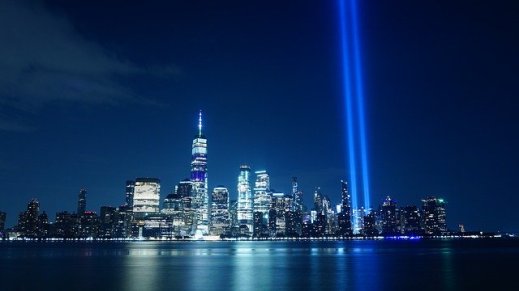
For New Yorkers who were out of town on September 11, 2001, the horrors of that day were accompanied by a feeling of horrific impotence. I was at a conference for work in California, and I was awake in time to watch the North Tower collapse on live television. I could do little but make phone calls to make sure some of my family who lived and worked in lower Manhattan were still alive (they were).
There is no way to fathom the extent of the loss the world suffered that day; our city and country (and world) have never been the same. But there are positive lessons we can take from that day that give us strength in the face of lingering darkness:
New York City will be here forever, and our Gotham can survive anything. In my lifetime alone, New York City has survived bankruptcy, riots, the worst-ever terrorist attack on U.S. soil, an East Coast blackout, and a deadly global pandemic. “Tough” doesn’t begin to describe New York. New Yorkers are both tormented and inspired by our city every day, but we love it and will defend it to the death.
Americans will rise to the occasion, no matter how dire or dangerous the mission. The heroism of the passengers of Flight 93 and the sacrifices of the first responders and others who helped people to safety during the attacks is an enduring legacy that gives us hope in dark times. The blood of revolutionaries and pioneers still courses through our veins. At times of our worst traumas come opportunities for greater good, and the mettle America showed in the wake of the attacks is alive and well.
Everyone has a role to play, and life is too important to sit on the sidelines. The heroes of the September 11 attacks include not only the first responders and the Flight 93 passengers, but the train and ferry operators who got people to safety, doctors and nurses who tended to the wounded, and even everyday people who did whatever they could. Those kinds of opportunities to be a part of making our city, country and world better are still present. Don’t be a spectator.
Take a moment to remember those that we have lost. Remember, too, the resilience and character of our city and country—qualities that carried us through and continue to endure.
New York’s most punk band leaves the stage

In the early 2000s, I picked up a copy of the punk rock newspaper The New York Waste, and paged through the show listings, record reviews and other articles. I came across a comic strip, ‘Last In Line for the Gang Bank, the GG Allin Story,’ a comic biography of late punk rock musician GG Allin.
GG Allin was a legendary punk rock performer known for his obscene and violent performances. His posthumous notoriety has grown in recent years but at the time his legend was more restricted to a smaller circle of punk rock die-hards.
Holy shit, I thought, someone is writing a comic-strip biography of GG Allin’s life and that is the coolest thing ever!
I read this comic strip religiously in every issue of the New York Waste. At the bottom of every comic in a small banner or border was a web address that looked somewhat cryptic. Unable to resist, I fired up my large desktop computer at home (this was several years before smart phones became publicly available) and visited the web address to find it was for a band called World War IX. Their guitar player, Justin Melkmann, was the man behind the GG Allin comic.
Based on the strength of this awesome comic alone, I made a mental note to see World War IX play at the earliest opportunity.
I first saw the band play at CB’s Basement, a smaller, downstairs venue attached to the legendary CBGB’s. They were the kind of raw, no-frills garage punk rock that I can never get enough of. They brought a loud punk sound with catchy tunes and, importantly, a sense of humor.
After their set, I found their guitar player, Justin, and told him that I liked his comic, and that World War IX was playing great music. I was in the process of getting my band Blackout Shoppers off the ground and we promised to stay in touch.
Fast forward a few months, and Blackout Shoppers and World War IX were playing shows together frequently, and the first recordings that Blackout Shoppers ever had for sale was a split 7-inch record with World War IX called ‘Larceny Armageddon,’ playing off the names of our bands.
People have been arguing over what constitutes “punk” since 1975. If you ask 100 punk rock fans for a definition of punk, you will get 100 different answers. We can agree maybe on two key attributes that make a band punk: an aggressive, often purposely offensive style of rock, and a base level of honesty with its fans and the general public.
Many punk bands try to act as if they are completely above the fray, that because they play this style of music they exist on a higher moral plane than those that play more lucrative genres. I can tell you first-hand that punk musicians harbor all the same egos and insecurities that the rest of the rock world has. As much of a joy as it is to play music, there comes a time in every band member’s life when they look at other bands and say to themselves, “Why can’t we have what they have?” or otherwise questions or gripes about their position in the entertainment industry food chain.
World War IX has a case for being New York’s punkest band of the last few decades. It played a raw, aggressive punk rock style that evolved but never mellowed, and it was very honest with its fans. Especially as told through Justin’s comics, World War IX narrated its own journey with all the pitfalls and aggravations that come with keeping a band afloat for years. Lineup changes, issues with drugs and alcohol, job worries and marriages and the weight of the world that is crushing at times have all been illustrated with humor, grit and ultimately gratitude.
As World War IX embraced its creativity, I had the opportunity to share the stage with them as a member of Blackout Shoppers and other bands, and I also had the chance to play villains in several of their music videos for Cutlass Supreme, Carrera con el Diablo and Bender Royale. I cannot think of an instance when I had a bad time at a World War IX show, or had a bad time with a member of World War IX.
I felt great joy when my friend Philthy Phill became their singer. A super-creative soul who has embraced the arts of writing, stand-up comedy, and music while surviving in New York, Phill was a natural choice when the band was looking for a singer once more. It was a sign that the forces of the world had brought on a confluence of punk rock perfection when Phill was on the mic. His departure from New York is what got Blackout Shoppers back on stage and playing again regularly after a few years on semi-hiatus.
Phill was replaced on singing duties by Johnny C., previously of the band Citizen Blast Kane. A few years later, World War IX decided to call it quits. There wasn’t any big drama or dispute over money (there is no money in punk rock!), but there comes a time when a band just feels it has run out of road and needs to move on and do other things. That time came for World War IX, and the band decided last year that they would play a final show this January at Otto’s Shrunken Head.
World got out that WWIX was breaking up and having a final show. People from all over the country made plans to fly to New York for the event. The band invited all their former members to return to play one last time. Most importantly, Philthy Phill would be coming in from Indiana.
The night arrived for World War IX to say a loud farewell. Otto’s was packed and first on the stage was Cash Bribe, featuring WWIX bass player Brian Jackson on bass. Cash Bribe kicked things off with hardcore fury that blended old school Black Flag with heavier distortion and more metal-sounding riffs, truly a modern hardcore band building on gritty, guitar-fueled punk.
All but one of Dr. Ex and the Break-Ups are World War IX alumni, and Dr. Ex took the stage next to play classic garage rock with a more punk rock treatment; imagine Question Mark and the Mysterians after an all-night drug orgy with The Kinks. The jean jackets, white-frame sunglasses, and keyboard-infused rock set them apart from the rest of the night’s entertainment.
Philadelphia’s Loafass was next, and beer flew everywhere as things were getting heated up. Loafass brings a funk-influenced punk-hardcore sound and their work is a testament to the longevity of music that is made with the intention of having a good time. Loafass has been around for more than 25 years; and they are the same intense fun they were when I first saw them in 2003.
My band Blackout Shoppers were next, and before we started, I mentioned to the audience that while the four of us as a band have nearly 200 years of bad decisions under our belts, one of the soundest decisions any of us have ever made was befriending World War IX. “World War IX, you are the best, we are Blackout Shoppers.”
Then it was time for World War IX to take the stage. What followed was a chaotic masterpiece of a punk rock sendoff. It was a loud, demented family reunion that was extremely energetic and sweaty, and amazingly raucous fun. The songs were delivered with the kind of energy punk rock is famous for. It was a sweet relief to see one of my favorite bands of all time go out with a the kind of impressive roar that its history deserved. World War IX left the stage a battered, beer-soaked mess. It left the New York punk scene better than it found it. We are grateful for having been there to listen.
Back on the hunt

I have been hunting for about a dozen years and have three deer to show for it, but I don’t regret a minute of hunting. As my friend Steve reminds me, “A day in the woods is a good day.”
This past deer season was my first back in the woods since the pandemic, and in the past decade I had exactly two deer to my name, both button bucks (male deer with no antlers). These were great personal victories but small potatoes in the world of hunting. Some of these years of hunting consisted of only one day on a weekend; another year I went both bow hunting and several days of gun hunting and still came out of the woods empty handed.
The world and personal upheavals of the pandemic and post-pandemic life made it imperative I get out of town and spend time alone in nature. I took the days off from work and hoped beyond hope that I would be able to do it—past years and past jobs I’ve had to cut my hunting trips short and work on days I had planned to take off, an unpardonable sin in the real world if the real world worked right. But this year I managed to do it.
I go hunting in Connecticut. My Connecticut friends got me into hunting and it’s where I keep my shotgun (I don’t have a permit for a gun in New York City—getting a permit for a gun in the five boroughs is more expensive than buying a gun). There are also more plentiful woods in Connecticut.
Heading to Connecticut also means connecting with old friends. I remember when my friend Steve’s oldest daughter was still in utero; now she is acting in films and planning her first tattoo.
The night before your first day of hunting is a poor sleep; memories of past missed deer and the prospect of returning empty handed weigh on your conscious, preventing the restful night’s sleep you want. Alarms set for enough time to get into the wood before legal hunting time, which is one half hour before sunrise.
Hunting makes you get up at a crazy early hour of the morning on your day off from work when everyone else is asleep. I found it’s possible to forgo the morning coffee. The frigid air and the urge to get out hunting is an effective wake-up of its own, and the surge of adrenaline at seeing a deer (or what you think is a deer) is enough to keep you awake through the day.
After having some quick snacks for breakfast and drinking a can of soda for the caffeine, I dressed and forced my feet into hunting boots, gathered my gear, and headed out. I first had to defrost my truck—first frost of the season and I didn’t think I would be scraping my windshield that early into November but it was New England in the fall. Another pickup truck sailed by on the dark road as I was getting the truck ready—Are they going hunting also? Will they get a better spot by the side of the road, and do they know my favorite hunting spot? My fears were unfounded. I drove to the entrance to the Cockaponset State Forest and was the first one there. I walked into the woods alone, wondering how odd a spectacle my truck with New York license plates would be for local residents driving by or heading into these same woods to hunt.
Out in the woods, it’s sometimes hard to focus on finding deer so early in the morning and not marvel at the beauty of the forest in the early morning, pre-sunrise light. Human beings are not meant to be boxed in by glass and concrete. We are of the Earth, and we diminish ourselves the more we remove ourselves from it. Being surrounded by natural beauty is a human need; just being within view of a river can make sitting in a city office much more bearable.
Being in the woods is the drastic reset your body needs. But the marvel at the natural world wears off a bit as the sun comes up and the imperative to get a deer kicks in. This is why you are here: you don’t want to return empty-handed even if you are getting much-needed time in the woods.
When you hear gunshots going off around you—some closer and definitely in the same state forest, some farther away on private land—the urge of the hunt surges again, and you get more restless. This is where I have erred in hunting. Staying in one place for so long and not seeing any deer gets the wanderlust going, and powers up your self-doubt on how well you’ve selected your hunting spot. Did I pick the right spot? Why are other people finding deer so close by and none are coming here? Did I make too much noise? Are there better hunting grounds elsewhere I can get to?
On my second day of hunting, I caught this wander bug and decided to see if I could find better places to hunt. The upside is that I found a good spot; the downside is that I walked around too much and the one deer I saw that day was one I scared away by hauling myself through the leaf-crunching woods. I also discovered an old illegal hunting camp set up on public land, a big no-no. It looked like it hadn’t been used for a while, with man of the structured dilapidated or filled with water and leaves.
Finally settling in on a spot at the end of the second day, I heard the sound of running feet and saw a dog chasing a deer through the woods. A large white dog was barking and giving chase, and my heart raced as I aimed at the deer that was heading my way. As it got closer, I realized that this fast brown animal was in fact another dog; the sound of its collar jingled as it got closer. I lowered my shotgun and cursed whatever idiot owner let their dogs loose in the woods during deer hunting season. The rest of hunting that day was quiet save for the sound of those dogs, who likely chased away any deer that would have come my way. That day was another wash.
You realize how much of a city person you are when you go out into the country and do country things. What do you mean a supermarket closes at 9 p.m. on a Friday? Closed on Sundays? Are these people insane? I drove to Robert’s Food Center, a supermarket where I had my first on-the-books job for less than $4 an hour (not as horribly cheap in 1987) only to realize that they carried no Pepsi products at all, so I had to drive to downtown Madison’s Stop & Shop to stock up. I later messaged Robert’s to ask why they carried no Pepsi but have not yet heard back.
Every time I go hunting, I’m reminded of the sweat and grit and cold that goes into it, and how I quickly forget about this rough unpleasantness the rest of the year. Before I made hunting a regular event, I had a romanticized view of it. I dreamt of expansive adventures where I would collect large trophies and other relics from my travels in the wild. I fantasized about being some kind of contemporary Hemingway and shooting exotic game and then retiring to my tent to sip brandy and draft powerful novels. In reality I mostly return with sore muscles, cuts and scrapes from brambles and thorn bushes and a pile of muddy clothes.
On my last day I parked myself at a spot I had found earlier that I named Anunnaki Rock. “Anunnaki” is a name given to a race of extra-terrestrials that conspiracy theorists credit with helping build the pyramids or creating or cloning human life on our planet. This spot features a large boulder shaped like a large alien’s head. A tree has fallen on it, so it appears that the alien is being smacked in the face with a baseball bat; a sad but fitting metaphor for how we would treat intelligent life on our planet.
When I got there, I kicked leaves out of my way so I could pace back and forth soundlessly throughout the day. There was a natural ledge I could sit on and still get a nice, elevated view of a good swath of woods, but my area of coverage was greater standing and I stood and paced around most of the day.
The day remained cold and at certain times of the day I heard gunshots going on elsewhere in the woods; it sounded like everyone was having better luck than me. I paced relentlessly but quietly. Around 2 p.m. that afternoon, Steve texted me to ask if I’ve seen anything. I had not, and told him that I was considering coming out of the woods early and getting a head start on the drive home. Steve said he was going to go into the woods for the last few hours of hunting. I figured that if Steve was going to hunt until the end of the day (hunting ends at sunset, which is usually around 4:30 p.m.), then I would hunt also.
A half hour later I heard one of those blasted dogs again, I kept looking in the direction that the barking was coming from, on the chance that the barking was sending a deer my way, and if not then maybe to give its owner a piece of my mind if they were heading my way.
A deer bounded in my direction from the sound of the barking, and I raised my shotgun. It saw me and stopped short. I found it in my scope and pulled the trigger.
A shotgun blast is loud and unless you go shooting frequently you do not get accustomed to it. The deer took off and ran past me. I thought my race to get zeroed in on the deer again caused me to miss, I watched the deer head past me about 30 yards and then come to a stop. The buck stood there for a second and then fell over.
A sense of glory and relief washed over me. My hours of cold frustration in the woods had paid off; I had done it! I got a deer.
It’s customary to give the deer time to make sure it has died. That is both respectful and practical. Respectful in that you let the animal be alone in its last moments, surrounded by the woods rather than probing hands of our alien human race. Practical in that if you approach a deer that is dying, it will sometimes get up and run away for a bit in a panic fueled by a last rush of adrenaline, or, worse yet, gore you with its antlers. After at least 10 minutes of the deer not moving, I slowly made my way toward where he had fallen. Approaching it from the back (the customary practice to avoid startling a deer that may still be alive), I confirmed it had died. It was an antlered buck that would be a four-point deer but one of its antlers had been damaged. Nothing you would have mounted but it was another buck, and I was proud of getting it. I set about field dressing it.
Again, a reminder from my friend Steve about the post-shooting part of the hunt: “Everything from pulling the trigger to eating it on a plate is a pain in the ass.”
Field dressing a deer means removing its internal organs. It had been six years since I had shot my last deer, which was only the second one I ever got, so I still feel new to field dressing. But despite my confusion and frustration, I managed to get the deer field dressed and was ready for the worst part of hunting: the drag.
I was deep in the woods on the far side of a ravine split by a stream. The majority of my drag was uphill, and I also had to carry my shotgun and backpack out of the woods also. The drag started fine since I was going downhill, though there were brambles and prickers that could not be avoided. I had to drag farther than I thought in order to get to a part of the stream that was shallow enough. I carried over my gun and pack first—the backpack is blaze orange so easy to see—and then brought the deer. The deer got heavier since it now had water weighing down its coat. I was going uphill now. I took the gun and backpack and scouted ahead a bit, finding the path of least resistance, then walked back and dragged the buck to my gun and backpack. Through more brambles, scraped by a low-hanging tree branch, and over a stone wall, each more tiring and frustrating than the next. I kept this pace up and took my time so as not to throw out my back or trip and fall (dragging a deer out of the woods with a broken ankle or sprained back wasn’t going to happen) and feeling every one of my 50 years.
Throughout the drag I banked on things becoming much smoother once I finished the uphill portion and found the main path that I would take to get back to my truck. A deep sense of relief washed over me when I reached this path. There was still a long way to go. I changed methods again and put the backpack on my back, taking an antler in one hand and the shotgun in another and went faster that way. That became very tiring and then impossible to navigate around the ruts and puddles that dotted the path. I kept taking my time and taking frequent breaks. At one point while dragging the deer to the next stop I tripped over a small rock and fell backwards. It was past sundown now. It was 2:30 when I shot the deer, it was close to 5 p.m. by the time I got the deer to my truck, with my friend Steve helping me drag the deer the last 20 yards or so. We got the deer into my truck and headed back to Steve’s house.
Hunting has been the adventure I need more than the adventure I had envisioned as a younger person. I had dreamed of hunting as a manly affectation that I would indulge in on my way to being a literary icon, surrounded by dashing young flappers and a devilish halo of cigar smoke. I wound up downing Diet Pepsi in my friend’s shack, taking puffs of a store-bought cigarillo, but could not have felt better about life.
Here’s to the hunt.
Quarantined for Christmas
New York is aglow in holiday glory. Within walking distance of my home are houses and apartment buildings adorned in beautiful lights and holiday displays. Midtown Manhattan is deluged with the stunning accoutrements of the holiday season, and parts of the outer boroughs and the suburbs have homes that take yuletide cheer to new heights.
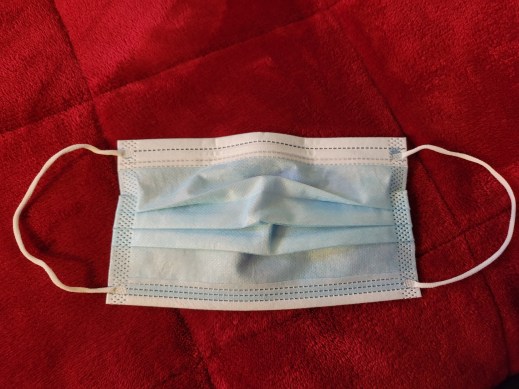
And New York and the world are in the throes of another pandemic surge. Despite being vaccinated and still generally cautious, I’m quarantined in the bedroom of my apartment as Christmas approaches, testing positive for COVID-19 for the second time this year. The whole family had it in February, luckily the rest have tested negative. I’m sequestered in my bedroom and my 10-day Coronavirus quarantine ends two days before Christmas.
This is the second holiday season in a row, at least here in the Northeast, that has been disrupted by this global pandemic, and I share in the fatigue of constant waves of variants, surges, and arguments over masks and vaccines. The COVID pandemic has become a pathetic Greek alphabet soup with everyone going through the motions until the next surge or the next new variant.
For most of the country, COVID doesn’t impact daily life until it does. A few months ago, hospitals in Georgia were so flooded with unvaccinated COVID patients that one of my stepbrothers had a tough time getting non-COVID-related hospital care he needed. The Delta variant surge failed to convince the population that won’t get vaccinated to get vaccinated. Much of the U.S.A. is already mentally past the pandemic, and rightly or wrongly, looks at our continued precautious and inoculations as a form of cultural snobbery.
Getting COVID a second time is frustrated, as I’m doing things by the (often changing and hastily re-written) book. I am fully vaccinated and have been going to places in the city that require full vaccination. I had a few cold symptoms and some general weariness, nothing I thought could not be knocked out with more rest and vitamin C. Then a coworker I had seen recently informed me he tested positive for COVID, so I took a home test that came back positive. The rest of the family got COVID tests at a clinic and tested negative.
I went online and scheduled a COVID test at a local clinic.
Arriving early to check in for my 1 p.m. appointment, I waited behind a woman boasting of her position as a pharmacist and carrying on an extra-long and unnecessary conversation with the desk attendant at the clinic; she kept asking the same questions and laughing and looking at the growing line behind her for some kind of validation and camaraderie. “I fill Z-Pack prescriptions all the time…”
The desk clerk was very patient and kept telling her they couldn’t register any more walk-in patients; there were people who had been waiting there since 10 a.m.
Once the verbose pharmacist moved on, I gave my name and my insurance card and ID, and signed my scribble on an electronic pad without seeing any version of what I was signing—the clerk told me what it was and to be honest, I rarely read these documents anyway—and I was told I would be called when my time comes.
I waited in my car for 45 minutes before I had to go back inside to use the restroom. While I was waiting for the restroom, more people showed up, looking for COVID tests. One man said he had driven in from Long Island, that this was the fourth clinic he had visited today, and that one clinic had told him to arrive at 4 a.m. He was going to travel soon for the holidays and needed travel clearance.
My call finally came, and I got my test in the forms of swabs up the nose; not as intrusive as the one I had in February, we’ll count that as progress. The doctor came in a few minutes later with my results. He was thorough but harried; he had seen about 50 patients before I got there and would see at least that many more before he left for the day. He confirmed my home test and gave the information I needed. I was soon on my way home, walking through a small crowd of people who had arrived at 3 p.m. to try to put their names on the new walk-in waiting list.
This isn’t the holiday season we wanted; we were supposed to be through this by now. When the initial outbreak happened in early 2020, we thought the upcoming spring and summer would spell an end to the lockdowns. After all, this wasn’t 1918, we have advanced technologically very much since then. But human nature does not change, and a deadly combination of partisan theatrics, bureaucratic ineptitude, and general boorish ignorance have kept this going.
I’m not sure what relief 2022 will bring. I have lost count of the number of times that I thought we were on our way to being done with the Coronavirus pandemic. I’ll remember to be thankful for the good health that I have—my symptoms are mild, and I will be through it before Christmas.
I’ll look ahead to the New Year with hope and the resolve to keep living life, no matter what the world puts in the way. See you there.
Happy holidays.
Clawing our back to a “new normal”

Early in May, I returned to a company office to work for the first time since March 2020. The company I worked for at the time is headquartered in Times Square.
The earliest express bus that comes through my neighborhood arrived at 6 a.m. and it was at about half capacity—pre pandemic this bus would often be close to full capacity, even at that early hour.
Times Square is never empty, but the crowds did not meet the massive levels that were typical in the time before COVID-19. That will likely start to change as NYC declares a larger reopening. In the few weeks I’ve been working a few days in the office, the crowds in the streets have been getting larger.
New York’s reopening is picking up steam, there’s still a lot of damage assessment going on in real time. The go-to salad place across Broadway in Times Square I was hoping to visit shut down; luckily, the Times Deli on 44th near Broadway survived, as have several halal carts. But some places are gone and not coming back for a while, and those places that are open are in some cases struggling to find workers.
I switched jobs in mid-June and the company I work for is smaller and not pushing people back to the office. I usually go into the new office once per week, and that’s because I have band rehearsal in midtown Manhattan. This past week, I ventured into Manhattan after hours because someone at my new job is leaving, and there was a farewell party for him at a bar. It was the first-time meeting some of the coworkers I had been working with for three weeks.
Connolly’s Pub on 47th Street near Madison Ave. was doing good business on a Wednesday night. They were short-staffed but their harried waiters were working hard to keep up. I saw few customers wearing masks. More than two decades ago, I went to Connolly’s to see Black 47 ring in the Year 2000. If the Y2K threat—a threat that seems trivial and quaint compared to the problems of today—was going to wipe out civilization as we knew it, I was going to out with a pint in my hand and rocking Irish rebel tunes ringing in my ears.
And it may be many more months before I work in an office with any regularity with my new coworkers. The “hybrid” working model of combining home and office work should become the “new normal” of the post pandemic world. Things were headed in that direction before Wuhan bat stew threw the globe into a tizzy, and the model was proven during the past year and a half of lockdowns. Especially now as people see opportunity to leave their current jobs, companies are going to compete for workers and those trying to push people back to the office will be on the losing side when other things appear equal.
It was interesting from a corporate perspective to see how different companies handled the “back to work” question. More modern tech companies like Facebook quickly gave employees the option of working from home for as long as they wanted. It was more old-school companies like JPMorgan that have been pushing for people to come back to the office.
As before, cultural life is the vanguard of New York’s general wellbeing. If people feel safe enough to cram themselves into Broadway theater seats, we’ve entered the post-pandemic world. Broadway is reopening slowly, with different productions coming back at different times.
Free Shakespeare in the parks has returned to the Delacorte in Central Park and in Queens the Hip to Hip Theatre Company announced they have approval for in-person performances from Actors’ Equity and will be performing productions of Twelfth Night and Antony & Cleopatra. That’s good news for a city that needs it.
Live music is coming back as well. In May I went to the first live music show in nearly a year and a half at the Shillelagh Tavern in Astoria. The bands were great, and it was a catharsis to feel the blast of the music and see people I hadn’t seen in person in so long. I’m happy to report that Blackout Shoppers already have two shows booked for August. Every week it feels great to rehearse and make music. We were able to take our girls roller skating at an outdoor rink on Father’s Day at the TWA Hotel, where I actually used to go to work some days when it was still an airport terminal. One more outing in the emerging world.
There’s not going to be a sudden flip of the switch to reset our world back to normal; we’re going to have to work and scrape and put it back together ourselves. Our work is cut out for us, but it is underway.
Vaxxed to the max

We’re approaching the end of the biggest global pandemic in more than a century, and New York is ready to dive into Spring and Summer with renewed fervor.
Much of America is reopening prematurely, with some states flouting mask mandates and common sense the way they have for the past year and a half.
In New York City, Mayor de Blasio declared we would be fully reopen on July 1, which is about eight weeks from now. Not to let a deadly pandemic stand in the way of a pointless pissing contest between awful lame-duck officials, New York Governor Andrew Cuomo is hoping for a full state reopening before July 1.
People can’t wait to do normal things again and I can’t blame them. Recently, a large free concert was held in Tompkins Square Park featuring popular New York Hardcore bands Madball and Murphy’s Law. It was a crowded and largely mask-less affair, with the usual mosh pit and stage diving and a crowd that would not have been able to socially distance within the confines of Tompkins Square Park and still see the stage. Videos of the concert were shared widely online and there was a lot of heavy criticism of the event. No way were any reasonable COVID protocols observed, and in a group of that size at this stage its unlikely that there was a 100% vaccination rate among participants.
The Parks Department gave a permit for this event, and then declared it was investigating it and pulled permits from upcoming shows. I’m not sure who the Parks Department would investigate besides itself—it gave a permit for the event and then was shocked that people actually showed up for it after a year devoid of public concerts. The most rudimentary Google search would have informed the powers that be that these are popular bands, and this was likely to have a large turnout.
And worse, the upcoming concerts that the Parks Department canceled are likely to be smaller events with greater likelihood of social distancing.
But despite this malarkey, this is a good sign. It means we’re in a transitional period and moving back to a time when having public gatherings and concerts will be commonplace again. People are aching to make music again, yearning for the New York City Spring and Summer of outdoor drinking and music and fun.
Living in Eastern Queens and having a car made things easier to schedule, and my wife used the TurboVax Twitter feed to learn of openings at SUNY Old Westbury, and she let me know. Within a few minutes of her telling me, I had my appointment, though the time slots all near hers had been filled and I had to go hour later. Still, I grabbed it.
The early days of the vaccine rollout were rough, but by early April things were running very smoothly in New York. I was seated and ready for my shot within a few short minutes of arriving at the mass vaccination site. When I returned for my second shot three weeks later, I was given the dose even faster.
It’s been two weeks since my last shot, and I’m vaxxed to the max and ready to rock and roll. I’m still making up indoors and keeping one ready if I get close to people outdoors. And honestly, I’d like to stay six feet away from everyone else forever.
But life won’t stop and clawing our way out of the pandemic means getting vaccinated and keeping with some of the habits we developed during the past year. It’s gotten easier to do.
Get vaccinated, you filthy animals.
A death in Whitestone

A mile and a half from where I live, at the same intersection where I’ve used the ATM countless times and taken my children for numerous fast food happy meals, a man was killed outside a bar after being punched in a fight.
A 35-year-old-man punched a man 20 years his senior. The older man fell to the sidewalk, striking his head; he was pronounced dead at Flushing Memorial Hospital soon afterwards.
The local news media picked it up because the assailant who has been charged with assault in the case is a New York City firefighter. Even though the person he stuck was dead, he walked out of jail a few hours later—New York City’s revolving door of justice works its magic. He claimed to be acting in self defense.
Whitestone is a more suburban area of New York City. It has a downtown area like that of a village you would find on Long Island or in Westchester County, and most neighborhoods consist of single-family homes. The affluent Malba area of well-heeled mansions is part of Whitestone.
While it does not have the cultural cache of Manhattan or the trendy panache of Brooklyn, I take heart on knowing that the Parkside Lounge a half mile away from me puts on great punk rock shows, and that Dee Dee Ramone once lived in Whitestone. It also has nice parks, good public schools walking distance from our home, and
There are many nice features of Whitestone, Queens, but it’s also a place where you will wonder how so many wretchedly stupid people manage to live in nice houses and drive expensive trucks. There is a bogus working-class posturing on the part of upper-middle class people here, a vociferous ignorance that cannot be excused by poverty combined with a shallow cultural posturing that consists of thickly pantomiming stereotypical New York mannerisms. Because they live within the boundaries of the five boroughs of New York City, they think they need to size everyone up for a fight even when they are buying groceries.
When you love something, its faults drive you all the crazier because they blemish something you cherish. That is one of the reasons why this death outside of a bar in one of the outer boroughs is more troubling besides being literally closer to home.
Though I left the drinking life more than a decade ago, I cannot deny the good times that they have given me and the central role they still play in cultural life. It was in a dive bars that I helped form punk rock bands, got ideas for poems, traded quotes from “Repo Man” with both financial journalists and bouncers. Dive bars are the respite that people have needed from their daily grind for decades, and dive bars in the outer boroughs is where you can find the soul of New York City trying to drink off its last hangover. I don’t know if they have good punk rock shows at juice bars and I’m not going to find out.
I remember being alone and living in New York City on my own for the first time and meeting a friend from work at the Wee Pub in Ozone Park one Saturday night and it was a rambling joy that made me feel like I was home. Years later, I met up with friends and toured all the dive bars we could fine in Hell’s Kitchen. I’ve spent countless hours in some of the seediest drinking holes in the city and regret not a minute of it.
So, if we’re ruining dive bars, we are ruining life. Our civilization will not function if people don’t decent, affordable places to drink.
New York City will survive and thrive again. If anything be sacred, let it be our dive bars.
2021 New Yorker’s To Do List
Happy New Year from New York City, where neither the Coronavirus, incompetent leadership, nor burgeoning crime can kill us. We have been through a lot over the past year and will go through much more before our current pandemic is over. Things may never return to pre-pandemic “normal” again and that’s not all bad.
We will not let the stressful state of our world stop us from listing some priorities for the New Year. Here are what I see as our guiding principles for 2021:
Stay frosty. I am fortunate that I live in a region where facemasks and social distancing are both the law and the social norm. That is fragile even here and even more difficult in areas where anti-maskers/science deniers have a greater dominance. There is no such thing as being too careful about your health when there is a once-in-a-century pandemic happening. Seriously, no matter your political proclivities, do you really feel the urge to be closer to your fellow man right now? I hope not. Keep your distance and wash your hands. Here is your chance to mouth a hearty “fuck you” to half the people you meet behind your fashionable mask. Stick to it because this is not over yet.
Read more poetry. This oft-ignored form of literature is much more diverse than it gets its due. We need poetry and the madness of literary dreamers now more than ever. You could do worse than perusing Impolite Literature or Outlaw Poetry.
Pursue the things you miss most. This pandemic has left us hungry for things that we miss. It’s has shone a big spotlight on things we love and hate. Remember the things you miss the most and chase them with dedicated abandon. I plan on spending more time making music than I have in recent years. I could never tear myself away but having played only two shows in 2020 has left me with a fever for being back playing shows, no matter how small the stage or the crowd. Some people need to be loud. Maybe you rediscovered a passion for painting pumpkins or making weird videos or trying to grow ghost peppers in your garden. Go for it all.
Chasing normal for normal’s sake won’t work. I miss the benefits of the non-pandemic life but working 12-hour days without seeing your family is bullshit, no matter how much money you make. Just because it bears that pre-pandemic shine does not mean it’s Shinola. Some of the stuff that COVID kicked to the curb belongs there. Leave it.
Don’t wait for the pandemic to be over to reach out to family and friends. You do not have to do a Zoom call or a Skype call for everything. Use your telephone the old-fashioned way and call people. You will find it be a refreshing exercise. Convert the tiresome Zoom calls into regular visits; we can build better rituals in the flesh when that becomes possible again.
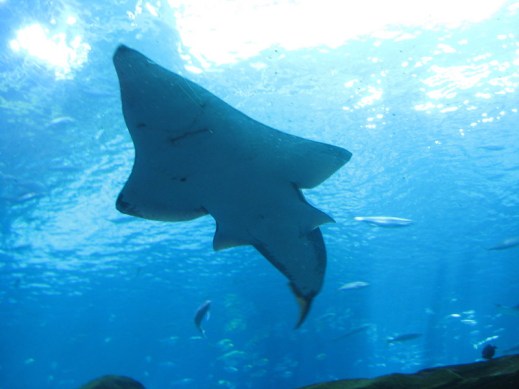
Order as much takeout as you can eat without becoming obese. Our favorite local diner cannot let us sit inside, so I brought my girls there this morning and we ordered takeout and had a car picnic in our mini van before driving to an aquarium. Those restaurants that are able to stay open are hanging on for dear life. If you can afford to give them your business, please do, and tip generously.
Time is getting shorter for everyone; and we have put enough of our lives on ice. Grab the New Year by the lapels and make it dance with you.
Dispatches from the Secret Playground

Thanksgiving came and went with still much to be thankful for in New York, at least for my family. While a second or third Coronavirus raged through the city, our immediate family remains healthy and those in our larger family circle that have been ill have recovered.
Everyone in our family has food in their stomach and a roof over their head. Even before COVID-19 rampaged through the world there were billions of people who could not say that much, and that’s getting worse now. I am gainfully employed and have not been sick and have more than enough food; I am thankful.
New York perseveres, but suffers a crisis of confidence. While we were the first place in the U.S. to see widespread COVID infection and death, we were the first to “flatten the curve” with social distancing and masks. Now we’re having a critical relapse with a spike of infections. Schools closed, now are reopening again in a swift reversal of policy. Crime continues to surge.
And all the while, we see thousands of our fellow New Yorkers not taking their own lives seriously. A Hasidic group worked secretly to arrange a large indoor wedding, sans facemasks, and was given a slap-on-the-wrist fine. I go food shopping and see people who can’t wear a facemask properly going about their business in blissful, entitled ignorance.
Yes, we’re not supposed to be judgmental during these difficult times, but this pandemic has revealed just how many of our fellow human beings are unfit to breath the same air.
Having children in a city apartment can be trying during good times; it has been especially trying during this extended pandemic. What we have though is a place we call the secret playground. It’s not really a secret playground, but a little-used playground in a neighboring co-op that we’re not really supposed to use. The old fogeys that run the board where we live did away with the playground for our building years ago, so to use a local playground is to be an automatic scofflaw.
But I take my girls to the secret playground as often as I can. There are rarely other children playing there, so I can let my kids take down their facemasks, if our family is alone. Usually a few residents will walk through on their way to and from their homes, and we’ll put our masks back up as they come through; they are still almost always more than six feet away. It is an oasis that the unseasonably warmer November weather has given us access to and I don’t want to let a single good weather day go to waste as we endure another lockdown.
Sometime next year, we will hopefully begin adapting to a post-COVID world, and some things we will want to stay the same. I’m not alone in hoping that the world remains one where we’re given more personal space and take extra steps to reduce indoor crowds and make spaces safer, with better ventilation and more protections. These are good ideas outside of pandemics.
And therein lies the appeal of the secret playground: it is a respite from the current world and a model for how to best rebuild when we emerge from our currently dismal state. We cannot live in a bubble world, but we can look at our better adaptations of today to keep our joy and our priorities in line with where we need to be.
What is still beautiful about us…
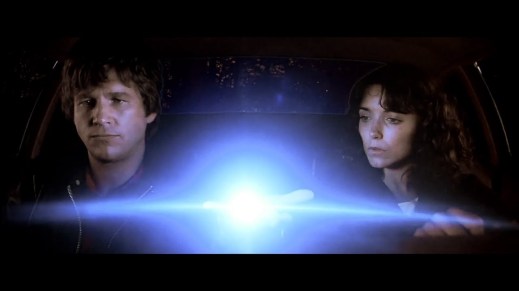
In John Carpenter’s 1984 film “Starman,” Jeff Bridges stars as an alien who is stranded on Earth, and goes on the run from U.S. government agents with the widow of a deceased housepainter, whose body he has cloned as a disguise. They have misadventures while eluding the authorities and the widow (Karen Allen) falls in love with this alien in the body of her dead husband.
In retrospect the plot summary makes this sound like a ludicrous B-film, but it works. One scene and one line from the film has stuck with me since I watched it in a movie theater as a 12-year-old.
The couple are finally cornered in a restaurant by the authorities and the federal agent who has been leading the hunt for them comes to confront them. He asks the alien about his journey and learns he is here to study Earthlings.
“You are a strange species, not like any other, and you would be surprised how many there are, intelligent but savage,” the Jeff Bridges/alien tells his pursuer. “Shall I tell you what I find beautiful about you?”
The federal agent nods yes.
“You are at your very best when things are worst.”
That line has been etched in my mind for more than three decades now, and it’s a fitting mantra for the times we are in.
“You are at your very best when things are worst.”
It can be hard to imagine things getting worse. We are still in the midst of a global pandemic that has hit the U.S. harder than any other country, followed by widespread civil unrest over the death of George Floyd in Minneapolis police custody, poisonous politics in an election year and unemployment levels not seen since the Great Depression.
These are times that try our patience and our resolve. It is easy to want to withdraw and bunker down, to tune out the outside world and lapse into a fatalistic nihilism, a hopeless sloth of withdrawal.
The pandemic reminded us that contact with others is an essential part of life. Human contact is something we took for granted, or even came to resent in New York City, where everything is too crowded and the inconsideration of others is amplified by proximity.
But the need to interact with others is more important now than ever, and despite the myriad conflagrations boiling over in our society, we can still find common ground with decent people of differing ideas.
Human life is inherently tribal, and America has forged tribes along lines of culture and character in ways other societies cannot fathom. These cultures appear to be irreconcilable, but basic human decency and goodness can transcend even our deepest chasms. The past few weeks have shown the extent of our divisions but also the depth of our decency and resolve.
“You are at your very best when things are worst.”
It is time to be the best person you can be and play some part in making our world a better one. You may be at odds with your friends and family, you may be subjected to hatefulness from smaller minds, but the things most worth doing are often most difficult. Keep going.
We can look back at this time and be proud we were at our very best.
Skynet at the Stop & Shop

“Can we see the robot?” one of our daughters asked.
“Sure,” my wife answered.
We were finishing up lunch and I had mentioned I wanted to briefly visit the Stop & Shop to look for something. I had no idea this outlet near our home employed one of those grocery store robots I had seen mentioned online ubiquitously. These slim, monolith grey towers on wheels are outfitted with large googly-eyes as one would a child’s craft. I had heard they were being installed in more and more stores; friends had posted photos of them at their local supermarkets. I had yet to see one in action.
The shopping center at Linden Place and the Whitestone Expressway in Flushing is a zone of cluttered chaos and the logical effluvium of the overcrowded eyesore of the streets nearby. Forgotten New York rightfully calls this part of Flushing “Queens’ Crappiest” for its lack of aesthetics, complete disrespect of historic buildings, and utter incompetence of the design of residential buildings. The shopping center was not long ago filled with crater-like potholes. It has a check cashing establishment and was for a time frequented prostitutes that served truck drivers. I try to avoid this shopping center because of the traffic alone—it’s either accessed by a busy highway service road or a two-lane street that is often busy. My kids love the McDonald’s that is there for some reason; perhaps I have already failed as a father.
The Stop & Shop there is a last refuge of desperation when we are looking for groceries that aren’t found elsewhere. Now I also wanted to see the grocery store robot. These robots are named “Marty.” Stop & Shop supermarkets have deployed them in more them in more than 200 stores to look for spills and hazards. According to Mashable, each robots costs $35,000 and weighs 140 pounds. Also, these robots don’t clean up anything, but just alert people nearby to the fact that there is a mess.
I went looking for the one item I hoped they had: a specific popular baby food pouch that serves as a healthy snack for our youngest daughter. I headed for the baby food aisle while the rest of my family made a bee line for the back of the store where they spotted the robot.
The baby food section was the same mess it was at my last visit and was without the food pouch I was looking for. I scoured again and looked behind every box and envelope to no avail. The robot had not spent enough time in this aisle.
My excited daughters came to get me to show me the robot, which was making its way across the back of the store from where they had first met it near the deli. They ran after it and my wife and I followed.
When my children ran up on the robot again, it seemed to pause to allow us all to gawk at it. Bored shoppers accustomed to the googly-eyed rolling cyborg went about their shopping.
“Hi Marty!” my children thought this thing was great. Maybe you could put googly eyes on a giant steaming people of crap and children will find it convincingly anthropomorphized into a cute friend and want to take it home. The robot slowly moved away from us, not interacting with anyone other than moving out of our way and appearing to look at us with its false, plastic, and unblinking eyes.
New York City seems like a poor choice to send Marty. Our supermarkets are too crowded, and our people in need of work is always plentiful. Also, New Yorkers are more skeptical of gimmicks like this. While little kids got a kick out of Marty the robot, most adults are put off by it.
The supermarket robot is not the coming incarnation of Skynet, the computer system that becomes self-aware and plunges the world into a nuclear holocaust in the Terminator films. It’s pretty underwhelming by itself.
The truly troubling issue with the increasing use of robots is not that technology is marching forward and machines are doing jobs people want to do. It’s that people no longer want to act like people as much anymore.
If society functioned well, customers would report a spill to an accessible employee, who would easily see to it that the spill was cleaned up, or the store would employ enough cleaning staff to make it a pleasurable experience. Instead we’ll gawk at a machine and be on our way.
We are spurning human contact in favor of technology-driven convenience because our human interactions have plunged in quality. That’s not the fault of the machines, that’s our fault.
 Matthew Sheahan
Recent Comments