
The Lemon Ice King of Corona
Weekends during the spring and summer are crowded in Flushing Meadows-Corona Park. You can tell how bad the crowds are when you pull off the highway and every inch of available parking and then some is taken up on 111th Street. Keep in mind that a minority of people arrive by car too. When you get there on the 7 train and look down 111th Street towards the park you can see a sea of humanity clogging the sidewalks and moving toward the park.
Still, despite the crowds, Flushing Meadows Corona Park is not a bad place. It can be crowded, for sure, but you can still have a pleasant stroll through it on a busy Sunday.
This past Sunday the wife and I went to the Queens Zoo to visit with my friend Jay Levitz and his wife and infant son. Jay is an awesome musician and plays lead guitar for Endangered Feces, one of my favorite bands of all time. Small world: ace punk rock drummer Chris Ara, freshly graduated from the New York Fire Academy, was also in the park that day and it was cool to offer my congratulations to him in person.
After the walk through the zoo with children, we were tired, and my wife thought it would be nice to stop by the Lemon Ice King of Corona on the way home. It was a great idea.
This modest ice store is an essential place to go during the warmer months.
The Corona neighborhood is dominated by Hispanic immigrants from a multitude of Spanish-speaking countries. That brings with it teeming crowds, obnoxious music and bad traffic with worse drivers but it also comes with some awesome food street vendors. Walking down 111th Street you can encounter some delicious empanadas or roasted corn on the cob that’s out of this world.
The celebrated lemon ice store—it is officially named Benfaremo – The Lemon Ice King of Corona—is on 108th Street and the 111th Street stop on the 7 train is the best way to get there via public transit.
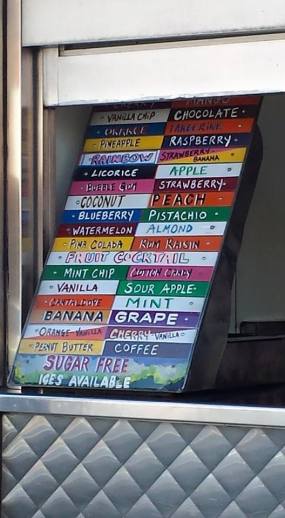
The Lemon Ice King of Corona offers flavored ice. Would you like to have some ice cream or a shake too? Too bad. The Lemon Ice King has a lot of flavors to choose from (but won’t mix them).
My wife went and stood in line while I found a place to temporarily park the truck and wait. Our babies were sleeping after a long day at the zoo (a long day for a 15-month-old can be about two hours when you let them walk most of the way). The line was long but moved quickly and my wife soon returned with our ices. I went with the classic lemon flavor and my wife had strawberry banana that had pieces of real strawberry in it. Our babies got nothing; you snooze, you lose, girls.
I ate my first lemon ice of the year sitting in my truck parked in front of a fire hydrant. I powered through the large lemon ice, pausing only to wait out some brain freeze. It felt like I was starting the New York summer on the right foot.
One place I feel I should mention is Uncle Louie G, which operates a chain of stores in the five boroughs and Long Island. They have some of the best ices you’ll ever eat as well, but they also have regular ice cream.
Either way, it is going to be a long, hot summer (it always is in New York City), so don’t forget to treat yourself to a refreshing ice.
A Bronx Zoo Tale

The Bronx Zoo is not on everyone’s to-do list but should be. No year in New York City is complete without at least one long visit to this great zoo, which insists on calling itself the Wildlife Conservation Society.
The Wildlife Conservation Society has a Run for the Wild 5K run/walk every year to help raise money for its conservation efforts. Each year has the theme for some endangered animal and this year it was gorillas. In the past it was fun to run the 5k and then spend the day at the zoo. Nowadays the wife and I walk the 5k with our babies in a jogging stroller and then spend as much time as possible at the zoo until our offspring become too tired and cranky to make the zoo pleasant.
So it was a fun family trip to the zoo and we of course got there much later than we expected. We parked in a field farther away from the starting line of the 5K than we had hoped but in the process of finding our way to the 5K starting line, we happened to walk on the Mitsubishi Riverwalk, a nature walk with a lot of informative displays about local wildlife. It opened in 2004 and totally free and open to the public every day.
It’s a rarer thing to find stuff to do in New York that is both family-friendly and free. It was nice to see waterfalls and woodlands and know that you are in the Bronx.
We did a brisk walk for the 5K though there were lots of slow-moving people, parents and grandparents seriously lacking in stroller-parking etiquette, and mobs of people stopping to gawk at the animals.
We still finished the 5K walk in good time (I assume, who really gives a shit) and we collected our prizes, which included stuffed gorillas for our girls. Then we began traversing the zoo and seeing as much as we could while letting our 15-month old girls walk. Walking with them while also steering a double-wide jogging stroller is a new and unique challenge. It is like other parenthood skills in that you will master it just in time to not need it anymore.
The Bronx Zoo now kind of nickel-and-dimes you at every turn though. Lots of the cool exhibits cost an extra three or four dollars, which can all add up if you want to see the more popular animals. We were lucky in that we got a zoo membership as a gift, but also running the 5K gets you discounts during your zoo trip.
There were long lines at the World of Asia Monorail line, and you get to know people waiting in line just because your kids are interacting with one another and you have to be minimally sociable. A couple of parents with very well-painted faces were asked a half dozen times where they had their faces painted. A bald father with tattoos on his head berated his children and joking (I hope) offered to exchange his daughters for ours, although his daughters weren’t behaving badly at all. An Asian grandfather in the family ahead of us shot me a look of insulting contempt every time my crankier daughter cried and fussed. I hope my devil baby put his panties in a bunch. Full disclosure: his infant grandson was an absolute angel.
For all her fussing, my older daughter became quiet and seemed to be enjoying seeing the animals on the monorail, but that was because she fell asleep. That was our signal to head home after the monorail ride.
Luckily we got to swing by the bison on our way out. After viewing animals from every corner of the globe, it feels right to visit the bison, the great and very American animal that we have here in our own land. They are not native to New York, of course, but I vow that one day I will travel west and see buffalo in the wild. Until then I will be happy to conclude my Bronx Zoo visits with them.
Down on the Farm, in New York City
No city is as emblematic of the urban life as New York City, so it may be a surprise to find that there are several farms operating in the city. There’s a working farm in Queens, the city’s largest borough.
The Queens County Farm Museum is a real working farm located in the Glen Oaks neighborhood of Queens.
The farm dates all the way back to the late 1600s and is the longest continually farmed site in New York State. It started as a farm during the days of the Dutch settlers. For many years it survived because it was run by patients of Creedmoor State Hospital, a mental hospital. Creedmoor is still in use today even though some of its buildings are abandoned. It’s fitting that farming survived in this area of Queens because of inmates from an insane asylum.
The Queens County Farm Museum is open to the public and while it is largely used for educational purposes, it is still a legitimate farm. You can buy fresh eggs laid by their chickens and eat vegetables grown there. When you go to visit you’ll see workers moving wheelbarrows of dirt and feeding animals.
The farm is visited by school groups and has lots of activities for students and volunteers. You can take classes there on a variety of topics. You can also rent space for parties. In the autumn, the farm grows an elaborate corn maze and the public is challenged to work their way through it with a map. My wife and I entered the maze a few years ago and it was not easy to find your way out.
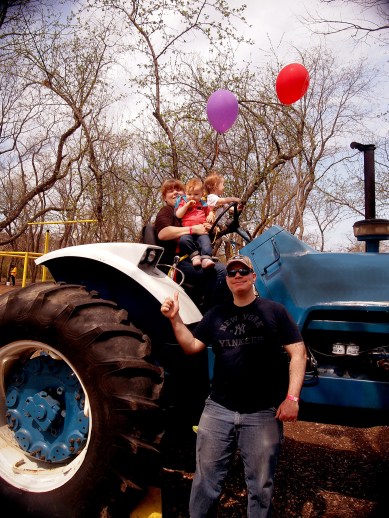
This past weekend, they held a carnival there and the wife and I took our 15-month-old girls there to meet up with the in-laws and enjoy the nice weather. They got to pet rabbits, feed goats and sheep, ride ponies and take a hay ride. The girls got free balloons from the Glen Oakes Volunteer Ambulance Corps. We were able to take the girls up on a large tractor and got to see a great magic show by Cordone.
The five boroughs used to be covered in farms. New York City at one point did not extend far beyond the downtown area. Where City Hall is now was considered the remote outskirts of town (when they renovated City Hall Park in the late 1990s, workers unearthed graves from a poor house that used to be there).
In addition to the Queens County Farm Museum, there are urban farmers growing vegetables and raising chickens on small plots of land throughout the city. Staten Island has several working farms, though not open to the public. And there are people trying to preach the gospel of organic food by carving gardens out of abandoned lots and any scrap of space they can find.
The city currently doesn’t have enough arable land to make a dent in the agricultural markets, but it’s nice to know that people who live in this hothouse of a metropolis can get a taste of the farming life without leaving the city.
New York Means Expected Excellence
A recent report from the New York City Comptroller found that New Yorkers work the longest weeks and have the longest average commutes in the U.S. What makes the report so disturbing is that the two top cities with the longest commute times: New York and San Francisco, are cities that have some of the most extensive public transportation infrastructures.
And not only do New Yorkers have long commute times for the many millions who live outside the five boroughs and commute in every day, New York City residents who live and work in the city have long commute times.
I am one of those New York City residents that have a long commute. I live 12 miles from where I work. Google Maps tells me it takes 24 minutes to drive that distance without traffic. It takes me over an hour to get to my office each day even when things are running properly (which is rarely).
New Yorkers tolerate these long commutes (which are getting worse and more expensive at the same time) not because we are suckers for punishment but because New York is worth it.
We expect a certain level of excellence in New York. Things that are acceptable or even considered excellent in other parts of the country just don’t make the cut here. That’s not being snobby or cruel, it’s just the cold hard truth. New York excels at smashing people in the face with cold hard truth at every opportunity.
I definitely notice that borderline New York snobbery creeping up on me in certain circumstances, especially at restaurants when I’m traveling. I’ve been to enough good restaurants in New York that when I go outside the city and stuff just isn’t right I notice right away. I know I wouldn’t have noticed if I had been living elsewhere.
The reputation for New Yorkers as being rude is tired and not entirely true. There are plenty of rude people in the city, absolutely, but what many people take for rudeness is actually just a brusque sense of not having time to waste. As the numbers show, New Yorkers are in a hurry and have less time to dawdle. That’s a testament to people being at the top of their game and playing for keeps.
There are reasons the city is teeming with people, many of whom were born elsewhere. It’s because New York is a symbol of the very top of everything: music, art, culture, dining, literature, you name it. If you can make it here, you can make it anywhere—the adage holds as true today as it ever did. Our homeless are even better than other cities if for no other reason than they have to be smart enough to survive the cold weather and that weeds out the extremely feeble-minded.
And, while it certainly is not justified, city residents almost always feel a twinge of schadenfreude when a friend or acquaintance leaves the five boroughs. Just the act of staying and surviving in the city gives you a feeling of accomplishment all on its own, no matter how dreary the circumstances of your life might be. That can be a destructive attitude as well – staying in one place at all costs just to prove a point can be just as harmful as habitually moving all the time. No other city carries that same emotional baggage with it. No one pats themselves on the back for eking out a living in Jacksonville, Florida.
Which is why the public transit system is going to have to change. It has never run well and it has run with minimal competence for decades. This latest report by the New York City Comptroller illustrates in raw numbers the fact that New York’s transit system is operating far below New York standards.
The latest data is proof that New Yorkers are getting the shaft (again) from our own transit system. The silver lining is that New York is too good a city to let this slight go unchanged.
Brooklyn Isn’t Safe for Rock & Roll
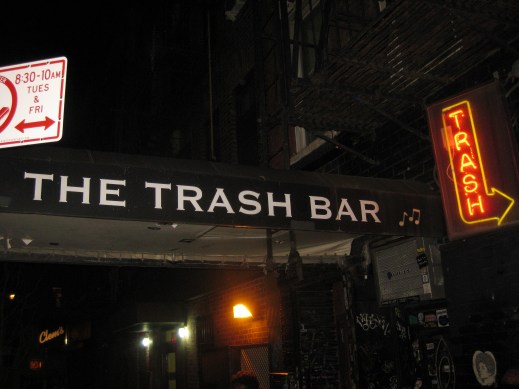
Last Friday, my band Blackout Shoppers was fortunate enough to be one of several bands to play for the last time at The Trash Bar. A great music venue, The Trash Bar has been a great place to see a show. They have a great sound system and manage to bring a wide array of music there.
Trash Bar is the kind of live music venue that used to thrive in Manhattan, and now it’s found itself priced out of Williamsburg. It’s the latest victim of the city’s own success and Brooklyn’s transformation from downtrodden borough to one of the most expensive places in the world to live.
The Williamsburg section of Brooklyn used to be a bad place. Frank Serpico was shot not far from the Williamsburg Bridge. Apartments in that building are now listed for sale at up to $1 million.
Williamsburg is where young artistic types began moving to at the end of the last century because space was cheap and the area was close to Manhattan. But creative young people can’t afford to live in the popular parts of Brooklyn anymore. The kind of people more likely to move to these areas now are wealthy people who had traditionally occupied the more upscale parts of Manhattan. A recent episode from the TV show Broad City captured this perfectly. One of the show’s main characters is chatting with three high-priced lawyers. They all tell her that they currently live in Murray Hill (a high-priced part of Manhattan) but that they are all moving to Williamsburg.
It follows a familiar pattern, a pattern we saw in the East Village and Lower East Side of Manhattan: A run-down area attracts enthusiastic artists and musicians because living is cheap. Those artists make the area desirable, which raises property values. Those property values drive away the artists and their venues that began the rejuvenation.
While it was the place that music venues fled to when Manhattan became too overpriced, Williamsburg is losing the art and music that made it attractive.
Bushwick has become the new Williamsburg, although the pace of gentrification seems to speed up in some respects. Prices on apartments start to rise in advance of the vanguard of gentrification that makes a neighborhood safe. Williamsburg has been relatively safe for a while now, but Bushwick is still more dangerous with higher crime.
This kind of gentrification has been going in the city for years. Since the time of the Dutch settlers, this has been a city in flux. Nothing stays for too long. The churn of commerce and change is constant. The city wouldn’t thrive otherwise.
It’s true that the city is losing some of its trademark characteristics and grit. No doubt part of Big Apple lore is lost forever. It’s not all bad though. I’m glad I can walk down the Bowery without being afraid for my life, though I’m sad that there aren’t as many music venues there.
Williamsburg been overpriced for years, but I didn’t think that Trash Bar would get priced out of existence in a decade. It brought in big crowds and even catered to the obnoxious yuppies and hipsters with some of its live music and its karaoke. The show we played Friday night was well attended. The bands played great and it sounded excellent. Everyone left it all on stage and we walked out with our heads held high.
And that’s all you can do as a New Yorker. Change is never going to stop, so don’t let it stop you. There will be new places to make and see music. The pioneer spirit that brought the Dutch to the New World and brought rock clubs to formerly desolate and dangerous parts of the city can’t be killed off, it’s just moving to a new neighborhood.
Mistaken for an Uber
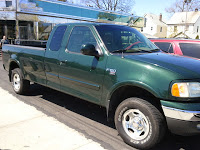
Hank’s Saloon in Brooklyn was hosting a punk rock show celebrating the birthday of Mike Moosehead, one of the city’s most talented musicians. I was not going to miss it, even though the weather was horrible and the city was slow to plow the roads.
Driving cautiously over roads and highways caked with snow that had been churned by traffic to a grim grey slurry, I eventually found my way to Hank’s. I pulled up to the traffic light outside the hearty saloon and prepared to make a turn to look for parking.
Some young men outside the bar looked towards my truck and I thought I recognized them. One of them at least looked like a guy I know from playing in punk bands. They looked like they recognized me and approached me.
“Uber?” said the young man.
“No, sorry,” I said, feeling stupid, though I’m guessing he felt dumber. The cars that are Uber cars are usually newer and have a very clear and recognizable ‘UBER’ or ‘U’ sign in their window.
“Does Uber have pickup trucks?” I asked. The young man didn’t seem to know.
Uber, the online taxi service that allows users to summon and pay for cabs entirely online and without cash, does have pickup trucks, though they are rare in New York.
Being the resident old man in the office where I work, I do not have the Uber app on my smart phone. My wife has used it to secure a ride for her mother when the weather locked our truck under a sheet of ice a while ago. It’s a useful thing to have because you can take the mystery and risk out of whether or not you’ll get a cab. I rarely take cabs and I don’t trust Uber.
Years ago, when I spent more time drinking into the early hours of the morning in bars far from home, I wound up taking a lot more cabs. I enjoyed talking to the drivers, who are usually from a different part of the world, about where they are from and life in the city. I once met a Muslim driver from Pakistan with a long beard and traditional garb who had become an American citizen. He was heartfelt in his frustration at how extremists had come to define his religion in his adopted home.
The migration to online taxi hailing means trouble for New York’s yellow cabs, and the yellow cab drivers have only themselves to blame. Every New Yorker can recount a litany of horror stories about the difficulty in hailing and getting decent service from yellow cabs.
Yellow cabs will cherry pick who they take. Even though this is illegal, they will drive around with their ‘out of service’ lights on to avoid regulations. I have successfully hailed a yellow cabs only to have them drive away when they thought I had too much luggage. Drivers have been known to overcharge, tamper with meters, and otherwise cheat and nickel and dime their fares.
Online taxi service is a concept whose time is long overdue. We can rent cars online and buy plane and bus tickets online. There’s no reason calling a cab online shouldn’t be commonplace for everyone, and in a few short years I have no doubt it will be standard operating procedure.
Where Uber goes wrong however, is in its pricing. It runs pricing on a strict supply and demand basis and gouges its prices through “surge pricing,” so when demand goes up, pricing can go through the roof. Because the service is not cash-based and is charged to the customer’s credit card, people can be charged exorbitant amounts of money for what would normally be an inexpensive cab ride. Recently Uber quickly raised its prices in Sydney, Australia during a recent terrorist hostage standoff. The fare algorithm that Uber uses does not adjust for human decency.
Like other New York traditions, hailing a taxi on the street is one that is fading. Nostalgia will keep it alive for a good while longer, but technology has found a more reliable way to get people in and out of cabs. Like other New York traditions, there is good and bad about its loss, but it’s a loss nonetheless.
The Cold is Good for You

It is the middle of February and my smart phone tells me that it’s a balmy 13˚F (-10.5˚C) degrees outside with a “real feel” of -17˚F (-27.2˚C). Walking outside was painful today and the wind is howling fiercely. It’s a yearly tradition to have days like these. Winter is not complete without at least one heavy snowfall and several days when the weather chills you to the bone.
We’re getting a true winter in the Northeast this year. No spring-like conditions should be welcome before mid-March. Some of the winter traditions can be done away with. Especially here in New York City, some of the lesser traditions include mountains of polluted snow, deceptive slush, walls of hard-packed plow snow, black ice, and transit mishaps.
The cold makes people tougher. You won’t get any increase in toughness from standing around in the sun. You may get sun-burned and skin cancer, but you’ll not improve yourself at all. The cold can kill you like the heat can, but coming in from the cold leaves you energized and glad for the warmth of the indoors. Coming in from a hot day leaves you slimy with sweat and smelling badly.
Every winter in New York has at least a few periods where the cold is biting and painful. Even for those of us with a high tolerance for the frigid, these times in winter are a step beyond our comfort zone. It’s important not to shrink from that. That’s not to say you should dedicate a few fingers or other bodily extremities to frostbite to truly experience the winter, but get out there and let the wind punch you in the face a few times. You’ll be glad you did.
Moving to a place where they don’t have a real winter is a bit of cop-out at life. We who live through the winters are better for it. There’s no reason to surrender toughness for the soft ease of the tropics. The sun-drenched climes have their place, but to not really experience all the seasons is not experiencing all of life. New York is lucky because it has all four seasons. There’s no weather that the earth can throw at the city that it has not survived. New York has survived hurricanes and snow blizzards and heat waves, sometimes all in the same year. And it will do it again, guaranteed.
States that are colder tend to have populations with higher IQs, research has shown. Those nations with consistently colder climates over the past few thousand years have produced some of the world’s most peaceful and democratic societies. Do you know what country has the longest-serving democratic parliament? Iceland. What country is doing better right now: Norway or Nigeria? Canada or Brazil?
Enjoy the cold weather because in a few short months it is going to be hot and miserable. Much of the Northeast that endures a frigid winter is not spared the humid suffering of summer. The cold will make you stronger. The cold kills off the weak and gives strength to the strong. Embrace the cold because you embrace life itself.
The MTA Has Snow Excuses
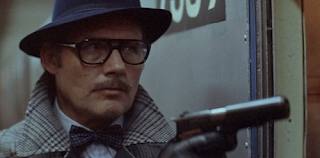
The Metropolitan Transit Authority (MTA) is the blessing and the curse of life in New York. Our transit system makes the city a livable place considering its population density. If everyone who works in New York City drove to work, we would be in a state of surreal permanent gridlock.
What the city has seen over the last several weeks has been the MTA at its worse. While the weather has been cold with a lot of snow and ice, nothing we’ve seen this winter is without precedent. It snows in the Northeastern United States. A winter without ice and snow is a rarity. We can understand a lot of traffic delays in the ice and snow, but the train lines should not seize up the way they have over the last several weeks.
We can’t blame the city and state for the steps they took in the face of the January 26 blizzard. The authorities have to go with what the weather forecasters say and err on the side of caution. The forecasts were dire and while the storm didn’t amount to the “snowpacalypse” that was predicted, better safe than sorry. I managed to catch one of the last express trains anywhere in the system on the afternoon of the 26th apparently. The city banned all but emergency transit, including car traffic, after 11 p.m. that night.
Where I live in Queens, on Union Street in Flushing near where it becomes Willets Point Boulevard, is usually a heavily trafficked street. It is close to the Whitestone Bridge, near a shopping center and along three or four city bus routes. Even in the quiet of the early morning hours, it is usual to see regular traffic on the road. The night of January 26th saw the streets deserted in a very strange yet beautiful snowscape. I walked right up the middle of the street and stood right in the middle of the usually busy intersection of Willets Point Boulevard and Parsons Boulevard and so no cars moving anywhere. I did see two cars driving during the time I was outside, whether they were violating the travel ban or were emergency workers I couldn’t tell. They were civilian cars risking a fine and having an accident on roads that were by then heavily snowed and sparsely plowed.
But while the travel bans were quickly lifted, the transit system is still seizing up at the slightest hint of bad weather. The MTA operates in New York City with maddening inefficiency and malfunction. Commuters’ hearts regularly break when they arrive on their train’s platform to find it mobbed with people trying to board much-delayed trains.
I must take two of the most congested and delay-prone lines in the system: the 7 train and the 6 train.
The 7 train is actually among the higher-rated train lines by the Straphangers Campaign, which is a commentary on the MTA. The 7 train can only handle express service in one direction at a time, and that express service is often canceled or delayed. Every train is standing-room only when it leaves the Flushing-Main Street stop on weekday mornings. Trains on the 7 local line often pull into local stations so packed that no one can get on them. People try to push on anyway, passengers argue, and trains are delayed further. Conductors make obnoxious announcements blaming passengers for the delays the MTA caused.
During one of the more recent abominable mass delays on the 7 line, an umbrella on the tracks caused the entire line to go into mass chaos. An umbrella. I’m sorry, but if the worst thing that falls onto the tracks in a day in an umbrella, we should be lucky. Unless this was some kind of James Bond-type bomb umbrella that Al Qaeda managed to toss onto the tracks, there is no excuse for this. A neighbor of mine was stuck on a 7 train with no heat for two and a half hours.
And it’s not just the 7 line. That same evening almost all of the subway lines were facing massive delays. Other rail systems like the LIRR and Metro North were delayed as well.
This recent winter weather should not have wrecked our transit system, but it did. New York is in need of a massive transit overhaul. We can’t shut down at the first sign of snow.
New York at Christmas Time
The holidays are a time when many of us are reluctantly pushed into public places to go through the motions about being happy about the holidays. Sometimes the very happiness of the holidays are mocking and angering. Sometimes the very image of others’ happiness is a slap in the face, and the holidays give other people’s happiness a particularly cold sting.
There’s no reason for the holidays this year to be any different. A cursory glance at the world at large doesn’t give the impression that there is much to celebrate.
It is my goal again this year, as in previous years, to not go into a single store to buy a Christmas present. I would rather be an antisocial Grinch and do all of my shopping online.
I get enough of the horrendously-behaved crowds in my everyday life. The holidays are a time to reflect on the blessing we have. While living in New York City is one of those blessings, living cheek-by-jowl with millions of other human beings is not. It’s an odd conundrum: We love New York, which wouldn’t be what it is without all of its people, yet a good many of those people are detestable.
But what else are we to do? We can’t live life as disgruntled hermits. We are social creatures and the people who are successful in living outside of society don’t live very good lives.
And besides, New York is beautiful around the holidays. Even the most jaded New Yorker can appreciate how beautiful things can become around this time of year. I embrace the “bah-humbug” aspect of the holidays in every way possible, and even I feel pangs of civic pride to see our city landmarks decked out in their holiday finery.
Here are five things you can do to experience New York City at its Christmastime best:
Gingerbread Lane at the New York Hall of Science consists of record-breaking gingerbread houses and you even get a chance to take home some of the gingerbread once the holidays are over. And the New York Hall of Science is a good place to escape to from the holiday scrum of Manhattan. It is in Queens, the greatest and most American New York City borough.
The Holiday Train Show at the New York Botanical Garden has been running for over 20 years and runs until January 19. It features trains that run through beautiful models of some of New York’s greatest landmarks. The models are all made from plants. It’s like a New York-centric Rose Bowl Parade that doesn’t suck. It’s in The Bronx, and if you take some time to stroll through the Botanical Gardens, you will be amazed that you’re in a big city. It will be much less crowded after the holidays.
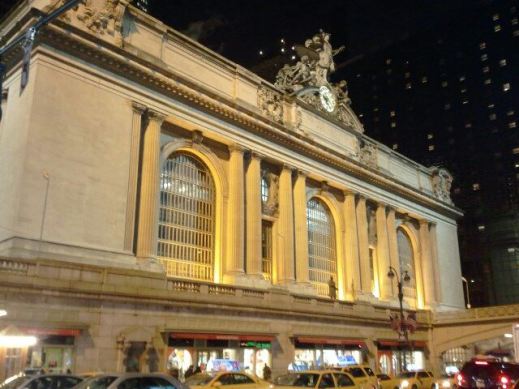
The Grand Central Terminal holiday light show is going to be crowded. Grand Central Terminal is always horribly crowded but it’s so beautiful that it’s worth it. The holiday light show will make you glad you went there.
Free reading of A Christmas Carol at Housing Works Bookstore Café. More than two dozen writers take turns reading from the Charles Dickens classic at this event. The book store raises money for Housing Works, an AIDS charity. Some free literature will make you feel better about yourself over the holidays.
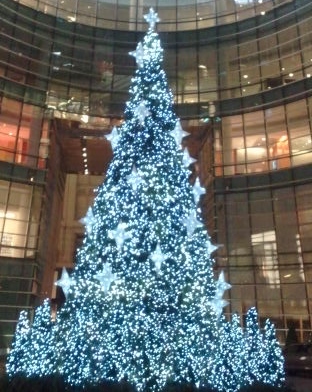
Time Warner Center’s Holiday Under the Stars is a display of large lighted stars at the Time Warner Center’s large great room and are specially lit in a display that is set to music. The Time Warner Center does not have much to offer the non-millionaire shopper, so here is a chance to enjoy some nice holiday spirit at the center’s expense and maybe avoid some of the horrific crowds that clog other venues.
Holiday markets also abound. Union Square has one, as does Bryant Park, Grand Central Terminal and Columbus Circle. Here is your chance to buy last minute Christmas things or feel OK about doing some real retail non-online shopping this year. These may be crowded but there are enough of them and these are large enough that you should be able to find a nice place to shop among these many markets. They also usually feature local artists selling their work.
Whatever you do, get out there and see the holiday sights. Even if you hate the holidays and want to piss on everyone’s parade, it only counts if you do so in person.
Avoiding the Poison of Excessive Nostalgia

The once-celebrated East Village bar the Yaffa Café announced that it is closing its doors for good. It was initially shut down in September by the Department of Health for health violations. The coverage sent up its standard lament; another “iconic” landmark crushed by cruel fate.
It’s a familiar pattern now. A well-known music venue, bar or restaurant announced its closing and there’s a chorus of objection to it, a scolding clucking about how shameful it is and how the city isn’t what it used to be. But this is a pattern that’s been going on since the 1600s.
Many friends and colleagues are correct when they say that small businesses closing represents a danger to the soul of New York. But let’s also remember that constant change and reinvention is also a part of the soul of New York.
While we ought to make sure small businesses have a fighting chance, we also must be careful not to fall victim to the poison of excessive nostalgia.
Nostalgia is deadly because it leaves people to believe that the best part of their lives are behind them. I don’t care if your eight or 80, if you’re not looking forward to something in the future, you’re not really living life. The promise of something in the future is what keeps people alive.
If any place can’t maintain its relevance for its ever-changing clientele, then it’s simply running on the fumes of nostalgia. The fumes of nostalgia may start off smelling sweet, but are composed of an underlying rot.
New York exists in its current form today because it is unforgiving and values nostalgia very little. The constant churn of commerce is always inquiring: ‘What have you done for me lately?’
I was among the chorus of voices that bemoaned the loss of CBGB’s seven years ago. The famous club helped birth punk rock and when I played there with Blackout Shoppers at our very first show in 2004, it was a dream come true. I saw many great shows there and had many good times and memories. But CBGB had not kept up with the times or even lived up to its own history. Bands who got their start there chose not to return and played other clubs in the area. The Ramones played their last New York shoes at a venue called Coney Island High, also long gone, which was a few blocks away from CBGB. The throngs of people who crowded into the club during its last days were curiosity seekers and tourists, people seeking to tap into nostalgia for its own sake, darkening its doors during its death throes so they could boast that they had been there.
So let it be with the Yaffa Café. I went there once when I was younger and I thought the place was overwrought and pretentious, and this was a time in my life when I was happy to put on airs as a hopeful young writer and therefore had a higher threshold for overwrought pretension.
Places like the Yaffa Café attract people who don’t so much want to live the life of a writer or artist as much as they want to play-act being a writer or artist. Ernest Hemingway went to the cafes of Paris because he was dead-broke and those cafes were dirt-cheap. Hemingway is celebrated today not for the time he spent time at a café but because of the time he spent at his typewriter.
I enjoy sidewalk cafes to a certain point, but squeezing my overweight frame into a tiny, crowded space so I can imagine I’m F. Scott Fitzgerald is a ridiculous idea. A writer or artist is too busy writing or making art to invest a lot of time on nostalgia.
The White Castle in Williamsburg has done a greater public good than the Yaffa Café in my opinion. Its demise is the one that ought to be mourned. I’ll indeed miss filling up on delicious White Castle burgers when I am in Williamsburg, but I can’t begrudge the decision by the owners to sell the place. They knew that they’d make more money selling the land to condo developers than they’d make selling burgers, and it followed that it made more sense. It’s a for-profit business; they weren’t giving away burgers for free.
I’m sure the Yaffa Café had its strong points. If I remember correctly the coffee wasn’t half bad. But the past is littered with better businesses that could not stand the test of time. Let them all rest in peace.
Autumn is Coming: New York City Edition

Autumn officially begins on Monday, Sept. 22, and even though New York had a relatively mild summer this year, there are still plenty of reasons to feel good about the new season.
Fall is just better than summer, even a pleasant summer. Autumn is one of the best times of the year. It gives one a sense of renewal, of things starting over again. It is time to celebrate, dedicate oneself anew and see crisply the possibilities of the coming seasons. And this sense of renewal is one of the reasons autumn and New York go so well together. Starting things over again and exploring new frontiers, harvests and chapters of life is what New York City is all about as well.
Here are some ways you can celebrate the coming Fall season in New York that don’t involve fashion shows or raking leaves:
Corn Maze at the Queens County Farm Museum: You probably don’t expect to find too many working farms in the five boroughs of New York City, but there are. Chief among them is the Queens County Farm Museum, located in the Glen Oaks section of Queens. Its annual corn maze (“Maize Maze”) opens this coming Saturday, Sept. 20. A few years ago I entered the corn maze there and managed to find my way out. A few times it was tempting to just break through the walls of corn and thrash my way out of there as if pursued by the Children of the Corn. But we managed to get out without losing our minds, though we didn’t stop at every check point along the way (next time, maybe). Corn mazes are quite common in more rural parts of the country, even those not famous for corn. I’ve come across several while driving through New England.
Any chance to take part in the country life while within the boundaries of New York City is an adventure you should take.
Foliage watching in Inwood Hill Park: People from all over the country come to the Northeast in order to drive through upstate New York or parts of New England to see the trees change color. Save yourself the car rental and take the A train (or the 1 train) to the “upstate Manhattan” neighborhood of Inwood and Inwood Hill Park. I was fortunate enough to live across the street from Inwood Hill Park for more than 10 years. The brilliant array of colors that the trees of Inwood present are as grand as any you’ll find upstate. Inwood Hill Park contains the last natural forest in Manhattan. Even on a day when lots of people are in the park, it’s not hard to find yourself in a quiet and remote part of the woods. Also, because New York City is warmer than upstate and New England, the trees will take longer to change colors, so you have more time to make it uptown. While you’re in Inwood you may spot some eagles or hawks in the park. Nearby Fort Tryon Park is worth a visit too, but lacks the dense woods.
Learn some new skills: Want to be more of a capable person and less of a lazy spendthrift? Well the Fall is a good time to learn some new skills and there are chances to learn how to be a more useful person. For example, New York State is offering free disaster preparedness training courses both in person and online. And this weekend in Queens you can learn how to can your own vegetables thanks to the Flushing CSA (full disclosure: my wife is a member of Flushing CSA and is helping organize this event). So you have no excuse not to emerge from autumn a better and more prepared person.
Overrated New York Attractions (And Their Underrated Alternatives)
For the tourist, and many of the locals, New York is a series of attractions and experiences that everyone must check off of their bucket list in order to consider their New York experience authentic or complete. But there are some things that are overrated and that resident and tourist alike should move to the bottom of their list.
Let’s make not being a sucker one of the authentic New York experiences once again. Here are five New York attractions that get way too much attention, along with some more reasonable alternatives:
The Statue of Liberty. The Statue of Liberty is a beautiful monument to the enduring symbol of freedom America is to the world. However, visiting Lady Liberty means paying a shyster ferry company for an overpriced ticket out there, standing in a long line to go through TSA-style incompetent security care of the U.S. Park Police, and then riding to Liberty Island where you can wait in another long line if you want to get to the top of the statue’s crown. Once you get up there, you’ll have a few seconds in front of a small window before you are hustled on your way. It’s not worth the money or the time out of your life. As an alternative, the Staten Island Ferry is absolutely free, requires no strip search, and will get you within great photograph distance of both the Statue of Liberty and Ellis Island.
Brick Oven Pizza. Hipsters and tourists stand in long lines and pay high prices for pizza that is burned, unevenly cooked, and gives you less of everything. Somewhere a mob-connected pizza scammer is laughing until he wets his creased chino pants. Go ahead and wait hours for your sucky overpriced pizzas and brag to your friends how you pretended to enjoy the thin crust and the flimsy layer of “artisanal” cheese. Meanwhile, any real neighborhood pizza place will get you a delicious slice or pie for a good price. Here’s an effective litmus test of any New York pizza place: if it doesn’t have parmesan cheese for you to sprinkle on your pizza, walk away.
The Central Park Zoo. Every zoo in New York that isn’t the Bronx Zoo is playing second fiddle to that fine animal kingdom. The Central Park Zoo gets lots of foot traffic because of its location but it’s overrated and doesn’t have as much to offer as its counterpart in Queens. People are too enthralled with being in the heart of Manhattan to notice that the zoo they paid for sucks. Take the 7 train to Queens and you can experience the Queens Zoo in Flushing Meadows-Corona Park. The Queens Zoo is half the price of the Central Park Zoo and has more to offer.
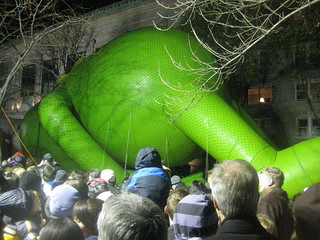
Thanksgiving Eve Balloon Inflation Stampede. The night before Thanksgiving, thousands upon thousands of New Yorkers, tourists and their children make their way to the Upper West Side to see the Thanksgiving Day Parade balloons before the parade. While it’s a relatively mild, family-friendly mob scene, it’s still a mob scene that requires you to pack into a small area where you have no choice but to follow the slow moving crowd. The balloons are inflated but kept under nets at odd angles. This might make for some unintended comedy. It might look like the Buzz Lightyear balloon is being fellated by Pikachu and that might be hilarious, but it’s not hours of being herded like cattle hilarious, and you can’t expect your children to find that funny if you’re a parent. Wait until the Big Apple Circus comes to your borough and take the kids to see that. There will be some impressive talent and you can save Thanksgiving Eve for preparing for Thanksgiving.
Fancy cupcake shops. I like cupcakes as much as the next guy, but any bakery not run by blind monkeys can churn out delicious cupcakes. How a few choice cupcake stores have made everyone whore themselves out for their goods is beyond me. I was at a catered event and had a cupcake from the Magnolia Bakery. It was good, but so where cupcakes I had from school bake sales and every other bakery I’ve been to. For a good New York dessert experience, go to the Lemon Ice King of Corona in Corona, Queens. It is a famous place but it’s far enough away from Manhattan that you’ll have a real New York experience and not be a fool.
New York Has Beach Bums and Boat People
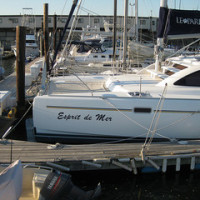
The beach bum and boating life are usually the providence of Florida or California. We don’t normally think of the metropolises of the Northeast to be home to the sun culture of people who live on boats or spend all of their time on beaches. But you can find some interesting seaside life right here within the five boroughs.
You can find a beach bum type atmosphere at Ruby’s Bar and Grill on the Boardwalk of Coney Island, where you would swear you were at a seaside Florida town where everyone had overdosed on some combination of sunshine, sand, Jimmy Buffet and/or crystal meth. It is a haven of grizzled sea dogs and leathery skin but it is10 times better than most bars in Brooklyn today. Ruby’s has survived for 80 years, no small feat in our rapidly changing metropolis.
A few years ago, I had the honor of being present when the ashes of New York poet, lyricist and musical performer known as ZAK were spread at sea. The friends of the deceased chartered a special boat that took off from the Marine Basin Marina, a small marina in Brooklyn not far from Coney Island. The marina was near some industrial areas and not connected at all to any of the more celebrated boardwalks of Coney Island or neighboring areas. It was a small and relatively desolate area but even in October it was populated by a small number of people who were living on their boats and didn’t want to leave yet. It’s even possible that some of them lived on their boats permanently.
Living on a boat or having access to one is a form of freedom that no one else has. If you have a boat with access to the ocean, you can travel to anywhere in the world. If I get in my pickup truck I can drive pretty far in it if I had enough gas money but I couldn’t get to Spain, the Philippines or the Cape of Good Hope. Those people docked at the marina in Brooklyn could step on their boats and, with enough fuel and good weather, travel to any continent in the world they wanted. You wouldn’t necessarily expect such a sun-drenched boat culture to be alive and well within the boundaries of New York City, but it is.
Near where I live now in Flushing, Queens, one can find the Bayside Marina for a taste of marina life. The marina sits in Little Neck Bay, the bay that gave us Little Neck clams and serves the shores of both Queens and Nassau County. It is accessible by the Cross Island Parkway by car or by foot or bicycle via a path from nearby parkland. At the end of a long pier is a small nucleus of buildings and decks where a small restaurant will sell you fried food and also sell you flares for your boat. You can hear a loud radio in an adjoining place where boaters radio in as they approach their berths. Joggers, dog walkers and people out for a stroll wander onto the pier and mingle with the salty boating types and die-hard fisherman.
One can also find people fishing on all the shores of the five boroughs. You have to be a special kind of brave to eat fish that have come from the polluted waters of the city. But wherever there are docks and piers you can find people fishing or else find the slimy evidence of their presence. Plenty of piers throughout the city even have counters or sinks set up specifically for people to clear their fish.
Queens is also home to both the Rockaways, which has a large beach and boating culture of its own, as well as the small community of Broad Channel, which sits right in Jamaica Bay.
The city’s many coastal communities are still trying to recover from super storm Sandy that struck New York in October 2012. Before the summer is out, or even in the fall, go visit these places and enjoy, even for a minute, the beach bum or boating life.
New York Summers Are For Free Shakespeare
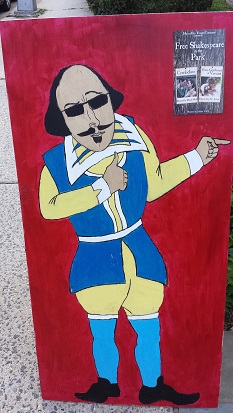
Summer is when many New Yorkers plot when and how they are going to leave the city for as long as possible. Although this has been a relatively mild summer so far (we still have to get through the rest of August), New York summers can be a cauldron of oppressively humid heat and sweaty anger.
But New York City is also a place of free Shakespeare in the summer, and if you have not gotten to one of the city’s offerings of free Shakespeare, make plans to do so at once.
The most well-known free summer Shakespeare plays are those produced by the Public Theater in Central Park’s Delacorte Theater. But there are many others and they run the gamut. Many are done in parks and one is even produced in a parking lot.
When I lived in Inwood in uptown Manhattan I made sure to attend the Inwood Shakespeare Festival of free plays in Inwood Hill Park courtesy of the Moose Hall Theater Company. A few summers ago I was fortunate enough to attend The New York Classical Theatre’s production of King Lear in Battery Park that featured my uncle Andrew in the role of the fool.
Living in Flushing, Queens among throngs of Asian immigrants and currently out of the zones of hipsters and rapid (or at least costly) gentrification, I am fortunately still walking distance from seeing the Bard’s work performed.
The Hip to Hip Theatre Company specializes in bringing Shakespeare to the people of Queens. I was recently fortunate enough Hip to Hip’s production of Cymbeline that was performed in the garden of the Voelker Orth Museum in Flushing. I walked straight there from the Main Street stop of the 7 train and arrived with time to spare. I was able to stroll home afterwards with no trouble.
My wife and our two baby girls got there before me and the good people of the museum had us set up nicely with some folding chairs on either side of our double-wide jogging stroller (bringing a double-wide jogging stroller to an indoor production would indeed make us among the rudest people on Earth but this was in an outside park and we were not in anyone’s way, really).
The audience was at full to overflowing capacity well before show time, and more folding chairs were brought out and placed wherever people could find space without getting in the way of the actors. There was a children’s presentation before the show began. A member of the theater company brought children from the audience up in front of the crowd and put them through their Shakespeare paces, including getting them to perform dramatic Shakespearean deaths.
The show started and despite obstacles that come with performing in public, outdoors and in New York—actors dealt with microphones that cut out and fed back and they were constantly competing with the sounds of overhead airplanes and a running power generator—the cast forged through and put on a great show.
Watching Shakespeare in summer twilight is special no matter where you are. The changing light signals a cooling of the air and the start of night and new possibilities. Dusk ushers in with it the promise of adventure under the cover of night and hearing the poetry of Shakespeare’s plays as the sun sets is magnificent and is a joy that can’t be duplicated.
Watching Shakespeare’s Cymbeline in the summer night was outstanding. Even though we wrestled with two baby girls the whole night and even had to take them to the back when they started getting noisy (they liked the show and got excited), it was still possible to get lost in the beautiful language of the play. And Cymbeline has everything: romance, long-lost relatives, bloody swordfights, the works.
Once the show was over, audience members and actors alike paid compliments to our twin girls. I am proud that they went to their first Shakespeare performance when they were only six months old. The Hip to Hip Theater Company is to be admired for so ably fulfilling its mission.
Don’t miss the chance to see some Shakespeare this summer.
 Matthew Sheahan
Recent Comments