
Just another weekday explosion in New York City
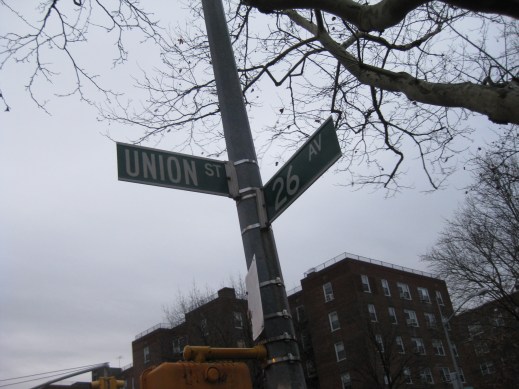
It was a quiet Wednesday night and we had just managed to put our girls to bed when we heard and felt an explosion. Even though it had been raining, there was no way that this was thunder. The explosion was quickly followed by a burning smell. We looked out our windows but did not see anything. The burning smell persisted.
A few short minutes later a legion of emergency vehicles arrived. Fire engines and police cars with screaming sirens and lights ablaze rushed down Union Street. The fire trucks positioned themselves near our building as police cars rushed passed them to block off traffic coming in both directions. The problem seemed to be coming from across the street, but we couldn’t tell what had happened. Was there a burning vehicle? Did someone detonate a car bomb in our neighborhood? Was there a meth lab in someone’s apartment that caught fire and now toxic chemicals are in the air?
I decided to investigate, taking a basement exit in case police were blocking off the front entrance of our building. When I got to the front of my building there were many people on the street already there to bear witness to the events. I noticed smoke coming from an open manhole on the street. A firefighter was connecting a hose to the fire hydrant nearest our building. The hose led across the street.
I encountered a Spanish-speaking man who was standing near my building. I asked him what was going on. In thickly accented English he told me that he saw flames coming from a building across the street and he had called 911. He didn’t know what had happened but he saw flames and smoke coming from a manhole and a building. A South Asian woman wrapped in a traditional sari came by and spoke with us. She mentioned that she had been saying her prayers when she heard the explosion; the burning smell had driven her from her apartment to investigate.
After chatting with these neighbors I headed across the street where there more people gathered. One of the buildings was completely dark and it was towards there that the firefighters were all streaming. Police officers and fire officials talked to one another as more FDNY personnel arrived. A few more fire department vehicles showed up. A Q44 bus found itself trapped, hemmed in by first responders on both sides. Its driver stood outside the bus talking into a cell phone before signing off and standing there resignedly.
As I stood watching, a friend, J. Dip, approached me. He lives across the street. I know him through music: he plays guitar for New York hardcore stalwarts Bloodbeat. He lives in a building next to the affected one and told me that he heard and felt the blast and saw flames coming from the basement windows of the next building as well. He told his wife to be ready to move their kids out of their quickly and he went to investigate. We talked about other things: how we were doing and what our lives were up to. He and his wife are expecting a third child in November. We are both still playing music, but life slows down a bit when you have kids.
Another bystander said that it was likely an electrical fire and explosion caused by corroded wiring. He explained that with the large quantities of salt put on New York City roads during the winter months, some salt seeps underground and corrodes utility cables there. When it rains later in the year, water can touch those exposed wires and cause fires and explosions.
That seemed like the most plausible explanation, and the firemen were not evacuating any buildings, so my adventure was done. Con Ed trucks were already pulling up to start fixing things as I walked back across the street for home.
This was some excitement that one might think would make it onto the television news or merit a mention in a newspaper, but nothing doing. There were no fatalities or grisly injuries. “If it doesn’t bleed, there’s no need,” would be the appropriate adage for lack of news coverage.
So no big deal, just another explosion in New York. We live in one of the largest cities in the world and the infrastructure is always being revised. Sometimes by tragedy or accident, sometimes by design, New York always reinvents itself. As long as this metropolis stands, its story will be one of grinding, sweat and broken concrete, of taped-off work zones and slap-dash detours. We’ll face them all down, one odd weekday explosion at a time.
Jury Duty, the Right We Have Come to Despise
Civic duty is much nobler in speech than it is in action. Jury duty is an honorable civic duty that most citizens do everything in their power to avoid.
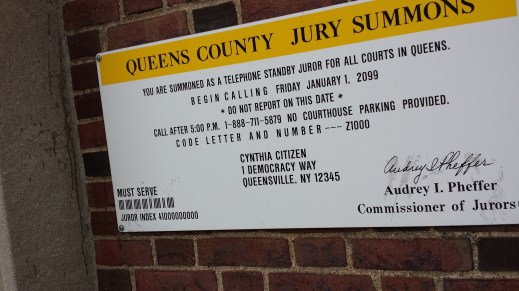
I received a jury duty summons in the mail to serve in my home borough of Queens. But rather than get a definite day to report, the system keeps you guessing and requires you to call by telephone to see if you must report the following day.
So for a few days I lived with the Sword of Damocles over my head wondering if I was actually going to serve. I called on a Friday after 5 p.m. per the instructions on the notice only to be told to call again on Monday. At 5 p.m. Monday I called and learned I’d have to be in Kew Gardens the next day. Fantastic.
It was a warm Tuesday and I took the wrong subway and ended up taking a very long walk along Queens Boulevard to the central jury room, which is actually in Queens Borough Hall across 82nd Avenue from the large criminal court house.
I arrived a half hour late but was not the last one there, and I filled out a few notices and settled in for a long wait. The waiting room was filled with people that reflected the wide ethnic diversity of Queens, which is both a blessing and a curse. It is definitely interesting and good to meet people from faraway lands and learn about their language and cultures; it is bad when a sizable portion of your jury pool can viably fake not understanding English.
I had my work laptop with me and just as I was starting to make some progress on things, my name was called. About 40 of us were lined up and brought to the court of Judge Gene Lopez. We filed into the audience and the clerk randomly drew names and those called took a seat in the jury box. Both attorneys and the accused were there.
The defendant was an elderly Chinese man who had a Mandarin interpreter with him. He was charged with several serious crimes including assault with intent to maim, causing grievous bodily harm and menacing with a firearm, among others. I almost wanted to serve on the jury just to find out what the hell went down.
Judge Lopez appears to be a distinguished and amiable jurist. He has also probably heard every excuse known to man as to why people can’t serve on juries in his court.
Just about everyone wanted out and was willing to say anything to be excused. One women, a chiropractor, said that if she were chosen to be a juror she would be so emotionally distraught that it would affect her impartiality. Several people requested private conversations with the judge in order to discuss personal or medical issues. Each time both attorneys and the stenographer had to position themselves on the far side of the bench from us. The success rate for these private conferences was very high. Most people got out of being on the jury after one of these.
People who voiced religions objections were let go without any questioning. The first man let go said he was a Jehovah’s Witness and said he couldn’t sit in judgement of another person. He even cited a Bible verse. Good for him if he did the research on that religion to come up with that. I don’t know if it’s possible for jury duty to be so bad as to forgo a lifetime of Christmas and birthday celebrations.
The only juror that got excused on a language excuse that seemed believable was an Asian woman who didn’t recognize her own name being called. She was gone pretty fast. The others hammed it up and got some righteous guff from the judge.
A typical exchange went like this:
JUDGE: Miss Kwan. You say have an issue understanding English?
Ms. KWAN: Yes. I don’t understand some things so good.
JUDGE: What is your profession?
Ms. KWAN: I a nurse.
JUDGE: Are you a licensed, registered nurse?
Ms. KWAN: Yes. Registered nurse.
JUDGE: And you had to take an exam to get your license, yes?
Ms. KWAN: Yes.
JUDGE: And was that exam in English?
This could go on for a while. The results were never different: if you could pretend you didn’t know English that well, you would eventually be excused. Eventually more than half of the potential pool was excused and the rest of us were called to the jury box except one person. By the time we were seated it was 4:30 p.m. and the judge let us go home early with instructions to be back by 9:30 a.m. the next day.
The next day I got to the court house with time to spare. In the lobby of the court building, a gruff female court officer who sounded like Harvey Fierstein directed foot traffic in the main entrance of the criminal court building.
I had no problems getting through security on my first day, but as I entered court on day two of jury duty they discovered the multi-tool knife in my bag, and the key tool and the handcuff key on my key ring. Those court officers on duty are sharper than the police who arrested me (twice), other court officers in every other court I’ve been to over the past 17 years, and countless TSA agents. I’d had that handcuff key on my key ring since 1998. They told me I wouldn’t be getting it back. It’s OK though. I have others (and you can pick handcuffs with a staple as well). They gave me a voucher form so I could get my knife and key tool later.
Eventually we were all gathered and jury selection resumed. The prospective jurors ran the gamut: a NYPD police detective who worked in the department’s bomb squad, a Kentucky-born actress who managed a deft exit after a private sidebar with the judge, a future law student trying to decide between the University of Virginia and Fordham University law schools, a few college students, an accountant, a music producer from Whitestone, and an elderly retired nurse, among others.
After another battery of questions from the judge and the prosecutor and defense attorneys, we were sent out of court to wait for a while until being called back in. And from these 16 last remaining from the jury pool, none of us were selected. Of the 40 or so that were called, only two had made the cut. We were sent out of the court room and a court officer told us to be back in the central jury room by 2:15 p.m.
I got my lunch at a deli and went to Maple Grove Park, a small area on the side of the court building. The small and underused park is basically a wedge between Queens Boulevard and the Van Wyck Expressway. I noticed the park from the third floor of the court building and saw only one person use the park: a homeless man sleeping on a bench. He was gone when I went there. I used a napkin and some of my water to clean away a film of green pollen so I could sit down without looking like I was sodomized by the Incredible Hulk. There was construction going on in the area around the park and construction vehicles came and went under the direction of a flag-waving hardhat worker. A few other people followed my lead and brought their lunch to the park, but it was relatively solitary.
After I was done eating, I had the chance to do something I hadn’t done in a long time: sit on a park bench and read. If nothing else, this jury duty outing gave me a half hour or more of peaceful, unconnected living of the kind we used to take for granted.
I still returned to the central jury room before 2:15. I sat and read some more as my phone charged in a corner along with other smart phones soaking up power from some inconveniently placed outlets. I kept a cautious eye on my phone while it charged and waited for some kind of announcement. I looked around for people I recognized from the panel and didn’t see any. Finally they called up people who had been to court earlier that day and gave people letters signifying that they had concluded their service. After they were given out, I and one man from my panel were left.
“What about us?” we asked the clerk.
She went back to the office and found another stack of jury ballots with two letters. “They called these at one,” she said before handing us our letters. I was one of two lucky or unlucky people who waited an extra two hours. I got to read a book outside in the nice weather and enjoy a leisurely lunch, so I regret nothing.
I made my way home in the pre-rush hour traffic but still couldn’t avoid a packed Q44 bus. I should be safe from jury duty for another four years.
The Lemon Ice King of Corona
Weekends during the spring and summer are crowded in Flushing Meadows-Corona Park. You can tell how bad the crowds are when you pull off the highway and every inch of available parking and then some is taken up on 111th Street. Keep in mind that a minority of people arrive by car too. When you get there on the 7 train and look down 111th Street towards the park you can see a sea of humanity clogging the sidewalks and moving toward the park.
Still, despite the crowds, Flushing Meadows Corona Park is not a bad place. It can be crowded, for sure, but you can still have a pleasant stroll through it on a busy Sunday.
This past Sunday the wife and I went to the Queens Zoo to visit with my friend Jay Levitz and his wife and infant son. Jay is an awesome musician and plays lead guitar for Endangered Feces, one of my favorite bands of all time. Small world: ace punk rock drummer Chris Ara, freshly graduated from the New York Fire Academy, was also in the park that day and it was cool to offer my congratulations to him in person.
After the walk through the zoo with children, we were tired, and my wife thought it would be nice to stop by the Lemon Ice King of Corona on the way home. It was a great idea.
This modest ice store is an essential place to go during the warmer months.
The Corona neighborhood is dominated by Hispanic immigrants from a multitude of Spanish-speaking countries. That brings with it teeming crowds, obnoxious music and bad traffic with worse drivers but it also comes with some awesome food street vendors. Walking down 111th Street you can encounter some delicious empanadas or roasted corn on the cob that’s out of this world.
The celebrated lemon ice store—it is officially named Benfaremo – The Lemon Ice King of Corona—is on 108th Street and the 111th Street stop on the 7 train is the best way to get there via public transit.
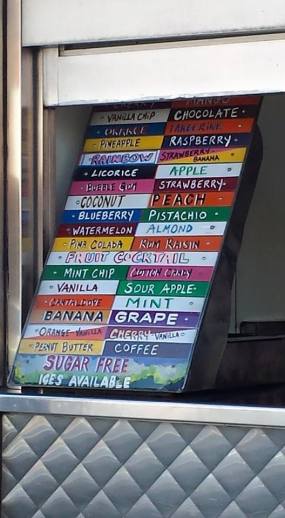
The Lemon Ice King of Corona offers flavored ice. Would you like to have some ice cream or a shake too? Too bad. The Lemon Ice King has a lot of flavors to choose from (but won’t mix them).
My wife went and stood in line while I found a place to temporarily park the truck and wait. Our babies were sleeping after a long day at the zoo (a long day for a 15-month-old can be about two hours when you let them walk most of the way). The line was long but moved quickly and my wife soon returned with our ices. I went with the classic lemon flavor and my wife had strawberry banana that had pieces of real strawberry in it. Our babies got nothing; you snooze, you lose, girls.
I ate my first lemon ice of the year sitting in my truck parked in front of a fire hydrant. I powered through the large lemon ice, pausing only to wait out some brain freeze. It felt like I was starting the New York summer on the right foot.
One place I feel I should mention is Uncle Louie G, which operates a chain of stores in the five boroughs and Long Island. They have some of the best ices you’ll ever eat as well, but they also have regular ice cream.
Either way, it is going to be a long, hot summer (it always is in New York City), so don’t forget to treat yourself to a refreshing ice.
Down on the Farm, in New York City
No city is as emblematic of the urban life as New York City, so it may be a surprise to find that there are several farms operating in the city. There’s a working farm in Queens, the city’s largest borough.
The Queens County Farm Museum is a real working farm located in the Glen Oaks neighborhood of Queens.
The farm dates all the way back to the late 1600s and is the longest continually farmed site in New York State. It started as a farm during the days of the Dutch settlers. For many years it survived because it was run by patients of Creedmoor State Hospital, a mental hospital. Creedmoor is still in use today even though some of its buildings are abandoned. It’s fitting that farming survived in this area of Queens because of inmates from an insane asylum.
The Queens County Farm Museum is open to the public and while it is largely used for educational purposes, it is still a legitimate farm. You can buy fresh eggs laid by their chickens and eat vegetables grown there. When you go to visit you’ll see workers moving wheelbarrows of dirt and feeding animals.
The farm is visited by school groups and has lots of activities for students and volunteers. You can take classes there on a variety of topics. You can also rent space for parties. In the autumn, the farm grows an elaborate corn maze and the public is challenged to work their way through it with a map. My wife and I entered the maze a few years ago and it was not easy to find your way out.
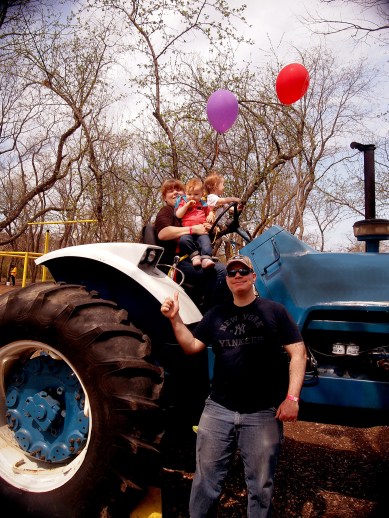
This past weekend, they held a carnival there and the wife and I took our 15-month-old girls there to meet up with the in-laws and enjoy the nice weather. They got to pet rabbits, feed goats and sheep, ride ponies and take a hay ride. The girls got free balloons from the Glen Oakes Volunteer Ambulance Corps. We were able to take the girls up on a large tractor and got to see a great magic show by Cordone.
The five boroughs used to be covered in farms. New York City at one point did not extend far beyond the downtown area. Where City Hall is now was considered the remote outskirts of town (when they renovated City Hall Park in the late 1990s, workers unearthed graves from a poor house that used to be there).
In addition to the Queens County Farm Museum, there are urban farmers growing vegetables and raising chickens on small plots of land throughout the city. Staten Island has several working farms, though not open to the public. And there are people trying to preach the gospel of organic food by carving gardens out of abandoned lots and any scrap of space they can find.
The city currently doesn’t have enough arable land to make a dent in the agricultural markets, but it’s nice to know that people who live in this hothouse of a metropolis can get a taste of the farming life without leaving the city.
I Want To Be Poet Laureate of Queens

The Borough of Queens is taking applications for its poet laureate, and I’m going to throw my sweaty hat into the ring. I think my chances of being accepted are low, but fuck it. I’m as good as anyone else and I like this borough very much.
Queens was where I lived when I moved back to New York. I had been away from the Northeast for several years and hadn’t lived in the five boroughs since I was an infant in the Bronx. I grew up mostly in Yonkers and while I came to the city frequently growing up, I am by and large a child of New York’s suburbs.
In college I decided I wanted to be a great American writer in the same way that thousands of other English majors do. I was determined to get myself back to New York City as if that would somehow magically bestow some great inspiration power and let me live a charmed literary life.
I got a job at JFK airport that helped me move back here and I went looking for apartments that were a reasonable commuting distance to JFK. I found a small studio in Ozone Park at $500 per month (it soon went up to $525). It was on 101st Avenue and John Gotti’s old Bergin Hunt & Fish Club was still there and only a few blocks away. That was a selling point that the realtor mentioned. “People know not to mess around in this neighborhood,” he said. Gotti had been locked up for several years by then but the neighborhood still had some old wise guys hanging around.
I enjoyed living in Ozone Park a lot. I would walk around the neighborhood as much as I could and enjoyed how quickly neighborhoods could transition from one to another. Not far from where John Gotti plotted his takeover of the Gambino Crime Family a store sold cricket supplies to the Indian and West Indian immigrants who were moving into Richmond Hill. I was not too far from Forest Park and I could also walk to the small apartment where Jack Kerouac wrote his first novel.
While immediate literary success proved elusive, I managed to publish my first poetry collection while I was living in Ozone Park. ‘Five Borough Blues’ was a small broadsheet of poems published by New Jersey-based Lucid Moon Poetry (RIP Ralph Haselmann Jr.).
Years later, after living in Inwood for a decade, I moved in with the woman who is now my wife and that brought me to Flushing. I got to learn Northern Queens whereas Ozone Park is in Southern Queens.
The greatest borough continues to impress me. I do miss Inwood a good bit, I can’t lie. But Queens has many more great neighborhoods that are still real neighborhoods and not overpriced tourist zones.
Queens has both the greatest number of interesting neighborhoods, real residential neighborhoods with character, as well as cultural institutions and a variety of environments that the other boroughs don’t have. Do you have the beachfront and harbor areas like Broad Channel and the Rockaways in Manhattan? No. Can you find 24-hour Korean barbeque in Staten Island? Good luck.
And without fail, Queens continues to inspire me to write poetry. The entire city does, to be sure, but Queens is my home and it’s where I believe you find the most New York part of New York. It has the widest array of cultural offerings and the largest sampling of interesting people anywhere in the world. It stands between the city and its suburbs. It has all manner of terrain. It even has its own zoo.
I will gladly accept the (unpaid) responsibilities of the Queens Poet Laureate. I will let no excellent verse about this borough go unwritten. Applications are due April 24th (April is national poetry month).
But whether or not I am poet laureate of Queens, I will continue to let the city inspire to create good written works. It deserves no less.
New Skill for the New Year

Swearing off the usual litany of New Year resolutions (except to maybe be kinder to people), the New Year is still a time to do something new or seek to improve yourself. I’ve decided that this year is the year I become proficient at archery.
Hunting is an excellent way to enjoy the outdoors, and while a gun is still the preferred method, a gun usually only gives you 10 days or so each year to hunt per state.
Bow hunting season, however, is much longer. For example, New York State’s deer and bear bow hunting season can be about three months long, depending on area. And on Long Island and parts of New York State closest to the city, where the population is very dense, only bow hunting is allowed for regular hunters. Bow hunting is also a bigger challenge. You have to be much closer to the animal to take it with an arrow and you will usually have to track that animal for a much longer distance once you’ve hit it.
And even if you don’t hunt, archery is an excellent and fun skill to develop. It’s something that city dwellers have the ability to do with several centers within the five boroughs. Archery is also a way to connect to the past and to characters in literature from Robin Hood to Katniss Everdeen.
I decided to visit Queens Archery, which is located not too far away from where I live. I showed up without a reservation but was getting a good archery lesson only a few minutes after arriving. The cost was only $25. That included an excellent lesson using a really sweet compound bow and some arrows on a target.
The young instructor taught me the basics of a proper stance and range safety, as well as other basic essentials that I had no idea about. For example, you NEVER “dry fire” a bow without an arrow in it. It can seriously damage it and cause it to come part. The compound bow uses a hand-held trigger device that one uses to release the bow and shoot the arrow. It was simple and the arrows flew into the target with a satisfying thwack!
A bow has to be set for each individual user and since mine wasn’t set for my specific use, it was not as accurate as it would have been if it had been customized. But with a little bit of adjustment, I managed to do pretty well. The instructor quickly moved me from the five yard line to the 10 yard line.
More newcomers arrived and they were soon shooting alongside me, some with compound bows and some with more traditional recurve bows. They varied in ability but they all seemed to have a nice time and they quickly improved their aim with some additional pointers from the instructors.
The instructor was happy with my abilities and said I might be able to move over to the more advanced part of the archery range on my next visit.
It was very satisfying to see the dozen or so hunting trophies on the wall that the center’s hunting club members had taken using their skills. It felt good to be in the city and be at a place where people appreciated were dedicated to developing skills for the outdoors.
Overrated New York Attractions (And Their Underrated Alternatives)
For the tourist, and many of the locals, New York is a series of attractions and experiences that everyone must check off of their bucket list in order to consider their New York experience authentic or complete. But there are some things that are overrated and that resident and tourist alike should move to the bottom of their list.
Let’s make not being a sucker one of the authentic New York experiences once again. Here are five New York attractions that get way too much attention, along with some more reasonable alternatives:
The Statue of Liberty. The Statue of Liberty is a beautiful monument to the enduring symbol of freedom America is to the world. However, visiting Lady Liberty means paying a shyster ferry company for an overpriced ticket out there, standing in a long line to go through TSA-style incompetent security care of the U.S. Park Police, and then riding to Liberty Island where you can wait in another long line if you want to get to the top of the statue’s crown. Once you get up there, you’ll have a few seconds in front of a small window before you are hustled on your way. It’s not worth the money or the time out of your life. As an alternative, the Staten Island Ferry is absolutely free, requires no strip search, and will get you within great photograph distance of both the Statue of Liberty and Ellis Island.
Brick Oven Pizza. Hipsters and tourists stand in long lines and pay high prices for pizza that is burned, unevenly cooked, and gives you less of everything. Somewhere a mob-connected pizza scammer is laughing until he wets his creased chino pants. Go ahead and wait hours for your sucky overpriced pizzas and brag to your friends how you pretended to enjoy the thin crust and the flimsy layer of “artisanal” cheese. Meanwhile, any real neighborhood pizza place will get you a delicious slice or pie for a good price. Here’s an effective litmus test of any New York pizza place: if it doesn’t have parmesan cheese for you to sprinkle on your pizza, walk away.
The Central Park Zoo. Every zoo in New York that isn’t the Bronx Zoo is playing second fiddle to that fine animal kingdom. The Central Park Zoo gets lots of foot traffic because of its location but it’s overrated and doesn’t have as much to offer as its counterpart in Queens. People are too enthralled with being in the heart of Manhattan to notice that the zoo they paid for sucks. Take the 7 train to Queens and you can experience the Queens Zoo in Flushing Meadows-Corona Park. The Queens Zoo is half the price of the Central Park Zoo and has more to offer.
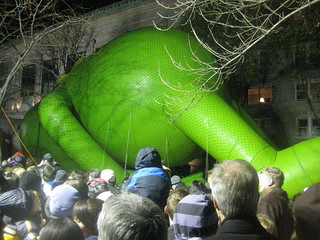
Thanksgiving Eve Balloon Inflation Stampede. The night before Thanksgiving, thousands upon thousands of New Yorkers, tourists and their children make their way to the Upper West Side to see the Thanksgiving Day Parade balloons before the parade. While it’s a relatively mild, family-friendly mob scene, it’s still a mob scene that requires you to pack into a small area where you have no choice but to follow the slow moving crowd. The balloons are inflated but kept under nets at odd angles. This might make for some unintended comedy. It might look like the Buzz Lightyear balloon is being fellated by Pikachu and that might be hilarious, but it’s not hours of being herded like cattle hilarious, and you can’t expect your children to find that funny if you’re a parent. Wait until the Big Apple Circus comes to your borough and take the kids to see that. There will be some impressive talent and you can save Thanksgiving Eve for preparing for Thanksgiving.
Fancy cupcake shops. I like cupcakes as much as the next guy, but any bakery not run by blind monkeys can churn out delicious cupcakes. How a few choice cupcake stores have made everyone whore themselves out for their goods is beyond me. I was at a catered event and had a cupcake from the Magnolia Bakery. It was good, but so where cupcakes I had from school bake sales and every other bakery I’ve been to. For a good New York dessert experience, go to the Lemon Ice King of Corona in Corona, Queens. It is a famous place but it’s far enough away from Manhattan that you’ll have a real New York experience and not be a fool.
New York Summers Are For Free Shakespeare
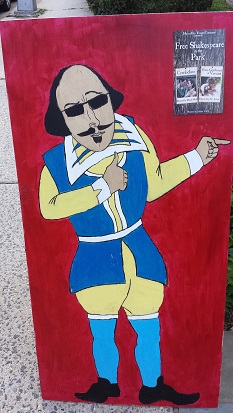
Summer is when many New Yorkers plot when and how they are going to leave the city for as long as possible. Although this has been a relatively mild summer so far (we still have to get through the rest of August), New York summers can be a cauldron of oppressively humid heat and sweaty anger.
But New York City is also a place of free Shakespeare in the summer, and if you have not gotten to one of the city’s offerings of free Shakespeare, make plans to do so at once.
The most well-known free summer Shakespeare plays are those produced by the Public Theater in Central Park’s Delacorte Theater. But there are many others and they run the gamut. Many are done in parks and one is even produced in a parking lot.
When I lived in Inwood in uptown Manhattan I made sure to attend the Inwood Shakespeare Festival of free plays in Inwood Hill Park courtesy of the Moose Hall Theater Company. A few summers ago I was fortunate enough to attend The New York Classical Theatre’s production of King Lear in Battery Park that featured my uncle Andrew in the role of the fool.
Living in Flushing, Queens among throngs of Asian immigrants and currently out of the zones of hipsters and rapid (or at least costly) gentrification, I am fortunately still walking distance from seeing the Bard’s work performed.
The Hip to Hip Theatre Company specializes in bringing Shakespeare to the people of Queens. I was recently fortunate enough Hip to Hip’s production of Cymbeline that was performed in the garden of the Voelker Orth Museum in Flushing. I walked straight there from the Main Street stop of the 7 train and arrived with time to spare. I was able to stroll home afterwards with no trouble.
My wife and our two baby girls got there before me and the good people of the museum had us set up nicely with some folding chairs on either side of our double-wide jogging stroller (bringing a double-wide jogging stroller to an indoor production would indeed make us among the rudest people on Earth but this was in an outside park and we were not in anyone’s way, really).
The audience was at full to overflowing capacity well before show time, and more folding chairs were brought out and placed wherever people could find space without getting in the way of the actors. There was a children’s presentation before the show began. A member of the theater company brought children from the audience up in front of the crowd and put them through their Shakespeare paces, including getting them to perform dramatic Shakespearean deaths.
The show started and despite obstacles that come with performing in public, outdoors and in New York—actors dealt with microphones that cut out and fed back and they were constantly competing with the sounds of overhead airplanes and a running power generator—the cast forged through and put on a great show.
Watching Shakespeare in summer twilight is special no matter where you are. The changing light signals a cooling of the air and the start of night and new possibilities. Dusk ushers in with it the promise of adventure under the cover of night and hearing the poetry of Shakespeare’s plays as the sun sets is magnificent and is a joy that can’t be duplicated.
Watching Shakespeare’s Cymbeline in the summer night was outstanding. Even though we wrestled with two baby girls the whole night and even had to take them to the back when they started getting noisy (they liked the show and got excited), it was still possible to get lost in the beautiful language of the play. And Cymbeline has everything: romance, long-lost relatives, bloody swordfights, the works.
Once the show was over, audience members and actors alike paid compliments to our twin girls. I am proud that they went to their first Shakespeare performance when they were only six months old. The Hip to Hip Theater Company is to be admired for so ably fulfilling its mission.
Don’t miss the chance to see some Shakespeare this summer.
The Horror That Is The 7 Train
Speaking in 1999, Atlanta Braves pitcher John Rocker said the following about New York City:
“Imagine having to take the 7 Train to the ballpark looking like you’re riding through Beirut next to some kid with purple hair, next to some queer with AIDS, right next to some dude who just got out of jail for the fourth time, right next to some 20-year-old mom with four kids. It’s depressing…”
Saturday Night Live’s Colin Quinn, doing the weekly news spot, said this about Rocker: “He might be a bigot, but he’s definitely been on the 7 train.”
Despite all the romantic notions you may have in your head about New York, there are some traditional New York experiences that are never pleasant no matter how much you romanticize them. Being mugged is never fun; neither is stepping in dog shit or having to smell a homeless person.
Another old New York tradition that is no fun is the 7 train. The 7 train is a human cattle car of endless misery and inconvenience. It perfectly combines all the incompetence of New York’s Metropolitan Transit Authority with the rancid overpopulation of our city that makes New York the cultural calling card of the dying American empire.
I live in Flushing, Queens and work in lower Manhattan. I have an hour-and-15-minute commute each way when things go well, but things rarely go well. I take a bus to downtown Main Street Flushing, which has a crowd density similar to that of Times Square, and board a 7 train that takes me to Grand Central, where I take either the 4 or 5 train (also no joy) to the Bowling Green station near where I work.
Today I managed to get down the overcrowded stairs to the train platform only to miss the closing doors of a not-very-crowded 7 train by seconds. The next express train arrived soon but sat on the platform for 10 minutes and didn’t leave the station until it was wall-to-wall people.
Sometimes the 7 train likes to quit on you and dump all of its passengers out a random stop. “This train is out of service! No passengers!” the conductor will announce. Sometimes the express 7 train decides to go local, sometimes without telling its passengers until they’re at a stop they didn’t plan on making. On the weekends, the 7 train doesn’t run any express trains at all and often will have large service gaps that will leave its passengers scrambling to shuttle busses or trying to find alternate trains to take.
In September, when the U.S. Open is happening at the U.S. Tennis Center, the 7 train is flooded with tennis fans who are clueless as to where they are going and completely unschooled in subway etiquette. Sometimes a perfect storm of passenger clusterfuck will happen and you’ll have Mets fans and U.S. Open fans cramming the same trains heading to the Willets Point station.
The 7 train will often stop service entirely or delay service torturously or decided it doesn’t want to run express trains at the height of rush hour. Often the reason the MTA gives passengers for this is “signal problems.” One winter I asked an MTA worker on the platform why express service was abruptly canceled and he answered, “It’s cold outside, sir.”
I don’t bother trying to get a seat on the 7 train. Those are the dominion of sharp-elbowed Asian women who push their way onto the trains before the unfortunate souls who have to commute to Flushing can exit. I actually prefer to stand. I’ll actually have more room standing and the ride isn’t that long. Besides, I sit on my ass for eight hours at work. I usually try to position myself directly between two car doors in the center of the car, where the crush of passengers will be slightly less.
It is often standing-room only before the trains leave its first stop, but that doesn’t stop people from trying to cram themselves on to the train at later stops.
The 7 train is one of the oldest lines in the city, so its rails are close together and the cars that fit on the tracks are narrow and without as much room as other trains. It is also the only subway serving some of the most densely populated parts of the city and it terminates (for now) in Times Square.
And the 7 train is about to get worse. The geniuses who run our transit system decided it would be a good idea to cram 15 pounds of ham into this 5-pound bag instead of 10, so the 7 line is being expanded all the way to 34th Street and 11th Avenue. This means more crowding on a subway line that can barely handle what its current ridership. Joy.
There are some upsides to the 7 train. Most of it is above ground, so you can see some beautiful views of Queens and Manhattan that you won’t see from any other train line. Also, while it is regularly packed to the gills, most of the riders are working New Yorkers who are not there to cause problems; you don’t have the thug element of the A train or the hipster abominations of the L line. Because the trains are so crowded all the time, you have fewer homeless and crazies. I have never seen a “Showtime!” subway dance troupe try to ply their obnoxious trade on the 7 train.
For all its faults, the 7 line has stood the test of time, and if overcrowding doesn’t bring it crumbling to the ground this year, someone will be bitching and moaning about it 100 years from now.
Head to the New York City Woods

Summer is a traditional time to go to the beach and be near the water, and New York City has 14 miles of public beaches where you can contract skin cancer while being eaten alive by horse flies. I never understood why people would want to go to a sunny place and let the sun burn them during the hottest time of the year.
But believe it or not, New York City also has woods and you would do well to spend some time in the shade this summer. There’s something immensely satisfying about going for a walk in the woods and knowing you are still within the five boroughs of New York City.
For more than 10 years I lived in Inwood, the northernmost neighborhood in Manhattan. I was lucky enough to live right across one of the wooded sections of Inwood Hill Park, which contains the last piece of natural forest in Manhattan as well as Manhattan’s last surviving salt marsh. It is also the highest natural point of elevation in the city.
I moved into Inwood on a Saturday in the summer and the following Monday went on a jog in the park before going to work. Not familiar with the park and its paths yet, I became lost. I couldn’t believe it that I was lost in the woods in Manhattan, but I was. I eventually found my way home and wasn’t too late to work, but Inwood Hill Park remains a treasure with lots wooded paths to walk. Even on weekends in the spring and summer when the park is typically crowded, you can find some solitude in the woods.
Be careful though, there are no shortage of shady characters who know this as well, and while I was living in Inwood a young Julliard student named Sarah Fox was murdered in a wooded part of the park one afternoon while she was jogging.
Inwood Hill Park may be one of the best and most overlooked wooded parks in the city but it’s not the only place to cool off in the shade.
Now that I am in Queens, I live not far from several parks that have real woods and wooded trails.
A few weeks ago, my wife and I decided we would go to Alley Pond Park. My wife, who grew up in Queens, knew it as a place high school students would go to drink alcohol under the cover of darkness. The park is the second largest public park in Queens (Flushing Meadows Corona Park, which doesn’t have dense woodlands, is the largest).
Alley Pond Park would be difficult to reach via public transportation as it is not near any subway lines; you’d have to take the bus if you don’t have a car or can’t walk or bike there. We found a parking space in a small parking lot that looks like it overflows during busy times. We put our twin daughters in a jogging stroller and managed to navigate it through much of the wooded paths in the park. Of course, being in New York City, the paths in the park were sometimes paved and sometimes led to steep staircases that we dared not traverse with a stroller, but we were always able to turn around and find another suitable path that would let us enjoy the woods a little more.
We saw lots of birds and even a rabbit. There were plenty of mosquitoes as we got near swamp areas of the park. We came across other strollers in the woods but like Inwood Hill Park, one can achieve a certain solitude in the woods even on days that the park is crowded.
No matter what borough you reside in, there is no shortage of wooded parks in New York. It will be cooler and less crowded in the shade.
Parking in New York: A New Path to Anger and Disgust

When I moved back to New York City years ago, one of the greatest benefits was that I didn’t need a car.
My luck with cars has been terrible. My first car, a 1987 Plymouth Horizon, broke down constantly. I was a broke college student who couldn’t afford a new head gasket when my car put itself out of its misery via self immolation.
I bought my second vehicle from a shirtless man in the back woods of Georgia who was drunk at two in the afternoon and called his son “Molson” even though that wasn’t his name. My giant 1977 Plymouth Voyager van was mustard yellow with a big white strip. If you viewed it at the right angle you could still make out the lettering from the church that used to own it. It didn’t perform much better than my old Horizon. Its drive shaft fell off on Interstate 285 in Atlanta once.
My 15-year car-free life came to an end a few years ago when the wife and I bought a used truck. I don’t live in Manhattan anymore and Eastern Queens is not as much of an automotive purgatory as Manhattan. And being involved in music means I have to haul large speaker cabinets, guitars and drunk musicians throughout and beyond the five boroughs.
But the conveniences of city car ownership are paid for with the wages of anger and aggravation.
The roads are full of bad drivers and New York City is rife with people who not only drive terribly but feel entitled to do so. I’ve seen people in Inwood triple park rather than walk an extra 20 feet to a supermarket. I’ve seen cab drivers wait until they have a red light to drive across an intersection.
And parking in New York City is a misery that never goes away unless you are somehow incredibly wealthy. The city’s parking laws are a Byzantine morass of prohibitions that are consistently poorly-signed. A liberal interpretation of a sign can get you a fat ticket or worse, towed. I have not had the experience of paying vehicular ransom at a city impound lot, but every account I have heard from survivors indicates it is a Kafkaesque nightmare that can make someone hate our city for life.
My wife has lived in the co-op apartment we share for more than twelve years and was on a waiting list for a parking space for five years.
We thought our parking troubles were mostly over. We have a regular space. But the perpetual douchery of New York City driving revealed itself again just this past weekend.
My wife had taken our baby girls to visit relatives in Nassau County and returned home from three hours of tied-up traffic on the Long Island Expressway. to find someone had parked in our spot.
Normally the travails of someone with a reserved parking spot would fall firmly in the confines of “First World Problems.” But when you’ve waited five years for that spot and you’re a barely middle-class family with no margin for parking tickets or private garages and someone rudely parks their Mercedes Benz in your spot, violence is justified.
If someone had left a note on the car with their contact info and let us call them to move the car, it would have been no problem. We would have been annoyed but impressed by their willingness to be decent upon notice. Because of the late hour and our building management’s inability to get a towing company right, we were stuck without legal parking for the night.
Normally this would be license to get creative with vandalism. If this car had a sunroof, my dream of justifiable shitting through a sunroof of a snotty dickhead’s car would have finally been realized. I would have loved to stick bananas in the tailpipe, pissed all over the door handles and leave a steaming log of justice on the windshield. It would have given me joy to superglue some tasteless gay porn all over the windows and scratched giant curse words into the expensive paint job.
But since our space is reserved, the authorities would have us as their prime suspects easily. There was little we could do but leave a tersely-worded note stating that they were parked illegally and we had been forced to call the towing service (which was true, even though the towing service was out of business).
So justice has not been served. If you see a dark-colored Mercedes Benz S550 with New York license plate FTX-2898, please vandalize the shit out of it. Thank you.
A Bridge Adventure Near 59th Street
Since four out of five New York City boroughs are on Islands, living in New York means dealing with bridges (and subway tunnels) if you want to get anywhere. Since I became a driver in New York a few years ago, I have mostly driven over the Whitestone Bridge, which is closest to my home.
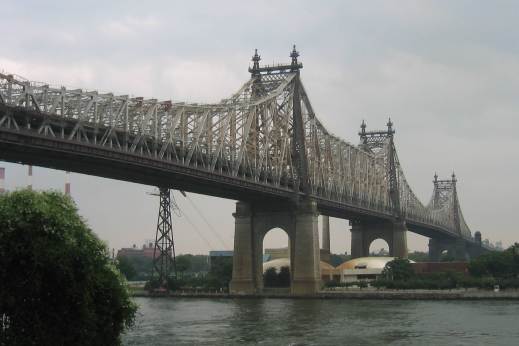
Lately the authorities have gotten into the nasty habit of adding or changing names to some of its bridges. The 59th Street Bridge was officially called the Queensboro Bridge until a few years ago when they decided to also name if after former New York City mayor Ed Koch. It’s now the Ed Koch/Queensboro Bridge. The Triborough Bridge has been renamed the RFK Bridge after Robert F. Kennedy, who was a U.S. Senator from New York when he was gunned down. This has been aggravating. I don’t want to call the Triborough the RFK Bridge. Triborough works better – it connects three boroughs and the name sums that up nicely.
The 59th Street Bridge is a depressing and aggravating bridge for drivers. It has all of the congested traffic of midtown Manhattan with the sooty industrial character of the more neglected parts of Queens. But it is free, so people will stew in hellish traffic to save themselves the $7.50 it now costs to take the Triborough Bridge. (Public policy experts note that the systems of tolls we have on bridges in New York is backward, that we should charge tolls for bridges over the East River that cause more traffic congestion and instead encourage people to use the larger, highway-connected bridges, which now charge tolls).
This past Saturday I was driving home after dropping off some good friends in midtown Manhattan. I made my way east from Times Square and seriously considered taking the Triborough home. No, I thought to myself, I must overcome my apprehension about taking the 59th Street Bridge and make a success of it this evening.
I found myself on First Avenue but did not make the first turnoff I saw for the bridge. I came upon another turn for the bridge and took it, following behind another pickup truck. I saw a sign saying that the outer roadway of the bridge was closed between 9 p.m. and 6 a.m. I thought nothing of it; I hadn’t planned on taking the outer roadway of the bridge, which I had never heard of anyway, and those signs usually referred to weekday construction.
The truck ahead of mine came to the entrance of the bridge, which was closed. It was blocked off with orange traffic barrels. The man got of his truck and just moved some of the barrels. He looked at me as he got back in his truck and his face wore the expression of someone who just did not give a fuck about closed roads. For all I knew he was an off-duty cop. I paused for a minute, not sure if I should follow this driver to a new illegally-opened section of the bridge. Fuck it, I thought. If the cops stop me then I’ll play dumb and just say I didn’t know the bridge was closed because the roadway wasn’t closed. That was technically true.
I could have been driving into a dangerous construction zone or have been tailgating some kind of undercover police operation or been intruding on some other kind of high crime or misdemeanor taking place over the East River. All of those unfortunate circumstances still sounded a lot more fun than contending with the convoluted traffic that would have been required to stay law abiding. I drove up the closed ramp of the bridge.
The outer roadway of the 59th Street Bridge (a.k.a. the Queensboro Bridge a.k.a. the Ed Koch Bridge) is one narrow late separated from the lower roadway by bridgeworks and thick concrete walls. Every once in a while there is a break in the wall and someone driving a smaller vehicle than my pickup truck could probably get away with maneuvering in and out of the lane. I was stuck on the outer roadway until the bitter end.
I drove on the closed outer roadway as quickly as I could while trying to look normal and blend in with the traffic, though there was no other traffic in my lane at all, except the daring barrel-mover, whose tail lights I could dimly make out far ahead of me. I drove on expecting the law to come bearing down on me any minute or to dead end into an impassable construction site. None of those things happened. I drove over the bridge with a paranoid mania until the regular traffic patterns of the bridge shunted me into a lane that didn’t help me get home.
The worse thing about it for someone driving home from Manhattan over it is that it is very tough to find your way when you reach the other side of the bridge. Whether you take the upper or lower roadway and what lane you take on either roadway can quickly determine your options when you reach Queens. Driving eastbound, it transports you from an anger-fueled Byzantine knot of Manhattan streets to a clustered maze of impossible roadways of Queens.
I eventually disentangled myself from whatever unappealing part of Long Island City I was in and found my way to Northern Boulevard and a more pleasant drive home.
Revenge of the Outer Boroughs

This past weekend the wife and I attended a co-ed baby shower for my friend and spiritual advisor Rabbi Jay Levitz and his wife Sarah. We were in Oceanside, Long Island, New York, a short drive outside the city for us, as we live in Eastern Queens. As we talked with Jay, the conversation turned to what constitutes the “bridge and tunnel crowd.”
We all agreed that the term was more of a cultural construct than a geographic one, though we acknowledge that the two go hand in hand in many ways. Where I live now in Queens is not a trendy area at all and is too far from any of the celebrated night life to become popular among the moneyed classes or the upwardly mobile youth any time soon. That is actually a blessing. We happen to have decent access to public transportation, though getting into Manhattan always involves at least one bus and one train. My commute to work is at least one bus and two subways, and it is terrible, subject at all times to the fickle whims of the increasingly incompetent MTA.
The “bridge and tunnel” term may have been initially meant to denote people coming from outside of New York City—especially from New Jersey, considered by many to be a cultural leper colony filled with only guidos and hill people. But my current settings would qualify me as a bridge and tunnel crowd person when I venture into Manhattan for cultural events.
Manhattan was once the undisputed epicenter of New York City’s cultural life. Now that cultural life is much more diffuse and spread through the outer boroughs, most prominently in Brooklyn. New movie theaters, restaurants and music venues are more likely to be opening in Brooklyn or Queens today than in Manhattan. Accordingly, real estate prices in the outer boroughs are still going through the roof.
This shift has made use of the term “Bridge and Tunnel” a bit outdated, but the cultural chasm between whose who perceive themselves as cultured city residents and the people who travel to the city only on the weekends to party is not gone. Someone who takes the Long Island Rail Road from Mineola to see a concert in Brooklyn is considered part of the bridge and tunnel crowd, though they did not use a bridge or tunnel (yes, I understand that the LIRR in Brooklyn does use subway tunnels and uses overpasses on its way to the city; shut up).
And these social demarcations between what is city and what is not stretch to the outer boroughs as well. I mentioned that I drove to Long Island to attend a baby shower this weekend, but as I live in Queens, I already live on Long Island. When New Yorkers talk about “Long Island” they don’t mean the Island itself but Nassau and Suffolk Counties, the parts of the Island that lie outside of the border of New York City.
I could never justify the expense of living in a more trendy or celebrated area of Manhattan. I had a chance to move to the Upper East Side one time. I looked at an apartment in Yorkville and realized that I would be doubling my rent and would still not be able to fit the modest furniture from my small studio in Ozone Park, Queens into the new place. It wasn’t worth the money. I could have said I lived on the Upper East Side, but I’d be living like a hobbit.
So while proximity to Manhattan is become less and less of a cultural touchstone to judge a neighborhood, I propose a new measure of the value of where you live: proximity to live Shakespeare.
A good measure of the value of any place to live is how far away you are from some free Shakespeare. When I lived in Inwood in uptown Manhattan, it had yet to become a trendy place to live and people hadn’t heard of it. But I lived across the street from Inwood Hill Park which had free Shakespeare plays every summer. Score.
I can’t easily walk to free Shakespeare like that, but I am a very short trip from more than one of the venues of the free Shakespeare in the Park in Queens.
Some will argue that this Shakespeare standard is an unfair way to judge where you live, but I don’t think so. I don’t want my children to live in a world where they can’t easily see some free Shakespeare every summer. I’ll be dragging their soggy asses to Two Gentlemen of Verona this season; I won’t need a bridge or tunnel to get there.
New York Things to Watch in 2014
 A New Year is almost upon us, and New York City will have lots of things going on, per usual. Here are some things to watch for, look forward to or get ready to hate in 2014.
New Mayor: Bill de Blasio is the first Democrat elected mayor in New York in more than 20 years. He managed to unite New York Democrats and ran a very smart campaign. He’s inheriting a shit show from outgoing Mayor Bloomberg in the form of multiple city worker contracts that have expired. Thousands of city workers have been working without a contract for years and they expect their liberal Democratic mayor to pay up and fast. De Blasio knows he can’t give his many supporters everything they want. He’s got to walk the tightrope of trying to hold together a liberal coalition that wants to increase taxes on the wealthy without scaring away the rich New Yorkers who provide the city’s much-needed tax base.
Super Bowl: The Super Bowl will bring more money to New York City, even though the game is being played in New Jersey at Giants Stadium or MetLife Stadium or whatever corporate behemoth blows a wad of cash to put its name on it by next year. Of course, the powers that be are hard at work making sure that the game will be expensive and less fun than your average Jets or Giants routing that normally takes place there. They have banned tailgating at the game, which is like banning praying in church.
Extended 7 Subway Line: The No. 7 subway line is scheduled to open in June 2014, but the authorities ran a special train just so outgoing mayor Bloomberg could ride it before he left office. It currently runs from Flushing, Queens to Times Square in Manhattan. The extension will run to 11th Avenue and 34th Street, near the Javits Convention Center. As a commuter who takes the 7 train every day to work, I loath this upcoming extension. The 7 train is a crowded clusterfuck of a subway line. Unless the MTA has a magic train fairy ready to plop massive double-decker trains on the line right before the extension opens, they are about to make a bad situation much worse. The silver lining is that it will make it easier for people to get to the Javits Center for conventions. But really, slow-moving tourists who don’t know where they’re going is not what we really need more of on our subways.
Fulton Street Transit Hub: On the good news end of public transportation grand openings in 2014, the Fulton Street Transit Hub in lower Manhattan may open in 2014. The Fulton Street subway station has been a maze of construction closures for close to a decade now, and some of the improvements are already evident. It has been delayed and scaled down from its original, more elaborate plans, but it will be a vast improvement.
Real Community Organizing: We’ll see more real community organizing in New York in 2014, and by community organizing, I mean citizens getting together outside of government institutions to do things for themselves. Most people think of community organizing as people getting together to petition for increased benefits or air grievances of one form or another. But as our fractured city and nation find official institutions continually lacking, more New Yorkers will see the wisdom in doing things for themselves. You’ll see more Community Supported Agriculture (not just for hippies anymore), more home schooling (not just for religious fanatics anymore) and the like. New Yorkers are resilient and inventive. That won’t change.
 Matthew Sheahan
Recent Comments