
Lessons of strength from September 11
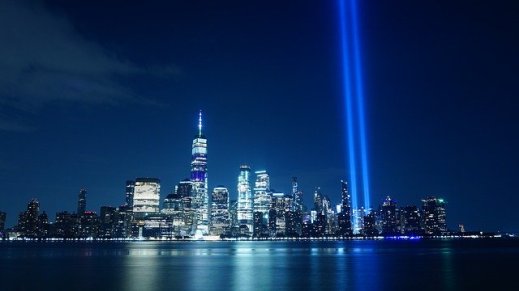
For New Yorkers who were out of town on September 11, 2001, the horrors of that day were accompanied by a feeling of horrific impotence. I was at a conference for work in California, and I was awake in time to watch the North Tower collapse on live television. I could do little but make phone calls to make sure some of my family who lived and worked in lower Manhattan were still alive (they were).
There is no way to fathom the extent of the loss the world suffered that day; our city and country (and world) have never been the same. But there are positive lessons we can take from that day that give us strength in the face of lingering darkness:
New York City will be here forever, and our Gotham can survive anything. In my lifetime alone, New York City has survived bankruptcy, riots, the worst-ever terrorist attack on U.S. soil, an East Coast blackout, and a deadly global pandemic. “Tough” doesn’t begin to describe New York. New Yorkers are both tormented and inspired by our city every day, but we love it and will defend it to the death.
Americans will rise to the occasion, no matter how dire or dangerous the mission. The heroism of the passengers of Flight 93 and the sacrifices of the first responders and others who helped people to safety during the attacks is an enduring legacy that gives us hope in dark times. The blood of revolutionaries and pioneers still courses through our veins. At times of our worst traumas come opportunities for greater good, and the mettle America showed in the wake of the attacks is alive and well.
Everyone has a role to play, and life is too important to sit on the sidelines. The heroes of the September 11 attacks include not only the first responders and the Flight 93 passengers, but the train and ferry operators who got people to safety, doctors and nurses who tended to the wounded, and even everyday people who did whatever they could. Those kinds of opportunities to be a part of making our city, country and world better are still present. Don’t be a spectator.
Take a moment to remember those that we have lost. Remember, too, the resilience and character of our city and country—qualities that carried us through and continue to endure.
Embrace being politically homeless

I remember standing in the Atlanta airport the day after Election Day in 2004, watching John Kerry and John Edwards give concession speeches. I was dumbfounded that America could vote for a second George W. Bush administration. How could any thinking person cast their ballot for such a vacuous disaster as that?
George W. Bush had neither the intelligence nor the dignified manner to hold the office of president. He was tested in his first term by the enormous events of September 11, 2001 and failed miserably by falling prey to his coterie of ambitious and careless advisors. His invasion of Iraq got thousands of Americans killed needlessly; it further destabilized the Middle East and made the mullahs of Iran more powerful.
Four years later, John Kerry was not a perfect candidate, but he wasn’t George W. Bush, and that was all that mattered. The infuriating absurdity of the George W. Bush presidency was compounded tenfold by a public that took this empty suit seriously; many even thought it was some kind of patriot duty to vote for him.
So when Donald Trump won re-election earlier this month, I felt like I understood people who were morally outraged and angry at their fellow Americans. When your opposition candidate is an unqualified absurdity, a high level of moral outrage is natural. I’ve been there.
But I no longer rank among people emotionally swayed by election results. I’ve embraced political homelessness, and with that comes great freedom.
Maybe it’s a certain level of age and experience, or a knowing cynicism that has crept into my worldview, but I don’t see the world in the same black-and-white landscape of good and evil that I did in 2004.
Maybe it is my background working as a financial journalist that allows me to look at issues and policies more clinically and with a sense of emotional detachment. I’ve learned to look at what people actually do and what facts on the ground are, and pay little attention to rhetoric.
I’ve come to expect the worst from everyone and so I’m rarely surprised or disappointed. Of course, the government is going to abuse its power, it wouldn’t have attained power if they hadn’t planned on using it. I’m often saying to my friends, regardless of their political affiliation, “Your side did this too.”
So I went into the presidential election predicting that Donald Trump would win and confident that I wouldn’t be happy with either outcome. I’ve seen Democrats and Republicans sacrifice principles for political advantage repeatedly, over multiple election cycles, to the point that I know neither is capable of keeping its word or staying grounded.
But while I have lost whatever faith I had in the American political system, I have not lost faith in America. If anything, our country shows us over and over again that it is resilient and capable. America exists in a superior plane far above our wretched politics. George W. Bush and his cabinet of incompetents deserve to smolder in the ash heap of history, but the people who voted for him were mostly decent people who loved their country and felt wounded by being attacked. The Trump supporters who put him back into office have seen their grocery bills triple.
There is so much more consensus on vital issues than we’re led to believe, and in the real world, if people are able to meet on their own terms, they can build meaningful bridges with neighbors and political opponents. It’s being done on the local level around the country every day.
So, if you’ve become frustrated and disillusioned, political homelessness may be for you. It won’t cure all frustration and aggravation with American politics, but you won’t blow a head gasket when the next unqualified hot mess takes the Oval Office.
Vote

I will spare you the regular gibberish about this being the most important election ever and the dire warnings that we will descend into civil war. I think all Americans of voting age should vote because it is our patriotic duty no matter who is on the ballot.
I endorse Joe Biden for President and hope you vote for him. But even if you support Trump or a third-party candidate: go vote. This is your country, and you owe it to yourself to be counted.
My history of picking winners is pitiful. I volunteered for the Bill Bradley campaign in 2000 with zero regrets. Bill Bradley was a Rhodes Scholar who became a basketball superstar and served as a U.S. Senator from New Jersey for three terms. He was the kind of intellect we need in public office but also had a breadth of life experience that made him rise above the pack of regular career machine politicians. He opposed the establishment favorite: Vice President Al Gore.
At his campaign event on the night of Super Tuesday, I noticed none of the big screens in the hotel ballroom were showing any primary results. The party swelled and Bill Bradley came through the crowd toward the stage. Bradley towered above everyone else. He gave a brief speech where he mentioned that he would assess the future of his campaign over the next several days but also made us proud to have been part of the campaign and focused on important issues facing the country. The party wound down and I saw various political and intellectual celebrities there. Professor Cornel West was on the stage close to Bradley and I was glad to see former New York City Mayor Ed Koch (who for me is the one person in the world who will always embody New York City) giving interviews in support of the former Senator.
It wasn’t until I got home and clicked on the TV news did I see the actual results and Holy shit, we got killed! Al Gore’s political machine had made quick work of the Bradley campaign, and Super Tuesday was the coup de grace. Bradley dropped out of the race a few days later. I cast my vote for Al Gore that November with no enthusiasm for Gore but with the indignity that someone as much of a vapid empty suit as George W. Bush had no business getting the nomination of a major political party. I couldn’t believe Republicans could be so gullible to pick Bush over Sen. John McCain, who would have wiped the floor with Al Gore in the general election.
In 2004, former Vermont Gov. Howard Dean was the one who seemed to get it the most, who told Democrats that the people who drove around in pickup trucks with Confederate flags on them needed to be voting for Democrats too, because they needed healthcare and their kids needed an education. He was promising to take Democrats off the dangerous course of our own culture war. That promise evaporated with Dean’s campaign; I sent in my absentee ballot for John Kerry because he wasn’t George. W. Bush.
Both political parties are now broken. With Trump, we have the same incredulity that came with George W. Bush’s nomination: How could a major political party elevate such a fraud to the highest office of the land? With Biden, we have an establishment politician who had to embrace the excesses of the Democratic Party’s activist wing to secure the nomination.
But the disaster of the Trump presidency, especially in the wake of the COVID-19 pandemic, makes this election a no-brainer. Biden was not my first choice, but he is the best choice of the two main political parties, and we stand to lose too much ground as a country with another four years of Trump.
All I ask my Trump supporter friends is that they judge the President by his record of the past four years. Would you have forgiven a Democrat who talked big and delivered little on patriotic immigration reform? Would Barak Obama have been able to shrug off reports of Russians paying bounties for American troops killed in Afghanistan? Would even George W. Bush have had the delusional gall to tell the nation that we’ve turned the corner on the Coronavirus pandemic as the U.S. breaks its daily record of new cases?
Please vote.
What is still beautiful about us…
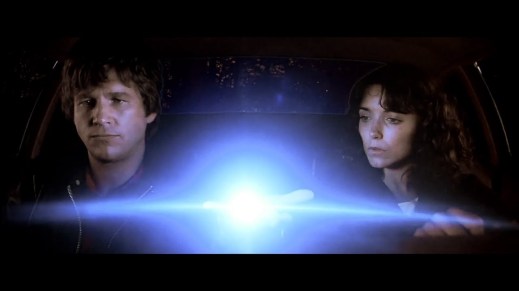
In John Carpenter’s 1984 film “Starman,” Jeff Bridges stars as an alien who is stranded on Earth, and goes on the run from U.S. government agents with the widow of a deceased housepainter, whose body he has cloned as a disguise. They have misadventures while eluding the authorities and the widow (Karen Allen) falls in love with this alien in the body of her dead husband.
In retrospect the plot summary makes this sound like a ludicrous B-film, but it works. One scene and one line from the film has stuck with me since I watched it in a movie theater as a 12-year-old.
The couple are finally cornered in a restaurant by the authorities and the federal agent who has been leading the hunt for them comes to confront them. He asks the alien about his journey and learns he is here to study Earthlings.
“You are a strange species, not like any other, and you would be surprised how many there are, intelligent but savage,” the Jeff Bridges/alien tells his pursuer. “Shall I tell you what I find beautiful about you?”
The federal agent nods yes.
“You are at your very best when things are worst.”
That line has been etched in my mind for more than three decades now, and it’s a fitting mantra for the times we are in.
“You are at your very best when things are worst.”
It can be hard to imagine things getting worse. We are still in the midst of a global pandemic that has hit the U.S. harder than any other country, followed by widespread civil unrest over the death of George Floyd in Minneapolis police custody, poisonous politics in an election year and unemployment levels not seen since the Great Depression.
These are times that try our patience and our resolve. It is easy to want to withdraw and bunker down, to tune out the outside world and lapse into a fatalistic nihilism, a hopeless sloth of withdrawal.
The pandemic reminded us that contact with others is an essential part of life. Human contact is something we took for granted, or even came to resent in New York City, where everything is too crowded and the inconsideration of others is amplified by proximity.
But the need to interact with others is more important now than ever, and despite the myriad conflagrations boiling over in our society, we can still find common ground with decent people of differing ideas.
Human life is inherently tribal, and America has forged tribes along lines of culture and character in ways other societies cannot fathom. These cultures appear to be irreconcilable, but basic human decency and goodness can transcend even our deepest chasms. The past few weeks have shown the extent of our divisions but also the depth of our decency and resolve.
“You are at your very best when things are worst.”
It is time to be the best person you can be and play some part in making our world a better one. You may be at odds with your friends and family, you may be subjected to hatefulness from smaller minds, but the things most worth doing are often most difficult. Keep going.
We can look back at this time and be proud we were at our very best.
Both sides in America’s great divide

I had promised myself I wasn’t going to spend money to see the Floyd Mayweather vs. Conor McGregor fight. McGregor is a great mixed martial arts fighter and proud Irishman but a perpetual shit-talker who took the low road in promoting this fight. Floyd Mayweather is one of the best boxers the sport has ever produced but is a wife-beating jerk no sane person wants to make richer.
But some friends invited me to meet them for the fight and I enjoyed seeing Conor McGregor’s last fight with them, so I met up with them at Hooters of Farmingdale on Long Island.
There is no charming way you can tell your wife you are going to Hooters. I have disliked Hooters because I think if you want to go to a strip club you should man up and go to a strip club. Hooters wants to treat its waitresses like strippers but not pay them like strippers. But I wasn’t going to argue against a night out.
The great racial divide in America was easy to divine looking at the dining room of Hooters, which is a better place to take the pulse of the nation than The Palm Court at the Plaza. I think I saw two tables that were not racially homogenous. There was no bad blood that I saw. No one had any harsh words for anyone else, but the essential tribal nature of human life was on full display. Some of the white customers had t-shirts that read ‘Fook Mayweather,’ poking fun at McGregor’s Irish brogue while insulting the experienced boxer. When Mayweather won the fight, a black customer at a neighboring table stood on his chair to gloat.
America’s house is definitely divided, even the Hooters on Long Island. I was expecting there to be more quality fights in the parking lot than on the pay-per-view screen; likewise with the crowd at the fight in Las Vegas. It didn’t play out that way. There was no violence at the Hooters at the end of the night, just people settling their bills and going their separate ways.
We all like to think that we’re the open-minded exception to the pervasive divides of our time, but we all have an intrinsic need to draw our lines and take an accounting of our allies and enemies. You are forced to choose sides in life once fists start to fly, even if you are disgusted with the whole sham.
I certainly wanted McGregor to win. No self-respecting Irishman would root against him, no matter how obnoxious his pre-fight conduct was. But wanting him to win and expecting him to win are two different things, and the odds were such that I would happy if he lasted more than a few rounds.
After a long undercard and several helpings of wings and appetizers, it was time for the fight. McGregor went 10 rounds in his first ever professional boxing match with a fighter who is arguably one of the best ever. Mayweather came out of years of retirement to fight one of the best combat sports starts of today who is more than a decade younger. They both walked out of the ring with their heads held high, and rightfully so.
After the bout, both fighters were gracious and respectful. It was heartening to see these men be civil after spending months insulting one another. Then again, they had exploited America’s great racial divide to make millions of dollars on a fight that had no business taking place.
The crowd dispersed to either curse or celebrate the fortunes of their proxy combatants, but those fighters came away the big winners. And therein lies the more telling divide: the millionaires in that fight have more in common with each other than they do with anyone who shelled out for the pay-per-view. A foreigner who was on welfare five years ago and a black man who can barely read rode this race-baiting shit show all the way to the bank and had the last laugh on the rest of us. That’s the American way.
 Matthew Sheahan
Recent Comments