
Snowbound NYC feels the filth of winter
The Northeastern U.S. has become accustomed to mild winters over the last decade. Prior to the latest snow blizzard that pummeled much of the country, online newsreels were commemorating the 30th anniversary of the blizzard of 1996. Now we have a new milestone to mark in the history of the five boroughs’ struggles with snow.
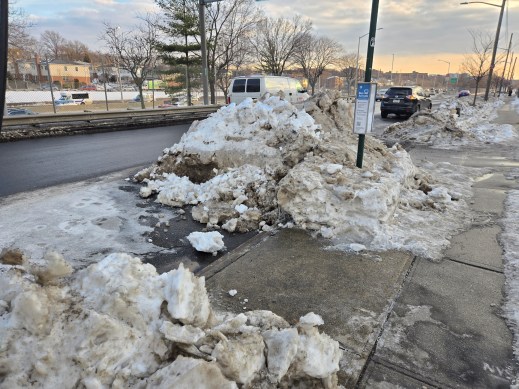
The Northeastern U.S. had weeks of below-freezing temperatures immediately following an exceptionally large snowstorm. The usual melt that happens in the days after a storm hasn’t happened. I can’t remember any time in my life that so much snow sat around for so long afterwards.
While the roads may be cleared in theory, large snowbanks have turned two-lane streets into one-lane streets. Slippery snow and ice patches make driving in the city more dangerous than usual.
The sidewalks and crosswalks are in an even more dismal state. Plows push large quantities of snow into icy walls that solidify into chunky walls of hard-packed ice and snow.
The city’s Department of Sanitation continued to plow the same roads and did little or nothing about freeing up sidewalks, bus stops, and crosswalks. I recently stood behind a plow wall at a bus stop and watched a snow plow drop loads of salt on an already dry road while piles of filthy, frozen snow sat nearby untouched.
Even with the understanding that this was an unprecedented storm, the city’s response rates poorly. Long stretches of sidewalk, including those abutting public parks and city-run spaces, remain largely inaccessible weeks later, thin paths cut by the feet of harried pedestrians the only things working to clear any walking space.
Snow makes New York City look beautiful for about three hours. Snow in NYC quickly turns into a mosaic of street and sidewalk filth, collecting dog urine, car exhaust, and the varied effluvium that regularly pulses across our sidewalks and curbs. After several weeks, the hardened snowbanks sport a spattering of grotesque shame, rife with collected bacteria.
New York’s sidewalks and crosswalks, already a crowded place of give-and-take silent negotiations of movement, have become more challenging to navigate. Having a good pair of waterproof boots is paying big dividends, and I am trudging through frozen sidewalk tundra like an over-the-hill urban sherpa.
Warmer temperatures in the weeks ahead promise relief through melting snow, but city authorities should take stock of this storm and improve their response. In the meantime, New Yorkers are waiting for the Great Snow Melt of 2026.
The touching holiday story of the Crack Whore Santa
One evening at Blackout Shoppers’ band rehearsal, our drummer at the time, Mickey Fingers, was recounting a story of his apartment being robbed.
He worked in broadcasting at the time and was working midnight shifts. His roommate had been out drinking heavily at bars and had brought home a woman of ill repute with the intention of carnal indulgences. The roommate, however, passed out drunk and the woman burglarized the apartment. She had ransacked the place and taken numerous valuables. Mickey gave the drunkard roommate his walking papers and was shortly rid of him.
Mickey ran through a catalog of what she had stolen: expensive cameras, high-end electronics, books, DVDs, and a plethora of CDs had vanished in the hands of the larceny-prone harlot. It was an immense amount of property, beyond the capacity of one person to haul off by themselves.
“How did she carry all of that stuff out of your apartment?” I asked.
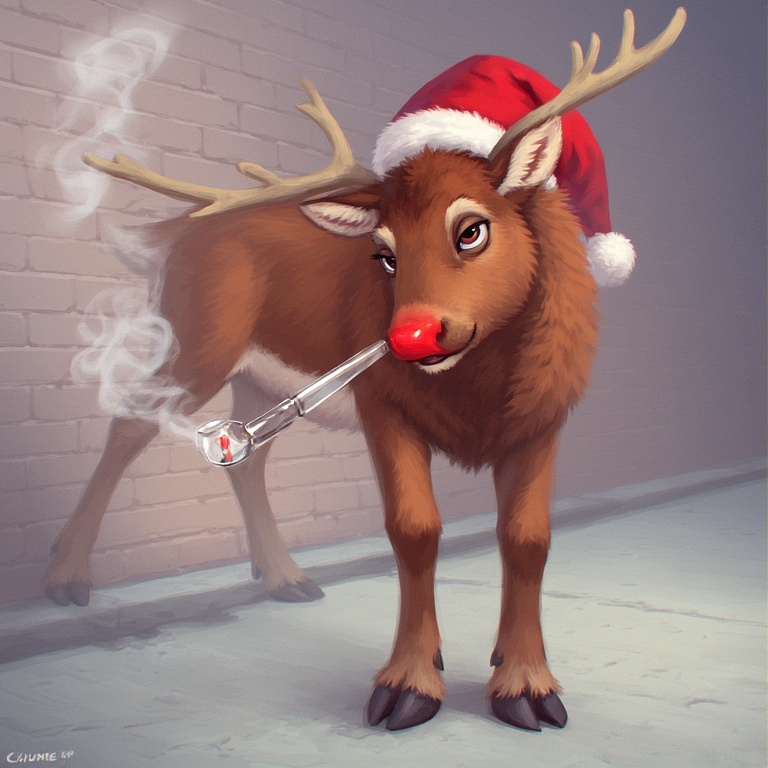
“She took pillowcases from my bed, filled them up with my stuff, and walked out of there like some kind of Crack Whore Santa.”
The Crack Whore Santa never left our imaginations after that. Not long after Mickey Fingers departed from the band, we recorded a song called “Crack Whore Santa” and asked him and his son to come in to the studio and record an introduction to the song. His son was five years old at the time. It is preserved for posterity on the recording:
“OK, so who don’t we want to see for Christmas this year?”
“Crack Whore Santa.”
“And why not?”
“Because she took Daddy’s things!”
[Together:] “Crack Whore Santa! One, Two, Three, Four!!”
Mickey Fingers recovered from the theft of his property and lives in Westchester with his wife and children. Despite having played in Blackout Shoppers, he is gainfully employed and lives a productive life. The drunken roommate managed to turn his life around—the next time Mickey Fingers saw him he appeared sobered up and in a stable relationship.
And Blackout Shoppers continue to play music inspired in part by such absurdist comedies of life. We are playing Otto’s Shrunken Head on Saturday, Dec. 20th and “Crack Whore Santa” is on the set list.
Book rescue in Queens and its vortex of unknows

I was cleaning out my motor vehicle, disposing of a handful of parking meter receipts that accumulate on the dashboards of cars in large American cities. As I deposited my trash in a receptacle, an open book nearby caught my eye.
Someone had dropped or thrown a book, and it had landed open against a curbside trash shed outside a co-op. It was an odd place to see a book, and it looked like it was thrown from a moving car or dropped out of bookbag that was being kicked down the street. I retrieved it.
The book, “Who Put This Song On?”, by Morgan Parker, was in good condition considering its rough treatment. Upon inspecting the book further, it bore a label on its back cover that read “FLUSHING HIGH SCHOOL LIBRARY.”
Flushing High School is a mile away from where I found the book. I made a note to return it. No book should be homeless, and someone may be looking forward to reading that, or may not be able to afford whatever fine may be levied for losing it.
A host of possibilities flooded my mind regarding how the book came to rest upon the sidewalk a mile away from its library home. Did someone steal it and try to throw it in the trash bin? Was a student carrying this when they were attacked by a kidnapper or serial killer, and the page was open to a passage that would reveal the whereabouts of the victim or give a clue as to the motive of a brutal killing? Am I now a suspect in a kidnapping or murder that has not been made public yet? Or will I be considered a cringeworthy thief, found with a book stolen from a local high school?
I made it my mission to return the book as soon as it was convenient, lest I be unwittingly caught up in these mysteries, but more likely, that the book can continue to be enjoyed by students. I was prepared for whatever grilling I would receive when I brought the book back—I can explain my fingerprints on the book were from finding the book, not stealing it or doing anything untoward to whatever student checked it out.
I set about my task taking a public bus to the high school, arriving in the afternoon after classes were over for the day. I tried to look as assuming and non-threatening as possible while carrying a book clearly geared toward young women.
Flushing High School is on a nice green campus surrounded by the dense vertical sprawl of downtown Flushing, Queens. It’s an oasis of beautiful architecture and calm grass and trees amid the rapid overdevelopment of a city fueled by commerce without a thought for beauty and cohesion. I hope it fights to the death to stay the way it is.
My returning the book was anticlimactic. I stepped into the front entrance of the school and handed the book to a school safety officer behind a desk, who thanked me for returning it. I walked out of school and enjoyed the walk home, having done my good deed for the day and rescued a book from oblivion.
Lotto Dreams
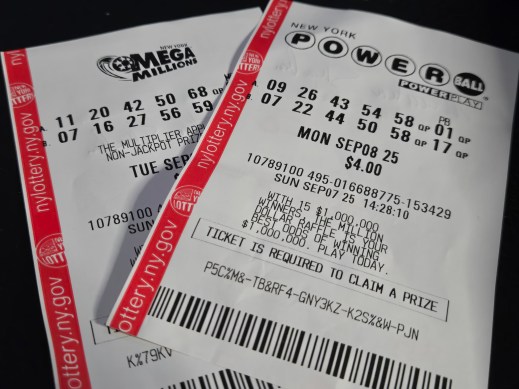
The Powerball lottery game recently reached a jackpot close to $2 billion. Those jackpots spur people who don’t normally buy lotto tickets to shell out for a big win, and I am guilty of being one of those people.
Compared to some of my family and friends, my investment in lotto tickets is pretty low. With that weak justification, I forgive myself for this vice. I am not sure what else $2 will buy you today, and sometimes a hopeless dream can get you through the day.
The odds of winning the lottery are massively stacked against us. Still, I have a go-to lotto buy that I repeat to the tired clerks at my local drug store:
“Two Powerball, two Mega Millions, please.”
They have raised the price on some lottery games recently, so this minor vice is now more expensive. I buy two kinds of lottery tickets because it increases my chances of winning by a minuscule amount and I can pat myself on the back with the illusion of being a smart tactician, when I am really a hopeless dreamer like everybody else.
The news cycle surges around big lotto jackpots have been going on for as long as I can remember. Lotto was ubiquitous growing up in the New York City area in the 1980s, and my parents played it semi-regularly. I remember buying a lotto ticket soon after I turned 18 as a rite of passage, similar to registering to vote or getting your draft card.
When I moved to Georgia in the early 1990s, there was a statewide referendum on the ballot over the question of whether there would be a lottery. I couldn’t believe the lottery didn’t exist in Georgia. What was wrong with these people that they didn’t have lotto? It was a mark of civilization in my mind.
It was actually a close vote; the lottery ballot initiative passed, but barely. Churches and religious organizations had organized against the lottery, and people were divided over the issue.
In retrospect, the church groups and religious activists who oppose lotto raise good points: Lotto preys upon the poor; it exacerbates gambling problems and gets the bulk of its cash from those who can least afford to give it. It promotes a ‘get rich quick’ ethos and encourages the illusion of wealth without work.
My daughters will ask me to promise them things if I win a big jackpot. I have promised them a home where they can each have their own bedroom, a trip to Paris and other travel adventures, and adopting a dog to live in our new house. I won’t make a big announcement, but if you see me wearing a cowboy hat and a fur coat like Dusty Rhodes, I’ve won.
I would spend my days writing and playing music, traveling, and sitting on a lawn to feel my own grass under my feet. I would have time to read all the books I want, see all the movies my friends talk about, take my friends to lunch, and plan my next trip with my daughters.
Lotto is not a viable path to changing our lives, but it’s a chance to dream aloud with the ones we love, and in that it serves a purpose.
Wish me luck.
Lessons of strength from September 11
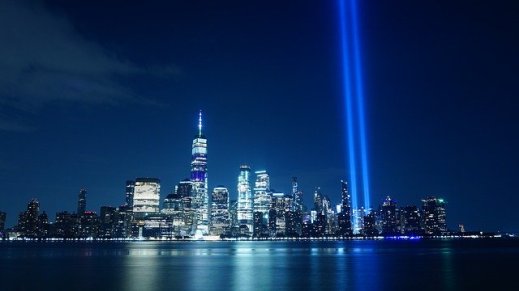
For New Yorkers who were out of town on September 11, 2001, the horrors of that day were accompanied by a feeling of horrific impotence. I was at a conference for work in California, and I was awake in time to watch the North Tower collapse on live television. I could do little but make phone calls to make sure some of my family who lived and worked in lower Manhattan were still alive (they were).
There is no way to fathom the extent of the loss the world suffered that day; our city and country (and world) have never been the same. But there are positive lessons we can take from that day that give us strength in the face of lingering darkness:
New York City will be here forever, and our Gotham can survive anything. In my lifetime alone, New York City has survived bankruptcy, riots, the worst-ever terrorist attack on U.S. soil, an East Coast blackout, and a deadly global pandemic. “Tough” doesn’t begin to describe New York. New Yorkers are both tormented and inspired by our city every day, but we love it and will defend it to the death.
Americans will rise to the occasion, no matter how dire or dangerous the mission. The heroism of the passengers of Flight 93 and the sacrifices of the first responders and others who helped people to safety during the attacks is an enduring legacy that gives us hope in dark times. The blood of revolutionaries and pioneers still courses through our veins. At times of our worst traumas come opportunities for greater good, and the mettle America showed in the wake of the attacks is alive and well.
Everyone has a role to play, and life is too important to sit on the sidelines. The heroes of the September 11 attacks include not only the first responders and the Flight 93 passengers, but the train and ferry operators who got people to safety, doctors and nurses who tended to the wounded, and even everyday people who did whatever they could. Those kinds of opportunities to be a part of making our city, country and world better are still present. Don’t be a spectator.
Take a moment to remember those that we have lost. Remember, too, the resilience and character of our city and country—qualities that carried us through and continue to endure.
Back on the hunt

I have been hunting for about a dozen years and have three deer to show for it, but I don’t regret a minute of hunting. As my friend Steve reminds me, “A day in the woods is a good day.”
This past deer season was my first back in the woods since the pandemic, and in the past decade I had exactly two deer to my name, both button bucks (male deer with no antlers). These were great personal victories but small potatoes in the world of hunting. Some of these years of hunting consisted of only one day on a weekend; another year I went both bow hunting and several days of gun hunting and still came out of the woods empty handed.
The world and personal upheavals of the pandemic and post-pandemic life made it imperative I get out of town and spend time alone in nature. I took the days off from work and hoped beyond hope that I would be able to do it—past years and past jobs I’ve had to cut my hunting trips short and work on days I had planned to take off, an unpardonable sin in the real world if the real world worked right. But this year I managed to do it.
I go hunting in Connecticut. My Connecticut friends got me into hunting and it’s where I keep my shotgun (I don’t have a permit for a gun in New York City—getting a permit for a gun in the five boroughs is more expensive than buying a gun). There are also more plentiful woods in Connecticut.
Heading to Connecticut also means connecting with old friends. I remember when my friend Steve’s oldest daughter was still in utero; now she is acting in films and planning her first tattoo.
The night before your first day of hunting is a poor sleep; memories of past missed deer and the prospect of returning empty handed weigh on your conscious, preventing the restful night’s sleep you want. Alarms set for enough time to get into the wood before legal hunting time, which is one half hour before sunrise.
Hunting makes you get up at a crazy early hour of the morning on your day off from work when everyone else is asleep. I found it’s possible to forgo the morning coffee. The frigid air and the urge to get out hunting is an effective wake-up of its own, and the surge of adrenaline at seeing a deer (or what you think is a deer) is enough to keep you awake through the day.
After having some quick snacks for breakfast and drinking a can of soda for the caffeine, I dressed and forced my feet into hunting boots, gathered my gear, and headed out. I first had to defrost my truck—first frost of the season and I didn’t think I would be scraping my windshield that early into November but it was New England in the fall. Another pickup truck sailed by on the dark road as I was getting the truck ready—Are they going hunting also? Will they get a better spot by the side of the road, and do they know my favorite hunting spot? My fears were unfounded. I drove to the entrance to the Cockaponset State Forest and was the first one there. I walked into the woods alone, wondering how odd a spectacle my truck with New York license plates would be for local residents driving by or heading into these same woods to hunt.
Out in the woods, it’s sometimes hard to focus on finding deer so early in the morning and not marvel at the beauty of the forest in the early morning, pre-sunrise light. Human beings are not meant to be boxed in by glass and concrete. We are of the Earth, and we diminish ourselves the more we remove ourselves from it. Being surrounded by natural beauty is a human need; just being within view of a river can make sitting in a city office much more bearable.
Being in the woods is the drastic reset your body needs. But the marvel at the natural world wears off a bit as the sun comes up and the imperative to get a deer kicks in. This is why you are here: you don’t want to return empty-handed even if you are getting much-needed time in the woods.
When you hear gunshots going off around you—some closer and definitely in the same state forest, some farther away on private land—the urge of the hunt surges again, and you get more restless. This is where I have erred in hunting. Staying in one place for so long and not seeing any deer gets the wanderlust going, and powers up your self-doubt on how well you’ve selected your hunting spot. Did I pick the right spot? Why are other people finding deer so close by and none are coming here? Did I make too much noise? Are there better hunting grounds elsewhere I can get to?
On my second day of hunting, I caught this wander bug and decided to see if I could find better places to hunt. The upside is that I found a good spot; the downside is that I walked around too much and the one deer I saw that day was one I scared away by hauling myself through the leaf-crunching woods. I also discovered an old illegal hunting camp set up on public land, a big no-no. It looked like it hadn’t been used for a while, with man of the structured dilapidated or filled with water and leaves.
Finally settling in on a spot at the end of the second day, I heard the sound of running feet and saw a dog chasing a deer through the woods. A large white dog was barking and giving chase, and my heart raced as I aimed at the deer that was heading my way. As it got closer, I realized that this fast brown animal was in fact another dog; the sound of its collar jingled as it got closer. I lowered my shotgun and cursed whatever idiot owner let their dogs loose in the woods during deer hunting season. The rest of hunting that day was quiet save for the sound of those dogs, who likely chased away any deer that would have come my way. That day was another wash.
You realize how much of a city person you are when you go out into the country and do country things. What do you mean a supermarket closes at 9 p.m. on a Friday? Closed on Sundays? Are these people insane? I drove to Robert’s Food Center, a supermarket where I had my first on-the-books job for less than $4 an hour (not as horribly cheap in 1987) only to realize that they carried no Pepsi products at all, so I had to drive to downtown Madison’s Stop & Shop to stock up. I later messaged Robert’s to ask why they carried no Pepsi but have not yet heard back.
Every time I go hunting, I’m reminded of the sweat and grit and cold that goes into it, and how I quickly forget about this rough unpleasantness the rest of the year. Before I made hunting a regular event, I had a romanticized view of it. I dreamt of expansive adventures where I would collect large trophies and other relics from my travels in the wild. I fantasized about being some kind of contemporary Hemingway and shooting exotic game and then retiring to my tent to sip brandy and draft powerful novels. In reality I mostly return with sore muscles, cuts and scrapes from brambles and thorn bushes and a pile of muddy clothes.
On my last day I parked myself at a spot I had found earlier that I named Anunnaki Rock. “Anunnaki” is a name given to a race of extra-terrestrials that conspiracy theorists credit with helping build the pyramids or creating or cloning human life on our planet. This spot features a large boulder shaped like a large alien’s head. A tree has fallen on it, so it appears that the alien is being smacked in the face with a baseball bat; a sad but fitting metaphor for how we would treat intelligent life on our planet.
When I got there, I kicked leaves out of my way so I could pace back and forth soundlessly throughout the day. There was a natural ledge I could sit on and still get a nice, elevated view of a good swath of woods, but my area of coverage was greater standing and I stood and paced around most of the day.
The day remained cold and at certain times of the day I heard gunshots going on elsewhere in the woods; it sounded like everyone was having better luck than me. I paced relentlessly but quietly. Around 2 p.m. that afternoon, Steve texted me to ask if I’ve seen anything. I had not, and told him that I was considering coming out of the woods early and getting a head start on the drive home. Steve said he was going to go into the woods for the last few hours of hunting. I figured that if Steve was going to hunt until the end of the day (hunting ends at sunset, which is usually around 4:30 p.m.), then I would hunt also.
A half hour later I heard one of those blasted dogs again, I kept looking in the direction that the barking was coming from, on the chance that the barking was sending a deer my way, and if not then maybe to give its owner a piece of my mind if they were heading my way.
A deer bounded in my direction from the sound of the barking, and I raised my shotgun. It saw me and stopped short. I found it in my scope and pulled the trigger.
A shotgun blast is loud and unless you go shooting frequently you do not get accustomed to it. The deer took off and ran past me. I thought my race to get zeroed in on the deer again caused me to miss, I watched the deer head past me about 30 yards and then come to a stop. The buck stood there for a second and then fell over.
A sense of glory and relief washed over me. My hours of cold frustration in the woods had paid off; I had done it! I got a deer.
It’s customary to give the deer time to make sure it has died. That is both respectful and practical. Respectful in that you let the animal be alone in its last moments, surrounded by the woods rather than probing hands of our alien human race. Practical in that if you approach a deer that is dying, it will sometimes get up and run away for a bit in a panic fueled by a last rush of adrenaline, or, worse yet, gore you with its antlers. After at least 10 minutes of the deer not moving, I slowly made my way toward where he had fallen. Approaching it from the back (the customary practice to avoid startling a deer that may still be alive), I confirmed it had died. It was an antlered buck that would be a four-point deer but one of its antlers had been damaged. Nothing you would have mounted but it was another buck, and I was proud of getting it. I set about field dressing it.
Again, a reminder from my friend Steve about the post-shooting part of the hunt: “Everything from pulling the trigger to eating it on a plate is a pain in the ass.”
Field dressing a deer means removing its internal organs. It had been six years since I had shot my last deer, which was only the second one I ever got, so I still feel new to field dressing. But despite my confusion and frustration, I managed to get the deer field dressed and was ready for the worst part of hunting: the drag.
I was deep in the woods on the far side of a ravine split by a stream. The majority of my drag was uphill, and I also had to carry my shotgun and backpack out of the woods also. The drag started fine since I was going downhill, though there were brambles and prickers that could not be avoided. I had to drag farther than I thought in order to get to a part of the stream that was shallow enough. I carried over my gun and pack first—the backpack is blaze orange so easy to see—and then brought the deer. The deer got heavier since it now had water weighing down its coat. I was going uphill now. I took the gun and backpack and scouted ahead a bit, finding the path of least resistance, then walked back and dragged the buck to my gun and backpack. Through more brambles, scraped by a low-hanging tree branch, and over a stone wall, each more tiring and frustrating than the next. I kept this pace up and took my time so as not to throw out my back or trip and fall (dragging a deer out of the woods with a broken ankle or sprained back wasn’t going to happen) and feeling every one of my 50 years.
Throughout the drag I banked on things becoming much smoother once I finished the uphill portion and found the main path that I would take to get back to my truck. A deep sense of relief washed over me when I reached this path. There was still a long way to go. I changed methods again and put the backpack on my back, taking an antler in one hand and the shotgun in another and went faster that way. That became very tiring and then impossible to navigate around the ruts and puddles that dotted the path. I kept taking my time and taking frequent breaks. At one point while dragging the deer to the next stop I tripped over a small rock and fell backwards. It was past sundown now. It was 2:30 when I shot the deer, it was close to 5 p.m. by the time I got the deer to my truck, with my friend Steve helping me drag the deer the last 20 yards or so. We got the deer into my truck and headed back to Steve’s house.
Hunting has been the adventure I need more than the adventure I had envisioned as a younger person. I had dreamed of hunting as a manly affectation that I would indulge in on my way to being a literary icon, surrounded by dashing young flappers and a devilish halo of cigar smoke. I wound up downing Diet Pepsi in my friend’s shack, taking puffs of a store-bought cigarillo, but could not have felt better about life.
Here’s to the hunt.
RIP Kathy Shaidle, Five Feet of Fury
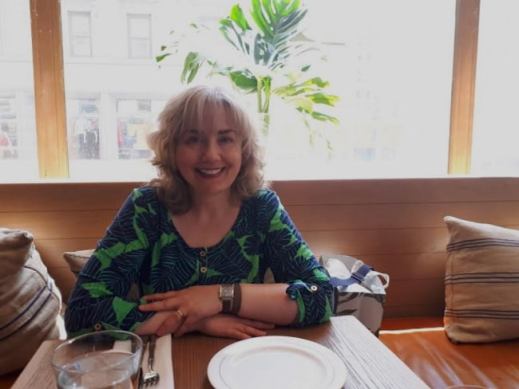
In the midst of a brutally chaotic and violent week, we lost one of our fiercest and funniest voices with the death of Kathy Shaidle in Ontario on January 9.
Kathy Shaidle was an opinion writer, poet, film, and cultural critic and unrelenting defender of free speech. She was a conservative Catholic who made enemies on both the left and the right. The biography in her memoir Confessions of a Failed Slut reads “I’ve been called one of the nation’s worst racists by the head of the Canadian Jewish Congress, and a tool of the Zionist conspiracy by Stormfront.”
Oftentimes, more conservative commentators discuss the arts and modern contemporary culture as a kind of alien civilization so foreign and depraved as to escape all comprehension. Part of what made Shaidle so effective an advocate for conservative ideas is that she wrote about contemporary culture fearlessly and with authority. Her time in the punk rock world gave her familiarity with counterculture and informed her arguments in favor of tradition and faith. She had been there, done that, and had the t-shirt.
Few conservative columnists could discuss “The Rocky Horror Picture Show” with deft expertise or delve into the memoir of Sex Pistols guitarist Steve Jones with a knowing eye, but Shaidle could do all of that and make you laugh out loud. Even if she did not convince you, she would present a great argument with logic and, most importantly, a sense of humor that never quit.
She titled her blog “Five Feet of Fury” in reference to her short stature. Whether you agreed or disagreed with her views, she was always fun to read. She had a poet’s eye for language—she published several volumes of poetry—and became a devout Catholic later in life. While religious, she did not preach, and modern secular sanctimony was her most common foil.
I exchanged emails with her once, six years ago, after she linked to one of my articles in her column. The article was in a now-defunct Web site, and she mentioned she was a fan of the site and was jealous I wrote for them. Getting a link and compliment on opinion writing from Kathy Shaidle was like having Michael Jordan admire your jump shot or seeing Lenny Bruce laugh at your jokes. It was a boost of morale that has stayed with me years later.
A year ago, Shaidle revealed she had Stage 3 ovarian cancer with a piece titled By the Time You Read This, I Will Be Bald. She wrote, “After more than 50 years, I finally got my hair to look just the way I wanted. So of course I got cancer.”
Over the past year, her spirit and humor did not waiver and she informed her readers of her journey through ovarian cancer. She neither wallowed in self-pity nor attempted to give her readers a rose-colored view of this journey. Earlier this month she posted a note that she would soon be in hospice. A few days later, a self-penned obituary appeared online:
Kathy Shaidle 1964 – 2021
Following a tedious rendezvous with ovarian cancer, Kathy Shaidle has died, wishing she’d spent more time at the office.
Her tombstone reads: GET OFF MY LAWN!
She is relieved she won’t have to update her LinkedIn profile, shave her legs, or hear “Creep” by Radiohead ever again. Some may even be jealous that she’s getting out of enduring a Biden presidency.
Kathy was a writer, author, columnist and blogging pioneer, as proud of her first book’s Governor General’s Award nomination as of her stint as “Ed Anger” for the Weekly World News. A target for “cancel” culture before the term was coined, she was denounced by all the best people, sometimes for contradictory reasons. …
It was exactly the kind of sendoff one would expect. Kathy Shaidle was a fearless writer who defended free speech with unshaking certainty. She faced death with the kind of grace and humor that her readers admired. She will be greatly missed.
Sherlock Brett Saves America

More than 20 years ago, when I was still in college, I started writing short stories for my stepbrothers. My stepbrothers Brett and Lyle wanted to be hero detectives, and so the first short story, “Sherlock Brett and the Case of the Missing Clowny” featured them searching for our younger sister’s favorite stuffed toy (spoiler alert: I had the stuffed toy; I was such a poor college student that I was trying to barter it for groceries).
These stories were silly fun for young kids, though I snuck some adult jokes in there in case my father or stepmother happened to read one of them. I began making a habit of writing these stories for Brett and Lyle’s birthdays and for Christmas.
The adventures of Sherlock Brett, his trusted brother and sidekick Watson Lyle, and our sister Georgia, have evolved over the years. My younger brothers and sisters are all adults now. I still send stories, but they have much more adult subject matter and explicit sex and violence.
Four years ago, I got a call that Brett had taken ill in Miami—he had moved there to work for Univision—and that the illness might soon prove fatal. My father and stepmother flew down there immediately. Brett was in a coma and his prognosis was grim, but he pulled through. He’s still recovering from the effects of being sick and in a coma, and it has been a steady but slow road to recovery for him.
Brett has stayed sharp and I’ve continued writing stories for him. He hasn’t let his long recovery process put a stop to his life and he married his wife Samantha, who now has a bigger role in the Sherlock Brett stories.
While I am glad that these stories have a small and appreciative audience among family, I thought that they could help form a vital part of my literary canon and be published for the general public. I put a few short stories online for sale through Amazon, but you had to have an Amazon Kindle or have the (free) Kindle app on your smart phone.
For Christmas last year, I wanted to have a physical book to send Brett as a gift. I began collecting some of what I thought were the better and more recent Sherlock Brett stories and compiling them in a book. I pulled them together and began editing them for publication. This took longer than I expected and I learned I know little to nothing about book design.
But slowly things came together. I got the very excellent Justin Melkmann to do the cover art and help with editing from my wife Emily got the book in top shape.
Last year, Brett was the first person I called after our youngest daughter was born to give him the news and tell him his new niece’s name. I told him I was sorry he had to share a birthday with another family member, but the doctors had determined the time was right for our offspring to be from her mother’s womb untimely ripped.
I managed to get Brett copies of Sherlock Brett Saves America, a collection of Sherlock Brett stories that will humor and inspire. He said he was very happy with it, and that made my day.
So if you’d like to read the adventures of a detective who not only ran for president but also handed Islamic terrorists their worse defeat ever, took the world’ largest bowel movement while helping fight a band of White Castle bandits, and helped fight an unfair bathroom law in North Carolina, then buy this book.
I plan to continue writing the Sherlock Brett as well as stories about my other brothers and sister until they ask me to stop or until I die. These are fun to write and I have license to bring some much-needed levity and satire to our world.
Literature for You: Supernova Black Hole Butthole

Supernova Black Hole Butthole is now published. I am still new at the Amazon publishing game. I would like it if there were an option for people who buy things from Amazon’s kindle store to get them in printed book form as well, even if that means a smaller payout to the author.
But that doesn’t matter, because I have more fiction for sale on Amazon, out there and ready for the world to see, for a small fee.
This story was the first one I read at the Cash Prize Literary Open Mic at The Cobra Club in Brooklyn earlier this year. I didn’t win the prize at that open mic but the story was very well received and someone asked me after the reading if this was available online for purchase anywhere. Now it is.
So enjoy and thank the very talented Justin Melkmann for his awesome illustration.
I Want To Be Poet Laureate of Queens

The Borough of Queens is taking applications for its poet laureate, and I’m going to throw my sweaty hat into the ring. I think my chances of being accepted are low, but fuck it. I’m as good as anyone else and I like this borough very much.
Queens was where I lived when I moved back to New York. I had been away from the Northeast for several years and hadn’t lived in the five boroughs since I was an infant in the Bronx. I grew up mostly in Yonkers and while I came to the city frequently growing up, I am by and large a child of New York’s suburbs.
In college I decided I wanted to be a great American writer in the same way that thousands of other English majors do. I was determined to get myself back to New York City as if that would somehow magically bestow some great inspiration power and let me live a charmed literary life.
I got a job at JFK airport that helped me move back here and I went looking for apartments that were a reasonable commuting distance to JFK. I found a small studio in Ozone Park at $500 per month (it soon went up to $525). It was on 101st Avenue and John Gotti’s old Bergin Hunt & Fish Club was still there and only a few blocks away. That was a selling point that the realtor mentioned. “People know not to mess around in this neighborhood,” he said. Gotti had been locked up for several years by then but the neighborhood still had some old wise guys hanging around.
I enjoyed living in Ozone Park a lot. I would walk around the neighborhood as much as I could and enjoyed how quickly neighborhoods could transition from one to another. Not far from where John Gotti plotted his takeover of the Gambino Crime Family a store sold cricket supplies to the Indian and West Indian immigrants who were moving into Richmond Hill. I was not too far from Forest Park and I could also walk to the small apartment where Jack Kerouac wrote his first novel.
While immediate literary success proved elusive, I managed to publish my first poetry collection while I was living in Ozone Park. ‘Five Borough Blues’ was a small broadsheet of poems published by New Jersey-based Lucid Moon Poetry (RIP Ralph Haselmann Jr.).
Years later, after living in Inwood for a decade, I moved in with the woman who is now my wife and that brought me to Flushing. I got to learn Northern Queens whereas Ozone Park is in Southern Queens.
The greatest borough continues to impress me. I do miss Inwood a good bit, I can’t lie. But Queens has many more great neighborhoods that are still real neighborhoods and not overpriced tourist zones.
Queens has both the greatest number of interesting neighborhoods, real residential neighborhoods with character, as well as cultural institutions and a variety of environments that the other boroughs don’t have. Do you have the beachfront and harbor areas like Broad Channel and the Rockaways in Manhattan? No. Can you find 24-hour Korean barbeque in Staten Island? Good luck.
And without fail, Queens continues to inspire me to write poetry. The entire city does, to be sure, but Queens is my home and it’s where I believe you find the most New York part of New York. It has the widest array of cultural offerings and the largest sampling of interesting people anywhere in the world. It stands between the city and its suburbs. It has all manner of terrain. It even has its own zoo.
I will gladly accept the (unpaid) responsibilities of the Queens Poet Laureate. I will let no excellent verse about this borough go unwritten. Applications are due April 24th (April is national poetry month).
But whether or not I am poet laureate of Queens, I will continue to let the city inspire to create good written works. It deserves no less.
Reclaiming Literature for the Real World

Years ago, before I returned to New York, I decided I wanted to be a writer. I had no real plan and to be honest my ambitions have languished at various times. But it’s long overdue that I stepped up my efforts to make waves in the world of fiction as I have long planned, and my effort comes at a time when more writers than ever are fighting to reclaim literature for the real world.
Like other parts of the art world, what is considered literature is often the judgment of a well-heeled clique of self-dealing academics. They feed on the dreams of earnest young writers and take them to the cleaners after convincing them that they need a Master of Fine Arts (MFA) to be considered a serious writer.
The MFA programs churn out many hopeful and aspiring writers, and many of them are excellent. But when I look back on the great writers that I admire, none of them made their bones in an academic program, but by scrapping out a living in the real world. The academic journals and programs have a choke-hold on what gets considered literature at the moment, though history will offer a different opinion.
Either way, the current system of academic literature has never been in greater need of a hard kick in its well-powdered derriere. And getting books published at all often requires knowing the right people and getting the right agent.
The Internet has helped writers working outside of this established universe to be heard and even make some money off of their writing. I am honored to know people like Darren Pillsbury, who has more courage than just about anyone I know and moved to California to pursue his dreams as a screenwriter. He wound up excelling in online publishing and is best known for his ‘Peter and the Vampire’ series. He gave me some great advice on how to publish things online. I probably violated plenty of his advice when I put a short story on Amazon and charged too much money for it, but I did it to figure out how to do it.
I’ve been too long avoiding pursuing literary ambitions in earnest because I’ve busied myself with other creative things. In some way they’ve all made me a better writer and a better person. Being in a punk rock band demonstrated that a key to any success is finding good creative people to join you. No one wants to listen to me play bass lines on my own, but I was lucky enough to have excellent collaborators in Blackout Shoppers. Doing comedy showed how not all audiences will respond the same way to the same material. A joke that kills at one gig bombs at another. The key is remembering you have the microphone and pressing on.
The right niche for success likely lies in the more comic short stories that I write. I love writing them and people enjoy reading them. I don’t know how marketable that is. Short fiction doesn’t make much money these days, but so what? I’ve mastered the art of excelling at art forms that are money losers at their core. As one of my excellent musician friends said, “We are middle-aged men with an expensive hobby.”
For a long time I attempted to write what I thought would be what literary types wanted to read, but in reality even moody literary types want to read something interesting. My stories feature people shitting themselves to death, loaning a family member’s corpse out to necrophiliacs, and taking part in operations to kill Islamic militants with Ebola on their toast. I have not done any of these things, but they are more compelling subject matter than most of what passes for literature today. I think I manage to make these stories into literature that will stand the test of time, but even if you don’t think it is art, at least it’s damn interesting.
Too many people, in art and in life, do what they think they are supposed to be doing instead of what is right for them to do. It’s not right for me to try to write weepy sensitive stories about people coming to terms with their emotions. I’d rather write about people saving White Castle from terrorists or punk rock bands doing battle with crack head zombies.
So Monday, Feb. 16 I will be reading a short story at the debut Short Story Open Mic at The Cobra Club in Brooklyn. It is hosted by my good friend Phill Lentz, who lives the mad literary life of music art, blood, sweat and tears. I am honored to be the featured reader.
The reading is a competition. Writers pay $5 and the winner gets the whole pot. The crowd gets to vote on their favorite writer, with drink tickets being used for votes. You could rig the whole thing if you bring enough hard-drinking friends, but it’s still a more fair literary competition than what the academic journals are offering.
So if you have a short story that you can read aloud in five minutes or less, join us at The Cobra Club and put your work out there on the line. You will be living a truly literary life. Be bold.
 Matthew Sheahan
Recent Comments