
There is no such thing as too many books

“The reader, the booklover, must meet his own needs without paying too much attention to what his neighbors say those needs should be.”
—Theodore Roosevelt
“We need to make books cool again. If you go home with somebody and they don’t have books, don’t fuck them.”
― John Waters
When I first moved back to New York City as an adult, I made it a point to make regular pilgrimages to The Strand to stock up on books. There was no way I could manage to leave there without several bags of books.
My small studio in Queens had two windows that looked out over a bus stop on 101st. Avenue and Woodhaven Boulevard. One of those windows was home to my air conditioner, the other window became my extended library. I already had a hutch bookcase filled with books but as my trips to The Strand and other bookstores multiplied, I needed more space for my books. Soon I was picking up plastic milk crates I found on the street to use as bookshelves. Then I acquired more milk crates, and soon had to double-stack books in them. More than once I found a great deal on a classic book at The Strand and bought it only to find that I already had that book at home.
When I moved to new apartment a few years later, I had space for actual bookshelves and bought four of them. They were quickly filled.
No longer single and free to binge at bookstores, my wife and I are now in the process of trying to make more space in our apartment for our family of five. That includes making more space in our living room, which currently houses most of our books. It is not an easy task.
It is not easy to part with books, nor should it be. Each book is an adventure waiting to happen, to give away a book without having read it is to deny a future possibility, a potential new thrill or idea. To turn away from books is to turn away from inspiration, from moving dreams and a new way of looking at life. Books are the lifeblood of the soul, and the building blocks of a civilized society.
Some purists may not forgive me for trying to adapt to the confines of space in our urban environment and using a Kindle. I know, I know: there is no substitute for the printed page, and the satisfying heft of a hardcover tome cannot be replicated by any electronic device. I agree. But as a commuter it is helpful to be able to read things with one hand, and while I would love to fill every spare inch of wall space in my apartment with shelves full of books, my kids need space to sleep and play. The Kindle has been a great evolution in the reading life if you can adapt to it. Some die-hards will not have it and I understand. If space and convenience were not factors, I’d be there.
But I have not given up printed books altogether. I will buy printed books when I can and use the Kindle as much as possible as well.
My collection of printed books will continue to grow, albeit a bit slower than in my bachelor days. My children are growing up in a home with plentiful books. They already love reading and if I fail in every other aspect of life, I have already achieved great success there.
Following the footsteps…

I was in California on September 11, 2001. I was there for work in a hotel room getting ready to go to a conference the company I worked for was putting on. I heard someone pass by my hotel room door talking on a cell phone saying someone had flown a plane into the World Trade Center. By the time I turned on the television, the South Tower had already collapsed and a plane had already crashed into the Pentagon. I knew right away that our country was under attack and I felt helpless and angry. I watched the North Tower collapse in my boxer shorts with shaving cream all over my face.
My story is not unique. I’m among the millions of New Yorkers who watched savages destroy thousands of innocent lives and remake our skyline. But hand-in-hand with the horror and anger is the unrivaled admiration for the first responders that gave their lives and showed that people could be at their best when things were at their worst.
One of those first responders was Stephen Siller, a firefighter who ran through the Brooklyn – Battery Tunnel to get to the Trade Center on the day of the attacks and perished in the South Tower collapse.
This past Sunday I was among the more than 30,000 people who followed Siller’s footsteps in the Tunnel to Towers 5k.
The event loses none of its effect if you’ve done it before and if you haven’t done it, you should.
The run begins with a lot of waiting around. For an event this large, it is well-organized but it still means large, slow-moving crowds. The run ceremony began at 9 and the run officially starts at 9:30 a.m. I was in Wave C, the third wave of runners, and I didn’t cross the START line until 10 a.m.
First responder groups, corporate groups, school groups, teams of family members paying tribute to their fallen loved ones, college students there for fun and adventure—almost every kind of city denizen is present at the 5k. Firefighters come from all over the world to run in homage to Siller, many of them doing it in their heavy firefighting gear. This is no easy task in the Indian summer heat.
Standing around waiting in the hot sun will get you tired before the race begins, and then the Brooklyn Battery Tunnel is very hot and crowded. People who had every intention of running may find themselves on the sidelines walking, with others trying to get around them. It’s a bad jostle but a jovial one, with chants of U.S.A.! U.S.A.! breaking out spontaneously throughout the passage.
The Tunnel to Towers run and walk is perhaps the largest gathering in the city that can still generate massive amounts of goodwill and cooperation. Runners and first responders thanked one another. There were high fives and handshakes all around. Despite tens of thousands of people constantly bumping into one another and stepping on one another’s feet, I heard no harsh words uttered and saw no arguments; try finding that on your average subway commute.
The sacrifices of those who gave their lives on September 11, 2001 cannot be sullied by contemporary political strife or bent to serve a narrow purpose. These sacrifices are heroism in their truest and purest form, and the solemn honors we pay to those heroes help give our city a form of peace.
A friend who lost two cousins in the Trade Center attacks did the run today – and raised $10,000 for the Stephen Siller Foundation this year alone—had this to say afterward:
“Today I saw love and beauty, respect and pride, camaraderie and patriotism. I saw love. Everywhere. I didn’t see dissent. Hatred. Anger. I saw love. And for that, I’m truly grateful.”
Science is usually our friend
This weekend our family attended an event called the Queens SOUP that was hosted by the Greater Flushing Chamber of Commerce. The event raises money for a worthwhile community group and participants vote for a winning group from among four that make presentations for projects. My wife was one of the presenters for the Flushing C.S.A.
The winning group was the Lewis H. Latimer House’s Summer Tinker Lab. Lewis Latimer was a prominent African-American scientist who contributed greatly to the invention of the light bulb and was instrumental in the spreading use of electricity. His former home is a preserved historic site in Flushing. The Latimer House’s presentation consisted of a music demonstration that allowed children to use a circuit and a laptop to make music with basic household items.
Our twins love music and it was great to watch them thrill at the discovery of the circuit concept and to have that associated with music. We want our girls to join the Tinker Lab program when they are old enough. The relatively small grant that the Latimer House received was nonetheless a victory for science.
Earlier that same day, thousands of people marched around the country in a “March for Science,” protesting the current White House’s policies that labels climate change theory as either a hoax or exaggerated. The march also looked to show disgust with the general anti-intellectual attitude that many conservative establishment politicians have tended to embrace in recent decades. Science is great and is certainly worth of the reverence, but let’s take a look at what adhering to science means.
“Science” to me means the skilled application of learning through the empirical method of observation, experimentation, and theorization. It usually results in a consensus view among those who practice the scientific method.
Science does not abide by any values other than those used by those conducting those experiments. Dr. Jonas Salk, who discovered the polio vaccine, was a scientist. So was Josef Mengele, the Nazi doctor who conducted cruel experiments on victims at Auschwitz. They each made discoveries that advanced the causes of medicine, but they are rightfully not held in the same esteem by our civilization.
Science cannot be claimed as a mantle by any partisan cause. The people who “Marched for Science” this past weekend were embracing those scientific findings that supported their ideas. We may agree with those ideas, but we can’t ignore that these are values-driven at their core.
Science will ultimately thwart attempts to make it the show horse of any political movement. If the mastery of science is by itself our only measure, then J. Robert Oppenheimer should be on as many t-shirts as Neil deGrasse Tyson. He’s not. And like our politics, scientific consensus is subject to change. What passes for common sense today might be considered foolhardy balderdash in a few years’ time.
So let us embrace science at every turn and let our children know it is fun. But let’s not pretend that science is always our friend. It’s going to prove us wrong at some point and leave us with very uncomfortable conclusions. But living life means facing those awkward moments and making sure your kids are prepared to face them too.
For science!
How to be a pedestrian in New York City
New York is a very walkable city. We have horrible traffic that makes driving regularly in the more densely populated parts of the city nearly impossible and a grossly imperfect but extensive mass transit system that makes owning a car in the city unnecessary.
Walking the streets of Gotham is mostly a joy. But there are also a lot of frustrations in getting about on foot, as not everyone is up on their pedestrian etiquette.
I think we can safely exempt tourists from some of the walking rules, because we need their money to keep the city’s economy afloat and many tourists are from far-away places that don’t have the same customs or don’t have the same walking-friendly infrastructure. Lots of American suburbs, for instance, don’t have sidewalks in their residential area (something that threw me for a loop when I moved from Yonkers to Yorktown Heights).
Here are five essential rules for how to be a pedestrian in New York City:
Keep to the right of the sidewalk or stairs. In most countries people drive to the right. The same applies to pedestrian traffic just as it would automobile traffic. Walk to the right and you don’t have weave around a million people going the opposite direction. It’s a very simple concept and usually works well for motorized traffic.
Stay focused on walking. You may be a master multi-tasker when you are behind your desk at work or in the kitchen of your home. The sidewalks of New York are a different place. Do not look read a book or mobile phone while walking. You don’t look like a deep literary soul when you try to read a book while walking, you look just as stupid as a smart phone zombie but twice as pretentious.
Keep your eyes ahead of you and avoid gawking. There a millions of dazzling sights and no city in the world makes for better people watching than our bustling Gotham. It’s tempting to soak in all that’s around you and give in to the wanderlust and marvel at the vibrant life of our city, but some of us are trying to get to work or catch a bus or subway. If you keep your eyes straight ahead and let the foot traffic ebb and flow around you easily, you’ll get to where you are going with much less of a hassle. The bearded strangers trying to make eye contact with you are likely panhandlers and not the next Walt Whitman.
Remain considerate of others. Walking three abreast is OK in some places, but we have limited sidewalk space and if you are traveling in a group, others are going to be moving quicker and need to move around you. Our sidewalk cut-ins are often limited and not as easily maneuvered by people in wheelchairs and the elderly, so go ahead and step upon the curb like the healthy person you are.
Remember when cars and other vehicles have the right of way. Pedestrians have the right of way, except when they don’t. It’s OK to cross against the light when there are no cars coming, but if there are, stay out of their way. Pedestrians who blindly walk into traffic like they haven’t a care in the world are the ones I prefer to see smooshed.
So please be alert. Everything in New York requires thought and mastery, even walking from place to place. Life is too short to stumble through it cluelessly. If you focus on where you’re going you’ll be a happier person when you get there.
I’ll always be friends with someone you hate

“Say it’s not so, Matt,” my friend’s message read, accompanied by a photo of a public figure that I don’t know personally but follow on social media. I explained that I follow/befriend people on social media that I often disagree with, and that while I find some of this person’s views extreme, they were not the murderous villain popularly portrayed in the mainstream press.
My explanation was lost and I found myself “blocked.” It’s a real shame. This is someone I’ve been friends with since college that is generally open-minded and intellectually strong. I know this person from a college debate society, the whole purpose of which is to listen to people you disagree with and debate them peaceably without tantrums or emotional self-immolation.
Maybe this person will find it in their heart to befriend me on social media again, but if not, so be it. I can’t please everyone and I can’t apologize for the opinions of others.
No matter who you are or what your politics, you are going to find I am friends with someone you hate. I can guarantee that to everyone: someone on my list of friends is going to piss you off.
I won’t have it any other way. I refuse to live in an echo chamber only occupied by people who share my view of the world. No matter how right you think you are, no one is above having their opinions and perceptions challenged and there is absolutely nothing virtuous about a closed mind.
In our era of divided politics, trolls on both sides of the spectrum feel morally justified in becoming increasingly uncivil. I’ve had a few people block me or “unfriend” me. One even called me names and blocked me so I couldn’t see or respond, a cowardly low. People engage in this kind of behavior when they have no real ideas or don’t have the wherewithal to defend their beliefs.
But I also have lots of friends that don’t block me. The friends with more substantial progressive activist bona fides – the people who’ve actually been in the streets and done battle with the cops, who’ve been to jail for their activism or actually rumbled with real Nazis in the real world – don’t find the need to block me on social media or prove their online virtue through their computer keyboards. I have friends who are law enforcement officers and military veterans who have been shot at in the line of duty at home and abroad; none of them have expressed horror that I’m friends with people that are communists or anarchists. They don’t need to wear their patriotism or their toughness on their sleeves, they live it every day.
Fortunately, the majority of my friends are confident enough in who they are to listen to other’s people’s views. That doesn’t mean they agree with me or like that I’m online friends with people they deplore, but they have strong enough wits to disagree without name calling.
I can’t judge people based on their ideology alone. Some of the people considered most virtuous in public life have been some of the most miserable human beings; egos rendering them incapable of treating others with dignity and respect. How you treat the waiter or waitress at a restaurant tells me much more about you than whatever politician you voted for last November. So many people who check all the right virtue boxes can’t be bothered to act like a decent human being in real life.
I hope my friend comes back online. I won’t block or unfriend someone just because they hold opinions we may despise. There’s something about my collection of friends that everyone can hate. But I have a great group of friends nonetheless. I’ll never apologize for keeping an open mind to different ideas, no matter how offensive they might seem to others. If that makes enemies out of some friends, then that’s too bad.
If you’re not making enemies, you’re not living life.
What Would Theodore Roosevelt Do?

In 1895 anti-Semitic German politician Hermann Ahlwardt came to speak in New York City. Local Jews were very upset and there was political pressure on the police department not to provide Ahlwardt any protection. The police commissioner at the time, Theodore Roosevelt, made sure to provide the visiting speaker with an adequate police escort; he also made sure that every officer in that security detail was Jewish. There was no better response than what Roosevelt did, and his gesture symbolized New York’s and America’s commitment to freedom of speech and freedom of religion.
This President’s Day, it is worth our time to look at who we consider our favorite president. For me there is no question: Theodore Roosevelt was one of the greatest Americans who ever lived and was one of our greatest presidents.
There’s something for people of all political persuasions to like in Teddy Roosevelt. He believed in a just and fair America that respected the environment and he believed in a united country not beset by the kinds of divisions lesser leaders have allowed to fester. He supported women’s suffrage and also wanted America to be a forceful leader in the world with a very strong military He fought against monopolies, passed important laws keeping our food and medicines safe, and created national parks that protect millions of acres of land to this day.
Theodore Roosevelt came back from great tragedy that stalled his political career—his wife and mother died on the same day—and was the youngest person ever to become president. While most former presidents today cash in on their notoriety with lucrative book deals and speaking engagements, Theodore Roosevelt went on a South American safari that nearly killed him after losing the election of 1912. He was a war hero who braved Spanish cannon fire on San Juan Hill. He also once delivered a lengthy speech after being shot!
Few people in public office today could pass the character test and compare favorably to Roosevelt. He held to a code of honor that is unknown among most people we know in public life. Though he was born in to wealth and privilege that could have shielded him from hardship, he purposely strove to make himself strong and do things that were difficult. He lived his life for constant adventure and self-improvement. He was an avid reader and martial arts practitioner.
Truth, character, loyalty to the country above your immediate or self-serving interests: these are concepts that may seem quaint or get a lot of lip service, but Theodore Roosevelt lived them and expected America’s leadership to. Have our leaders lived up to the ideals Roosevelt set? How many of us can claim the levels of character and boldness that Roosevelt had? In my dreams I’m half as bold.
Though he is more closely associated with Oyster Bay on Long Island, Teddy Roosevelt was born in New York City. A few blocks from where I work in Manhattan is Theodore Roosevelt’s birthplace. Sometime soon I will take time to visit and contemplate on American greatness and how we might improve upon it. In this and all matters of life, it pays to ask: What would Theodore Roosevelt do?
Ask a New Yorker vs. Ask A Native New Yorker
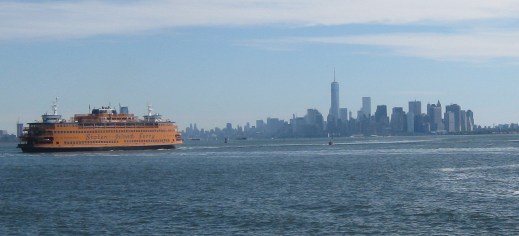
New York City generates billions of dollars in tourist revenue every year. Seeing and experiencing New York City should be on everyone’s to-do list and if you haven’t been here, you’re missing out.
Arguing about New York City is also its own industry. There are books and websites dedicated to letting you know what you should know about our city and all vie for authority and authenticity. People want to eat a real New York bagel and have a quintessential New York slice of pizza when they are here. People who live here want to keep things real as well. No one who lives in Manhattan dares dine in the tourist trap chain restaurants of Times Square if they can help it—that’s not the New York thing to do.
I was born in New York City, so I am a native New Yorker. I happen to have lived a good bit of time outside of the city though. I’ve been back a long time – almost 20 years now. But between the ages of 11 and 25 I lived outside of the New York City area. I drove back to New York in November of 1997 and have lived within the five boroughs since March of 1998.
While I’m proud to be have been born here and being a native New Yorker is a source of pride, I’d be kidding myself if I thought that being born here made you more of a real New Yorker than not. Our current and most recent former mayor are not native New Yorkers. In fact both Michael Bloomberg and Bill de Blasio are originally from the Boston area (yuck!). But if you can get elected mayor of New York, no one can deny you are a real New Yorker.
For the record, the mayor who most embodied New York City during his tenure and beyond is the late Ed Koch. It’s a personal prejudice because I grew up during his time in office, but if there is one single person who embodied our city over the last half century it is Koch. Koch was a native New Yorker, but his definition of being a New Yorker was six months. He noted that more than half the people who live in the city are from somewhere else, so if you move here and at the end of your first six months here you find yourself walking, talking and thinking a little faster, you’re a New Yorker.
People have been arguing over what makes someone a real New Yorker since our metropolis became New York in 1664 (anyone calling our city New Amsterdam is a poseur). It’s something that will always be argued and debated. Like all debates about culture it will rage on forever and never be resolved to everyone’s satisfaction.
But having lived in New York your whole life certainly gives you a good perspective. The Gothamist Web site has a column called Ask A Native New Yorker written by its publisher and cofounder Jake Dobkin. People write in anonymously with questions like: Is It OK To Smoke Weed With Other Parents During A Playdate? and Is It Wrong To Scream At Ivanka Trump If We See Her In Public? While the title of the column gives credence to the fraudulent idea that those born here are somehow more authentically New York, the column’s advice is very sound.
There are unconfirmed rumors that Gothamist is working to trademark the phrase “Ask a Native New Yorker” and that this goliath media entity will turn its legal hounds upon the modest upstart Ask A New Yorker. We say: bring it. We have no issue with what Gothamist is doing, but we were here before that column. Gothamist even interviewed our chief, Kennedy Moore.
Being an underdog and an upstart is also a very New York move. We don’t think anyone would ever mistake Ask A New Yorker for Gothamist. We couldn’t care less what overpriced food festivals are going to take hipsters to the cleaners this weekend or what shady faux dive bar “Still Got It.”
And bring on the debate over who gets to speak for New York City. I am proud to have been born within the five boroughs, but that’s not what makes me a real New Yorker. Enjoying the life of the city despite its many difficulties and compromises, embracing the chaos and the bustle that simultaneously energizes and exhausts you, and loving to share this city with others makes you a real New Yorker.
Nazi trolls and fascists in black
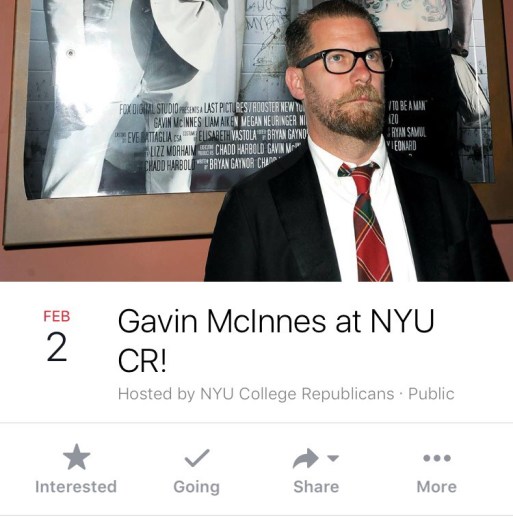
Last week, a mob descended on New York University and effectively cut short a talk by Gavin McInnes, an author and commentator who was a co-founder of VICE. The day before, rioters caused a talk by Breitbart editor Milo Yiannopoulos at the University of California at Berkeley to be canceled.
Around the same time, a series of photos made the rounds of social media showing subway riders getting together to wash swastika graffiti from their subway car that some sad troll had scribbled there. It’s an example of the true New York. Some real Nazi thought they would get a rise out of someone and instead people rolled up their sleeves and did the right thing. People getting together to clean up some nasty vandalism makes New York, and America, a little bit greater.
There’s a reason Nazis are bad, and it’s not just because they sometimes graffito the subways. Nazis are awful because they believe they are entitled to step on the rights of others, to use political violence to silence their critics, and that they are self-righteous enough to sanction murder to further their ideas.
Censorship by mob violence is something we thought we had taken out of American life, and that in large, self-proclaimed “progressive” cities like Berkeley, California and New York would be treated as a sacred part of the social fabric. Indeed most New Yorkers who can read above a 12th grade level abide by the maxim often attributed to Voltaire: I disapprove of what you say, but will defend to the death your right to say it.
But many factions of the progressive left do not see the threat to free speech when street thugs, or the spoiled Trustafarian versions most likely to join the “black block,” decide to be arbiters of who gets to exercise the universal human right of free expression. To them, the speakers at Berkeley and N.Y.U. were “Nazis” who lost their human rights when they embraced the dark side of the ideological divide.
Neither of these people being touted as Nazis really are. Milo Yiannopoulos is gay and part Jewish; he would have been made into a lampshade during the Third Reich. Gavin McInnes is a libertarian whose views would have gotten him thrown in the nearest labor camp in post-1933 Deutschland as well (full disclosure: I have had articles published on McInnes’ Web site Street Carnage and once met him at a party).
What the Milo Yiannopoulos’ of the world are is a threat to the tired identity politics that has become the Gospel of a detached and sanctimonious activist left. If the “alt right” is an evil empire of straight white males that will shove everyone who voted for Hillary into a new Auschwitz, then a gay Jewish immigrant as their poster boy belies all the boogeyman hype.
The people burning things and rioting to stop Milo Yiannopoulos and Gavin McInnes from speaking are bigger fascists than any real “alt right” figure could ever dream of being.
There are real Nazis in America today. Most of them are keyboard commandos who like to dress in ridiculous uniforms. Some of them are dangerous criminals, but most couldn’t putsch their way out of their mother’s basement. These people feel emboldened, thinking that the breakdown of political orthodoxy signaled by Donald Trump’s victory means there is a market for extreme ideas. There isn’t.
New Yorkers have always reveled in their ability to get along with others despite the tribal nature of human life. If we’ve made a go of it here in New York, we figure, we’re a cut above the normal social mores that are taken for granted elsewhere. We put them aside though we know they are never completely gone. With millions of people crammed into the five boroughs like rats, we have a lot of hate for each other, but we’re pragmatic enough to get through our days frustrated but not hell-bent on murder.
“Hate speech” or “Free speech is not consequence-free speech” are calling card phrases of a dogmatic and intolerant left. This faction isn’t new but is newly. It is neither progressive nor just. When you judge them by their actions “antifa” is pretty damn “fa.”
New Yorkers aren’t fooled by self-proclaimed saviors who see a Nazi under every rock. Our city respects free speech, it is part of what makes us the most American of cities. The next time Gavin McInnes or Milo Yiannopoulos makes a public appearance in our Gotham, I plan to go see them.
Deep shame in the Queens bus game

I am convinced that living in areas not immediately within walking distance from a subway may save them from gentrification and cultural death. I am fortunate enough to live in one of those thankfully un-hip areas of the five boroughs. But while my neighborhood is still overpriced and overcrowded, it still retains some of its old-world New York charm and character.
But I rely on buses to get me to the 7 train that gets me to the 6 train that gets me to work. The 7 train and the 4-5-6 line in Manhattan are two of the most miserable and overcrowded subway lines in the entire system, which is quite an accomplishment.
But I’m lucky. I’m lucky I have a job that I can safely commute to. I’ve also learned some of the tricks of the trade that can at least alleviate my daily aggravation somewhat. One of them is catching a ride on the Q34 bus when I can.
The Q34 is my preferred bus. I can get on early enough to have a place to sit in the morning and if I take it home in the evening I can usually get a set as well. Because it’s a smaller line and its riders are usually from a middle-and-working class part of Queens, there is a greater degree of civility than on the other buses I could take. The Q44 goes from the Bronx all the way to Jamaica, Queens and is almost always crowded. The Q20 is a local version of the Q44 when it passes by my home, so it picks up all the angry people who couldn’t fit or who would otherwise be miserably stewing on the Q44. After you’ve been on the Q44, the Q34 feels like a VIP lounge with diesel fumes; it’s the Rolls Royce of regular-fare bus rides when it’s working properly.
But here is the catch: the Q34 is a rogue ghost ship during the evening commute. Somewhere in a dark alleyway in downtown Flushing there must be a gaggle of Q34 drivers spending their evenings gambling or drinking themselves into a stupor while what seems like one lone bus drives the entire route by itself, and slowly. If you get to Main Street and see no line for the Q34, forget it. Then again, I’ve done that only to see a near-empty one drive by minutes later.
Normally I know to jump on the line for the Q34 when I see that there is one at Main Street. If there are people waiting in any significant numbers, it means enough time has elapsed since the last bus arrived that the next one cannot be too far off. This bus stop is at the corner of Roosevelt Ave. and Main St. in Flushing, Queens, which makes it one of the busiest pedestrian intersections in the city if not the world. It’s also right outside a busy Duane Reade convenience store. The stop is on a stretch of street that hosts several other bus stops.
The line for the Q34 got so long that it doubles up upon itself like a large snake folding itself in half. Pedestrians bump into people waiting on line even when they try not to. Multitudes of buses roll down that section of Main Street, very few of them are Q34s.
And last week I achieved something that is rare even in the miserable world of Queens bus transit: I stood on line for the Q34 longer than it would normally take to drive the entire length of the Q34 route.
One reaches a point oftentimes of waiting for public transit that you want to give up in disgust and find another means to get going to where you have to be, but you’ve invested so much time in waiting that you refuse to budge. Damn it, I’m going to get my money’s worth and the MTA isn’t going to win this round! I found myself standing in the cold among the other miserable people waiting for the Q34 with this same mentality. I would enjoy a seat on the Q34 this evening if it was the last thing I ever did.
I have no right to complain, as I have other options for getting home in the evening. But many of the people who ride the Q34 do not have that option, and the underserved but route is all that stands between them and a pricy cab ride or a long walk home.
I Want To Be Poet Laureate of Queens

The Borough of Queens is taking applications for its poet laureate, and I’m going to throw my sweaty hat into the ring. I think my chances of being accepted are low, but fuck it. I’m as good as anyone else and I like this borough very much.
Queens was where I lived when I moved back to New York. I had been away from the Northeast for several years and hadn’t lived in the five boroughs since I was an infant in the Bronx. I grew up mostly in Yonkers and while I came to the city frequently growing up, I am by and large a child of New York’s suburbs.
In college I decided I wanted to be a great American writer in the same way that thousands of other English majors do. I was determined to get myself back to New York City as if that would somehow magically bestow some great inspiration power and let me live a charmed literary life.
I got a job at JFK airport that helped me move back here and I went looking for apartments that were a reasonable commuting distance to JFK. I found a small studio in Ozone Park at $500 per month (it soon went up to $525). It was on 101st Avenue and John Gotti’s old Bergin Hunt & Fish Club was still there and only a few blocks away. That was a selling point that the realtor mentioned. “People know not to mess around in this neighborhood,” he said. Gotti had been locked up for several years by then but the neighborhood still had some old wise guys hanging around.
I enjoyed living in Ozone Park a lot. I would walk around the neighborhood as much as I could and enjoyed how quickly neighborhoods could transition from one to another. Not far from where John Gotti plotted his takeover of the Gambino Crime Family a store sold cricket supplies to the Indian and West Indian immigrants who were moving into Richmond Hill. I was not too far from Forest Park and I could also walk to the small apartment where Jack Kerouac wrote his first novel.
While immediate literary success proved elusive, I managed to publish my first poetry collection while I was living in Ozone Park. ‘Five Borough Blues’ was a small broadsheet of poems published by New Jersey-based Lucid Moon Poetry (RIP Ralph Haselmann Jr.).
Years later, after living in Inwood for a decade, I moved in with the woman who is now my wife and that brought me to Flushing. I got to learn Northern Queens whereas Ozone Park is in Southern Queens.
The greatest borough continues to impress me. I do miss Inwood a good bit, I can’t lie. But Queens has many more great neighborhoods that are still real neighborhoods and not overpriced tourist zones.
Queens has both the greatest number of interesting neighborhoods, real residential neighborhoods with character, as well as cultural institutions and a variety of environments that the other boroughs don’t have. Do you have the beachfront and harbor areas like Broad Channel and the Rockaways in Manhattan? No. Can you find 24-hour Korean barbeque in Staten Island? Good luck.
And without fail, Queens continues to inspire me to write poetry. The entire city does, to be sure, but Queens is my home and it’s where I believe you find the most New York part of New York. It has the widest array of cultural offerings and the largest sampling of interesting people anywhere in the world. It stands between the city and its suburbs. It has all manner of terrain. It even has its own zoo.
I will gladly accept the (unpaid) responsibilities of the Queens Poet Laureate. I will let no excellent verse about this borough go unwritten. Applications are due April 24th (April is national poetry month).
But whether or not I am poet laureate of Queens, I will continue to let the city inspire to create good written works. It deserves no less.
Brooklyn Isn’t Safe for Rock & Roll
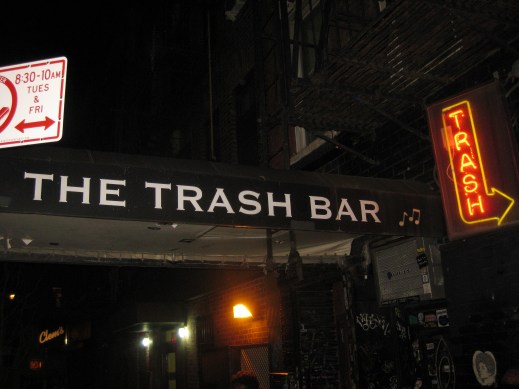
Last Friday, my band Blackout Shoppers was fortunate enough to be one of several bands to play for the last time at The Trash Bar. A great music venue, The Trash Bar has been a great place to see a show. They have a great sound system and manage to bring a wide array of music there.
Trash Bar is the kind of live music venue that used to thrive in Manhattan, and now it’s found itself priced out of Williamsburg. It’s the latest victim of the city’s own success and Brooklyn’s transformation from downtrodden borough to one of the most expensive places in the world to live.
The Williamsburg section of Brooklyn used to be a bad place. Frank Serpico was shot not far from the Williamsburg Bridge. Apartments in that building are now listed for sale at up to $1 million.
Williamsburg is where young artistic types began moving to at the end of the last century because space was cheap and the area was close to Manhattan. But creative young people can’t afford to live in the popular parts of Brooklyn anymore. The kind of people more likely to move to these areas now are wealthy people who had traditionally occupied the more upscale parts of Manhattan. A recent episode from the TV show Broad City captured this perfectly. One of the show’s main characters is chatting with three high-priced lawyers. They all tell her that they currently live in Murray Hill (a high-priced part of Manhattan) but that they are all moving to Williamsburg.
It follows a familiar pattern, a pattern we saw in the East Village and Lower East Side of Manhattan: A run-down area attracts enthusiastic artists and musicians because living is cheap. Those artists make the area desirable, which raises property values. Those property values drive away the artists and their venues that began the rejuvenation.
While it was the place that music venues fled to when Manhattan became too overpriced, Williamsburg is losing the art and music that made it attractive.
Bushwick has become the new Williamsburg, although the pace of gentrification seems to speed up in some respects. Prices on apartments start to rise in advance of the vanguard of gentrification that makes a neighborhood safe. Williamsburg has been relatively safe for a while now, but Bushwick is still more dangerous with higher crime.
This kind of gentrification has been going in the city for years. Since the time of the Dutch settlers, this has been a city in flux. Nothing stays for too long. The churn of commerce and change is constant. The city wouldn’t thrive otherwise.
It’s true that the city is losing some of its trademark characteristics and grit. No doubt part of Big Apple lore is lost forever. It’s not all bad though. I’m glad I can walk down the Bowery without being afraid for my life, though I’m sad that there aren’t as many music venues there.
Williamsburg been overpriced for years, but I didn’t think that Trash Bar would get priced out of existence in a decade. It brought in big crowds and even catered to the obnoxious yuppies and hipsters with some of its live music and its karaoke. The show we played Friday night was well attended. The bands played great and it sounded excellent. Everyone left it all on stage and we walked out with our heads held high.
And that’s all you can do as a New Yorker. Change is never going to stop, so don’t let it stop you. There will be new places to make and see music. The pioneer spirit that brought the Dutch to the New World and brought rock clubs to formerly desolate and dangerous parts of the city can’t be killed off, it’s just moving to a new neighborhood.
Revenge of the Outer Boroughs

This past weekend the wife and I attended a co-ed baby shower for my friend and spiritual advisor Rabbi Jay Levitz and his wife Sarah. We were in Oceanside, Long Island, New York, a short drive outside the city for us, as we live in Eastern Queens. As we talked with Jay, the conversation turned to what constitutes the “bridge and tunnel crowd.”
We all agreed that the term was more of a cultural construct than a geographic one, though we acknowledge that the two go hand in hand in many ways. Where I live now in Queens is not a trendy area at all and is too far from any of the celebrated night life to become popular among the moneyed classes or the upwardly mobile youth any time soon. That is actually a blessing. We happen to have decent access to public transportation, though getting into Manhattan always involves at least one bus and one train. My commute to work is at least one bus and two subways, and it is terrible, subject at all times to the fickle whims of the increasingly incompetent MTA.
The “bridge and tunnel” term may have been initially meant to denote people coming from outside of New York City—especially from New Jersey, considered by many to be a cultural leper colony filled with only guidos and hill people. But my current settings would qualify me as a bridge and tunnel crowd person when I venture into Manhattan for cultural events.
Manhattan was once the undisputed epicenter of New York City’s cultural life. Now that cultural life is much more diffuse and spread through the outer boroughs, most prominently in Brooklyn. New movie theaters, restaurants and music venues are more likely to be opening in Brooklyn or Queens today than in Manhattan. Accordingly, real estate prices in the outer boroughs are still going through the roof.
This shift has made use of the term “Bridge and Tunnel” a bit outdated, but the cultural chasm between whose who perceive themselves as cultured city residents and the people who travel to the city only on the weekends to party is not gone. Someone who takes the Long Island Rail Road from Mineola to see a concert in Brooklyn is considered part of the bridge and tunnel crowd, though they did not use a bridge or tunnel (yes, I understand that the LIRR in Brooklyn does use subway tunnels and uses overpasses on its way to the city; shut up).
And these social demarcations between what is city and what is not stretch to the outer boroughs as well. I mentioned that I drove to Long Island to attend a baby shower this weekend, but as I live in Queens, I already live on Long Island. When New Yorkers talk about “Long Island” they don’t mean the Island itself but Nassau and Suffolk Counties, the parts of the Island that lie outside of the border of New York City.
I could never justify the expense of living in a more trendy or celebrated area of Manhattan. I had a chance to move to the Upper East Side one time. I looked at an apartment in Yorkville and realized that I would be doubling my rent and would still not be able to fit the modest furniture from my small studio in Ozone Park, Queens into the new place. It wasn’t worth the money. I could have said I lived on the Upper East Side, but I’d be living like a hobbit.
So while proximity to Manhattan is become less and less of a cultural touchstone to judge a neighborhood, I propose a new measure of the value of where you live: proximity to live Shakespeare.
A good measure of the value of any place to live is how far away you are from some free Shakespeare. When I lived in Inwood in uptown Manhattan, it had yet to become a trendy place to live and people hadn’t heard of it. But I lived across the street from Inwood Hill Park which had free Shakespeare plays every summer. Score.
I can’t easily walk to free Shakespeare like that, but I am a very short trip from more than one of the venues of the free Shakespeare in the Park in Queens.
Some will argue that this Shakespeare standard is an unfair way to judge where you live, but I don’t think so. I don’t want my children to live in a world where they can’t easily see some free Shakespeare every summer. I’ll be dragging their soggy asses to Two Gentlemen of Verona this season; I won’t need a bridge or tunnel to get there.
Ars Gratia Artis
 The gay community is a collective rainbow huff over the movie “Ender’s Game” because Orson Scott Card, the author of the novel on which the movie is based, holds conservative views on gay marriage and homosexuality. Lots of gays refuse to see the film and some have organized boycotts.
I have not read the book or seen the movie, but I understand it to be science fiction and that it does not overtly or metaphorically address any gay rights issues. It was written decades ago before issues of gay rights were as ubiquitous in our public discourse as they are today. The author is indeed outspoken against gay marriage and gay rights etc.
People are welcome to boycott any film or book for any reason, but there’s one important element I think that the boycotters are missing. That is: Enjoying a work of art is not an endorsement of the political views of the artist.
I’m all in favor of gay marriage and treating gays equally under the law in all relevant respects, but it’s not something I’m going to let get in the way of reading a book or seeing a movie.
You are free to decide what you want to see or read based on the political views of the creators. But at some point you are going to paint yourself into a corner. You will at some point find yourself patronizing the work of an artist with whom you disagree vehemently.
And even if Card penned a violent homophobic screed that called for some kind of lavender holocaust, reading it or watching it doesn’t mean you agree with it. Everyone should be willing to challenge themselves and purposely seek out opposing viewpoints in art, politics, religion and all aspects of life. If we can’t listen to the opposition, we can’t form our own arguments thoughtfully.
But let us also enjoy art for art’s sake. If “Ender’s Game” is a shitty book and movie, let it fail on its own merits, not because you hate the religious or political view of the author.
I was disappointed to learn Pablo Picasso was a communist and Louis-Ferdinand Céline was a fascist. It broke my heart to see ZZ Top play the George W. Bush inauguration and to read about Julianne Moore shilling for illegal immigration amnesty. Should I boycott all the works of these artists? No. I disagree with them but my patronage of their work is not an endorsement of their views.
The case of Alec Baldwin, a bona fide leftist who recently issued a mea culpa for calling a reporter a “cocksucking fag,” scrambled the minds of the powers that be at MSNBC, which suspended his TV show for the offense. But no matter how disgusted you are with him for whatever reason, you can’t deny his acting skills. Does watching his films mean you endorse his leftism or his gay slurs or his unique (gay) marriage of the two? No. You can watch “Glengarry Glenn Ross” guilt-free no matter what your political persuasion.
An artist’s goal is to make art that is powerful enough that it can overcome and outlast the foibles of the artist. Only time will tell. Did Robert Johnson approve of homosexuality? Did Nathaniel Hawthorne believe in equality between the races? Those questions are completely irrelevant to those men’s contributions to the world.
At some point art and politics must go their separate ways. Whatever your politics, can we least agree that one of the biggest sins of all is limiting your intake of art?
The Fine Art of Not Belonging
 One of the perks of working as a financial journalist is that you sometimes get to go to parties in nice places where food and drink are free. It doesn’t make up for working for years without a raise and being in constant fear of being laid off, but it’s nice nonetheless.
Last evening was one such party, a charity event put on by people in finance.
Ostensibly my coworker and I were there to meet people that would help us do our job. Schmoozing with financial people is part of my job, but it’s a part of the job that I am bad at.
I dressed well enough and was pleasant and polite and still had no hopes of blending in. Members of the financial class are their own race, though they are made of different races. They can look through you as if you are not there and walk with a confidence that bristles with a condescending hostility and feels perpetually offensive and false. I wore a nice suit but maybe there was something in the way I said thank you to the caterers, or the fact I thanked them at all, that gave me away as decidedly not one of the financial class.
There’s nothing wrong with finance, but the people who work in the higher echelons of finance today are not cut from the same material as the people who invent things or pioneered and forged new industries. They are custodians of other people’s money and often speak in a gloating jargon that moves lots of money but creates little of value. I’m sure many of them are decent people and good at their job, but they do not possess the fire of the technology entrepreneurs or venture capitalists I met during previous jobs.
After thirteen years of working in financial journalism, I have actually gotten worse at the art of fitting in at these types of gatherings. My motivation for the easy smile and the glad-handed talk has waned. But I am glad not to fit in among this alien class. Somehow I feel that in the important calculus of life I’ll have more to show for it at the unspoken reckoning at the verge of the great beyond.
I ate as many miniature lobster rolls as I could without making a spectacle of myself and made my discreet exit after putting in a respectable amount of time at the event. I briefly enjoyed the sights of the city on the first really warm evening of the spring before making my descent to the subway for home.
 Matthew Sheahan
Recent Comments