
Postcards to the future

An annual tradition in our family is to go to Mohonk Mountain House on President’s Day weekend. It’s a tradition started by my wife’s father and stepmother and we are happy to take part in it.
This year Mohonk Mountain House is celebrating its 150th anniversary (called a sesquicentennial if you want to use a big word and impress yourself). As part of its observation of this milestone, the historic resort plans to create a time capsule to be opened in 100 years. They invited all of their guests to fill out postcards to be sent 100 years into the future, presumably to be poured over by historians or glanced at by bemused guests in the next century.
One hundred years ago, much of the Western world was still recovering from the First World War, though no one would have called it that at the time because another 20 years would pass before the next World War would start. World War I was called simply “The Great War,” and Western civilization had not seen anything like it. Technology had helped nations create weapons that had not been used in large scale before and casualties were enormous. In fact, there are still areas of France off limits today because of the plethora of unexploded ordinance from the First World War.
Today our world is not in the after math of a great war but rather adjusting to the dissolution of the world order that was began after the Second World War. We have a new dominant world power in China and the world’s greatest superpower, the U.S., deeply divided. There is no shortage of conflict in the world that is taking a drastic human toll.
The world is still a scary, violent place, just in different ways than it was in 1919. We didn’t have mass school shootings in the U.S. in 1919, but we had a flu pandemic that killed more than 180,000 people. We didn’t have MS-13 gangs, but we still had anarchist bombings and labor and race riots. It’s not a bold statement to say that the world of 2119 will be frightening to the historical researchers who read our Mohonk postcards. Between now and then the world will change dramatically in ways we can’t predict, but human nature and the existence of conflict will remain.
But what is also constant, and what I tried to convey in the card, is that while conflict is never ending, so is hope and the human drive for improvement. As long as people have killed one another and destroyed past civilizations with sloth and greed, they have also constructed new communities and sought out the better angels of their natures.
In the postcard we left for the 100-year time capsule at Mohonk, I wrote to a future that would be as conflicted and fearful as our own. I conveyed to them that now, as will be the case then, people gathered to see the beauty of nature and share good times with the people they loved.
I added our postcard to the gathering mass of missives to the future, hopeful that maybe one of my great grandchildren will be enjoying some time at the Mohonk Mountain House and get to read our note from the past.
Year of the Pig

This week begins the Year of the Pig according to the Chinese zodiac calendar. All New York City public schools are closed for the celebration. There will be a big parade in downtown Flushing this weekend and there is no shortage of family-friendly events in the city to celebrate.
We commonly called this Chinese New Year but that has dropped out of fashion and Chinese New Year is now called Lunar New Year. Koreans and other Asian cultures celebrate this as the New Year, not just the Chinese. But the Chinese originated this festival. Sure, it’s set by the lunar cycle, but so are Jewish holidays. If Chinese New Year is Lunar New Year, then so is Rosh Hashanah.
Chinese New Year is a holiday that’s quickly moving out of its original ethnic boundaries, like St. Patrick’s Day or Cinco de Mayo. Chinese New Year is an opportunity to sample some compelling Chinese cuisine and light of firecrackers if you have them.
It’s a shame that celebrants in New York City cannot legally set of fireworks for the Chinese New Year. The Chinese invented gunpowder, damn it, they’ve earned the right.
In our house, the upcoming holiday was a reason to feast. My wife made delicious Coca-Cola Pulled Pork sandwiches on the eve of the Lunar New Year. They have the day off from classes and received some decorative paper lanterns from their school.
People born in the Year of the Pig are said to be intelligent, well-behaved, and artistic. They are among the calmer signs of the Chinese zodiac. It’s the sign we need for the world we have now. Some enlightened refinement and well-mannered artistry would go a long way to improve the state of things.
The pig is the last of the 12-part cycle of the Chinese zodiac, owing to legend that it was the last animal to arrive at a gathering summoned by the Chinese emperor, or by Buddha, according to a different legend. It is a stout animal known for its intelligence. In the United States, feral pigs that have escaped from pig farms are amazingly adept at surviving in the wild and can grow to enormous sizes.
There are five different versions of the Year of the Pig, based on the different elements (metal, water, wood, fire, earth). This is the year of the Earth Pig. It is the least fanciful and most real of the elements – our planet in its rawest form, the pure soil that is the basis for our lives here. It’s where we grow our food and the patch of land we seek to keep and defend.
So take whatever pleasures you can in this Year of the Pig. Survive and thrive no matter what slop is thrown your way. You owe it to yourself.
Happy Chinese New Year.
A tribute to Burns Night and the Brooklyn of Old
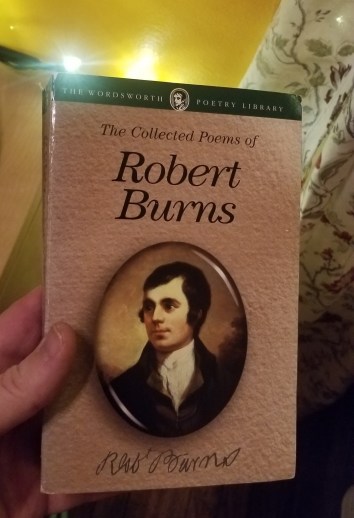
Fifteen years ago, it was a cold night in an apartment in Prospect Heights, Brooklyn where maybe two dozen people gathered for a Burns Night party. Burns Night is January 25 and celebrates the birthday of Robert Burns, the Scottish poet who lived in the late 1700s.
Several of us had brought our volumes of Robert Burns’ poetry, and at any point during the party, a partygoer would shout “Poem!” and silence the festivities for a reading of Burns poem.
The host had traveled to a meat distributor in New Jersey to obtain authentic haggis, a traditional Scottish dish comprised of a sheep’s offal and other ingredients served inside an animal’s stomach. A central ritual of the Burns Night party consisted of our host cutting open the haggis while someone read the Burns poem ‘Address to a Haggis.’
These Burns Night parties were a testament to the greatness of New York City and to the promise and meaning of Brooklyn to so many people. These were eclectic gatherings that showed the power of art to transcend time and place. Here were people of a variety of ethnic backgrounds celebrating a Scottish poet. The host, Roger, is a Peruvian Jew who grew up in Detroit. There was at least one real Scotsman at these parties, or at least he looked the party with a kilt. Maybe none of us had a drop of Scottish blood. Who cares? The power of Burns’ poetry transcends.
Among the guests at Roger’s parties were his frequent music collaborator Scott and Scott’s wife Diane. I once got to dog sit for Scott and Diane’s amazing dog Connolly (full name: Satchel Connolly X) – I picked up their house keys at a local diner where they knew the owners, walked their dog and explored Prospect Heights, which was a real neighborhood.
They were among the most active voices opposing the Atlantic Yards Project, a corrupt boondoggle that forced people out of their homes and businesses to construct luxury housing and a sports stadium. That fight was lost and the Barclays Center now sits on what used to be the part of the vibrant and eclectic Prospect Heights neighborhood. To this day I have not set foot inside the Barclays Center.
Roger returned to Detroit and Scott left Brooklyn and ended up in New Orleans. Diane remained in Brooklyn for a while after their breakup but she later moved to Westchester. All these people are doing well. Roger continues to write brilliantly, Scott has had his photos exhibited and Diane is a Fordham professor who recently published a book.
Those parties and those three people in particular represented Brooklyn to me like nothing else. They had each had come to New York and conquered it on their own, leaving great music and art in their wake. When those three people left Brooklyn, it was a sure sign that the things that made Brooklyn special were gone forever. If the people who embodied the spirit of Brooklyn more than anyone I knew were had left, then Brooklyn had outlived its usefulness.
That’s not to say there is nothing good about Brooklyn. I still go to Coney Island and Prospect Park and there are still music venues in Brooklyn worth your while. But for the most part when I think of Brooklyn I think of overpriced real estate and the hordes of well-off people who are driving up the price of everything.
But people who attended Roger’s Burns Night parties years ago have not forgotten them. A friend recently spent Burns Night at Peter Luger’s Steak House and recited some Burns poems to his family and friends. Diane mentioned Burns night in a school lesson about ethnic foods and culture; sadly her students had not heard of Burns Night.
Roger posted his memories of Burns Night online, noting how he first came across a reading of Burns poetry inside a pub in New Jersey, and woke up the next day in New York determined to be one of the people who would recite Burns poetry.
I stayed up late with my volume of Burns poetry, and read The Bonnie Wee Thing to my wife while holding her hand. It was not the happening party of years ago, but I could not go to bed on Burns Night without reading a Burns poem.
The Burns Night parties in Brooklyn of long ago are gone, but as long as I live I will keep them alive in spirit, and I am not alone.
Aye.
Five years a parent

It is five o’clock on a January morning in 2014 and I’m driving a pickup truck on the Grand Central Parkway. My pregnant wife is in the passenger’s seat. It’s dark and the roads are nearly deserted.
“In a few hours we’re going to be parents,” I tell her. “Isn’t that crazy?” She agrees.
This week our older girls, fraternal twins, will turn five. That’s a half decade of parenting in the can. We have three now, the youngest will be three in June, sharing a birthday with one of her uncles.
Having kids is a definite turning point in everyone’s life, and it brings a kind of happiness that is hard to achieve in other places. But it’s not panacea where unicorns and rainbows to replace the regular sturm und drang of life. All the same stresses and difficulties are there, and now they are there with new mouths to feed and diapers to change. Kids won’t turn you into a better person. You’ll still be an angry curmudgeon if you were one before their birth. But as miserable as your life may get from that point onward, your children will be a consistent reason to be happy, even when they are throwing up on you.
I am extremely fortunate that I went into parenthood with a very wide support network, a steady paycheck and a happy marriage. Not everyone has that. When I was born my parents were half the age I was when I had kids. Neither one had a college degree at the time. I started out way ahead; I have no excuses if my kids become serial killers.
Luckily, our kids are great and continue to inspire us to be better people. I see how bright they are and how they enjoy learning and I want them to never stop loving life or the pursuit of knowledge. Despite the many stresses and strains; my wife and I enjoy our molding, shaping and unconditionally loving these impressionable young lives. It’s an awesome responsibility but also one of unlimited potential.
I vowed not to be the kind of parent that gauged someone’s worth by whether or not they reproduced – I faced enough of that before I had children.
“So do you have a family?” someone asked me at a business reception years before I met my wife. They meant to ask if I was married and had kids, but the question seemed like they were checking to see if I had hatched out of an egg. Well I was raised by wolves and since I’m not biologically wolf I can’t track down the pack that raised me by my sense of smell, so no I guess. —was how I should have answered, but I mumbled a simple ‘no’ and noted I wasn’t married and changed the subject.
And while my kids are crushing life, we must refuse to put their accomplishments in place of our own. No one outside a tight circle of family and friends care how awesome your kids are, and having children is no excuse to fall on your face in every other aspect of life. No slacking.
This weekend we’ll be hosting a kids’ birthday party for the twins with pizza, cake and animals. It will be a big, tiring, stressful day but one that will have a happy ending because we get to spend it with our children.
Five years have gone by fast. Wish us luck on the next fifteen.
Demanding a better 2020

As the presidential race of 2020 is already underway, before the office-holders elected in the mid-terms have even taken their oaths of office, it would be a great time for Americans to demand that the level of conversation be switched permanently to ‘grown up.’ The stakes are very high with the looming possibility of a recession, a bitterly divided Congress and an executive branch in a constant churn. It would be a real treat for a few brave candidates to insist on taking the high road and talking about how their policies will benefit the citizenry.
This will run afoul of the zeitgeist of contemporary politics. Rampant partisanship has created a knee-jerk politics where not only is everyone expected to wear their allegiances on their sleeves, but to be at the most ideologically pure part of the spectrum with blind obedience. Facts that may run counter to one’s argument are “Fake News” or “Hate Facts.” Serious adults don’t use terms like that except to mock those that do.
We’re seeing the worst in tantrum politics and mental gymnastics among both major political parties as the current budget impasse over a border wall continues. Trump’s insistence on a border wall is a clear sign he doesn’t understand the issues, and Democrats are hard-pressed to demonstrate any serious commitment to increased border security or give lie to the notion they want open borders.
Both parties once were able to function and understand nuances of policy. Sovereignty and human dignity are not mutually exclusive. It is inexcusable for Americans to support a porous border and deny our right to a sovereign nation. It is also inexcusable that children would die preventable deaths in the wealthiest country in the world, no matter their circumstances. We are a better country than to let people die of common disease or dehydration in detention centers; we also won’t be a country without strong, enforceable borders—there is no contradiction in those statements.
Let’s all admit that our political opponents are not monsters and that seeing the logic in the other side’s argument is not a betrayal of our own ideals. No, people advocating for stopping family separation at the border are not doing so to create some kind of socialist global utopia just as people advocating for tougher border controls are not trying to reproduce the Third Reich on American soil. These are not staggering revelations to the worlds of adults, but these are gut-punching concepts to hyper-partisan audiences that tend to dominate the public conversation these days.
Future generations will look upon these times as days of decay and decline, when a vacuum in leadership and long-standing myopic public policy exacerbated a fractured society. The values that make our society great can endure even if our institutions crumble, but it means a conscious effort to build new communities for those of us with clear vision and willingness to see beyond the outdated prism of our fraying standards.
We can rebuild communities if we leave the echo chambers of media and engage with the world around us. If we can take anything constructive from the Trump candidacy and record in office, it’s that people respond to frank dialogue and people who stick to their guns. Trump trampled several political sacred cows in his road to the White House—I thought his candidacy was dead when he insulted John McCain before the first primary was held. Have no doubt: Trump’s success in winning office came from his being rooted firmly outside the political establishment. You don’t have to be a fraudulent, vulgar ignoramus to break out of the mold and effectively challenge that status quo. Let the barriers Trump broke down let in a better slate of candidates and activists. There are decent people who hold all kinds of political opinions. Hear them out and be one of them.
Let this be the year you speak your mind and demand honesty and understanding from candidates within your own party. The first step of breaking out of our political rut is to embrace the politics of honesty and change on our own terms.
Demand more from the election of 2020 than we got in 2016. We (hopefully) can only go up from here.
2019, a year for bold adults

New Year’s goals are familiar to most. We vow to exercise more and eat better, travel more, and read more books. Yes to all of those things. But there’s an important resolution that is more important and helps spur others. Let this year also be the year we embrace being bold adults and demand those around us be the same.
Being a bold adult means being willing to face hard truths and decipher realistic perceptions into coherent action, in repeated situations.
We see the division between these true adults and the rest of society when a violent incident occurs in public. Invariably, there are several videos of the incident made by bystander who could have made a difference but chose not to instead. If only half of the mobile phone zombies we see on our sidewalks and subways actually took some meaningful action when these incidents occur, we’d be in a much better position. The true, bold adults are the ones who step in to stop the fight, or help the injured person or even call the police. Sure, having a dozen cell phone videos of a subway stabbing will help police solve the crime, but my gut tells me most of these on-the-spot auteurs are not planning to aid law enforcement but instead contribute to a viral spectator culture that is hollow and shameless.
There are too few people willing to be the adults in the room. This lack of maturity even spawned the term “adulting,” which is used by grown people amazed that they are behaving appropriately for their age groups. I can’t hate on these people too much though. I was still living in my family’s basement at the age my parents had two kids. I like to think I have made up for lost time.
Earlier in the evening on New Year’s Eve, my wife and I took our children to a small party thrown by people in our neighborhood. My wife noted that even though many of the people at the party lived within a few short blocks of each other, few of us had ever met. And here was a hopeful sign. People breaking out of the rote functions of surface celebration to have a meaningful interaction with neighbors. It’s a much-needed reaction to a culture that increasingly exacerbates the superficial and exploits the chasms between identity groups: new tribes form communities that work for them.
The parents gathered their children in a circle to help count down and ring in the New Year a few hours early so we could get our kids to bed at a decent hour. Then the adults cleaned up and went home, to welcome 2019 after the children were asleep.
I rang in the New Year while lifting weights, not because I’m a roid-raging meathead determined to inflate myself to grotesque proportions, but because I’m planning to make this year one of continued self-improvement. I have been a mobile phone zombie myself at times, and the staid and stressful routines of a middle-aged office worker have taken their toll. I have no one to blame but myself for being generally out-of-shape, but I wanted to set the tone right for the New Year in that this has to change.
Being the bold adult in the room can be a scary prospect. No one wants to be the one to put their head out, to risk ostracization or attack. But you will be glad you went forward and did what needs doing, turned away from what the herd is doing and tackled the business of life head-on.
2019 is going to be a great year. Make it so.
Late Christmas trees are the best Christmas trees

My family puts up a traditional Christmas tree. Well, not that traditional. A truly traditional Christmas tree would be paraded through town and then set on fire.
But Christmas is a festive time of year, a time when our shared pagan heritage is proudly on display, albeit via the yoke of Christianity. And, godless as I am, I always put up a Christmas tree, a real tree. I can’t abide plastic shrubbery when the sweet green smell of the forest is so desperately needed by city dwellers.
I have friends who put up their trees before the month of December, and for me this is much too early. And we prefer to wait until at least the 15th in our family, as our girls’ maternal grandfather’s birthday is the 14th, and we do not want to cloud that celebration any more than it already is by holiday circumstance.
Right after Thanksgiving, temporary outdoor Christmas tree shops set up on sidewalks in parking lots, and shopping areas throughout the city. In Inwood, Broadway near 207th Street was my place of choice and the people who often manned that shop had come down from Canada. Some come from Pennsylvania or Vermont or New Hampshire. Last year we bought our tree in the shopping center on Linden Place and the Whitestone Expressway Service Road—not the most picturesque place to buy a tree but it got the job done and we went home with a nice tree.
Years ago when I was living alone in Ozone Park, I didn’t get around to getting a tree until Christmas Eve or the day before, and managed to get a $5 tree for $3. I tipped generously but never had that kind of luck again.
My three daughters and I set out on a mission to buy a tree this past Saturday, 10 days before Christmas. We drove to Douglaston, Queens, where a length of sidewalk beside a high church yard wall along Northern Boulevard was an impromptu Christmas tree store. We found parking down a side street and arrived at the tree stand to the sounds of Charlie Brown’s theme song being played over a PA system. The man who helped us with our tree gave candy canes to the girls. Within a few minutes I paid cash for the tree ($58, which is pricy for a tree but by New York City standards that’s a good deal), tipped the guy who helped us, and we were on our way back home.
Our Christmas tree has punk rock ornaments from awesome bands like The Spunk Lads, The Bullys, World War IX, Skum City, and (self-promotional plug here) Blackout Shoppers. And almost all of these come from Superfan Heather, New York’s best and possibly most prolific punk rock band photographer (her boyfriend, Admiral Yammomoto, would be a close second). These ornaments go on the tree every year, as do ornaments made my wife and her brother as children that date back to the 1970s.
Since three young children worked on decorating the tree, my wife had the foresight to separate the non-breakable ornaments and focus on using them to decorate the tree. We’ll have plenty of time to use the fragile ornaments when our girls are older.
With lights and a bit of silver garland, and a healthy heap of ornaments, our tree was ready pretty quickly. We’ll remember to water it and work to be worthy of its pagan heritage.
Alternative New York Holiday Traditions
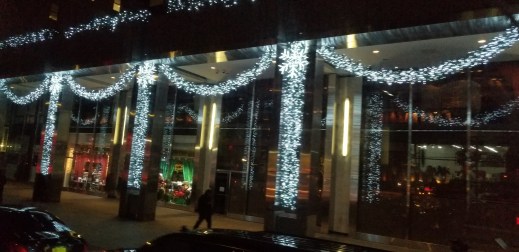
The holidays, as we collectively call them, start in earnest while we are still recovering from Halloween and preparing for Thanksgiving. Once Thanksgiving is over, all bets are off and we are surrounded by the Christmas season until we crawl back to work on January 2nd to the grim realities of our winter lives.
Holiday traditions are fine things, and for many years I took pride in my annual Bad Santa Party, which celebrated the greatest Christmas movie ever made, Bad Santa. Someday I will revive that tradition with a vengeance, but until that time it pays to find other holiday traditions that will celebrate the season without going to church or being part of a slack-jawed mob.
Of course, there are plenty of things to do that are not holiday related, but if you want to enjoy some yuletide spirit but not be surrounded by entitled ignoramuses or enormous crowds, here are some ways to observe the holiday season without losing your sanity or your edge.
Tree lightings abound. Mobs crowd Rockefeller Center and their tree is the most well-known in the city, but lots of other trees and menorahs have ceremonial lightings. Different parks, zoos and public gardens hold a host of lighting events and they are often a lot of fun. Go to one of those and you’ll get just as much craic as you would from going to some massive retail tree lighting and have a better time with smaller crowds as well.
Santa Claus for a better cause. You could certainly wait on a long line at a department store or shopping mall to put your sloppy toddler on that stranger’s lap, or you could explore an alternative venue where there won’t be as many elves or predatory photographers but the money will be going to a good cause. In my area, both the Queens Botanical Garden and the Lewis Latimer House have events where kids get to meet Santa Claus.
Anti SantaCon Pub Crawl. One of the more obnoxious holiday traditions in the city is SantaCon, a prolonged drunken stumble by perpetually unaware hollow men and their fawning female enablers. Sadly, SantaCon was once a fun and inspiring artistic event that became too popular and is now the corrupt antithesis of its founding ideals. But where there is a need for change, New Yorkers will step into the breech, and so bar owners in Brooklyn have started the Anti-SantaCon Gowanus Pub Crawl on Sunday, Dec. 9. You still get to dress up and drink in the holiday spirit, but absent the feeble stupidity that passes for holiday spirit among the current SantaCon crowd.
Literary birthday celebrations. Did you know that December 3 is Joseph Conrad’s birthday? Or that December 7 is the anniversary of Willa Cather’s birth? Shirley Jackson, Stanley Crouch, Edna O’Brien, Jane Austen, George Santayana, John Milton, and Mary Higgins Clark, among other literary lights, have birthdays in December. Why not have a party where you read their works?
Visit the New York Hall of Science. I have a tradition of visiting the New York Hall of Science on Christmas Eve with my daughters. It’s usually not crowded and our girls love science. It gives their mother a break from watching them for a while and she has time to wrap their gifts while they are away. It allows us to enjoy this popular public space in a bit of solitude and quiet.
There is no more New York thing to do than to carve out your own new tradition and celebration. The holidays give us these opportunities. Seize the day.
Back in the deer woods

My plans to take time off from work were squelched by too many year-end goings on at work. So I drove up to Connecticut last Friday night to get one full day of hunting in this past Saturday.
It was the Friday after Thanksgiving and the highways were regularly quiet. I-95 in Connecticut is normally a slow-lurching snake of chrome and misery, so to breeze north was a rare treat. I made good time in getting to my friend Steve’s house. Steve is an accomplished hunter and he is generous enough to let me stay at his house when I go hunting.
I was up before 5:30 a.m. the next day. Hunting or running the Tunnel to Towers 5k are the only reasons a anyone should be willingly awake before 6 a.m. on a weekend. I was ready and out the door without too much problem. Unfortunately I accidentally set off my car’s car alarm in the driveway of my friend’s house, waking him and at least one member of his family.
I was the only one pulling into the small area for cars at the unmarked entrance to the Cockaponset State Forest on Little City Road in Killingworth, Connecticut. I didn’t see any other human beings for the next 10 hours and that was a good thing. I saw and heard evidence of people, but all the time outside in the daylight it was just me and my quest to take a deer home.
Spending time in and around the natural world is a basic human need. The science is in, and there are significant health benefits to spending time around more trees and fewer people. Human beings are not meant to live without experiencing some part of the natural world on a regular basis.
I made my way into the woods. It was still dark, but a bright moon provided good light. Once it was past the legal hunting time I loaded up and kept making my way quietly to my chosen hunting spot.
I got very lucky the first time I staked out this area and it and it has the natural attributes that would make it a good location to begin with. It is a natural overlook with greenery for deer to eat and water for them to drink.
But nothing doing. While I heard gunshots going off in the distance frequently and thought maybe some deer would get chased my way, nothing doing. At midday, I decided to search out someplace different. I started by making my way to my old spot, at another overlook that is an even higher perch. It was there where I took my first deer several years ago.
The area has improved, in that the stream that was dried up a few years ago is back and flowing nicely. But it has attracted other, less ethical hunters. Someone left a camping chair and their garbage on this natural overlook, a major faux pas in the hunting world. I thought it would be justified to take this chair out of the woods, as punishment to whatever entitled rube left it there along with their refuse. Instead I moved on, making my way deeper into the forest.
And as I marched through an overgrown passage between trees, I finally saw a deer. He or she was not far away, but had seen or heard me first and was on the move, picking up the pace and getting out of good range before I could even raise my shotgun and get in my sights.
I paused, hoping some other deer may come along on its heels, but no luck. I hiked a bit more and found a new spot that looked over the growth where the deer I saw would have exited into a more open area, and if any deer had some along I would be in a good position.
The last two hours of the day passed by slowly. Someone in the distance fired off a lot of rounds; they were either target shooting or had come upon some prehistoric giant mega deer that took ten shotgun slugs to bring down.
I started to make my way out of the woods towards the end of the day, hoping to maybe get lucky on the way. When legal hunting ended, I unloaded and found my way back to my car.
Another hunting trip without some game to take home, but time in the woods is always time well spent.
Amazon on the East River

The skyline of Long Island City is a glowering army of glass and steel. As the 7 train crawls its way into the Queensboro Plaza station, commuters see buildings under various stages of construction. Many of these are high-priced residential towers boasting views of the Manhattan skyline and closeness to one of the subway lines that run though that part of the city.
The housing boom has moved high tech professionals to Long Island City – it’s a short commute to Manhattan and is still plenty cosmopolitan and relatively young and new. A largely industrial area until things began changing two decades ago, there is still a lot of charm that sanctifies Long Island City with the Whitmanesque aesthetic lacking in Manhattan and much of the more popular areas of Brooklyn.
So it was with a twinge of disappointment that New Yorkers learned that Long Island City was going to be home to one half of Amazon’s “HQ2,” or second headquarters. The city government bent over backwards to bring Amazon to our teeming shores and actual New Yorkers are right to be pissed off.
Full disclosure: I am an Amazon Prime member and I have several books available for purchase on Amazon. The Seattle-based retailer is the goliath it is because it championed online commerce before anyone could make money from it, and they made online shopping easy. I know I can go to Amazon and knock out a good portion of my Christmas shopping in a matter of minutes. So while I may heap some well-deserved hate on the company for its tactics and practices, I can’t deny the company has earned its dominant place among online retailers.
But Amazon engaged in a very slick and underhanded game. Putting out the notice that it was looking to build a large second headquarters in an American city, municipalities fell all over themselves to woo the company. Cities and states handed over reams of data they hadn’t provided to any other corporate caller on infrastructure, industry, demographics and economic forecasts. Amazon has yet another leg up on any and all remaining competitors. More than that, Amazon fielded offers of tax breaks and other lucrative pledges that would embarrass Tammany Hall. And in the end, none of these overtures may have made a difference. The factors that attracted Amazon were there long before the overtures of tax breaks.
Long Island City in Queens, New York and Crystal City, Virginia were the big “winners.” What exactly did they win? In New York’s case its nearly $2 billion in lost tax revenues thanks to guarantees made to the company, in addition for helping to build a helipad.
New Yorkers didn’t exactly break out the champagne to learn Amazon was coming to Queens. 50,000 well-paid tech workers means that already high rents and real estate prices will go up even farther. It means our already overloaded and dysfunctional subways and commuter railroads will be getting that much more crowded. It means more crowded classrooms in public schools, a bigger scramble for resources, and an infusion of shallow West Coast tech culture in our beloved Gotham. The specter of the big tax giveaway had people agreeing that this era of corporate toadying on the part of our political leaders had reached its nadir, especially in a city and state run by Democrats. Even the conservative National Review, no bastion of corporate-bashing Commies, agreed with Democratic Socialist Alexandria Ocasio-Cortez that Amazon’s corporate welfare is wrong.
New York City doesn’t need to play this game. The city makes itself attractive by investing in its infrastructure and working to keep the standards of living high. That means we lock up criminals, keep homeless people off the streets and subways, and make sure those subways are no longer dysfunctional. That’s a lot we have on our plate, and we can’t afford to give away billions in tax breaks.
Let Amazon build its “HQ2” somewhere else if they don’t like paying their taxes. But don’t blame Amazon; New York and Virginia offered them sweet deals and it took them. Amazon didn’t make anyone beg them to come to their city. Our political leaders did that to us, figuring the win of wooing Amazon’s office was worth whatever Faustian bargain they had to make to get it done.
It wasn’t Jeff Bezos who sold New Yorkers down the East River. It was Bill de Blasio and Andrew Cuomo.
The rewarding solitude of night driving

This past weekend I went to run some errands and found that our family minivan’s battery had died. Add it to the ‘last thing I needed’ list. We are lucky enough to be a two car family, and while I thought we had jumper cables in our other car, it turns out we did not. I was spared the opportunity to make myself look extra useful or electrocute myself.
I had to wait until after our older children were in bed before I could call AAA and have our car’s battery tended to. That took longer than I thought, and I wound up paying cash for a new battery. We needed it and I know my wife would not have time to go to a garage this week.
I set out on a drive to get cash from the ATM after using all that I had on me to pay for the new car battery. Some of us have become so accustomed to using credit cards or debit cards for just about any purchase over $20, that our trips to our bank’s ATM are infrequent.
Sunday night after 10 p.m. is a quiet time in the Western world. My part of Queens, New York, is a residential area where people are enjoying their last hours of family and freedom before the grind of the workweek picks up again.
Driving alone at night is one of life’s pleasures I used to enjoy more frequently. I had a car in the latter part of high school and through college, and taking long drives was a time I could enjoy solitude and productive daydreaming (even at night) and listen to music. Long walks and runs fulfill this need in city life, but the lure of the open road can’t be duplicated on foot so easily.
It is interesting to see who else is also on the road, what other strangers are enjoying the quiet time to be out and about while most of the nearby world is cloistered in their homes for the night. Drivers are not rushing to get everywhere as much and there’s a modicum of civility that you don’t find during daylight hours.
Sunday nights in particular, are fun times to get out. You can see this with drinking too. With Monday morning looming, not too many people are at the bars, and Sunday night at the bar was a great guilty pleasure during my drinking years.
Cruising down Willets Point Boulevard, few other drivers were on the road. I had a few errands to run and made some lucky green lights, with few others taking up lane space around me.
I got to my bank and went to use the ATM—the machine was giving out only $1, $5, and $100 bills because our financial institutions are losing their basic competencies. No mind, I set out again to drive to the next closest branch, just a mile or so away. Francis Lewis Boulevard is in the middle of repaving, and a big stretch of road has been milled down to a rough, striated surface. It was rough driving where normally it would be smooth; each manhole felt like driving over a pitcher’s mound.
I reached the next branch of the bank, only to find it was no longer there. Banks are closing branches as more people do all their banking online. I made an illegal U-turn and headed back towards home, stopping at a gas station to feed quarters to an air pump to refill two of our van’s tires. This gas station was a full service gas station, and the attendant stood in his booth, waiting for someone who needed gas. Good for them for being open late on a Sunday,
My business done, I returned home, listening to music and enjoying the quiet streets of Queens before the deluge of the workweek arrived.
Democracy is in the details
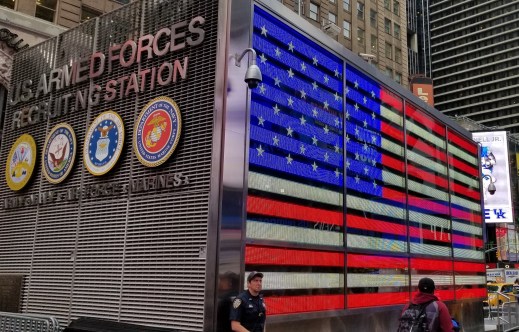
Former Speaker of the U.S. House of Representatives Thomas P. “Tip” O’Neill is famously quoted as saying, “All politics are local.” He was right. What’s more, so much of what gets decided in our republic doesn’t happen on the televised stage but in the mind-numbing minutia of committees and boards you’ve never heard of unless you are willing to delve into the morass of local politics. But I’m telling you: delve into that morass.
This universe of local community boards and party committees have more sway and control over our politics than one might think, and they are a way to have an outsized influence on your community without having to run for public office. Depending on what you do, you might only need a few hours a month.
And no matter what your politics, you likely agree that the political establishment is decrepit and in need of new blood. Case in point: here in New York, the Democratic Party bosses were nominating candidates for party positions who were not even aware they were running. There were actually people interested in some of these party positions, but the people in charge filed the names of candidates they drew from old lists, thinking they could fudge the paperwork and appoint their own candidates later. The bosses had become accustomed to few showing interest in these party positions. With more people engaged in the political process on the local party level, this kind of rusty machine can’t continue run like that. Why shouldn’t there be a contest for these positions every step of the way—picking candidates who are actually running would be a good first step.
And in addition to the usual local and state races on the ballot Tuesday, there are three ballot initiatives specific to New York City that can shape the future of local politics and open the door for more involvement. The first would mean stricter limits on individual campaign contributions candidates could collect but increase public funding for candidates. The second would create a Civic Engagement Commission under control of the mayor (please vote against this if you live in New York City). And the third would put term limits of a sort on people serving on community boards (they could serve for eight years but then must step down for two years with the ability to reapply). I think a better solution to create more responsive community boards would to make them elected positions—members are currently appointed by borough presidents.
Whatever your position on these or other issues, you won’t change a thing by throwing rocks at someone you hate, marching on Trump Tower, or trolling normies with dank memes. Go vote.
Clearly there is a populist political wave that is cresting with Democrats now after Donald Trump surfed it to victory two years ago. There’s no reason it should stop for either party. In both cases it has widened the debate.
Five years ago, Democrats were scared to call for socialized medicine and Republicans would not have dared question birthright citizenship. Both these topics are rightfully in the mainstream now. There is no reason that ideas should be kept out of the public sphere by old and uninspired machine politics.
Don’t like it? Get out there and do something about it.
In the wake of the latest bloodbath

I saw the headlines on my mobile phone and thought little of it, because grotesque acts of violence are normal now, and actually always have been. A crazed anti-Semite shot 11 people to death in a Jewish temple in Pittsburgh over the weekend.
Here are three ideas that might help:
- Mandate more effective surveillance of potentially violent extremists by law enforcement
- Create a federal database of people not allowed to own firearms
- Increase armed security until you can make progress on 1 and 2.
If someone who survived the Holocaust can’t survive going to a religious service in Pittsburgh, something is seriously wrong with this country. No part of how to fix this should be off the table. And as per usual the country’s reaction to this latest horror show follow predictable partisan scripts.
I shouldn’t be surprised. I thought that the September 11 attacks were so bad that people wouldn’t get away with resorting to the same tired old tropes and I was wrong then. If the horrific deaths of thousands of people on live TV didn’t shake us from unbecoming hackery, why should the massacre of 11 people at a synagogue in Pittsburgh make us change our ways?
When an Islamic terrorist massacred 49 people in Orlando two years ago, leading Democrats lectured us on Islamophobia and xenophobia. When a Christian terrorist killed three people at an abortion clinic that same year, leading Republicans mumbled platitudes about treating the mentally ill. When a mentally ill teenager slaughtered 17 fellow students at a high school earlier this year, the President said the solution was to arm teachers. After this latest shooting in Pittsburgh, the President said more armed guards were the answer. We have an abject failure of leadership throughout our government.
Something has got to be done about too many of the wrong people getting their hands on guns. That is a focus that enjoys broad support. Guns are another divisive issue in this country, but ask the most unwavering N.R.A. member if the people involved in any of these terror attacks/mass shootings should have been able to get a firearm, and they will tell you ‘no.’ Fellow Second Amendment supporters: if we don’t come up with a viable solution, less sympathetic voices will control this issue. Years ago I came up with a proposal to create one federal system that would screen out people deemed too dangerous to own firearms but also overrule the patchwork of often unconstitutional state and local laws that have gun owners rightfully angry.
Part of that is also being able to find dangerous extremists before they become violent. Our First Amendment allows people to believe and advocate anything they want, but most violent extremists leave other clues to violent intent beyond online musings.
It’s very common to see an increased police presence in New York outside of Jewish houses of worship, especially around Jewish holidays. The idea of increased security at synagogues and temples is not out of line. Only calling for more armed guards or armed teachers or clergy is a crap answer to addressing our problem with violence. But increased security will have to do in the meantime. We have to deal with the world as it is now, not as it should be.
Dreams of the Mega life

One dark weekday morning and I am standing in my spot at the bus stop, waiting for my bus to work. A car pulls up near the bus stop and a laughing passenger gets out. He’s carrying a plastic bag of clinking beer bottles and wearing a Knights of Columbus satin jacket with a large back patch. He turns and shouts something to the passenger before laughing and starting to walk away.
The sees me standing there in my glum workday “business casual” finery and offers me a beer from his plastic bag. “No thank you,” I tell the man, being appreciative of his generosity. He puts the beer back in his bag and offers me a bottle of hard cider instead. I politely decline again.
He sees I’m going to work and he jokes that he is just getting home from work. He smells of alcohol and emits drunken joviality. Though I left the drinking life nearly a decade ago, I am familiar with this stumbling generosity and the allure of unending good times. Had I followed a different path—different not necessarily meaning better—I could easily be the one drinking until 6:30 in the morning.
I didn’t envy the man being drunk at the crack of dawn, but I envied the ease and appreciation he had for his working life, whatever it is or was. When I get home from work, I am not a bundle of generosity towards strangers but a tired commuter eager to spend some time with my kids before I go to bed, fearful for what work emergencies might consume the rest of my waking day.
This came to mind later that same week when I purchased some tickets for the Mega Millions drawing for a prize that has since ballooned past $1 billion. By any stretch of logic lottery tickets are a waste of time and prey on the poor and working classes. It is people who can often least afford it who spent their money on these dreams printed out on small slips of paper.
The millions of tickets sold for a chance at that prize money was purchased by people dreaming of riches but not necessarily because they want to be rich. People spend their money on lottery tickets because they want to escape the present workday lives that consume much of their time.
A few weeks ago I was able to work from home on a Tuesday and I took my older children to their Pre-K classes. It was one of the best weekdays I’ve had in a long time. The 40-odd minutes I had with my older girls is time I rarely get outside of the rushed weekends. It’s time you can’t get back, and time burns faster than money.
If I had the choice of doubling the money I make at work currently or cutting that in half and not having to go to work every day, no question I would take the latter. And so would a lot of the people who stand on line for lottery tickets. It’s not big mansions or luxury cars we fancy, it’s buying more of our time back for ourselves.
Good luck everyone.
 Matthew Sheahan
Recent Comments