
Snowbound NYC feels the filth of winter
The Northeastern U.S. has become accustomed to mild winters over the last decade. Prior to the latest snow blizzard that pummeled much of the country, online newsreels were commemorating the 30th anniversary of the blizzard of 1996. Now we have a new milestone to mark in the history of the five boroughs’ struggles with snow.
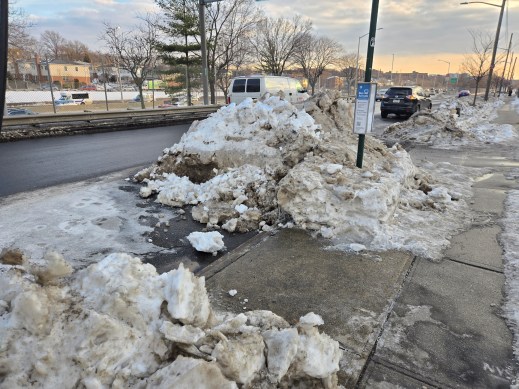
The Northeastern U.S. had weeks of below-freezing temperatures immediately following an exceptionally large snowstorm. The usual melt that happens in the days after a storm hasn’t happened. I can’t remember any time in my life that so much snow sat around for so long afterwards.
While the roads may be cleared in theory, large snowbanks have turned two-lane streets into one-lane streets. Slippery snow and ice patches make driving in the city more dangerous than usual.
The sidewalks and crosswalks are in an even more dismal state. Plows push large quantities of snow into icy walls that solidify into chunky walls of hard-packed ice and snow.
The city’s Department of Sanitation continued to plow the same roads and did little or nothing about freeing up sidewalks, bus stops, and crosswalks. I recently stood behind a plow wall at a bus stop and watched a snow plow drop loads of salt on an already dry road while piles of filthy, frozen snow sat nearby untouched.
Even with the understanding that this was an unprecedented storm, the city’s response rates poorly. Long stretches of sidewalk, including those abutting public parks and city-run spaces, remain largely inaccessible weeks later, thin paths cut by the feet of harried pedestrians the only things working to clear any walking space.
Snow makes New York City look beautiful for about three hours. Snow in NYC quickly turns into a mosaic of street and sidewalk filth, collecting dog urine, car exhaust, and the varied effluvium that regularly pulses across our sidewalks and curbs. After several weeks, the hardened snowbanks sport a spattering of grotesque shame, rife with collected bacteria.
New York’s sidewalks and crosswalks, already a crowded place of give-and-take silent negotiations of movement, have become more challenging to navigate. Having a good pair of waterproof boots is paying big dividends, and I am trudging through frozen sidewalk tundra like an over-the-hill urban sherpa.
Warmer temperatures in the weeks ahead promise relief through melting snow, but city authorities should take stock of this storm and improve their response. In the meantime, New Yorkers are waiting for the Great Snow Melt of 2026.
New Poem on Impolite Literature: Snowman

This past Sunday my girls asked if they could make a snowman. Of course they could. What kind of gobshite would I be to not let children build a snowman? I did not have time to take them to a nearby park, though; I was busy making Double Satanic Deviled Eggs for a family party. They made do with a snowman on the sidewalk in front of my home. They came to the door to ask for things to use for eyes—I did not have coal or carrots, but some almonds and a pecan worked for a face.
I wrote a poem about it, Snowman, which can be found on the Impolite Literature website.
The snowman is still standing guard a few days later, leaning a bit in the sunlight.
The touching holiday story of the Crack Whore Santa
One evening at Blackout Shoppers’ band rehearsal, our drummer at the time, Mickey Fingers, was recounting a story of his apartment being robbed.
He worked in broadcasting at the time and was working midnight shifts. His roommate had been out drinking heavily at bars and had brought home a woman of ill repute with the intention of carnal indulgences. The roommate, however, passed out drunk and the woman burglarized the apartment. She had ransacked the place and taken numerous valuables. Mickey gave the drunkard roommate his walking papers and was shortly rid of him.
Mickey ran through a catalog of what she had stolen: expensive cameras, high-end electronics, books, DVDs, and a plethora of CDs had vanished in the hands of the larceny-prone harlot. It was an immense amount of property, beyond the capacity of one person to haul off by themselves.
“How did she carry all of that stuff out of your apartment?” I asked.
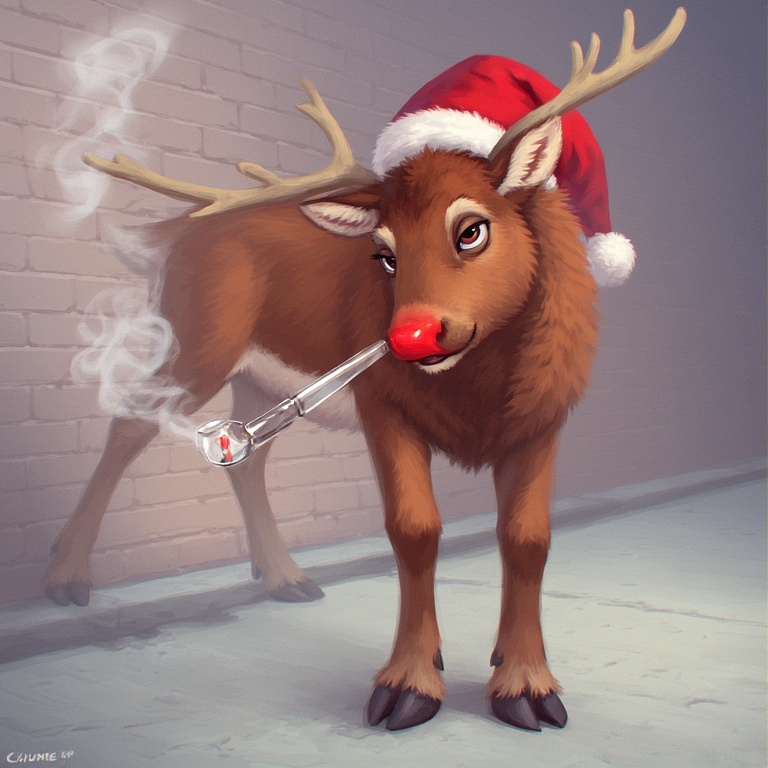
“She took pillowcases from my bed, filled them up with my stuff, and walked out of there like some kind of Crack Whore Santa.”
The Crack Whore Santa never left our imaginations after that. Not long after Mickey Fingers departed from the band, we recorded a song called “Crack Whore Santa” and asked him and his son to come in to the studio and record an introduction to the song. His son was five years old at the time. It is preserved for posterity on the recording:
“OK, so who don’t we want to see for Christmas this year?”
“Crack Whore Santa.”
“And why not?”
“Because she took Daddy’s things!”
[Together:] “Crack Whore Santa! One, Two, Three, Four!!”
Mickey Fingers recovered from the theft of his property and lives in Westchester with his wife and children. Despite having played in Blackout Shoppers, he is gainfully employed and lives a productive life. The drunken roommate managed to turn his life around—the next time Mickey Fingers saw him he appeared sobered up and in a stable relationship.
And Blackout Shoppers continue to play music inspired in part by such absurdist comedies of life. We are playing Otto’s Shrunken Head on Saturday, Dec. 20th and “Crack Whore Santa” is on the set list.
Book rescue in Queens and its vortex of unknows

I was cleaning out my motor vehicle, disposing of a handful of parking meter receipts that accumulate on the dashboards of cars in large American cities. As I deposited my trash in a receptacle, an open book nearby caught my eye.
Someone had dropped or thrown a book, and it had landed open against a curbside trash shed outside a co-op. It was an odd place to see a book, and it looked like it was thrown from a moving car or dropped out of bookbag that was being kicked down the street. I retrieved it.
The book, “Who Put This Song On?”, by Morgan Parker, was in good condition considering its rough treatment. Upon inspecting the book further, it bore a label on its back cover that read “FLUSHING HIGH SCHOOL LIBRARY.”
Flushing High School is a mile away from where I found the book. I made a note to return it. No book should be homeless, and someone may be looking forward to reading that, or may not be able to afford whatever fine may be levied for losing it.
A host of possibilities flooded my mind regarding how the book came to rest upon the sidewalk a mile away from its library home. Did someone steal it and try to throw it in the trash bin? Was a student carrying this when they were attacked by a kidnapper or serial killer, and the page was open to a passage that would reveal the whereabouts of the victim or give a clue as to the motive of a brutal killing? Am I now a suspect in a kidnapping or murder that has not been made public yet? Or will I be considered a cringeworthy thief, found with a book stolen from a local high school?
I made it my mission to return the book as soon as it was convenient, lest I be unwittingly caught up in these mysteries, but more likely, that the book can continue to be enjoyed by students. I was prepared for whatever grilling I would receive when I brought the book back—I can explain my fingerprints on the book were from finding the book, not stealing it or doing anything untoward to whatever student checked it out.
I set about my task taking a public bus to the high school, arriving in the afternoon after classes were over for the day. I tried to look as assuming and non-threatening as possible while carrying a book clearly geared toward young women.
Flushing High School is on a nice green campus surrounded by the dense vertical sprawl of downtown Flushing, Queens. It’s an oasis of beautiful architecture and calm grass and trees amid the rapid overdevelopment of a city fueled by commerce without a thought for beauty and cohesion. I hope it fights to the death to stay the way it is.
My returning the book was anticlimactic. I stepped into the front entrance of the school and handed the book to a school safety officer behind a desk, who thanked me for returning it. I walked out of school and enjoyed the walk home, having done my good deed for the day and rescued a book from oblivion.
Lessons of strength from September 11
For New Yorkers who were out of town on September 11, 2001, the horrors of that day were accompanied by a feeling of horrific impotence. I was at a conference for work in California, and I was awake in time to watch the North Tower collapse on live television. I could do little but make phone calls to make sure some of my family who lived and worked in lower Manhattan were still alive (they were).
There is no way to fathom the extent of the loss the world suffered that day; our city and country (and world) have never been the same. But there are positive lessons we can take from that day that give us strength in the face of lingering darkness:
New York City will be here forever, and our Gotham can survive anything. In my lifetime alone, New York City has survived bankruptcy, riots, the worst-ever terrorist attack on U.S. soil, an East Coast blackout, and a deadly global pandemic. “Tough” doesn’t begin to describe New York. New Yorkers are both tormented and inspired by our city every day, but we love it and will defend it to the death.
Americans will rise to the occasion, no matter how dire or dangerous the mission. The heroism of the passengers of Flight 93 and the sacrifices of the first responders and others who helped people to safety during the attacks is an enduring legacy that gives us hope in dark times. The blood of revolutionaries and pioneers still courses through our veins. At times of our worst traumas come opportunities for greater good, and the mettle America showed in the wake of the attacks is alive and well.
Everyone has a role to play, and life is too important to sit on the sidelines. The heroes of the September 11 attacks include not only the first responders and the Flight 93 passengers, but the train and ferry operators who got people to safety, doctors and nurses who tended to the wounded, and even everyday people who did whatever they could. Those kinds of opportunities to be a part of making our city, country and world better are still present. Don’t be a spectator.
Take a moment to remember those that we have lost. Remember, too, the resilience and character of our city and country—qualities that carried us through and continue to endure.
The design of decline
I was grocery shopping on a Friday night—I’m at an age when not only is that normal but admitting to it doesn’t bother me—and I noticed something new.
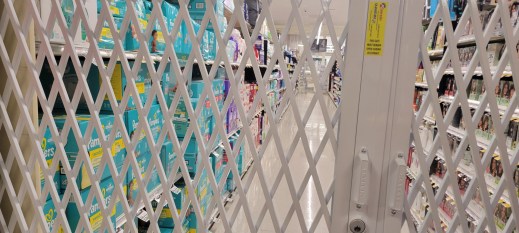
There were gates on a few of the aisles. Posted signs mentioned that the aisles would be closed after 7 p.m. and that customers could request they be opened. I was sure I knew why the gates were there, but I asked a store employee anyway. As I expected, he answered, “Too many people stealing.”
These kinds of gates are old news in many parts of the country. In most drug stores and convenience stores, high-theft items are already under guard, with alarm-trigger glass cases housing razor blades and cold medicine.
Over the past year, I’ve seen more shoplifters apprehended at this store than in the previous 10 years combined. In one case, there weren’t enough store security people to apprehend two men who had massive helpings of chicken hidden under their clothes, so the one lone guy made sure they dropped what they were stealing before letting them walk away. The would-be thieves sauntered through the parking lot, completely unconcerned that they would be arrested, not caring who saw them.
Across cultural and political divides, there is a sense in the U.S. that as a society, we are going out of our way to tolerate the intolerable. The percentage of the population that commits crimes may be small, but the gates on grocery aisles is a way that we all pay.
Everywhere the world around us bears the marks of our acceptance of the unacceptable and designing our environment in ways that are an acquiescence to societal problems. Park and subway benches have awkward dividers and ridges to prevent homeless people from sleeping on them rather than allowing people to sit on them comfortably. Many fast-food restaurants have no public restrooms, lest they attract homeless
In many ways, these elements of design indicate that we’re failing collectively. We are accepting the unacceptable because we don’t see a way out and we don’t feel a collective responsibility to the world around us. A collection of forces has chipped away at the collective “us.” When there is no “us,” no “we,” there’s not a common glue to the everyday world.
When we don’t feel connected to the community around us, we don’t take action to improve that community. People aren’t working together to solve their common problems; they are doing what they can to keep themselves away from the worst parts of the herd. They are covering their asses, and doing only their part.
People are starting to resist this spiral of decay. Customers are stopping shoplifters on their own when store employees are not allowed to. Even at my local grocery store, the last time I asked for the gates to be unlocked so I can buy some soap, the store employee told me that the gates were already unlocked, and that I should just close them behind me when I left.
Slowly but surely, if we regain our collective will, we can reverse our decline and make this design of decline a thing of the past.
Back on the hunt

I have been hunting for about a dozen years and have three deer to show for it, but I don’t regret a minute of hunting. As my friend Steve reminds me, “A day in the woods is a good day.”
This past deer season was my first back in the woods since the pandemic, and in the past decade I had exactly two deer to my name, both button bucks (male deer with no antlers). These were great personal victories but small potatoes in the world of hunting. Some of these years of hunting consisted of only one day on a weekend; another year I went both bow hunting and several days of gun hunting and still came out of the woods empty handed.
The world and personal upheavals of the pandemic and post-pandemic life made it imperative I get out of town and spend time alone in nature. I took the days off from work and hoped beyond hope that I would be able to do it—past years and past jobs I’ve had to cut my hunting trips short and work on days I had planned to take off, an unpardonable sin in the real world if the real world worked right. But this year I managed to do it.
I go hunting in Connecticut. My Connecticut friends got me into hunting and it’s where I keep my shotgun (I don’t have a permit for a gun in New York City—getting a permit for a gun in the five boroughs is more expensive than buying a gun). There are also more plentiful woods in Connecticut.
Heading to Connecticut also means connecting with old friends. I remember when my friend Steve’s oldest daughter was still in utero; now she is acting in films and planning her first tattoo.
The night before your first day of hunting is a poor sleep; memories of past missed deer and the prospect of returning empty handed weigh on your conscious, preventing the restful night’s sleep you want. Alarms set for enough time to get into the wood before legal hunting time, which is one half hour before sunrise.
Hunting makes you get up at a crazy early hour of the morning on your day off from work when everyone else is asleep. I found it’s possible to forgo the morning coffee. The frigid air and the urge to get out hunting is an effective wake-up of its own, and the surge of adrenaline at seeing a deer (or what you think is a deer) is enough to keep you awake through the day.
After having some quick snacks for breakfast and drinking a can of soda for the caffeine, I dressed and forced my feet into hunting boots, gathered my gear, and headed out. I first had to defrost my truck—first frost of the season and I didn’t think I would be scraping my windshield that early into November but it was New England in the fall. Another pickup truck sailed by on the dark road as I was getting the truck ready—Are they going hunting also? Will they get a better spot by the side of the road, and do they know my favorite hunting spot? My fears were unfounded. I drove to the entrance to the Cockaponset State Forest and was the first one there. I walked into the woods alone, wondering how odd a spectacle my truck with New York license plates would be for local residents driving by or heading into these same woods to hunt.
Out in the woods, it’s sometimes hard to focus on finding deer so early in the morning and not marvel at the beauty of the forest in the early morning, pre-sunrise light. Human beings are not meant to be boxed in by glass and concrete. We are of the Earth, and we diminish ourselves the more we remove ourselves from it. Being surrounded by natural beauty is a human need; just being within view of a river can make sitting in a city office much more bearable.
Being in the woods is the drastic reset your body needs. But the marvel at the natural world wears off a bit as the sun comes up and the imperative to get a deer kicks in. This is why you are here: you don’t want to return empty-handed even if you are getting much-needed time in the woods.
When you hear gunshots going off around you—some closer and definitely in the same state forest, some farther away on private land—the urge of the hunt surges again, and you get more restless. This is where I have erred in hunting. Staying in one place for so long and not seeing any deer gets the wanderlust going, and powers up your self-doubt on how well you’ve selected your hunting spot. Did I pick the right spot? Why are other people finding deer so close by and none are coming here? Did I make too much noise? Are there better hunting grounds elsewhere I can get to?
On my second day of hunting, I caught this wander bug and decided to see if I could find better places to hunt. The upside is that I found a good spot; the downside is that I walked around too much and the one deer I saw that day was one I scared away by hauling myself through the leaf-crunching woods. I also discovered an old illegal hunting camp set up on public land, a big no-no. It looked like it hadn’t been used for a while, with man of the structured dilapidated or filled with water and leaves.
Finally settling in on a spot at the end of the second day, I heard the sound of running feet and saw a dog chasing a deer through the woods. A large white dog was barking and giving chase, and my heart raced as I aimed at the deer that was heading my way. As it got closer, I realized that this fast brown animal was in fact another dog; the sound of its collar jingled as it got closer. I lowered my shotgun and cursed whatever idiot owner let their dogs loose in the woods during deer hunting season. The rest of hunting that day was quiet save for the sound of those dogs, who likely chased away any deer that would have come my way. That day was another wash.
You realize how much of a city person you are when you go out into the country and do country things. What do you mean a supermarket closes at 9 p.m. on a Friday? Closed on Sundays? Are these people insane? I drove to Robert’s Food Center, a supermarket where I had my first on-the-books job for less than $4 an hour (not as horribly cheap in 1987) only to realize that they carried no Pepsi products at all, so I had to drive to downtown Madison’s Stop & Shop to stock up. I later messaged Robert’s to ask why they carried no Pepsi but have not yet heard back.
Every time I go hunting, I’m reminded of the sweat and grit and cold that goes into it, and how I quickly forget about this rough unpleasantness the rest of the year. Before I made hunting a regular event, I had a romanticized view of it. I dreamt of expansive adventures where I would collect large trophies and other relics from my travels in the wild. I fantasized about being some kind of contemporary Hemingway and shooting exotic game and then retiring to my tent to sip brandy and draft powerful novels. In reality I mostly return with sore muscles, cuts and scrapes from brambles and thorn bushes and a pile of muddy clothes.
On my last day I parked myself at a spot I had found earlier that I named Anunnaki Rock. “Anunnaki” is a name given to a race of extra-terrestrials that conspiracy theorists credit with helping build the pyramids or creating or cloning human life on our planet. This spot features a large boulder shaped like a large alien’s head. A tree has fallen on it, so it appears that the alien is being smacked in the face with a baseball bat; a sad but fitting metaphor for how we would treat intelligent life on our planet.
When I got there, I kicked leaves out of my way so I could pace back and forth soundlessly throughout the day. There was a natural ledge I could sit on and still get a nice, elevated view of a good swath of woods, but my area of coverage was greater standing and I stood and paced around most of the day.
The day remained cold and at certain times of the day I heard gunshots going on elsewhere in the woods; it sounded like everyone was having better luck than me. I paced relentlessly but quietly. Around 2 p.m. that afternoon, Steve texted me to ask if I’ve seen anything. I had not, and told him that I was considering coming out of the woods early and getting a head start on the drive home. Steve said he was going to go into the woods for the last few hours of hunting. I figured that if Steve was going to hunt until the end of the day (hunting ends at sunset, which is usually around 4:30 p.m.), then I would hunt also.
A half hour later I heard one of those blasted dogs again, I kept looking in the direction that the barking was coming from, on the chance that the barking was sending a deer my way, and if not then maybe to give its owner a piece of my mind if they were heading my way.
A deer bounded in my direction from the sound of the barking, and I raised my shotgun. It saw me and stopped short. I found it in my scope and pulled the trigger.
A shotgun blast is loud and unless you go shooting frequently you do not get accustomed to it. The deer took off and ran past me. I thought my race to get zeroed in on the deer again caused me to miss, I watched the deer head past me about 30 yards and then come to a stop. The buck stood there for a second and then fell over.
A sense of glory and relief washed over me. My hours of cold frustration in the woods had paid off; I had done it! I got a deer.
It’s customary to give the deer time to make sure it has died. That is both respectful and practical. Respectful in that you let the animal be alone in its last moments, surrounded by the woods rather than probing hands of our alien human race. Practical in that if you approach a deer that is dying, it will sometimes get up and run away for a bit in a panic fueled by a last rush of adrenaline, or, worse yet, gore you with its antlers. After at least 10 minutes of the deer not moving, I slowly made my way toward where he had fallen. Approaching it from the back (the customary practice to avoid startling a deer that may still be alive), I confirmed it had died. It was an antlered buck that would be a four-point deer but one of its antlers had been damaged. Nothing you would have mounted but it was another buck, and I was proud of getting it. I set about field dressing it.
Again, a reminder from my friend Steve about the post-shooting part of the hunt: “Everything from pulling the trigger to eating it on a plate is a pain in the ass.”
Field dressing a deer means removing its internal organs. It had been six years since I had shot my last deer, which was only the second one I ever got, so I still feel new to field dressing. But despite my confusion and frustration, I managed to get the deer field dressed and was ready for the worst part of hunting: the drag.
I was deep in the woods on the far side of a ravine split by a stream. The majority of my drag was uphill, and I also had to carry my shotgun and backpack out of the woods also. The drag started fine since I was going downhill, though there were brambles and prickers that could not be avoided. I had to drag farther than I thought in order to get to a part of the stream that was shallow enough. I carried over my gun and pack first—the backpack is blaze orange so easy to see—and then brought the deer. The deer got heavier since it now had water weighing down its coat. I was going uphill now. I took the gun and backpack and scouted ahead a bit, finding the path of least resistance, then walked back and dragged the buck to my gun and backpack. Through more brambles, scraped by a low-hanging tree branch, and over a stone wall, each more tiring and frustrating than the next. I kept this pace up and took my time so as not to throw out my back or trip and fall (dragging a deer out of the woods with a broken ankle or sprained back wasn’t going to happen) and feeling every one of my 50 years.
Throughout the drag I banked on things becoming much smoother once I finished the uphill portion and found the main path that I would take to get back to my truck. A deep sense of relief washed over me when I reached this path. There was still a long way to go. I changed methods again and put the backpack on my back, taking an antler in one hand and the shotgun in another and went faster that way. That became very tiring and then impossible to navigate around the ruts and puddles that dotted the path. I kept taking my time and taking frequent breaks. At one point while dragging the deer to the next stop I tripped over a small rock and fell backwards. It was past sundown now. It was 2:30 when I shot the deer, it was close to 5 p.m. by the time I got the deer to my truck, with my friend Steve helping me drag the deer the last 20 yards or so. We got the deer into my truck and headed back to Steve’s house.
Hunting has been the adventure I need more than the adventure I had envisioned as a younger person. I had dreamed of hunting as a manly affectation that I would indulge in on my way to being a literary icon, surrounded by dashing young flappers and a devilish halo of cigar smoke. I wound up downing Diet Pepsi in my friend’s shack, taking puffs of a store-bought cigarillo, but could not have felt better about life.
Here’s to the hunt.
Strength and creativity in 2022
We entered 2022 in a state of sickness but also with a determination to reenter life with meaning and determination.
I sat on a couch with a plastic cup full of soda and a non-alcoholic sparkling grape juice as the giant Waterford crystal ball dropped in Times Square on television. The children that wouldn’t to go sleep were there, getting to see the real ball drop and real New Year’s Eve countdown despite our efforts to get them to bed at a decent hour.
What would have normally (is there even a proper normal anymore) been an easy, low-key get together took several rounds of COVID testing across three or four households to make happen. So many events were canceled and postponed I didn’t think our small gathering was going to happen until we were on the road to upstate New York (update New York as defined anywhere north of the Bronx-Westchester border).
Good food and good conversation made for a fitting end to 2021. Everyone’s other plans were canceled, and this was what we could do, but we pulled it off anyway. All of my Double Satanic Deviled Eggs were eaten, and everyone survived the night.
Having left the drinking life many years ago, I missed out on some of the revelry but also missed out on all of the danger and hangovers. But the next day, the first day of the year, was spent eating, driving home, and unpacking from a brief overnight stay.
The year may see things get worse before they get better, and with so many false ends-in-sight to the global COVID pandemic, anyone who ventures a guess is foolish. But…
Between fatigue at the length of this pandemic and disgust at the lacking leadership in fighting the Coronavirus plague, people are determined to live again in 2022.
This year will be one of continued challenges and changes. No one knows what the dawn of 2023 will look like, but the next 360+ days are going to be busy getting things settled and starting new chapters.
There is new music to be made, new books to be written, new lives to rebuild.
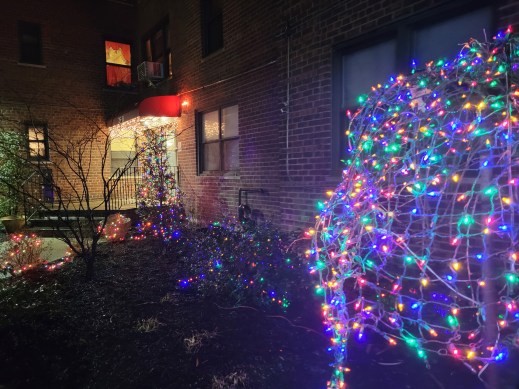
The holiday lights are still shining throughout New York City; we will let them burn as long as we can. We need reason to celebrate, and we’ve been cheated out of a second holiday season.
And so, we are ready to get living again and forge into whatever new normal we can shape. There is no time to waste; we’ve lost too much time already.
Let’s start.
Quarantined for Christmas
New York is aglow in holiday glory. Within walking distance of my home are houses and apartment buildings adorned in beautiful lights and holiday displays. Midtown Manhattan is deluged with the stunning accoutrements of the holiday season, and parts of the outer boroughs and the suburbs have homes that take yuletide cheer to new heights.
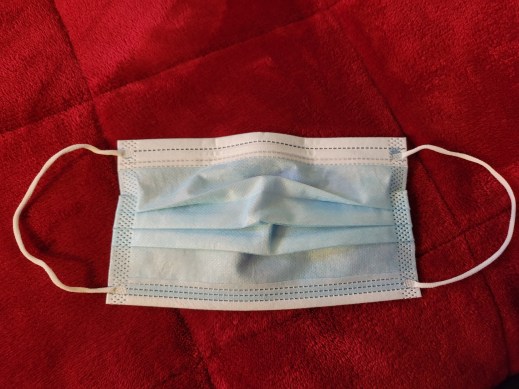
And New York and the world are in the throes of another pandemic surge. Despite being vaccinated and still generally cautious, I’m quarantined in the bedroom of my apartment as Christmas approaches, testing positive for COVID-19 for the second time this year. The whole family had it in February, luckily the rest have tested negative. I’m sequestered in my bedroom and my 10-day Coronavirus quarantine ends two days before Christmas.
This is the second holiday season in a row, at least here in the Northeast, that has been disrupted by this global pandemic, and I share in the fatigue of constant waves of variants, surges, and arguments over masks and vaccines. The COVID pandemic has become a pathetic Greek alphabet soup with everyone going through the motions until the next surge or the next new variant.
For most of the country, COVID doesn’t impact daily life until it does. A few months ago, hospitals in Georgia were so flooded with unvaccinated COVID patients that one of my stepbrothers had a tough time getting non-COVID-related hospital care he needed. The Delta variant surge failed to convince the population that won’t get vaccinated to get vaccinated. Much of the U.S.A. is already mentally past the pandemic, and rightly or wrongly, looks at our continued precautious and inoculations as a form of cultural snobbery.
Getting COVID a second time is frustrated, as I’m doing things by the (often changing and hastily re-written) book. I am fully vaccinated and have been going to places in the city that require full vaccination. I had a few cold symptoms and some general weariness, nothing I thought could not be knocked out with more rest and vitamin C. Then a coworker I had seen recently informed me he tested positive for COVID, so I took a home test that came back positive. The rest of the family got COVID tests at a clinic and tested negative.
I went online and scheduled a COVID test at a local clinic.
Arriving early to check in for my 1 p.m. appointment, I waited behind a woman boasting of her position as a pharmacist and carrying on an extra-long and unnecessary conversation with the desk attendant at the clinic; she kept asking the same questions and laughing and looking at the growing line behind her for some kind of validation and camaraderie. “I fill Z-Pack prescriptions all the time…”
The desk clerk was very patient and kept telling her they couldn’t register any more walk-in patients; there were people who had been waiting there since 10 a.m.
Once the verbose pharmacist moved on, I gave my name and my insurance card and ID, and signed my scribble on an electronic pad without seeing any version of what I was signing—the clerk told me what it was and to be honest, I rarely read these documents anyway—and I was told I would be called when my time comes.
I waited in my car for 45 minutes before I had to go back inside to use the restroom. While I was waiting for the restroom, more people showed up, looking for COVID tests. One man said he had driven in from Long Island, that this was the fourth clinic he had visited today, and that one clinic had told him to arrive at 4 a.m. He was going to travel soon for the holidays and needed travel clearance.
My call finally came, and I got my test in the forms of swabs up the nose; not as intrusive as the one I had in February, we’ll count that as progress. The doctor came in a few minutes later with my results. He was thorough but harried; he had seen about 50 patients before I got there and would see at least that many more before he left for the day. He confirmed my home test and gave the information I needed. I was soon on my way home, walking through a small crowd of people who had arrived at 3 p.m. to try to put their names on the new walk-in waiting list.
This isn’t the holiday season we wanted; we were supposed to be through this by now. When the initial outbreak happened in early 2020, we thought the upcoming spring and summer would spell an end to the lockdowns. After all, this wasn’t 1918, we have advanced technologically very much since then. But human nature does not change, and a deadly combination of partisan theatrics, bureaucratic ineptitude, and general boorish ignorance have kept this going.
I’m not sure what relief 2022 will bring. I have lost count of the number of times that I thought we were on our way to being done with the Coronavirus pandemic. I’ll remember to be thankful for the good health that I have—my symptoms are mild, and I will be through it before Christmas.
I’ll look ahead to the New Year with hope and the resolve to keep living life, no matter what the world puts in the way. See you there.
Happy holidays.
Hellish punk anthems for a decidedly sinful New York

This Halloween season finds New York City in a state of awkward transition to whatever post-pandemic world will eventually be shaped by the COVID outbreak, which continues to strut and fret its prolonged hours on the world stage.
Our city, the epicenter of the Coronavirus outbreak, is setting a template for recovery and establishing post-pandemic standards that make sense. It’s still a struggle in a lot of ways. Companies are struggling to hire enough workers to keep business going, while also struggling with return-to-office plans for a workforce that does not want to work in an office five days a week. “The Great Resignation” continues to churn as companies compete for workers at all levels and even entry-level positions can become bidding wars.
Public transit is far from being able to handle a return to normal. Our transit system was falling on its face before the pandemic, now bus and train routes are regularly canceled for lack of drivers and train operators. Crime and quality of life continue to be a persistent problem.
New York has always been a place where sin is welcomed and the need for law and order is informed, if not restrained, with the libertine permissiveness that has characterized our Gotham since Dutch times. But there is a need for balance. A law-abiding person should be able to walk down the street with an open can of beer, they shouldn’t be stepping over piles of homeless people and their rancid detritus on every corner, or robbed or worse on their way home from a night out.
New York has reached an imbalance; the tolerance for the night life and marijuana has been accompanied by a very real and dangerous rise in real crime. People find themselves being robbed by criminals that a few years ago would not have been back out on the streets from their previous arrest.
But amid this tumult, New York is working to return. While people are understandably in no hurry to return to offices, people want music, and theater, and art, and even want to watch sports teams like the New York Jets. These regular joys have been forcibly dormant by a historic pandemic, and should return with a historic vengeance.
So good news comes this Halloween season with the return of Green Hell, New York City’s Misfits cover band that has entertained dozens of people since 2004 (full disclosure: I have served as Green Hell’s bass player since their second show in 2004, giving me more rights to claim “Original” membership than Doyle of the Misfits). Green Hell has two shows lined up on Halloween weekend: one at Manhattan’s excellent Otto’s Shrunken Head and the other at The Shillelagh Tavern in Astoria Queens.
Misfits songs are fantastic anthems for any Halloween, and it feels very fitting that our modest band of middle-aged punk rockers get the band back together as the Coronavirus is (hopefully, for real this time) on its way out. They are fun to sing along to and not difficult to learn how to play. And no matter what nonsense the “Original” Misfits get into, these songs have stood the test of time.
Green Hell was last seen in 2016, and two members who live far out of town are braving the skies to fly back to New York for two shows. In true Green Hell tradition, we will have time for only one rehearsal, and in true Green Hell tradition I can guarantee that absent of someone’s on-stage death, we will play a tighter set than the Misfits.
We’ll be in excellent company both nights with some of the best bands one could hope to share the stage with, and I will not be satisfied until Green Hell singer Marc Sucks shouts “Fuck the MTA” with Shillelagh owner Russ.
New York continues to suffer the effects of a global pandemic and domestic neglect. This Halloween, as it resists both the death dirge of disease and the growing savagery of its streets, it will have the sounds of raucous horror punk rock to voice its orgiastic rage against an uncaring world.
Whoa!
Doing our part to save The Strand
There are some places wherever you live that you take to represent an important part of your life. Maybe a restaurant where you always go or a movie theater where you saw your favorite movie for the first time. Whatever the reason, these are places that you sentimentalize, maybe sometimes to a fault, because you identify them so closely with good memories.
One of those places for me is The Strand Bookstore. It was one of the first places I frequented when I began living in New York City as an adult.
At some point on just about every weekend I had off (I had to work most weekends), I would make a visit to The Strand a part of my routine. I would never fail to come home with a big bag full of books, sometimes two big bags. Wow, Crime and Punishment for only $3.99—how can I not buy that?? At some point I ended up with two different paperback copies of Anna Karena and gave one copy to a friend.
The Strand would be buzzing with people and I would spend hours wandering its cramped isles. I had a routine of starting with browsing the outside cheap bins (books for as little as 48 cents; it would be a crime not to rifle through every row of books) and making my way through the store, spending most of my time in the fiction section. Years later, I got to meet my guitar hero, Steve Jones of the Sex Pistols, when he did a book signing event for his memoir ‘Lonely Boy.’
But like many parts of my early life back in the city as an adult; I frequented The Strand less and less. At the time of the pandemic lockdown in mid-March, my time in Manhattan mostly consisted of sitting at a desk in the financial district or midtown and then getting home to Queens as quick as I could. I would occasionally go to a concert or local punk rock show, but those got fewer and farther between. The Strand has a kiosk in Times Square close to my job’s offices there, so I would get a chance to buy some books and a ‘Make America Read Again’ refrigerator magnet. But I ceased being a regular customer.
With the pandemic comes rafts of closures of institutions we thought would continue to be with us, at least through the duration of the virus. This was supposed to be over by now, but we can’t get our shit together enough to contain COVID-19, so things are still ground to a halt.
Recently the owner of The Strand bookstore issued a plea for help from the public to save it from closing. People responded, lining up around the block to buy books at the fabled institution or ordering books online from its web site.
The Strand is a landmark, but being a landmark is not enough. Many friends point out that other important cultural institutions, such as CBGB’s, did not survive to see the pandemic. Other places with deep histories have also not survived.
And The Strand’s ownership has not been entirely forthright. Earlier this year the owner accepted $1 million in in loans and still laid off workers while buying millions in stock, including more than $100,000 worth of Amazon shares. The Strand made a public show of its support to progressive causes while turning a blind eye to the plight of its own workers, so an important part of the store’s natural constituency is either indifferent or hostile to its future.
But an institution can be more than the sum of its owner’s conduct. I have loathed how the New York Yankees’ ownership tore down the House the Ruth Built and treats its fans like absolute garbage, yet I cannot bring myself to disavow the Bronx Bombers. We can detest the people who run our country and still be patriotic Americans. Do we owe The Strand loyalty for all that it has given us, despite the lack of principles by its current owner? I feel a loyalty to this great bookstore, though I understand those that don’t.
I yearn to lose hours of time in a bookstore again; to get the warm ego boost of a Strand cashier complimenting my choices, to amble to the subway laden with more tomes that will add to the ever-expanding walls of books in my home. Those days cannot come soon enough. In the meantime, I will do what I can to help keep the miles of books going.
The reports of New York City’s death are greatly exaggerated
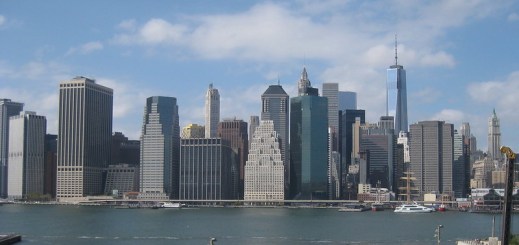
New York City’s obituary has been written many times. The latest declarations of Gotham’s demise harp on the current crop of problems but ignore New York’s ability to survive even the worst the world has to offer.
The current issues confronting NYC are for certain no joke. Our city was the epicenter of the global Coronavirus pandemic and its expansive economic impact and slow recovery continues to force businesses to close. Our vibrant nightlife and renowned theater district have been shuttered for months with no recovery in the near term. On top of that, we’ve seen a resurgence of crime and “quality of life” issues that harken back to the dark times of the 1970s and 1980s, replete with threats to lay off city workers including law enforcement.
It’s gotten to the point where a group of business leaders wrote a letter to New York City’s mayor pleading with him to begin addressing the crime problem and other issues of urban decay. Mayor Bill de Blasio began his first term promising to put a progressive spin on the successes of his predecessors; he will leave office an object of ridicule and a case study in how activist mayors consistently fail New York.
But as bad as New York’s problems are, they pale in comparison to problems that we’ve seen only a few short decades ago.
I first lived in New York City when I was born, and as a baby I lived on Sedgewick Avenue in the Bronx near Fordham Road. Not far from where I was living with my parents, landlords were routinely setting fire to their own buildings; cashing in the insurance money was more lucrative than renting apartments and the buildings were insured for more than they would have fetched on the real estate market. A few years later, New York’s Mayor Abe Beam famously appealed to President Gerald Ford for a federal bailout, as New York City was broke. ‘Ford to City: Drop Dead’ was the famous NY Daily News headline documenting his refusal to help.
A little over a century earlier, Union troops were drawn away from the battlefield of Gettysburg by the Draft Riots of 1863, which saw rampaging Irish mobs attack and murder Blacks, even setting fire to an orphanage. Even the most anarchic rioters of the current crime wave have not reached these levels of depravity.
I’ve been mugged and pickpocketed and gone through a year of unemployment to the point of having only a few dollars to my name. I have also played music on a stage that the Ramones made famous, had my family on cable television ringing the stock market’s opening bell, and seen some of the best concerts, plays and movies available to our civilization. New York is where I met my wife and where we raise our children and can show them the cultures of half the world by only traveling a few miles.
While the thought occurs to me to leave New York sometimes, the urge to stay is greater.
After the September 11 attacks, it became unpatriotic to flee the five boroughs in my opinion. It still breaks my heart that we have allowed religious lunatics to remake our skyline. But these failures of leadership do not make New York City less great, only more resilient.
The Roman Empire fell long ago, but Rome is still majestic and magical. New York was a force for the world before America became a reality. New York will survive the current malaise gripping America; it will survive until humanity dies out. New York City will be here forever.
RIP Walter Lure
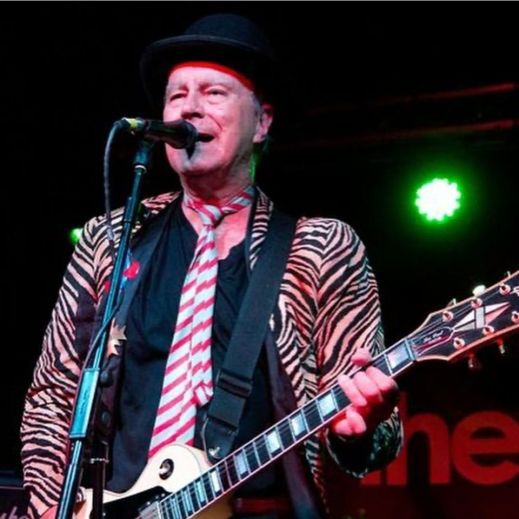
This year has seen the departure of some great musicians: Little Richard, Charlie Daniels, Neil Peart from Rush, Frankie Banali of Quiet Riot and W.A.S.P., Fleetwood Mac cofounder Peter Green, Power Trip lead singer Riley Gale, the list goes on.
Walter Lure’s passing is a loss that hits home for music fans, especially punk rock fans. Lure was one of the founders of The Heartbreakers, the band led by former New York Dolls Guitarist Johnny Thunders. The Heartbreakers were immensely influential in shaping punk rock. Lure helped write many of the band’s most famous songs and was part of the vanguard that brought punk rock to the world. After the Heartbreakers, he continued to play and record music with his own band, The Waldos. His musical virtuosity extended beyond his own groups as well. If you ever hear a guitar solo on a Ramones record, chances are Walter Lure is playing it. He was the one holding things down and singing lead vocals oftentimes when Johnny Thunders, addled by drug use, would nod off on stage.
Lure struggled with his own addiction, and recounted in an interview that an arrest for buying drugs on his lunch break and almost losing his job was what finally drove him to beat his habit. He worked in the financial world, running large clearing operations, and eventually retiring in 2015 from Neuberger Berman.
“The funny bit was that back in the 90s when I was in charge of all those people on the job, a lot of them would come to my shows and laugh at the fact that their boss was playing punk rock music onstage. My clothes closet had all my work suits and ties on one side and the other side had all the beat-up stage clothes. Dr. Jekyll and Mr. Hyde here you are!”
And here is another way in which Walter Lure continues to inspire so many musicians. The rock stars you see on the covers of magazines are an exceedingly small percentage of the people who are out there playing music every night. Most musicians who make music don’t make money at it and have to hold down day jobs to keep a roof over their head. Walter Lure was a big enough musician that if this were a just world, he would have had mansions all over the world, but he held down a day job and continued to make great music.
My band Blackout Shoppers got to play with The Waldos in the basement of CBGB’s 13, which was part of CBGB’s but not the more famous main stage. Walter Lure had played that main stage plenty of times and would later be one of the last acts to play when CB’s shut down a few years later.
He would have had every right to carry a massive rock star ego or bristle at the idea playing on a small stage in a basement with a bunch of unknown bands, but there was none of that from him. He showed up with his band and rocked, playing lots of the famous punk rock songs he helped write. He gladly took pictures with people who wanted to and hung around and chatted with everyone afterwards. He stayed true to the punk ethos to his dying day.
One of my friends whose band was on that same show commented, “We all got to play with Walter Lure, how lucky were we all??”
The world was lucky to have Walter Lure making music for so long. RIP and thank you Waldo.
Tribute in Light and the quest for normalcy
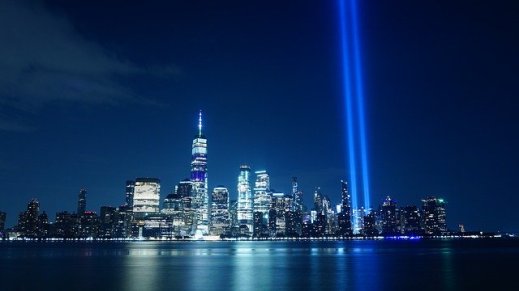
We are less than a month away from annual tributes to the September 11 attacks, and for a few tense days it looked like one of the most enduring traditions around the commemoration, the Tribute in Light—two columns of light projected from lower Manhattan close to where the Twin Towers were located—may not go on.
The National September 11 Memorial & Museum, which puts on the display, said it would have to cancel it over concerns for worker safety around the Coronavirus. The museum stated it didn’t have the financial support it needed to ensure the safety of the workers who would assemble and maintain the lights, and had made a contingency plan that replaced the traditional Twin Tower lights with other skyline observances on the night of September 11. There was a typical tabloid and internet-fueled outrage, and after securing funding promises from New York State, the museum reversed course and announced that the tribute will go on as planned.
It is a moving tribute that can be seen from the farthest reaches of the five boroughs and beyond: the night sky aglow with the ghostly shadow of our city’s loss. It is a sign of New York City’s resolve to create something beautiful out of tragic beginnings, and not forget the tremendous loss of that day even as we keep going.
Nearly 3,000 people died in the attacks; the largest loss of life in a single day since the General Slocum ship disaster of 1904. This past April, the death toll from the COVID-19 outbreak in New York City exceeded 4,000, surpassing the deaths from the September 11 attacks.
The Tribute in Light though, is additionally tragic because it also shines a light on our failure to rebuild properly. We have allowed Islamic fundamentalists to remake our greatest city. Every time we look at New York’s skyline, we see the work of murderous savages who thought Allah was commanding them to kill children and babies. I’m sure the new World Trade Center is a fine building; it certainly looks grand. But it’s not two Twin Towers. The Tribute in Light highlights our failures to stand up for ourselves.
When the towers fell, I thought for certain that our country would stand for nothing less than two new Twin Towers, maybe a few feet taller than the originals. That was the only proper rebuilding response to the terror attacks, and we made a hash of it.
The towers of light are what we have left, and the thought of not even having that was too much for some people. We cannot get people to wear masks and now we can’t pay tribute to September 11 victims because we cannot muster the resources to keep workers safe. If we can’t even shine lights into the sky, what has become of us?
New Yorkers have been living with the Coronavirus pandemic longer than anywhere outside of China. There’s a deep hunger for anything that is remotely normal. Any time we can safely do the normal human things we used to do; we’ll do it.
The Tribute in Light will be back this year; please think of those who we lost nearly two decades ago and the sacrifices so many made that day. It will be a moment of beauty in the midst of a lot of ugly.
 Matthew Sheahan
Recent Comments