
The mystery commuter on the QM20 bus

For about a year and a half, I have commuted to and from my job in Manhattan using an express bus, a more expensive but comfortable coach bus run by the Metropolitan Transit Authority.
Most of the bus drivers who drive these buses hustle to get us through traffic and make good time getting into Manhattan from the Eastern reaches of Queens. A meek or extremely defensive driver is going to fail at driving and express bus, and fail hard.
And that’s been happening recently in the early morning on the QM20 line. One driver I have not seen but only heard about, an older gentlemen, is a slow-paced driver that is content to hang in the slow lane of early rush-hour traffic while his passengers fret about reaching work on time. I have spoken with people who have stopped riding the 6:45 bus because they cannot get to work on time if they ride it. In fact, the 7 a.m. bus routinely reaches Manhattan sooner.
Because the driver of the 6:45 a.m. bus is such a pathetic slowpoke, passengers that used to take that bus now flood to the 6:30 bus. There are now at least three times as many passengers waiting at the bus stop for the bus I take, which means the other stops are all more crowded as well. I used to be able to find a seat all to myself with regularity, now it’s nearly impossible.
Yet still people insist on putting their bags on seats, even knowing that they’ll have to move them at some point. It’s a gamble on their part, they’ll possibly get the seats to themselves if enough passengers decide not to ask them to move. I usually make it a point to make these rude people move their bags, though if they are an exceedingly large person then I will often pass them by because I’m a large person also and then we’re both crammed into our seats seething and miserable. There is one rude fat bastard on my bus line who does this without fail and sits in corpulent luxury every day.
Sometimes I’ll choose people who are polite and thin because I’ll have more room. There’s a man who uses his time on the bus to sketch drawings and I feel camaraderie sitting next to someone interested in the arts, even if I never talk to him.
This past Monday however, there was a mystery man and I felt I had to sit next to him. By mystery man I mean someone who had a black wool hat pulled down all the way over his face. This was not a ski mask (aka balaclava), but just a hat that normally sits on top of the head and over the ears. He had it pulled down all the way over his face, so that his head was just one monolithic orb of woolen darkness.
I was appreciative of the aesthetic and felt a kinship to it. I often wear a ski mask when I perform in bands, and have enough ski masks at home to clothe a paramilitary battalion for a decade. So I sat next to this man. He was a bit spread out but I managed to get comfortable enough and read the news on my work phone. I didn’t want to see the man’s face, wanting his mystery to be kept for all eternity or at least until the weather was warmer and one would have to be psychotic to wear a winter cap. But no, soon after we rolled into Manhattan the man woke up and pulled up his hat revealing the countenance of a middle-aged commuter.
I don’t know where the man departed the bus. I got off at my usual stop at Herald’s Square and made my way downtown, hoping to engage with more of life’s mysteries as the day wore on.
The gritty oasis of Liberty Place

The Financial District in New York is known for large office towers of glass and marble facades of old buildings. It is considered the epicenter of the financial world.
Many of the large banking institutions that comprise the symbolic “Wall Street” are located in midtown now. And very little actual stock trading happens on Wall Street itself. Most actual stock trading happens on giant data servers in New Jersey. But the name is going to stay and new banks will move in to replace the old ones.
There is a charm to lower Manhattan that is missing from midtown and other parts of the island. The streets retain the narrow dimensions of the early Dutch settlers, and now they are lined with tall buildings instead of brick homes. The chaos of the streets is part of what makes it different. You have to know where you are going, and the logical numerical grid of midtown is choked off for good farther uptown at Houston Street. South of there, you have to know where you are going.
Lower Manhattan retains some of the old world charm of the early settlers, even though Manhattan today looks nothing like it did when it was New Amsterdam. You can still see remnants of Revolutionary War history and the days of our nation’s founding. If you are close enough to Battery Park, you can wander away from some of the tourists to the Korean War Memorial or one of the gardens that are quieter, or see working bee hives.
An additional charm to lower Manhattan generally and the Financial District in particular is the scattered network of small alleyways. When I first started working downtown, I had more time to take walks on my lunch hour and whenever I came across a small alley I had not experienced before, I had to walk down that alley. It still seems a sin not to.
Near where I work now is one such alleyway: Liberty Place. It’s among the alleys that populate lower Manhattan and serve as secluded getaways that are enticing for midday walks.
Forgotten NY points out that Liberty Place used to be called Little Green Street and dates to the era of the early Dutch settlers. People who walk or drive on the extremely narrow, one-way street are traveling where there once was a graveyard and Quaker meeting house.
I make a point to walk down Liberty Place whenever I can. It’s an oasis of old New York City grit in a scrubbed land of tourists and high finances. I often smell skunk weed and see people taking a break from work. The people who linger there are sharing a joint, drinking discreetly, or making a phone call away from the usual noise and bustle of the New York workday.
And even though I don’t drink or smoke weed I walk down this alleyway feeling I am among my people. I also would rather loaf and feel at ease and spend my days enjoying the random beautiful madness of our city streets rather than sit at a desk and answer emails for hours. I too should have stayed a rambling, impoverished poet looking for eternity in the eyes of strangers.
Liberty Place is just that, a place we can seek a breath of liberty even within a shadowy alleyway. I try to make it part of my daily routine, another way to get through the everyday and be a tourist in your own city.
The universal benevolence of a snow day

This winter has been a strange one for the Northeast and New York in particular. We’ve been absent the traditional snowstorms that usually blanket our area a few times each season. We had a slushy sleet in November that snarled traffic and quickly dissipated and a few snowfalls that failed to bring much snow volume.
This past Sunday night we had our most commonplace snowstorm yet, and the predictions were serious enough for New York City to cancel its public school classes that following Monday.
That Monday morning, with the full weight of a snowstorm having made its mark on our city, I decided to not have a snow day and went to work. The snowpocalyspe that had been predicted did not come to pass, at least not on the roads in Flushing. They were clear at 5:30 in the morning and I went through my normal routine and got to work in great time.
So many were taking a snow day, it served as extra motivation to make it into the office. I could have likely remained at home and few would have blamed me. The buses and subways were less crowded than they usually are.
Enjoying the relative quiet of the hushed urban snowscape, broken by the crunching of my office-appropriate rain/snow boots on the un-shoveled sidewalks, it was a harder walk to the bus stop through the crusted sludge.
A few years ago, a snowstorm that was raging through the night and into the commuting time of the morning meant that the office where I worked declared a “work from home” day. It was one of the most productive work days I have ever had. I managed to draft an 800-word op-ed that morning on top of all my usual work, and the lack of commuting hell made everyone generally happier.
The greatest snow day I ever had was in an April of my elementary school years, when there was a spring snow storm in the Northeastern U.S. and I got to take the day off from Catholic School. No more stifling white shirt and blue fake tie with the stenciled sEs (Saint Eugene’s School, Yonkers, New York) for the day. I waged war against my own blood kin and neighbors through snowball fights, barricaded into a snow fortress that numbed my hands and feet, and cherished respite in the warm caverns of our two-bedroom apartment.
Making it into work during a snow day is an easy way to prove dedication to your job without doing any extra work. There’s a saying attributed to Woody Allen that 80 percent of success in life is showing up. On a snow day that jumps to 95 percent. It feels good to be one of the few and the brave at the office when things are quiet. In a city as crowded as New York, you take your quieter times whenever you can.
With today’s technology, the central office as we know it is due for an overhaul. With public transportation unfortunately on the decline, people who live only a few miles from their job commute for more than an hour. That hour can be spent more productively at home, and employees will be happier. We can’t say the same for schools.
What I fear now is that a deep freeze coming later this week will create an icy menace on sidewalks and roads, including black ice that can be harder to see and prepare for.
But no matter what shape our school and office lives take, the allure of the snow day will not be completely gone. Whether you take it at home or elsewhere, enjoy the snow day.
Late Christmas trees are the best Christmas trees

My family puts up a traditional Christmas tree. Well, not that traditional. A truly traditional Christmas tree would be paraded through town and then set on fire.
But Christmas is a festive time of year, a time when our shared pagan heritage is proudly on display, albeit via the yoke of Christianity. And, godless as I am, I always put up a Christmas tree, a real tree. I can’t abide plastic shrubbery when the sweet green smell of the forest is so desperately needed by city dwellers.
I have friends who put up their trees before the month of December, and for me this is much too early. And we prefer to wait until at least the 15th in our family, as our girls’ maternal grandfather’s birthday is the 14th, and we do not want to cloud that celebration any more than it already is by holiday circumstance.
Right after Thanksgiving, temporary outdoor Christmas tree shops set up on sidewalks in parking lots, and shopping areas throughout the city. In Inwood, Broadway near 207th Street was my place of choice and the people who often manned that shop had come down from Canada. Some come from Pennsylvania or Vermont or New Hampshire. Last year we bought our tree in the shopping center on Linden Place and the Whitestone Expressway Service Road—not the most picturesque place to buy a tree but it got the job done and we went home with a nice tree.
Years ago when I was living alone in Ozone Park, I didn’t get around to getting a tree until Christmas Eve or the day before, and managed to get a $5 tree for $3. I tipped generously but never had that kind of luck again.
My three daughters and I set out on a mission to buy a tree this past Saturday, 10 days before Christmas. We drove to Douglaston, Queens, where a length of sidewalk beside a high church yard wall along Northern Boulevard was an impromptu Christmas tree store. We found parking down a side street and arrived at the tree stand to the sounds of Charlie Brown’s theme song being played over a PA system. The man who helped us with our tree gave candy canes to the girls. Within a few minutes I paid cash for the tree ($58, which is pricy for a tree but by New York City standards that’s a good deal), tipped the guy who helped us, and we were on our way back home.
Our Christmas tree has punk rock ornaments from awesome bands like The Spunk Lads, The Bullys, World War IX, Skum City, and (self-promotional plug here) Blackout Shoppers. And almost all of these come from Superfan Heather, New York’s best and possibly most prolific punk rock band photographer (her boyfriend, Admiral Yammomoto, would be a close second). These ornaments go on the tree every year, as do ornaments made my wife and her brother as children that date back to the 1970s.
Since three young children worked on decorating the tree, my wife had the foresight to separate the non-breakable ornaments and focus on using them to decorate the tree. We’ll have plenty of time to use the fragile ornaments when our girls are older.
With lights and a bit of silver garland, and a healthy heap of ornaments, our tree was ready pretty quickly. We’ll remember to water it and work to be worthy of its pagan heritage.
Amazon on the East River

The skyline of Long Island City is a glowering army of glass and steel. As the 7 train crawls its way into the Queensboro Plaza station, commuters see buildings under various stages of construction. Many of these are high-priced residential towers boasting views of the Manhattan skyline and closeness to one of the subway lines that run though that part of the city.
The housing boom has moved high tech professionals to Long Island City – it’s a short commute to Manhattan and is still plenty cosmopolitan and relatively young and new. A largely industrial area until things began changing two decades ago, there is still a lot of charm that sanctifies Long Island City with the Whitmanesque aesthetic lacking in Manhattan and much of the more popular areas of Brooklyn.
So it was with a twinge of disappointment that New Yorkers learned that Long Island City was going to be home to one half of Amazon’s “HQ2,” or second headquarters. The city government bent over backwards to bring Amazon to our teeming shores and actual New Yorkers are right to be pissed off.
Full disclosure: I am an Amazon Prime member and I have several books available for purchase on Amazon. The Seattle-based retailer is the goliath it is because it championed online commerce before anyone could make money from it, and they made online shopping easy. I know I can go to Amazon and knock out a good portion of my Christmas shopping in a matter of minutes. So while I may heap some well-deserved hate on the company for its tactics and practices, I can’t deny the company has earned its dominant place among online retailers.
But Amazon engaged in a very slick and underhanded game. Putting out the notice that it was looking to build a large second headquarters in an American city, municipalities fell all over themselves to woo the company. Cities and states handed over reams of data they hadn’t provided to any other corporate caller on infrastructure, industry, demographics and economic forecasts. Amazon has yet another leg up on any and all remaining competitors. More than that, Amazon fielded offers of tax breaks and other lucrative pledges that would embarrass Tammany Hall. And in the end, none of these overtures may have made a difference. The factors that attracted Amazon were there long before the overtures of tax breaks.
Long Island City in Queens, New York and Crystal City, Virginia were the big “winners.” What exactly did they win? In New York’s case its nearly $2 billion in lost tax revenues thanks to guarantees made to the company, in addition for helping to build a helipad.
New Yorkers didn’t exactly break out the champagne to learn Amazon was coming to Queens. 50,000 well-paid tech workers means that already high rents and real estate prices will go up even farther. It means our already overloaded and dysfunctional subways and commuter railroads will be getting that much more crowded. It means more crowded classrooms in public schools, a bigger scramble for resources, and an infusion of shallow West Coast tech culture in our beloved Gotham. The specter of the big tax giveaway had people agreeing that this era of corporate toadying on the part of our political leaders had reached its nadir, especially in a city and state run by Democrats. Even the conservative National Review, no bastion of corporate-bashing Commies, agreed with Democratic Socialist Alexandria Ocasio-Cortez that Amazon’s corporate welfare is wrong.
New York City doesn’t need to play this game. The city makes itself attractive by investing in its infrastructure and working to keep the standards of living high. That means we lock up criminals, keep homeless people off the streets and subways, and make sure those subways are no longer dysfunctional. That’s a lot we have on our plate, and we can’t afford to give away billions in tax breaks.
Let Amazon build its “HQ2” somewhere else if they don’t like paying their taxes. But don’t blame Amazon; New York and Virginia offered them sweet deals and it took them. Amazon didn’t make anyone beg them to come to their city. Our political leaders did that to us, figuring the win of wooing Amazon’s office was worth whatever Faustian bargain they had to make to get it done.
It wasn’t Jeff Bezos who sold New Yorkers down the East River. It was Bill de Blasio and Andrew Cuomo.
Punk rock’s champion leaves NYC
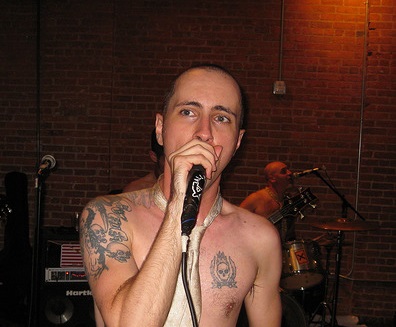
I knew it was a possibility; he had told me about the idea. But when I got word from Philthy Phill that he was leaving town I was still shocked.
Phill Lentz, better known to the New York punk rock world as Philthy Phill, is the singer for World War IX. He’s much more than that though. Over the 13 years he’s been in New York he’s excelled at stand-up comedy, writing, podcasting, concert organizing, and being a creative jack-of-all-trades that would be the envy of most Big Apple newcomers. He’s conquered New York City without losing the Midwestern disarming charm and good humor that drew some of this town’s finest musicians, artists, and comedians into his orbit.
I first got to know Phill when he was the lead singer in a band called Sexual Suicide. His singing style captured the necessary aggression of the genre while also displaying a keen sense of humor; a you-are-being-subjected-to-our-noise-but-we’re-in-on-this-together vibe. Bands with no sense of humor are miserable to watch. If you had any doubts about Phill’s take on things, the highlight of any Sexual Suicide show was when Phill would put on a Spider Man mask and sing a song about performing cunnilingus on Mary Jane Watson.
He came to New York City from the suburbs North of Chicago in 2003, following a girlfriend who had moved here. Three years later they broke up and he considered moving out of town at that point but decided to stay and drown his sorrows in punk rock.
Phill not only sings but also plays guitar and drums. Over the years he has served as the drummer for Joey Steel and the Attitude Adjusters, the Misanthropes, and toured Canada and Europe with the Scream’n Rebel Angels. I was fortunate to play with him in New Damage.
Phill wrote a book, a long-form short story, written from the point of view of a down-on-his-luck New Yorker who made a living as a Spider Man character for kid’s parties. It was a great read because it celebrated, among other things, the joy of the creative act. Read Self Poor Trait if you are down and feel jaded as a creative person, you won’t be sorry.
To top that all off, Phill worked the stand-up comedy circuit and played some of the top clubs like Caroline’s. And he co-founded the Dispatches from the Underground podcast.
Earlier on in my time in New York, I discovered the comics of Justin Melkmann through the New York Waste. I was so impressed that someone was doing a comic strip about the life of GG Allin, that I made it a point to go see the artist’s band, which was subtly advertised in each strip with a discreetly inked URL. Catching my first World War IX show at CB’s Lounge and meeting Justin was a turning point in my punk rock life. Blackout Shoppers have played numerous shows with World War IX and there’s nothing we like better.
A few years after I got to play my first show with World War IX, they were looking for a singer, and I and I’m sure a whole bunch of others called and told them to get Philthy Phill.
Having Philthy Phill join World War IX was like Beethoven coming back from the dead to conduct the London Philharmonic – it’s the supreme punk rock combination that had to happen. And it did.
World War IX entered a new period of productivity and creativity and produced some of my favorite songs over the past several years. I had the honor of playing a villain in a few of their videos, including the video for my favorite World War IX song, Cutlass Supreme. Phill’s acting chops earned him roles in other punk rock videos as well.
“Without a doubt, I will miss my World War IX and the friends I made playing with that band,” Phill told me. “We’ve toured many times, put out an envious number of high-quality music videos and some outstanding music to boot. Anyone who has partied with us at a show can tell how well we all get along because it comes across in what we did. Unrelated fun fact: everyone in the band has wanted to fight me at some point.”
Phill also met his wife among the punk rock fans that came to his shows. He and Erin married in 2012 and last year they had twin boys. While they excelled at making a family of their own, they have no other family in the area, at all. That, coupled with the high cost of living and the need for more space, was the deciding factor in making the move to Indianapolis.
Sometimes, the people who best embody the humor, creativity, and egalitarian grit of New York City find it is best to leave New York City.
There’s also a trap that New Yorkers fall in to easily, thinking that the world revolves around what happens in the five boroughs and believing that residing in the New York City area counts as an artistic achievement in and of itself. While surviving in New York is an accomplishment, we’d be kidding ourselves to think that any work of art is somehow automatically superior if it originates from an NYC zip code.
This Saturday, Philthy Phill will sing with World War IX for one last time at Otto’s Shrunken Head. My band, Blackout Shoppers, will be joining them, along with Controlled Substance. It will be a packed house and there will be lots of music, loudness and alcohol.
Phill hasn’t stopped being creative, and he’s already working on his next project, which he’s keeping under wraps for now.
While people will forever come from all over the world to pursue their creative dreams in New York City, the point is to keep being creative and live a good life while doing so. Great art, music, and literature can be found wherever there are people great enough to do great work, wherever the creative spirit ignites a spark that leads to more ideas, wherever there are people like Philthy Phill.
RIP Big Bertha, New York City’s punk rock pickup truck
When I moved to New York City to live as an adult more than 20 years ago now, one of the things I most looked forward to was being able to live without a car. The 10 years of being a car owner had been miserable. My first car broke down a lot and was finally consumed by flames in an engine fire. I replaced it with a 15-seat passenger van I purchased from an inebriated redneck in the back woods of Northeast Georgia. The van also broke down a lot. The drive shaft fell off on Highway 285 in Atlanta and I give it to charity in hopes of getting a tax write-off rather than try to sell it.
But time and life circumstances change, and six years ago my then fiancé and I decided to get a vehicle together as we were building our new life. I was playing a lot of punk rock shows at the time and we needed something affordable but that would carry a lot of musical equipment as well as be suitable for camping and hunting. We couldn’t afford much, but we managed to find something that fit the bill and was reliable at an affordable price: a full-length pickup truck that we named Big Bertha.
The name was an homage to my then-finance-now-wife’s great grandmother Bertha. It was also an alliterative reference to Blue Betty, an ill-fated blue van that I came to possess for several months and was able to use for only one punk rock show. Driving a barely-functioning van from Suffolk County to Brooklyn while having to shift into neutral at every stop to keep it from stalling out is a harrowing experience that builds character. How that van made it as far as it did is a miracle. We were never able to get it working and eventually sold it for scrap metal and got $300 for it, which didn’t fully cover what I had spent to insure it.
Big Bertha performed flawlessly for every punk rock show, every camping trip. When my wife and I went on our honeymoon, we drove Big Bertha to Maine. A missed highway exit took us through Lowell, Massachusetts, where we stopped by to visit Jack Kerouac’s grave (“You don’t look like typical Kerouacers,” the woman at the cemetery office told us, which we took as a compliment). When my wife was pregnant with twins, she found it convenient to use the truck. When our twins were born, Big Bertha enabled us to take our offspring home from the hospital safely.
Perhaps the greatest immediate benefit was ease of getting to shows with equipment when playing music. When my band Blackout Shoppers came home from playing Philadelphia and needed to blast some classic Whitesnake to the hipster-infested Lower East Side, Big Bertha had the power. When we did a short tour with Two Man Advantage, Big Bertha took us through the bitter cold. I somehow managed to park the nearly 20-foot truck in the East Village when we opened for Joe Coffee and 45 Adapters at Bowery Electric.
Driving and parking in New York City is not easy. It is especially difficult to do with a large vehicle. Where we live in Queens makes owning a car a bit easier, as street parking is possible and there are residential streets with more available parking than other places. Owning a vehicle as large as Big Bertha would be impossible in Manhattan and more popular parts of Brooklyn.
Our punk rock pickup truck persevered, until it didn’t. Its transmission, which was never 100%, began to decline rapidly over these last months. When I attempted to drive it to see SLAYER at Jones Beach, I had to quickly change plans and use the family minivan for the trip.
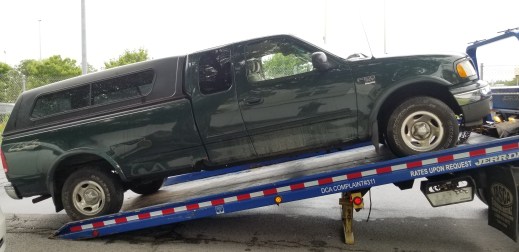
We had Big Bertha towed to our mechanic and the prognosis was not good. Bertha’s transmission was gone and it would be costly to replace. She had taken her last ride and it was on the back of a flatbed pickup truck.
Luckily, our friend Amy Jackson happened to be looking for a buyer for her Jeep Grand Cherokee, and we could not find a better person to help replace our truck. Amy is a photographer and adventurer. When a friend of hers was seriously ill a few years ago, she quickly organized and produced the Gentlemen of Punk Rock calendar to raise money. She accepted our offer and will be using the money to fund her trip to Antarctica. Amy Jr. will be part of our family and while she will never have the enormous presence of Big Bertha, she will be a lot easier to park.
Like many aspects of city living, owning a car is tougher here than elsewhere, but we find our ways to make it work. A decade ago I never thought I would own a vehicle again, and now I have two vehicles registered in my name. Wish us, Amy, and Amy Jr. good luck and smooth travels.
Dispatch from the Jersey Shore

A family tradition that began soon after we started our own family was to vacation with our in-laws on Long Beach Island. Traditionally we have gone after Labor Day when the crowds were smaller, but our kids starting pre-K in early September meant we had to brave the more crowded island during the height of the summer season.
Human beings have a need to feel the power of nature around them. Living in a big city has many advantages that cannot be replicated elsewhere, and I don’t regret making New York City my home for a minute. Where else in the world can you see Renoir’s By the Seashore, the New York Yankees, and No Redeeming Social Value all in the same day?
But a large city requires the conquest of nature on a large scale. Skyscrapers are their own majestic entity, they cannot compete for space with California Redwoods or the cresting waves of the Atlantic Ocean—my friends in the Rockaways do manage to surf in the Atlantic Ocean, miles away from these skyscrapers.
We lose something when we commit to living in a city, our awe is taken up by what mankind has achieved, and we lost the much-needed perspective of the power of the Earth itself. I believe that human beings need regular contact with nature in order to keep our minds right and in the general order of things. Being close to nature is the way human beings are supposed to be. We did not evolve from glass towers or produced in a sterile, state-of-the-art lab. We were born from the savages that evolved from organisms born of mud, shaped by our ancestors need to know and respect the murderously indifferent natural world around them. If we do not keep in contact with this primal truth in some consistent way, we lose our bearings and don’t function well. Though I have worked in Manhattan consistently for nearly two decades, I have always tried to walk through a park at least once a day in order to enjoy some greenery.
Long Beach Island is a tourist destination that does not put on airs of being otherwise. There are people who live there all year, but most of the people you seen between late May and mid-September aren’t from here. The island understands that it is a great destination that attracts people for its natural beauty and the accessibility of its beaches. There is a respectability that locals and tourists alike embrace their roles. There is a goodness and truth in that honesty. While you are here you can enjoy the arts at the Surflight Theatre and then enjoy singing waiters and waitresses at the Show Place Ice Cream Parlor.
But the miles of beach are what bring people here, and a trip here is not a success unless you spend some time on the beach.
While I try to stay out of the sun, I have learned to appreciate sitting on Long Beach Island and doing as little as possible. A few walks into the ocean though will give you an appreciation of the greatness and vastness of the ocean in front of you. An expanse of blue (that appears green when you’re up close) that stretches to the horizon.
Going deeper into the ocean, the current was more powerful and the water cooler. The power of this ocean, even at this calm period, was immense. You can’t help but be pushed and tossed around by the waves. A sting ray darted into my sight, close to a young boy on a body board but turned and was just as quickly out of sight. A tidal pool left behind dozens of tiny fish, numerous shells, and even a small live crab for children to marvel at.
Even when the heat is at its most punishing, the breeze from the ocean offers a cooling respite. Time moves quickly when you are away from the churning world of commerce and asphalt, and I must soon return to that savage expanse. I am grateful for the time I have here where the ocean calls the shots and people are united in their efforts to get away for a little while.
30 years after the Tompkins Square Park Riots
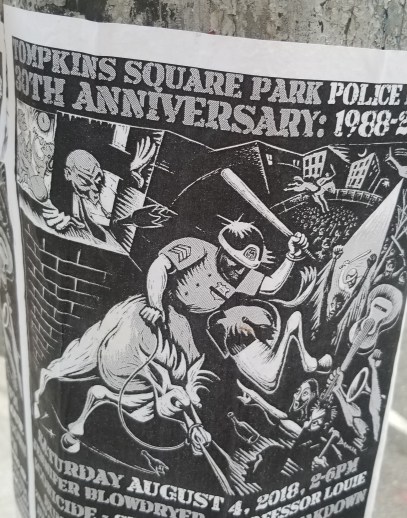
This weekend the East Village commemorated the three decade anniversary of the Tompkins Square Park Riots with two days of concerts and speeches in the once-notorious East Village park.
Protests over a 1 a.m. curfew of the park and eviction of homeless encampments there ended with multiple clashes with police and multiple instances of police brutality. It was among the first widely documented instances of police brutality caught on video and broadcast on the news. Angry protesters shouted dire warnings about gentrification, yelled “Die Yuppie Scum,” and vandalized a new apartment building. Police chased people down and clubbed them with night sticks. It was a low point in New York’s history but things would soon change.
I was an angry suburban punk rock high school kid in the late 1980s and I made it a point to go to New York and walk to Tompkins Square Park after the riot. While I made it there, I did not stay very long. The park was still a homeless encampment and drug-invested village of skels and squatters, even with the 1 a.m. curfew. I would walk along 8th Street and St. Mark’s after visiting a great record store called It’s Only Rock & Roll that did not survive to the late 1990s.
This year’s commemorative concerts included a reunion of Team Spider, a group I have long admired and followed that embody the best of the East Village punk rock ethos. For about a decade they had an elderly songwriter ZAK, join them for most of their performances. ZAK passed away in 2006. So I made it an imperative to get to the park to see Team Spider.
The fact that I felt safe enough to drive to the East Village in a minivan with my wife and three small children is testament to the radical changes that have affected the East Village in the interceding 30 years. Amazingly, I found a parking spot right alongside Avenue B. I parked right across the street from St. Brigid’s Church. The church has a storied history, including being used as a center for activists during the 1988 park protests. There is personal history there too. I was arrested for taping a flyer to a light post right on the corner outside the church in 2005.
We walked into the park between bands, and someone was on stage making a long-winded political speech. They had been there during the riots in 1988 and now the spirit of resistance was needed even more because Trump is a racist and in league with the Nazis and no borders and die yuppie scum and …I tuned out most of the rambling speech and instead said hello to friends that I saw there. Some of my friends that I know through music have not yet met my children, so it was good to introduce some of my punk rock family to may actual nuclear family.
Team Spider took the stage and rocked. Their brand of ska-infused, politically conscious punk rock is as relevant today as it was when they were performing regularly, and they even updated some of the lyrics to mention Donald Trump instead of George W. Bush. The concert was well attended – Choking Victim closed out the show after Team Spider – and evidence that the spirit of political protest has not been cleansed from our city streets entirely.
But by any measure of anti-gentrification politics, the yuppies have won in the East Village. There are only a few squatters left among the increasingly expensive real estate that have driven out much of the radical politics that fueled the protests. The 1 a.m. curfew on the park is still in effect and there’s a Starbucks where there was once a pizza place not long ago.
After we listed to Team Spider play, we brought our girls to a playground. I took a small detour to meet with old friends at the show, but soon it was time to go for ice cream. I am happy to report that Ray’s Candy Store is still on Avenue A and I and the family got to eat ice cream cones served by Ray himself. We found a bench in the park that was away from some of the homeless congregations that still take up a lot of space there and quickly ate the ice cream, though the summer heat made us all a mess. Soon it was time for home.
New York City has changed dramatically in the last three decades, and it wouldn’t be New York if it was any other way. We won’t always have the same punk rock bands to listen to in the decades ahead, but New York City will always be home to what is interesting.
Bidding a hellacious farewell to SLAYER

Big Bertha the pickup truck was not herself. My vehicle was over-revving, lurching, and I smelled something burning. I was afraid she wasn’t going to make the trip to Jones Beach. I picked up my friend Javier from downtown Flushing and headed back home, where we were able to use the minivan. Javier helped me take out the car seats to make room for Beast and Sid, and we headed back to downtown Flushing to pick them up. We got a late start, but we weren’t going to miss a minute of SLAYER.
Slayer has embodied the best of thrash metal for nearly four decades. Coming to the world in the early 1980s California, it mixes the rapid-fire, unrelenting aggression of hardcore punk with the guitar virtuosity of more traditional heavy metal.
Over the years, Slayer has become easy shorthand for aggressive music that rejects any and all self-indulgent niceties or attempts to soften its image. Years ago I was dating a woman who was destined to soon break up with me. Even though I was coming off a long period of unemployment I shelled out to treat her to a performance of Handel’s ‘Messiah’ at Carnegie Hall. One of my biggest regrets of that time was not screaming “SLAYER!!!” in the famous venue between movements. I would have enjoyed the performance much better and it would have brought that relationship to a quicker and more merciful end.
I’ve had the good fortune to see Slayer several times, including with the definitive lineup that included Jeff Hanneman before his untimely death in 2013 and drummer Dave Lombardo. “No Jeff, no Dave, no thanks,” was a refrain that some Slayer fans abided by in these later years, and I hadn’t seen them since Lombardo was fired in 2013 after disputes over money.
For whatever reason—and maybe being in the same band for nearly 40 years is reason enough—Slayer is calling it quits. If you needed another reason to pay to see Slayer again, this was it. They even patched things up with Dave Lombardo.
So on we rolled out to Long Island to see Slayer’s final show in the New York City area. Opening for these godfathers of metal were other excellent thrash metal veterans Anthrax and Testament along with Napalm Death and Lamb of God. The name of the concert venue there changes every few years to that of a different corporate sponsor, but everyone just calls it “Jones Beach.”
Jones Beach can be lacking as a concert venue. Even though I quit the drinking life long ago, it is an outrage that the amphitheater only allows alcohol in one restricted area with no view of the stage unless you pay even bigger bucks as a VIP. And the prices on concessions are ridiculously inflated. While I had enough cash in my pocket, I was not going to pay $5.50 for a bottle of soda that costs $2 elsewhere. Six dollars for a hot dog? No thanks.
But Jones Beach gets good shows. A lot of the big concert tours don’t come to the five boroughs. I asked the peanut gallery of social media why this is. The two biggest concert venues within the five boroughs—Madison Square Garden in Manhattan and the Barclay’s Center in Brooklyn—share space with sports teams for much of the year, so there are fewer concert dates available. Also, the city is more expensive and so much of a logistical nightmare it is easier to go elsewhere.
Forest Hills Stadium is a great place to see a concert. I saw The Who there a few years ago and it was a great show. It’s intimate for a stadium and it has the kind of food and craft beers that both younger and older crowds enjoy. That venue tends to more mellow acts (Van Morrison, The B-52s with Culture Club, Imagine Dragons) because it’s in a residential area and the people who own homes in Forest Hills probably aren’t very interested in listening to live thrash metal at 9 p.m.—their loss.
Whatever the drawbacks of Jones Beach, the Slayer show rocked. All the opening bands were good; no one disappointed. And Slayer played the best kind of farewell show they could have played. They closed with ‘Reign in Blood’ and ‘Angel of Death’ and then thanked the crowd for supporting them.
Someday we can hopefully make it easier for bands like Slayer to play within the city limits of our beloved Gotham more frequently. Music, and New York City, deserve it.
The crucible of summer in New York
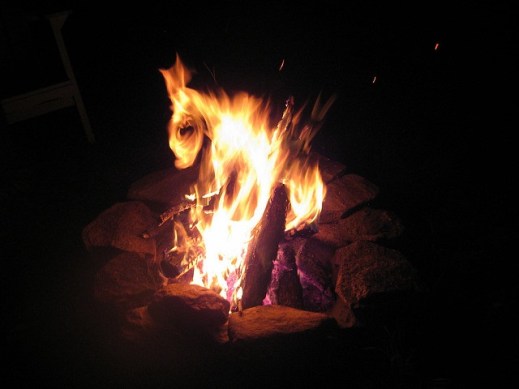
If hell exists, it borrows heavily from New York City in the summertime. The unescapable humid heat that is magnified on the sidewalks and amplified in the subways, the crowded aggravation of our crumbling infrastructure, and the general unrest that foments rage where there might normally be annoyance or resignation, are the central ingredients of our sulphuric summer stew.
New York goes into its Independence Day holiday in the midst of one of its heat waves. The general state of the country only adds to the humid misery, with half the country protesting and demonizing the other half at light-speed intervals, new Internet outrages generated almost by the hour. It’s a dizzying spiral downward in civil discourse that fuels a blanket disgust made more maddening by temperatures that bake an already exhausted brain.
This work week is interrupted by our Independence Day holiday on July 4. Imagine putting up with all the outrages of national politics today but without air conditioning and in wool clothes, and you’ll see why the colonies revolted. In New York City today, our country’s divided politics are writ large across the city. People who once enjoyed vibrant conversation on the state of affairs skip such conversations; it doesn’t pay to engage in civil discourse, even on a personal level.
This week we will get through our work week, hoping it will be easier with so many people using the holiday for vacation. The trains will be a little less crowded, the traffic a little lighter and the sidewalks will be blazing hot but not quite as mobbed. Tourists will walk downtown past where George Washington was inaugurated (New York City was America’s first capital).
Sometimes, even though I appreciate air conditioning, I have a moment when I leave a heavily air conditioned building and feel a sense of relief and satisfaction at feeling the blanket of humid heat cover me when I step outside. It is good to feel the real world on your skin, to embrace reality no matter how unpleasant, because that’s what we are destined to do.
That is part of our story. New York gives its residents all four seasons at full blast. You will be hot, you will be cold, you will feel the full force of nature’s fury and blessings, sometimes within the same month. On the first day of Spring, New York City had a snowstorm. I would have gladly endured many more if it meant we would be spared the stifling heat of the summer months, but I knew better than to think we’d have such a lucky trade.
The crucible of summer in New York makes for stronger New Yorkers and spurs our innovation, our creativity, and our own more quiet revolution. Some of us will “embrace the suck” as the military puts it, and barrel through the overheated times with a gimlet eye towards the future.
Our destiny means we move through this overheated season with a desire to embrace the heat, to dive into the fevered truth that others work hard to avoid or shout down. The hot weather will pass, and we cannot huddle in the air conditioning forever. We have nothing to do but have pride in ourselves as New Yorkers and live summer to the fullest.
Brown Bin Follies, and Why Composting is Not Just for Hippies Anymore
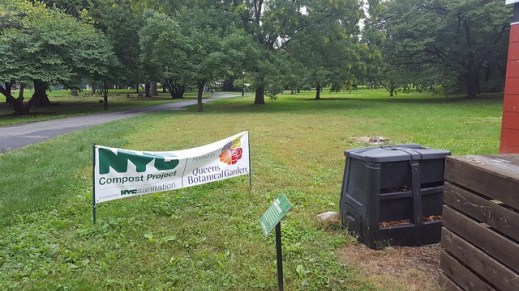
One of the odors that comprises the urban bouquet is that of garbage. The smell can be ubiquitous and is unmistakable, and the air of the hot summer months amplifies the oppressive stench when it sits uncollected for too long.
New York City has had recycling laws on the books for some time now, and while the success of the city’s recycling program is mixed—plenty of trash goes in recycling still, and the most ardent recyclers are homeless people who collect aluminum cans for the deposit money—recycling has wound its way into the everyday bustle of city life. It’s accepted as part of our routine.
The new frontier in responsible trash processing today is in composting: separating out the organic matter that can be used to create rich soil and put back into agricultural use. To this end the New York Department of Sanitation began a program that collects food scraps and yard waste to both promote composing and to help cut down on rats and roaches. The more edible food that’s in the garbage, the more vermin there will be to feast upon it.
But recently the Department of Sanitation halted the expansion of the program, saying it would focus on increasing adoption in those areas that were already in the program before expanding it. I can see why they did this. One could easily confuse these smaller brown bins for medical waste receptacles or for regular small garbage cans. No doubt people are adding their own manner of organic matter to these bins and probably making a mess of it.
Whatever the merits of the city’s program, you don’t need the Department of Sanitation to begin composting on your own. You can do it yourself and there are several organizations that will help you do it.
Among the enthusiastic composters in the city is my wife, who grew up in Eastern Queens and her family had a house with a yard when she was a youngster, and her family had a composting pile in their garden. She is one of the leaders of our local community supported agriculture program, Flushing C.S.A., and brings compost to a drop-off location at Queens Botanical Garden.
I was very skeptical of my wife’s plan to keep rotting food in our kitchen on purpose, but the composing has worked out so far and is easier to do than you might think. You can buy an inexpensive (about $20) countertop composting bin with charcoal filters to contain the odors. And the odor doesn’t get that bad, it actually smells like someone is trying to make pruno in your kitchen for a few seconds after you open and close the bin.
We have healthy jalapeno plants growing on our windowsill in containers filled with compost we got back from Queens Botanical Garden. Our basil plans, which make half our kitchen smell like a fancy Italian restaurant, are also growing in soil that is partly compost.
Why is this kind of thing important? Because we are running out of places to dump our garbage, with China recently refusing to handle more trash and recycling from other parts of the world. New York City ships much of its garbage out of state, but that is getting more expensive and it’s only a matter of time until that becomes unfeasible.
This kind of thing is smart to do. It’s for survival and the fittest people that are going to survive are the ones who can do more with less and organize to consume resources in a reasonable and sustainable way.
It would be easy to brush off composting as tree-hugging hippie nonsense, but it is not. Hippies are slackers who only want the trappings of conservation so they can feel good about themselves. Real conservationists and survivors are willing to do the hard work and build real systems to have the confidence in their future.
So embrace the rot and death of life to cut down on the rats and roaches and add more nutritious soil to our land. It is the smart thing to do.
The Oncoming Starbucks Conundrum

Life in New York City includes being on frequent scouting missions for public restrooms. Most subway stations did have some at one time, but those are now closed or off limits to actual paying passengers. If you live and have a social life in New York City, you will also likely become adept at public urination at a certain level.
Clean public restrooms are a sought-after commodity for people in the city. There are even mobile applications for smart phones that help people find the nearest public restroom. This phenomenon is not exclusive to New York, of course, but like everything else, it is more of an intense challenge here. There are too many people vying for comfort and ease in our Gotham, and breakneck competition for the good life means someone has to lose.
Starbucks was the subject of good-guy America’s two-minute hate a few months back when two African American men were arrested a Philadelphia location after using the bathroom and refusing to order anything. The Seattle-based coffee chain closed 8,000 of its stores in the U.S. this past Tuesday for “a conversation and learning session on race, bias and building of a diverse welcoming company.” One note: while it closed all of its “company operated” stores, its 7,000 “licensed stores” at airports, hotels, major grocery stores, and universities, remained open.
Maybe the whole mess could have been avoided if some of the people who objected to the arrests had bought the two men some coffee, but apparently the fight for justice is worth shooting video with your smart phone but isn’t worth springing for an $8 latte.
Outrage quickly spread and there were calls for boycotts of the ubiquitous coffee chain. I was way ahead of the curve before it became uncool to get coffee there. Starbucks injects unneeded pretention into buying coffee. I refuse to use its bogus jargon that calls a small coffee a “tall.” Just let me order a large coffee (which I never see on their menu; you have to know to order the “coffee of the day” if you want to get anything resembling a regular cup of coffee—please spare me that nonsense). I prefer to drink the free coffee they have at the office where I work. If I’m going to get coffee from a store, I’ll go to 7 Eleven or to any local corner deli or bodega, which usually have decent coffee and will be happy to take your money without putting on airs.
Just about everyone agrees that arresting people for loitering in a coffee shop is excessive. If police arrested everyone who went into a Starbucks just to use the bathroom there would be more Americans in jail than out of jail.
Starbucks’ continuing mea culpa included a public announcement that anyone can use any Starbucks bathroom at any time without making a purchase.
That’s both good and bad news. The good news is: If you are starting to get desperate for a restroom you know you can walk into a Starbucks and stand on the (now likely longer) line to access a legal toilet. The bad news is: Now everyone knows that. The company is going out of its way to welcome people who are not customers. When people can’t be turned away, the kind of people who show up are people who would normally get turned away.
This will make everything more crowded, and will also bring in more homeless people. This will get worse in the winter time, and if homeless people can’t be dissuaded from camping out there, customers will start turning away.
A few months ago, I met a friend for coffee at Grand Central Terminal, where they have tables and several coffee shops. The MTA has let the homeless problem at Grand Central get out of hand again, and while I was able to find a place to sit and have coffee with a friend, the presence of the homeless was everywhere.
Another issue that arises with unlimited bathroom access is that of drugs. We are in the midst of a drug use crisis that few have seen in their lifetimes involving opiates. Will Starbucks be the new injection site for addicts? The bathroom lines will be even longer when more people start overdosing in them.
One issue that’s become lost in this discussion is the welfare of Starbucks employees. Their jobs are tough enough, especially in light of this recent publicity, and they now have to clean up after a bigger swath of the general public, including more homeless and drug addicts. All official hand-washing aside, do you want someone who just cleaned a horrendous restroom to be handling your iced coffee and banana bread? Me neither.
If Starbucks becomes an overcrowded mess as America’s new homeless shelter or heroin shooting gallery, it will no longer be America’s preferred “third place.” Why shouldn’t people bring a bagged lunch when they visit the city and take advantage of the space, bathrooms, and free Wi-Fi at Starbuck’s? So what is the plan to counter the potential deluge of homeless and drug addicts?
I wish the chain the best of luck in navigating this. I will add them to my own mental list of available public restrooms, but only to be sought in desperate times, and I’ll try to buy something.
The Benefits and Dangers of Being in a Forgotten Zone
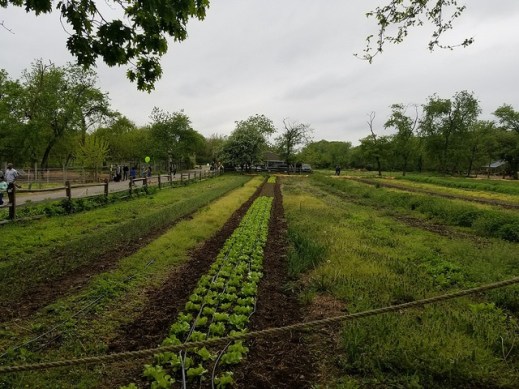
It’s frustrating when you live someplace that’s not on the map. It is doubly frustrating when you live in one of the largest metropolises in the history of human civilization and you find your neighborhood has been dropped from the map.
This phenomenon is well-known to anyone who lives far enough out of the popular centers of New York City. Manhattan maps might end mysteriously somewhere above or below 125th Street, and many tourist-centered maps of Queens don’t venture much farther than Astoria or Long Island City—not including the airports, mapped separately. Staten Island may have this the worst, as the most popular destination of their borough for tourists is the Staten Island Ferry Terminal. Staten Island wears its “forgotten borough” hat with pride; respect.
Even the “Not For Tourists” map guide that includes Flushing for Queens stops a few blocks away from the building where I live. That’s too bad for the not-tourists, since there are delicious 24-hour Korean barbecue restaurants not even half a block from where the map ends.
Living in a lesser-known area of the city has a lot of benefits. One is cost of living and small rentals, not necessarily home prices. People pay a lot of extra money to live in a neighborhood that is popular or sounds impressive or hip. That’s why realtors have developed bogus neighborhood names that reference more popular areas. A few years ago, “East Williamsburg” was realtor shorthand for Bushwick, but now even Bushwick has become a popular destination for gentrifying newcomers. Maybe East New York (a higher-crime area not blessed with any in-crowd interest thus far) will be called “South Bushwick” or “Jamaica Bay Coast” or something ridiculous.
If you’re not in easy walking distance to a subway, consider yourself in a forgotten zone. The prices will be lower but the commuting to work in Manhattan will be long and miserable unless you’re able to take an express bus or railroad and pay the extra money for the honor.
Also, being in a neighborhood that is a best kept secret is a bit thrilling. I lived in Inwood for a little more than a decade, and while it was frustrating to have to explain where I lived for that long, it was nice to experience all that the far north end of Manhattan had to offer before people found out about it. Now Inwood has all the trappings of an “up and coming” neighborhood including overpriced rents.
One drawback to living in a lesser-known neighborhood is the fight for resources. The political calculus that determines how money is allocated is determined by political power and opportunity, and if your neighborhood doesn’t have the cache to woo the powers that be in City Hall, you may be out of luck.
Local Flushing and Whitestone parents are trying to rally support to keep a Parks Department children’s program located nearby – the Parks Department wants to relocate the program to Kissena Park, about three miles south. A group has organized Families for Bowne Park and sought the help of local elected officials and is even planning a Kids Rally for Bowne Park on June 1st.
Bowne Park is definitely off the radar. It has a nice playground and pond, even some bocce courts. While in the past this may have helped the park stay a quiet gem in a local neighborhood, its success may have led enough of the wrong people to take notice and decide to move the Parks Department children’s program.
I wish this group all the success in the world, and while we may not always want to struggle for neighborhood recognition, we’ll go to the mattresses to make sure our area gets respect.
 Matthew Sheahan
Recent Comments