
Snowbound NYC feels the filth of winter
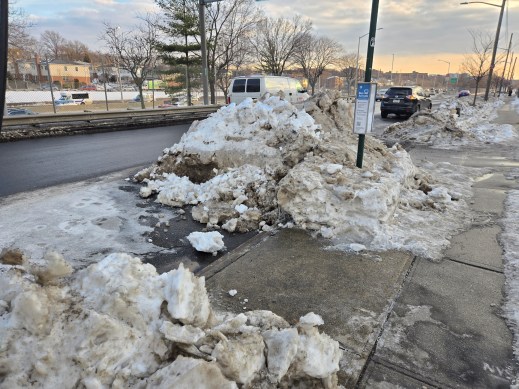
The Northeastern U.S. has become accustomed to mild winters over the last decade. Prior to the latest snow blizzard that pummeled much of the country, online newsreels were commemorating the 30th anniversary of the blizzard of 1996. Now we have a new milestone to mark in the history of the five boroughs’ struggles with snow.
The Northeastern U.S. had weeks of below-freezing temperatures immediately following an exceptionally large snowstorm. The usual melt that happens in the days after a storm hasn’t happened. I can’t remember any time in my life that so much snow sat around for so long afterwards.
While the roads may be cleared in theory, large snowbanks have turned two-lane streets into one-lane streets. Slippery snow and ice patches make driving in the city more dangerous than usual.
The sidewalks and crosswalks are in an even more dismal state. Plows push large quantities of snow into icy walls that solidify into chunky walls of hard-packed ice and snow.
The city’s Department of Sanitation continued to plow the same roads and did little or nothing about freeing up sidewalks, bus stops, and crosswalks. I recently stood behind a plow wall at a bus stop and watched a snow plow drop loads of salt on an already dry road while piles of filthy, frozen snow sat nearby untouched.
Even with the understanding that this was an unprecedented storm, the city’s response rates poorly. Long stretches of sidewalk, including those abutting public parks and city-run spaces, remain largely inaccessible weeks later, thin paths cut by the feet of harried pedestrians the only things working to clear any walking space.
Snow makes New York City look beautiful for about three hours. Snow in NYC quickly turns into a mosaic of street and sidewalk filth, collecting dog urine, car exhaust, and the varied effluvium that regularly pulses across our sidewalks and curbs. After several weeks, the hardened snowbanks sport a spattering of grotesque shame, rife with collected bacteria.
New York’s sidewalks and crosswalks, already a crowded place of give-and-take silent negotiations of movement, have become more challenging to navigate. Having a good pair of waterproof boots is paying big dividends, and I am trudging through frozen sidewalk tundra like an over-the-hill urban sherpa.
Warmer temperatures in the weeks ahead promise relief through melting snow, but city authorities should take stock of this storm and improve their response. In the meantime, New Yorkers are waiting for the Great Snow Melt of 2026.
The design of decline
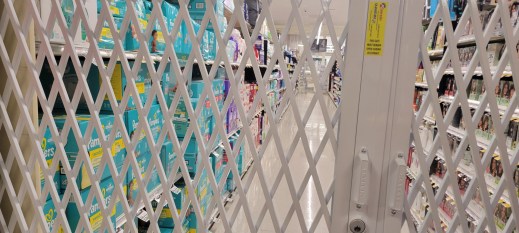
I was grocery shopping on a Friday night—I’m at an age when not only is that normal but admitting to it doesn’t bother me—and I noticed something new.
There were gates on a few of the aisles. Posted signs mentioned that the aisles would be closed after 7 p.m. and that customers could request they be opened. I was sure I knew why the gates were there, but I asked a store employee anyway. As I expected, he answered, “Too many people stealing.”
These kinds of gates are old news in many parts of the country. In most drug stores and convenience stores, high-theft items are already under guard, with alarm-trigger glass cases housing razor blades and cold medicine.
Over the past year, I’ve seen more shoplifters apprehended at this store than in the previous 10 years combined. In one case, there weren’t enough store security people to apprehend two men who had massive helpings of chicken hidden under their clothes, so the one lone guy made sure they dropped what they were stealing before letting them walk away. The would-be thieves sauntered through the parking lot, completely unconcerned that they would be arrested, not caring who saw them.
Across cultural and political divides, there is a sense in the U.S. that as a society, we are going out of our way to tolerate the intolerable. The percentage of the population that commits crimes may be small, but the gates on grocery aisles is a way that we all pay.
Everywhere the world around us bears the marks of our acceptance of the unacceptable and designing our environment in ways that are an acquiescence to societal problems. Park and subway benches have awkward dividers and ridges to prevent homeless people from sleeping on them rather than allowing people to sit on them comfortably. Many fast-food restaurants have no public restrooms, lest they attract homeless
In many ways, these elements of design indicate that we’re failing collectively. We are accepting the unacceptable because we don’t see a way out and we don’t feel a collective responsibility to the world around us. A collection of forces has chipped away at the collective “us.” When there is no “us,” no “we,” there’s not a common glue to the everyday world.
When we don’t feel connected to the community around us, we don’t take action to improve that community. People aren’t working together to solve their common problems; they are doing what they can to keep themselves away from the worst parts of the herd. They are covering their asses, and doing only their part.
People are starting to resist this spiral of decay. Customers are stopping shoplifters on their own when store employees are not allowed to. Even at my local grocery store, the last time I asked for the gates to be unlocked so I can buy some soap, the store employee told me that the gates were already unlocked, and that I should just close them behind me when I left.
Slowly but surely, if we regain our collective will, we can reverse our decline and make this design of decline a thing of the past.
Quarantined for Christmas
New York is aglow in holiday glory. Within walking distance of my home are houses and apartment buildings adorned in beautiful lights and holiday displays. Midtown Manhattan is deluged with the stunning accoutrements of the holiday season, and parts of the outer boroughs and the suburbs have homes that take yuletide cheer to new heights.
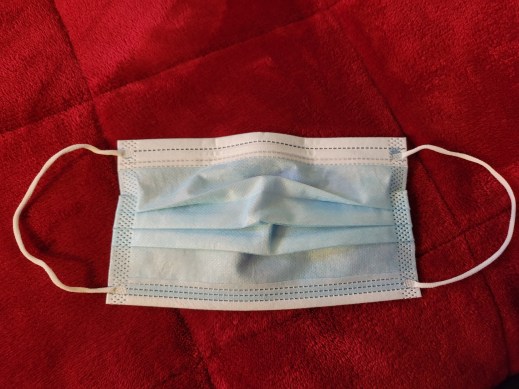
And New York and the world are in the throes of another pandemic surge. Despite being vaccinated and still generally cautious, I’m quarantined in the bedroom of my apartment as Christmas approaches, testing positive for COVID-19 for the second time this year. The whole family had it in February, luckily the rest have tested negative. I’m sequestered in my bedroom and my 10-day Coronavirus quarantine ends two days before Christmas.
This is the second holiday season in a row, at least here in the Northeast, that has been disrupted by this global pandemic, and I share in the fatigue of constant waves of variants, surges, and arguments over masks and vaccines. The COVID pandemic has become a pathetic Greek alphabet soup with everyone going through the motions until the next surge or the next new variant.
For most of the country, COVID doesn’t impact daily life until it does. A few months ago, hospitals in Georgia were so flooded with unvaccinated COVID patients that one of my stepbrothers had a tough time getting non-COVID-related hospital care he needed. The Delta variant surge failed to convince the population that won’t get vaccinated to get vaccinated. Much of the U.S.A. is already mentally past the pandemic, and rightly or wrongly, looks at our continued precautious and inoculations as a form of cultural snobbery.
Getting COVID a second time is frustrated, as I’m doing things by the (often changing and hastily re-written) book. I am fully vaccinated and have been going to places in the city that require full vaccination. I had a few cold symptoms and some general weariness, nothing I thought could not be knocked out with more rest and vitamin C. Then a coworker I had seen recently informed me he tested positive for COVID, so I took a home test that came back positive. The rest of the family got COVID tests at a clinic and tested negative.
I went online and scheduled a COVID test at a local clinic.
Arriving early to check in for my 1 p.m. appointment, I waited behind a woman boasting of her position as a pharmacist and carrying on an extra-long and unnecessary conversation with the desk attendant at the clinic; she kept asking the same questions and laughing and looking at the growing line behind her for some kind of validation and camaraderie. “I fill Z-Pack prescriptions all the time…”
The desk clerk was very patient and kept telling her they couldn’t register any more walk-in patients; there were people who had been waiting there since 10 a.m.
Once the verbose pharmacist moved on, I gave my name and my insurance card and ID, and signed my scribble on an electronic pad without seeing any version of what I was signing—the clerk told me what it was and to be honest, I rarely read these documents anyway—and I was told I would be called when my time comes.
I waited in my car for 45 minutes before I had to go back inside to use the restroom. While I was waiting for the restroom, more people showed up, looking for COVID tests. One man said he had driven in from Long Island, that this was the fourth clinic he had visited today, and that one clinic had told him to arrive at 4 a.m. He was going to travel soon for the holidays and needed travel clearance.
My call finally came, and I got my test in the forms of swabs up the nose; not as intrusive as the one I had in February, we’ll count that as progress. The doctor came in a few minutes later with my results. He was thorough but harried; he had seen about 50 patients before I got there and would see at least that many more before he left for the day. He confirmed my home test and gave the information I needed. I was soon on my way home, walking through a small crowd of people who had arrived at 3 p.m. to try to put their names on the new walk-in waiting list.
This isn’t the holiday season we wanted; we were supposed to be through this by now. When the initial outbreak happened in early 2020, we thought the upcoming spring and summer would spell an end to the lockdowns. After all, this wasn’t 1918, we have advanced technologically very much since then. But human nature does not change, and a deadly combination of partisan theatrics, bureaucratic ineptitude, and general boorish ignorance have kept this going.
I’m not sure what relief 2022 will bring. I have lost count of the number of times that I thought we were on our way to being done with the Coronavirus pandemic. I’ll remember to be thankful for the good health that I have—my symptoms are mild, and I will be through it before Christmas.
I’ll look ahead to the New Year with hope and the resolve to keep living life, no matter what the world puts in the way. See you there.
Happy holidays.
Hellish punk anthems for a decidedly sinful New York

This Halloween season finds New York City in a state of awkward transition to whatever post-pandemic world will eventually be shaped by the COVID outbreak, which continues to strut and fret its prolonged hours on the world stage.
Our city, the epicenter of the Coronavirus outbreak, is setting a template for recovery and establishing post-pandemic standards that make sense. It’s still a struggle in a lot of ways. Companies are struggling to hire enough workers to keep business going, while also struggling with return-to-office plans for a workforce that does not want to work in an office five days a week. “The Great Resignation” continues to churn as companies compete for workers at all levels and even entry-level positions can become bidding wars.
Public transit is far from being able to handle a return to normal. Our transit system was falling on its face before the pandemic, now bus and train routes are regularly canceled for lack of drivers and train operators. Crime and quality of life continue to be a persistent problem.
New York has always been a place where sin is welcomed and the need for law and order is informed, if not restrained, with the libertine permissiveness that has characterized our Gotham since Dutch times. But there is a need for balance. A law-abiding person should be able to walk down the street with an open can of beer, they shouldn’t be stepping over piles of homeless people and their rancid detritus on every corner, or robbed or worse on their way home from a night out.
New York has reached an imbalance; the tolerance for the night life and marijuana has been accompanied by a very real and dangerous rise in real crime. People find themselves being robbed by criminals that a few years ago would not have been back out on the streets from their previous arrest.
But amid this tumult, New York is working to return. While people are understandably in no hurry to return to offices, people want music, and theater, and art, and even want to watch sports teams like the New York Jets. These regular joys have been forcibly dormant by a historic pandemic, and should return with a historic vengeance.
So good news comes this Halloween season with the return of Green Hell, New York City’s Misfits cover band that has entertained dozens of people since 2004 (full disclosure: I have served as Green Hell’s bass player since their second show in 2004, giving me more rights to claim “Original” membership than Doyle of the Misfits). Green Hell has two shows lined up on Halloween weekend: one at Manhattan’s excellent Otto’s Shrunken Head and the other at The Shillelagh Tavern in Astoria Queens.
Misfits songs are fantastic anthems for any Halloween, and it feels very fitting that our modest band of middle-aged punk rockers get the band back together as the Coronavirus is (hopefully, for real this time) on its way out. They are fun to sing along to and not difficult to learn how to play. And no matter what nonsense the “Original” Misfits get into, these songs have stood the test of time.
Green Hell was last seen in 2016, and two members who live far out of town are braving the skies to fly back to New York for two shows. In true Green Hell tradition, we will have time for only one rehearsal, and in true Green Hell tradition I can guarantee that absent of someone’s on-stage death, we will play a tighter set than the Misfits.
We’ll be in excellent company both nights with some of the best bands one could hope to share the stage with, and I will not be satisfied until Green Hell singer Marc Sucks shouts “Fuck the MTA” with Shillelagh owner Russ.
New York continues to suffer the effects of a global pandemic and domestic neglect. This Halloween, as it resists both the death dirge of disease and the growing savagery of its streets, it will have the sounds of raucous horror punk rock to voice its orgiastic rage against an uncaring world.
Whoa!
Clawing our back to a “new normal”

Early in May, I returned to a company office to work for the first time since March 2020. The company I worked for at the time is headquartered in Times Square.
The earliest express bus that comes through my neighborhood arrived at 6 a.m. and it was at about half capacity—pre pandemic this bus would often be close to full capacity, even at that early hour.
Times Square is never empty, but the crowds did not meet the massive levels that were typical in the time before COVID-19. That will likely start to change as NYC declares a larger reopening. In the few weeks I’ve been working a few days in the office, the crowds in the streets have been getting larger.
New York’s reopening is picking up steam, there’s still a lot of damage assessment going on in real time. The go-to salad place across Broadway in Times Square I was hoping to visit shut down; luckily, the Times Deli on 44th near Broadway survived, as have several halal carts. But some places are gone and not coming back for a while, and those places that are open are in some cases struggling to find workers.
I switched jobs in mid-June and the company I work for is smaller and not pushing people back to the office. I usually go into the new office once per week, and that’s because I have band rehearsal in midtown Manhattan. This past week, I ventured into Manhattan after hours because someone at my new job is leaving, and there was a farewell party for him at a bar. It was the first-time meeting some of the coworkers I had been working with for three weeks.
Connolly’s Pub on 47th Street near Madison Ave. was doing good business on a Wednesday night. They were short-staffed but their harried waiters were working hard to keep up. I saw few customers wearing masks. More than two decades ago, I went to Connolly’s to see Black 47 ring in the Year 2000. If the Y2K threat—a threat that seems trivial and quaint compared to the problems of today—was going to wipe out civilization as we knew it, I was going to out with a pint in my hand and rocking Irish rebel tunes ringing in my ears.
And it may be many more months before I work in an office with any regularity with my new coworkers. The “hybrid” working model of combining home and office work should become the “new normal” of the post pandemic world. Things were headed in that direction before Wuhan bat stew threw the globe into a tizzy, and the model was proven during the past year and a half of lockdowns. Especially now as people see opportunity to leave their current jobs, companies are going to compete for workers and those trying to push people back to the office will be on the losing side when other things appear equal.
It was interesting from a corporate perspective to see how different companies handled the “back to work” question. More modern tech companies like Facebook quickly gave employees the option of working from home for as long as they wanted. It was more old-school companies like JPMorgan that have been pushing for people to come back to the office.
As before, cultural life is the vanguard of New York’s general wellbeing. If people feel safe enough to cram themselves into Broadway theater seats, we’ve entered the post-pandemic world. Broadway is reopening slowly, with different productions coming back at different times.
Free Shakespeare in the parks has returned to the Delacorte in Central Park and in Queens the Hip to Hip Theatre Company announced they have approval for in-person performances from Actors’ Equity and will be performing productions of Twelfth Night and Antony & Cleopatra. That’s good news for a city that needs it.
Live music is coming back as well. In May I went to the first live music show in nearly a year and a half at the Shillelagh Tavern in Astoria. The bands were great, and it was a catharsis to feel the blast of the music and see people I hadn’t seen in person in so long. I’m happy to report that Blackout Shoppers already have two shows booked for August. Every week it feels great to rehearse and make music. We were able to take our girls roller skating at an outdoor rink on Father’s Day at the TWA Hotel, where I actually used to go to work some days when it was still an airport terminal. One more outing in the emerging world.
There’s not going to be a sudden flip of the switch to reset our world back to normal; we’re going to have to work and scrape and put it back together ourselves. Our work is cut out for us, but it is underway.
A death in Whitestone

A mile and a half from where I live, at the same intersection where I’ve used the ATM countless times and taken my children for numerous fast food happy meals, a man was killed outside a bar after being punched in a fight.
A 35-year-old-man punched a man 20 years his senior. The older man fell to the sidewalk, striking his head; he was pronounced dead at Flushing Memorial Hospital soon afterwards.
The local news media picked it up because the assailant who has been charged with assault in the case is a New York City firefighter. Even though the person he stuck was dead, he walked out of jail a few hours later—New York City’s revolving door of justice works its magic. He claimed to be acting in self defense.
Whitestone is a more suburban area of New York City. It has a downtown area like that of a village you would find on Long Island or in Westchester County, and most neighborhoods consist of single-family homes. The affluent Malba area of well-heeled mansions is part of Whitestone.
While it does not have the cultural cache of Manhattan or the trendy panache of Brooklyn, I take heart on knowing that the Parkside Lounge a half mile away from me puts on great punk rock shows, and that Dee Dee Ramone once lived in Whitestone. It also has nice parks, good public schools walking distance from our home, and
There are many nice features of Whitestone, Queens, but it’s also a place where you will wonder how so many wretchedly stupid people manage to live in nice houses and drive expensive trucks. There is a bogus working-class posturing on the part of upper-middle class people here, a vociferous ignorance that cannot be excused by poverty combined with a shallow cultural posturing that consists of thickly pantomiming stereotypical New York mannerisms. Because they live within the boundaries of the five boroughs of New York City, they think they need to size everyone up for a fight even when they are buying groceries.
When you love something, its faults drive you all the crazier because they blemish something you cherish. That is one of the reasons why this death outside of a bar in one of the outer boroughs is more troubling besides being literally closer to home.
Though I left the drinking life more than a decade ago, I cannot deny the good times that they have given me and the central role they still play in cultural life. It was in a dive bars that I helped form punk rock bands, got ideas for poems, traded quotes from “Repo Man” with both financial journalists and bouncers. Dive bars are the respite that people have needed from their daily grind for decades, and dive bars in the outer boroughs is where you can find the soul of New York City trying to drink off its last hangover. I don’t know if they have good punk rock shows at juice bars and I’m not going to find out.
I remember being alone and living in New York City on my own for the first time and meeting a friend from work at the Wee Pub in Ozone Park one Saturday night and it was a rambling joy that made me feel like I was home. Years later, I met up with friends and toured all the dive bars we could fine in Hell’s Kitchen. I’ve spent countless hours in some of the seediest drinking holes in the city and regret not a minute of it.
So, if we’re ruining dive bars, we are ruining life. Our civilization will not function if people don’t decent, affordable places to drink.
New York City will survive and thrive again. If anything be sacred, let it be our dive bars.
Dispatches from the Secret Playground

Thanksgiving came and went with still much to be thankful for in New York, at least for my family. While a second or third Coronavirus raged through the city, our immediate family remains healthy and those in our larger family circle that have been ill have recovered.
Everyone in our family has food in their stomach and a roof over their head. Even before COVID-19 rampaged through the world there were billions of people who could not say that much, and that’s getting worse now. I am gainfully employed and have not been sick and have more than enough food; I am thankful.
New York perseveres, but suffers a crisis of confidence. While we were the first place in the U.S. to see widespread COVID infection and death, we were the first to “flatten the curve” with social distancing and masks. Now we’re having a critical relapse with a spike of infections. Schools closed, now are reopening again in a swift reversal of policy. Crime continues to surge.
And all the while, we see thousands of our fellow New Yorkers not taking their own lives seriously. A Hasidic group worked secretly to arrange a large indoor wedding, sans facemasks, and was given a slap-on-the-wrist fine. I go food shopping and see people who can’t wear a facemask properly going about their business in blissful, entitled ignorance.
Yes, we’re not supposed to be judgmental during these difficult times, but this pandemic has revealed just how many of our fellow human beings are unfit to breath the same air.
Having children in a city apartment can be trying during good times; it has been especially trying during this extended pandemic. What we have though is a place we call the secret playground. It’s not really a secret playground, but a little-used playground in a neighboring co-op that we’re not really supposed to use. The old fogeys that run the board where we live did away with the playground for our building years ago, so to use a local playground is to be an automatic scofflaw.
But I take my girls to the secret playground as often as I can. There are rarely other children playing there, so I can let my kids take down their facemasks, if our family is alone. Usually a few residents will walk through on their way to and from their homes, and we’ll put our masks back up as they come through; they are still almost always more than six feet away. It is an oasis that the unseasonably warmer November weather has given us access to and I don’t want to let a single good weather day go to waste as we endure another lockdown.
Sometime next year, we will hopefully begin adapting to a post-COVID world, and some things we will want to stay the same. I’m not alone in hoping that the world remains one where we’re given more personal space and take extra steps to reduce indoor crowds and make spaces safer, with better ventilation and more protections. These are good ideas outside of pandemics.
And therein lies the appeal of the secret playground: it is a respite from the current world and a model for how to best rebuild when we emerge from our currently dismal state. We cannot live in a bubble world, but we can look at our better adaptations of today to keep our joy and our priorities in line with where we need to be.
Doing our part to save The Strand
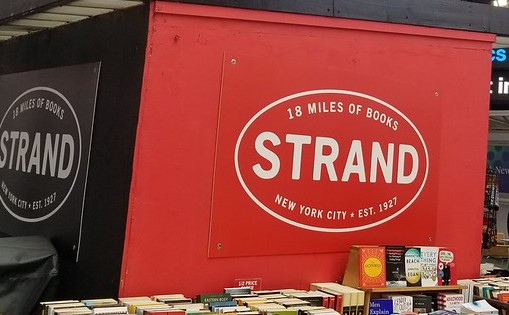
There are some places wherever you live that you take to represent an important part of your life. Maybe a restaurant where you always go or a movie theater where you saw your favorite movie for the first time. Whatever the reason, these are places that you sentimentalize, maybe sometimes to a fault, because you identify them so closely with good memories.
One of those places for me is The Strand Bookstore. It was one of the first places I frequented when I began living in New York City as an adult.
At some point on just about every weekend I had off (I had to work most weekends), I would make a visit to The Strand a part of my routine. I would never fail to come home with a big bag full of books, sometimes two big bags. Wow, Crime and Punishment for only $3.99—how can I not buy that?? At some point I ended up with two different paperback copies of Anna Karena and gave one copy to a friend.
The Strand would be buzzing with people and I would spend hours wandering its cramped isles. I had a routine of starting with browsing the outside cheap bins (books for as little as 48 cents; it would be a crime not to rifle through every row of books) and making my way through the store, spending most of my time in the fiction section. Years later, I got to meet my guitar hero, Steve Jones of the Sex Pistols, when he did a book signing event for his memoir ‘Lonely Boy.’
But like many parts of my early life back in the city as an adult; I frequented The Strand less and less. At the time of the pandemic lockdown in mid-March, my time in Manhattan mostly consisted of sitting at a desk in the financial district or midtown and then getting home to Queens as quick as I could. I would occasionally go to a concert or local punk rock show, but those got fewer and farther between. The Strand has a kiosk in Times Square close to my job’s offices there, so I would get a chance to buy some books and a ‘Make America Read Again’ refrigerator magnet. But I ceased being a regular customer.
With the pandemic comes rafts of closures of institutions we thought would continue to be with us, at least through the duration of the virus. This was supposed to be over by now, but we can’t get our shit together enough to contain COVID-19, so things are still ground to a halt.
Recently the owner of The Strand bookstore issued a plea for help from the public to save it from closing. People responded, lining up around the block to buy books at the fabled institution or ordering books online from its web site.
The Strand is a landmark, but being a landmark is not enough. Many friends point out that other important cultural institutions, such as CBGB’s, did not survive to see the pandemic. Other places with deep histories have also not survived.
And The Strand’s ownership has not been entirely forthright. Earlier this year the owner accepted $1 million in in loans and still laid off workers while buying millions in stock, including more than $100,000 worth of Amazon shares. The Strand made a public show of its support to progressive causes while turning a blind eye to the plight of its own workers, so an important part of the store’s natural constituency is either indifferent or hostile to its future.
But an institution can be more than the sum of its owner’s conduct. I have loathed how the New York Yankees’ ownership tore down the House the Ruth Built and treats its fans like absolute garbage, yet I cannot bring myself to disavow the Bronx Bombers. We can detest the people who run our country and still be patriotic Americans. Do we owe The Strand loyalty for all that it has given us, despite the lack of principles by its current owner? I feel a loyalty to this great bookstore, though I understand those that don’t.
I yearn to lose hours of time in a bookstore again; to get the warm ego boost of a Strand cashier complimenting my choices, to amble to the subway laden with more tomes that will add to the ever-expanding walls of books in my home. Those days cannot come soon enough. In the meantime, I will do what I can to help keep the miles of books going.
The reports of New York City’s death are greatly exaggerated
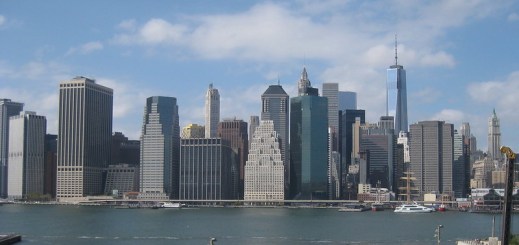
New York City’s obituary has been written many times. The latest declarations of Gotham’s demise harp on the current crop of problems but ignore New York’s ability to survive even the worst the world has to offer.
The current issues confronting NYC are for certain no joke. Our city was the epicenter of the global Coronavirus pandemic and its expansive economic impact and slow recovery continues to force businesses to close. Our vibrant nightlife and renowned theater district have been shuttered for months with no recovery in the near term. On top of that, we’ve seen a resurgence of crime and “quality of life” issues that harken back to the dark times of the 1970s and 1980s, replete with threats to lay off city workers including law enforcement.
It’s gotten to the point where a group of business leaders wrote a letter to New York City’s mayor pleading with him to begin addressing the crime problem and other issues of urban decay. Mayor Bill de Blasio began his first term promising to put a progressive spin on the successes of his predecessors; he will leave office an object of ridicule and a case study in how activist mayors consistently fail New York.
But as bad as New York’s problems are, they pale in comparison to problems that we’ve seen only a few short decades ago.
I first lived in New York City when I was born, and as a baby I lived on Sedgewick Avenue in the Bronx near Fordham Road. Not far from where I was living with my parents, landlords were routinely setting fire to their own buildings; cashing in the insurance money was more lucrative than renting apartments and the buildings were insured for more than they would have fetched on the real estate market. A few years later, New York’s Mayor Abe Beam famously appealed to President Gerald Ford for a federal bailout, as New York City was broke. ‘Ford to City: Drop Dead’ was the famous NY Daily News headline documenting his refusal to help.
A little over a century earlier, Union troops were drawn away from the battlefield of Gettysburg by the Draft Riots of 1863, which saw rampaging Irish mobs attack and murder Blacks, even setting fire to an orphanage. Even the most anarchic rioters of the current crime wave have not reached these levels of depravity.
I’ve been mugged and pickpocketed and gone through a year of unemployment to the point of having only a few dollars to my name. I have also played music on a stage that the Ramones made famous, had my family on cable television ringing the stock market’s opening bell, and seen some of the best concerts, plays and movies available to our civilization. New York is where I met my wife and where we raise our children and can show them the cultures of half the world by only traveling a few miles.
While the thought occurs to me to leave New York sometimes, the urge to stay is greater.
After the September 11 attacks, it became unpatriotic to flee the five boroughs in my opinion. It still breaks my heart that we have allowed religious lunatics to remake our skyline. But these failures of leadership do not make New York City less great, only more resilient.
The Roman Empire fell long ago, but Rome is still majestic and magical. New York was a force for the world before America became a reality. New York will survive the current malaise gripping America; it will survive until humanity dies out. New York City will be here forever.
Tribute in Light and the quest for normalcy
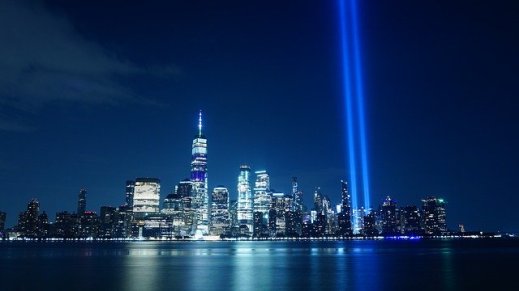
We are less than a month away from annual tributes to the September 11 attacks, and for a few tense days it looked like one of the most enduring traditions around the commemoration, the Tribute in Light—two columns of light projected from lower Manhattan close to where the Twin Towers were located—may not go on.
The National September 11 Memorial & Museum, which puts on the display, said it would have to cancel it over concerns for worker safety around the Coronavirus. The museum stated it didn’t have the financial support it needed to ensure the safety of the workers who would assemble and maintain the lights, and had made a contingency plan that replaced the traditional Twin Tower lights with other skyline observances on the night of September 11. There was a typical tabloid and internet-fueled outrage, and after securing funding promises from New York State, the museum reversed course and announced that the tribute will go on as planned.
It is a moving tribute that can be seen from the farthest reaches of the five boroughs and beyond: the night sky aglow with the ghostly shadow of our city’s loss. It is a sign of New York City’s resolve to create something beautiful out of tragic beginnings, and not forget the tremendous loss of that day even as we keep going.
Nearly 3,000 people died in the attacks; the largest loss of life in a single day since the General Slocum ship disaster of 1904. This past April, the death toll from the COVID-19 outbreak in New York City exceeded 4,000, surpassing the deaths from the September 11 attacks.
The Tribute in Light though, is additionally tragic because it also shines a light on our failure to rebuild properly. We have allowed Islamic fundamentalists to remake our greatest city. Every time we look at New York’s skyline, we see the work of murderous savages who thought Allah was commanding them to kill children and babies. I’m sure the new World Trade Center is a fine building; it certainly looks grand. But it’s not two Twin Towers. The Tribute in Light highlights our failures to stand up for ourselves.
When the towers fell, I thought for certain that our country would stand for nothing less than two new Twin Towers, maybe a few feet taller than the originals. That was the only proper rebuilding response to the terror attacks, and we made a hash of it.
The towers of light are what we have left, and the thought of not even having that was too much for some people. We cannot get people to wear masks and now we can’t pay tribute to September 11 victims because we cannot muster the resources to keep workers safe. If we can’t even shine lights into the sky, what has become of us?
New Yorkers have been living with the Coronavirus pandemic longer than anywhere outside of China. There’s a deep hunger for anything that is remotely normal. Any time we can safely do the normal human things we used to do; we’ll do it.
The Tribute in Light will be back this year; please think of those who we lost nearly two decades ago and the sacrifices so many made that day. It will be a moment of beauty in the midst of a lot of ugly.
Illegal fireworks are as New York as bagels
Years ago, when I lived in Inwood, I walked to the public pier at Dyckman Street on the Hudson River to see fireworks on the Fourth of July. The sightings were disappointing. Through clouds in the distance I could see the faint glow of a few shows over New Jersey and could see none of the official Macy’s fireworks happening farther downtown.
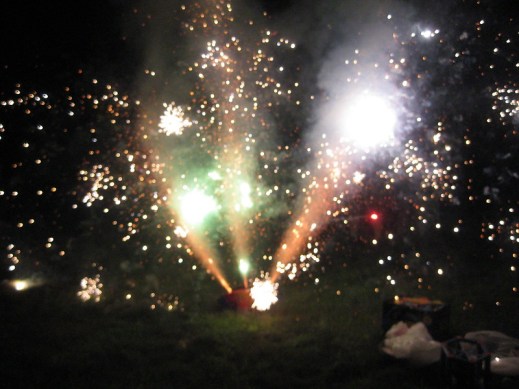
I returned to my apartment disappointed but was soon treated to shows of illegal fireworks that more than compensated. The barrage of ordnance that filled the northern Manhattan sky was a welcome sight that took me back to my childhood in Yonkers. I would emerge from our apartment in Yonkers on July 5th to a scene that resembled a war zone. The curbs and corners were filled with the spent paper from reams of firecrackers, and one time I saw a metal garbage can that had been exploded and overturned, looking like a giant metallic banana peel.
When I first returned to the city to live as an adult, I lived in Ozone Park, once the home to professional-grade illegal fireworks shows and street festivals paid for by the Gambino Crime Family boss John Gotti. Gotti had been in prison several years at that point, and the authorities worked hard to prevent the return of a large-scale illegal fireworks display. Police were all over 101st Ave. and the surrounding streets, but it made little difference. Managing to get on the roof of my building, I could see the official fireworks far away in Manhattan, but the cat-and-mouse game of cops and illicit fireworks was more entertaining.
Illegal fireworks have been a New York City staple for decades. When I was in fifth grade in the New York suburbs, I went to a neighbor’s yard where a friend’s father let me light sparklers off some candles set on the ground. I felt like the greatest outlaw on Earth. Kids waved around sparklers while adults set off bottle rockets and M-80s. When we heard police sirens in the distance, adults blew the candles out and we ran to the backyard until the danger had passed.
More recently, we have enjoyed the sights of fireworks over Whitestone and College Point. Early morning jogs through Flushing Memorial Field has found launch sites of the previous evenings fireworks displays, the tubes still smelling of gunpowder in the cool dawn, like a mortar position of a recently passed battle.
The allure of illicit explosives dates to the birth of the American nation. The first battles of the American Revolution were fought over the British Army’s attempt to seize illegal weapons.
New York, which was under the yoke of British rule for the bulk of the Revolution, was no less fervent in its commitment to the cause. One of the bloodiest battles of the war was fought in Brooklyn; the Battle of Long Island almost ended the Revolution—Washington barely escaped to regroup. The first woman known to take up arms for the United States did so in Manhattan at the Battle of Fort Washington; Americans lost that battle too and Fort Tryon park still bears the name of the British governor of New York at the time.
Our founding fathers would have been hanged as traitors to the crown had we not won. No matter our heritage, Americans are proudly descended from outlaws and outcasts. People setting off fireworks today are not would-be revolutionaries, but they are tapping into the same antiauthoritarian sentiment that is alive in spades in America today.
The city has seen an increase in setting off illegal fireworks. We hear them in every neighborhood and in some cases too late (true fireworks enthusiasts know to stop between 11 p.m. and 12 a.m., July Fourth excepted). There is a need now for people to celebrate and sending exploding stars into the night sky is best done while remaining safely distant from fellow citizens. Many bars and restaurants remain closed, large parts of the city are effectively locked down by massive protests. Fireworks are a needed respite, a needed release of our energies to celebrate something, whether that be the birth pangs of a better America or a fiery exegesis of an abiding patriotism.
Illegal fireworks are a proud New York tradition, a proud American tradition. Let it never die.
What is still beautiful about us…
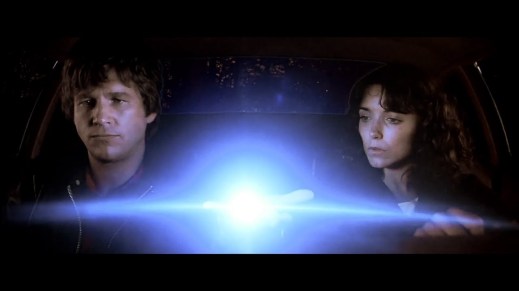
In John Carpenter’s 1984 film “Starman,” Jeff Bridges stars as an alien who is stranded on Earth, and goes on the run from U.S. government agents with the widow of a deceased housepainter, whose body he has cloned as a disguise. They have misadventures while eluding the authorities and the widow (Karen Allen) falls in love with this alien in the body of her dead husband.
In retrospect the plot summary makes this sound like a ludicrous B-film, but it works. One scene and one line from the film has stuck with me since I watched it in a movie theater as a 12-year-old.
The couple are finally cornered in a restaurant by the authorities and the federal agent who has been leading the hunt for them comes to confront them. He asks the alien about his journey and learns he is here to study Earthlings.
“You are a strange species, not like any other, and you would be surprised how many there are, intelligent but savage,” the Jeff Bridges/alien tells his pursuer. “Shall I tell you what I find beautiful about you?”
The federal agent nods yes.
“You are at your very best when things are worst.”
That line has been etched in my mind for more than three decades now, and it’s a fitting mantra for the times we are in.
“You are at your very best when things are worst.”
It can be hard to imagine things getting worse. We are still in the midst of a global pandemic that has hit the U.S. harder than any other country, followed by widespread civil unrest over the death of George Floyd in Minneapolis police custody, poisonous politics in an election year and unemployment levels not seen since the Great Depression.
These are times that try our patience and our resolve. It is easy to want to withdraw and bunker down, to tune out the outside world and lapse into a fatalistic nihilism, a hopeless sloth of withdrawal.
The pandemic reminded us that contact with others is an essential part of life. Human contact is something we took for granted, or even came to resent in New York City, where everything is too crowded and the inconsideration of others is amplified by proximity.
But the need to interact with others is more important now than ever, and despite the myriad conflagrations boiling over in our society, we can still find common ground with decent people of differing ideas.
Human life is inherently tribal, and America has forged tribes along lines of culture and character in ways other societies cannot fathom. These cultures appear to be irreconcilable, but basic human decency and goodness can transcend even our deepest chasms. The past few weeks have shown the extent of our divisions but also the depth of our decency and resolve.
“You are at your very best when things are worst.”
It is time to be the best person you can be and play some part in making our world a better one. You may be at odds with your friends and family, you may be subjected to hatefulness from smaller minds, but the things most worth doing are often most difficult. Keep going.
We can look back at this time and be proud we were at our very best.
NYC’s transit mess to spread above ground

The lives of New York City residents are filled with transit fatigue and the endless negotiation of a failing subway system. Our city subways are in such a sorry state that real lives get interrupted and sidetracked. People miss their college graduations, arrive late for job interviews, or don’t get to say a final good-bye to loved ones.
With the resignation of MTA chief Andy Byford in a dispute with Governor Andrew Cuomo, there is a sense that the situation will get much worse before it gets better.
Queens is poorly served by the New York City subway system and does not have the more comprehensive service that you find in Manhattan, Brooklyn and the Bronx. The subways are so Manhattan-centric that Queens lacks a basic north-south subway route. If you want to get from Ozone Park to the Queens Center Mall it can take you as little as 25 minutes by bus. It would require at least three different subways to get there and it’s only four and a half miles.
Where I live is more than a mile to the nearest subway, which would add 25 minutes to my commute were it not for buses. More recently I’ve learned to take the express bus, which is more expensive but is much better—more comfortable seats and direct service to midtown Manhattan.
The express buses are not a panacea though. Just this past week, as I stood directly next to a bus stop sign on 6th Ave. and 42nd Street, a QM20 bus drove right by as if I wasn’t there, even though I was trying to wave down the driver. So even the express bus system, which is the best experience the MTA has to offer, is still rife with problems.
But not content to serve up sub-par subway service on a good day, the MTA has proposed a plan to slash bus service throughout New York City’s largest borough, Queens. Neighborhood after neighborhood in the borough are organizing to try to stop service cuts that will do things such as: consolidate bus stops, denying service to some areas of the city already lacking for subway access; and stop service earlier in the evening, leaving people stranded in Manhattan if they go to a play or concert.
We need more bus service in the city, not less. Especially at a time when the subways are running so poorly.
Here is a goal for any and all mass transit systems. No one should ever have to wait more than 15 minutes for any bus or train at any time of day or night at any bus stop or train station.
Is that not realistic? Under our current system, yes, that’s a pipe dream, but why should we expect anything less than the best in our city. This is New York. Were it not for our transit system, we would not have experienced the tremendous growth over the last century.
Mass transit will pay for itself in a stronger economy and more productive workforce. Think about all the things you don’t do or places you don’t visit because the travel would be too difficult. Seriously, things only a few miles away are considered out of reach right now because our transit system is so underperforming and unreliable. I know I avoid going to cultural events because getting there and back in a reasonable amount of time is not possible under our current system.
A reliable transit system will have people going more places and doing more things, spending money that keeps our economy going.
Take the MTA out of the hands of political appointees and officeholders who have the power to raid its coffers. Our taxes should support an independent entity governed by a board of directors selected from a population of accomplished people who are transit users.
New York City transit is still way too far away from where it needs to be. There’s no quick fix. Creating a fully functioning transit system is going to take years of political struggle. Let’s start now.
The New York Times’ clueless narcissism reaches new depths

The New York Times announced that it would endorse a candidate for the Democratic Party’s nomination for President of the United States, the first time in its 169-year history that the newspaper would do such a thing. The Times’ editorial board interviewed nine candidates in extensive interviews at its New York headquarters in December and announced its endorsement for the Democratic nomination this past weekend.
The Times feels it’s important to get its voice into people’s deliberations now, though its coverage has laid out clearly that it does not want former Vice President Joe Biden, Senator Bernie Sanders or Mayor Pete Buttigieg to be the nominee. It will at least lay its slant bare for all to see earlier on, though it was shamelessly shilling for Hillary Clinton long before the first ballot was cast in 2016.
So, the Times invited those candidates it judged viable to come in and interview completely on the record with its pompous editorial board to be part of “The Choice,” as if it were some drama people were going to follow like “Game of Thrones.” To their credit, Michael Bloomberg, Julian Castro and Tulsi Gabbard declined to kiss the ring of the Times and sit for the chance to be the window dressing on the editorial board’s tribute to itself.
The weekend edition pullout of printed excerpts had an entire page dedicated to profile photos and titles of the editorial board, even noting with an asterisk someone special who is not normally a member but joined the board just for the important task of endorsing a Democrat before anyone even votes.
We’re supposed to be wowed at the brilliance of these professionals, who spent hours mugging for the cameras they invited into their boardroom because they think the American voters give a rat’s ass about what they think. And with all their brilliance and well-publicized rumination over this important endorsement, they couldn’t even decide on a single candidate to endorse!
They Gray Lady was too busy looking at herself in the mirror to choose only one candidate, endorsing both Senator Amy Klobuchar of Minnesota and Senator Elizabeth Warren of Massachusetts.
“In a break with convention, the editorial board has chosen to endorse two separate Democratic candidates for president,” the Times tells us in its blacked-out opinion page heading made somber for this special occasion.
The Times should have done the extra work and picked one of the candidates. They did do voters a service by giving Senator Klobuchar recognition; her campaign has so far failed to attract support that her accomplishments merit. And the Times is right to credit Warren with being policy-focused and experienced in multiple levels of Washington leadership.
Both Senators Klobuchar and Warren are serious candidates with real ideas and qualifications. The Times insults both with its overwrought half-endorsement that will serve to alienate them from the voters the need to reach most.
New York, like the rest of the country, is in for a long slog through a partisan election year. We can do without the self-congratulatory fluff the Times has subjected us to.
 Matthew Sheahan
Recent Comments