
The Horror That Is The 7 Train
Speaking in 1999, Atlanta Braves pitcher John Rocker said the following about New York City:
“Imagine having to take the 7 Train to the ballpark looking like you’re riding through Beirut next to some kid with purple hair, next to some queer with AIDS, right next to some dude who just got out of jail for the fourth time, right next to some 20-year-old mom with four kids. It’s depressing…”
Saturday Night Live’s Colin Quinn, doing the weekly news spot, said this about Rocker: “He might be a bigot, but he’s definitely been on the 7 train.”
Despite all the romantic notions you may have in your head about New York, there are some traditional New York experiences that are never pleasant no matter how much you romanticize them. Being mugged is never fun; neither is stepping in dog shit or having to smell a homeless person.
Another old New York tradition that is no fun is the 7 train. The 7 train is a human cattle car of endless misery and inconvenience. It perfectly combines all the incompetence of New York’s Metropolitan Transit Authority with the rancid overpopulation of our city that makes New York the cultural calling card of the dying American empire.
I live in Flushing, Queens and work in lower Manhattan. I have an hour-and-15-minute commute each way when things go well, but things rarely go well. I take a bus to downtown Main Street Flushing, which has a crowd density similar to that of Times Square, and board a 7 train that takes me to Grand Central, where I take either the 4 or 5 train (also no joy) to the Bowling Green station near where I work.
Today I managed to get down the overcrowded stairs to the train platform only to miss the closing doors of a not-very-crowded 7 train by seconds. The next express train arrived soon but sat on the platform for 10 minutes and didn’t leave the station until it was wall-to-wall people.
Sometimes the 7 train likes to quit on you and dump all of its passengers out a random stop. “This train is out of service! No passengers!” the conductor will announce. Sometimes the express 7 train decides to go local, sometimes without telling its passengers until they’re at a stop they didn’t plan on making. On the weekends, the 7 train doesn’t run any express trains at all and often will have large service gaps that will leave its passengers scrambling to shuttle busses or trying to find alternate trains to take.
In September, when the U.S. Open is happening at the U.S. Tennis Center, the 7 train is flooded with tennis fans who are clueless as to where they are going and completely unschooled in subway etiquette. Sometimes a perfect storm of passenger clusterfuck will happen and you’ll have Mets fans and U.S. Open fans cramming the same trains heading to the Willets Point station.
The 7 train will often stop service entirely or delay service torturously or decided it doesn’t want to run express trains at the height of rush hour. Often the reason the MTA gives passengers for this is “signal problems.” One winter I asked an MTA worker on the platform why express service was abruptly canceled and he answered, “It’s cold outside, sir.”
I don’t bother trying to get a seat on the 7 train. Those are the dominion of sharp-elbowed Asian women who push their way onto the trains before the unfortunate souls who have to commute to Flushing can exit. I actually prefer to stand. I’ll actually have more room standing and the ride isn’t that long. Besides, I sit on my ass for eight hours at work. I usually try to position myself directly between two car doors in the center of the car, where the crush of passengers will be slightly less.
It is often standing-room only before the trains leave its first stop, but that doesn’t stop people from trying to cram themselves on to the train at later stops.
The 7 train is one of the oldest lines in the city, so its rails are close together and the cars that fit on the tracks are narrow and without as much room as other trains. It is also the only subway serving some of the most densely populated parts of the city and it terminates (for now) in Times Square.
And the 7 train is about to get worse. The geniuses who run our transit system decided it would be a good idea to cram 15 pounds of ham into this 5-pound bag instead of 10, so the 7 line is being expanded all the way to 34th Street and 11th Avenue. This means more crowding on a subway line that can barely handle what its current ridership. Joy.
There are some upsides to the 7 train. Most of it is above ground, so you can see some beautiful views of Queens and Manhattan that you won’t see from any other train line. Also, while it is regularly packed to the gills, most of the riders are working New Yorkers who are not there to cause problems; you don’t have the thug element of the A train or the hipster abominations of the L line. Because the trains are so crowded all the time, you have fewer homeless and crazies. I have never seen a “Showtime!” subway dance troupe try to ply their obnoxious trade on the 7 train.
For all its faults, the 7 line has stood the test of time, and if overcrowding doesn’t bring it crumbling to the ground this year, someone will be bitching and moaning about it 100 years from now.
Head to the New York City Woods

Summer is a traditional time to go to the beach and be near the water, and New York City has 14 miles of public beaches where you can contract skin cancer while being eaten alive by horse flies. I never understood why people would want to go to a sunny place and let the sun burn them during the hottest time of the year.
But believe it or not, New York City also has woods and you would do well to spend some time in the shade this summer. There’s something immensely satisfying about going for a walk in the woods and knowing you are still within the five boroughs of New York City.
For more than 10 years I lived in Inwood, the northernmost neighborhood in Manhattan. I was lucky enough to live right across one of the wooded sections of Inwood Hill Park, which contains the last piece of natural forest in Manhattan as well as Manhattan’s last surviving salt marsh. It is also the highest natural point of elevation in the city.
I moved into Inwood on a Saturday in the summer and the following Monday went on a jog in the park before going to work. Not familiar with the park and its paths yet, I became lost. I couldn’t believe it that I was lost in the woods in Manhattan, but I was. I eventually found my way home and wasn’t too late to work, but Inwood Hill Park remains a treasure with lots wooded paths to walk. Even on weekends in the spring and summer when the park is typically crowded, you can find some solitude in the woods.
Be careful though, there are no shortage of shady characters who know this as well, and while I was living in Inwood a young Julliard student named Sarah Fox was murdered in a wooded part of the park one afternoon while she was jogging.
Inwood Hill Park may be one of the best and most overlooked wooded parks in the city but it’s not the only place to cool off in the shade.
Now that I am in Queens, I live not far from several parks that have real woods and wooded trails.
A few weeks ago, my wife and I decided we would go to Alley Pond Park. My wife, who grew up in Queens, knew it as a place high school students would go to drink alcohol under the cover of darkness. The park is the second largest public park in Queens (Flushing Meadows Corona Park, which doesn’t have dense woodlands, is the largest).
Alley Pond Park would be difficult to reach via public transportation as it is not near any subway lines; you’d have to take the bus if you don’t have a car or can’t walk or bike there. We found a parking space in a small parking lot that looks like it overflows during busy times. We put our twin daughters in a jogging stroller and managed to navigate it through much of the wooded paths in the park. Of course, being in New York City, the paths in the park were sometimes paved and sometimes led to steep staircases that we dared not traverse with a stroller, but we were always able to turn around and find another suitable path that would let us enjoy the woods a little more.
We saw lots of birds and even a rabbit. There were plenty of mosquitoes as we got near swamp areas of the park. We came across other strollers in the woods but like Inwood Hill Park, one can achieve a certain solitude in the woods even on days that the park is crowded.
No matter what borough you reside in, there is no shortage of wooded parks in New York. It will be cooler and less crowded in the shade.
The Central Park Five Are Probably Guilty and Will Soon Be Rich
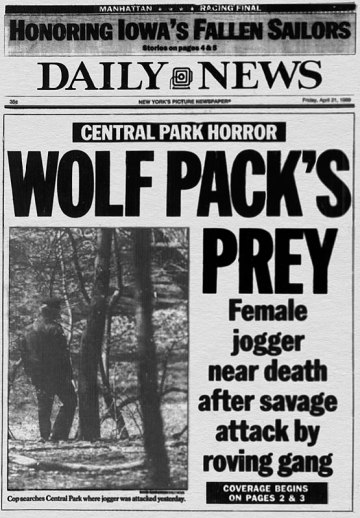
This past week, New York City’s Comptroller approved a settlement reportedly totaling $41 million to members of the “Central Park Five.”
The five men were convicted in 1990 of the brutal rape and bludgeoning of a woman jogging in Central Park in April of 1989. No one who was living in New York at the time could ever forget it. The jogger was so badly beaten that a friend had to identify her by a ring she was wearing on her finger. There was no telling how many people took part in the assault. The five who were convicted were part of a mob that numbered in the dozens.
Four of the five had confessed, and videos of their confessions were shows on the news. They renounced their confessions, claiming they were coerced, and went to trial.
Because several of the accused were juveniles, there was no way they would serve enough time in jail. They were somehow acquitted of attempted murder. They were convicted of several crimes committed that night, including the rape and assaults on other people in the park, and were sent to prison.
Years later, a serial rapist named Matias Reyes claimed that he had attacked the jogger that night and had acted alone. DNA evidence showed him to be guilty. The Manhattan District Attorney asked that the convictions of the Central Park Five be vacated as a result.
Here’s the first big problem with the confession of the alleged lone rapist Reyes: his tale of being the only attacker goes against the medical evidence that indicates the Central Park Jogger was attacked by multiple people. Part of this evidence includes bruising on both legs of the victim indicating she was held down by more than one person and cuts from a blade (Reyes said he only hit her with a rock and tree branch).
After the verdicts were vacated, the New York City Police Department published a detailed examination of the case, the Armstrong Report, which details evidence beyond the confessions that indicate that the defendants were involved in the assault. This includes statements some of the defendants made to police outside of the interrogation, things they said to family members, and details of the crime some of them provided that were not known to police at the time (for example, the NYPD did not know what property had been taken from the victim but two of the five separately described her Walkman being stolen).
The five sued the City and were helped along by filmmaker Ken Burns, who declared them “exonerated” despite the significant evidence of their guilt and made the documentary “The Central Park Five.”
The Burns documentary is an interesting examination of the case, but it is very one-sided and contains glaring omissions.
Fans of the Burns film are buying into a narrative that lets them feel righteous indignation at a supposed injustice, but the evidence in the case does not gel with the idea the Central Park Five are victims of injustice at all.
The documentary presents its case without any of the skepticism required. It assumes that self-proclaimed lone rapist Matias Reyes is some kind of born-again angel for confessing to a crime (after the statute of limitations had expired, by the way), even though his story is full of holes.
Part of the reason that there is a belief in the innocence of the Central Park Five is what is known as the “CSI effect.” People believe that there is always going to be a mountain of DNA evidence with every case, though there often isn’t. Keep in mind also that the use of DNA collection and examination was in its early stages in 1989. Yes, DNA evidence proves Matias Reyes raped the Central Park Jogger; the evidence shows he was not alone in doing so.
But the public wants to buy into the popular story. Earnest and well-meaning New Yorkers are smitten with Ken Burns’ films and want to believe that the violent men about to become millionaires deserve it and are getting some measure of justice. They are very wrong.
Bum Coin Mystery Still Unsolved

A little more than two years ago I found a strange object in downtown Manhattan and I have been puzzled by it and would like to learn its origins. I am reopening the case as I remain curious as to its origins.
I spotted it as I walked past Delmonico’s restaurant. I noticed what appeared to be an odd coin sitting on the edge of the landing.
The coin is roughly the size of a quarter and appears to be plaster. It resembles a quarter that has been plastered over. On one side reads “Give Money,” and the other side reads, “To Bums.” Underneath that is the cryptic “bw 12.” Should I take that to mean that this was created by an artist with the initials B.W. in 2012?
Is this perhaps a coin created by a mysterious artist? Has some anonymous artists been handing out coins with the insistence that recipients leave one in a public place? Have I found such a coin?
When first mentioning this find a few years ago, a few people posted comments that they found these coins elsewhere in downtown Manhattan. None of the others who found them had any clue where they came from.
If you have any clue as to the origins of this coin, please let me know. Until someone tells me otherwise, I’m going to assume it’s a priceless Banksy work that will be worth millions of dollars when I am ready to sell it to a fancy art collector
But whether it’s the work of a well-known artists or not, it’s anonymous public art that is looking to both entertain and provoke thought. Someone took the effort to make something solely for the purpose of provoking a change in the general public as well as the free enjoyment of the work itself.
Would it be a violation of the aesthetic to reveal the artist’s name if I learned it? If the artist contacts me first and lets me know who they are, I would honor their request to remain anonymous.
And while I very much appreciate finding this piece of art, I have not heeded the strange coin’s advice. Giving money to bums is a bad idea. Most of them will spend the money on drugs and alcohol and handing over your money will only encourage them to stay bums. There are plenty of legitimate homeless charities you can give to if you want to help the homeless and destitute. They should know that our streets and subways are a not place of bounty and willing donors.
I promise to keep the coin as an interesting work of art, and will only sell it if it is given a ridiculously high valuation or I become poor and desperate to sell anything of value. Until then, the coin stays with me and the bums will not get it.
Banish Yourself to Punk Island

This Saturday is the Punk Island 2014 festival in New York City. It will feature almost 100 bands on seven stages all for FREE on Staten Island.
I have had the good fortune to have been a fan of punk rock music since I first heard ‘Anarchy in the U.K.’ in the eighth grade. And 10 years ago I decided I would take a stab at being in a punk band of my own and started a band called Blackout Shoppers.
Full disclosure: our band is playing Punk Island and has played the festival several times, and we are friends with several of the principal organizers. But this isn’t world of laminated back stage passes and cushy green rooms. In the world of DIY punk rock music, the back scratching and mutual admiration dick sucking doesn’t earn you big rock and roll money; it maybe gets you a space on a floor to sleep on, and maybe a free beer.
The Punk Island festival for the first several years of its life was held on Governor’s Island. Governor’s Island is an excellent place to visit. A former Army base, airfield and Coast Guard base, Governor’s Island boasts lots of great historic sites and rarely-seen views of Manhattan and industrial waterfront Brooklyn.
Governor’s Island became off limits in the wake of the damage done by Superstorm Sandy and more recent park development by the city.
So last year, Punk Island moved to Staten Island. It takes place on a small strip of land and pier right near the Staten Island Ferry terminal. It was a long, hot day but it was well run and everyone had a good time. It wouldn’t be a punk show without a few fights and problems. But last year only one person went to the hospital and no one went to jail; that’s a win-win for a punk rock festival.
People have been fighting over what the term Punk Rock means since 1975. Punk Island has always featured a large cross section of punk rock music. There are “crusty punk” bands with members who my live as or at least appeal to the gaggles of itinerant homeless-by-choice youngsters who smell bad. There are beat-down hardcore bands that buy tattoo ink by the gallon. There are “pop punk” bands who may sound like Green Day though they probably don’t want you to tell them that. Punk Island even has a Brooklyn TransCore stage because trannies from Brooklyn have created their own punk scene. More power to them all.
Our band has agreed to help provide equipment for the Dispatches from the Underground stage, which we’ll be playing. So I will be there bright and early by 7 a.m. It will be a day baking in the sun with my ears ringing from the sounds of a multitude of punk bands. By noon I will be a disgusting miasma of sweat and coagulated sunscreen. It will be great. As much as my inner adult voice tells me to be more serious about life, and that punk rock is a young man’s game, I find it hard to tear myself away, try though I might.
Punk Island is a very short walk from the Staten Island Ferry Terminal and it’s free and for all ages. It it will have all kinds of punk bands there. You have no excuse not to go.
Parking in New York: A New Path to Anger and Disgust

When I moved back to New York City years ago, one of the greatest benefits was that I didn’t need a car.
My luck with cars has been terrible. My first car, a 1987 Plymouth Horizon, broke down constantly. I was a broke college student who couldn’t afford a new head gasket when my car put itself out of its misery via self immolation.
I bought my second vehicle from a shirtless man in the back woods of Georgia who was drunk at two in the afternoon and called his son “Molson” even though that wasn’t his name. My giant 1977 Plymouth Voyager van was mustard yellow with a big white strip. If you viewed it at the right angle you could still make out the lettering from the church that used to own it. It didn’t perform much better than my old Horizon. Its drive shaft fell off on Interstate 285 in Atlanta once.
My 15-year car-free life came to an end a few years ago when the wife and I bought a used truck. I don’t live in Manhattan anymore and Eastern Queens is not as much of an automotive purgatory as Manhattan. And being involved in music means I have to haul large speaker cabinets, guitars and drunk musicians throughout and beyond the five boroughs.
But the conveniences of city car ownership are paid for with the wages of anger and aggravation.
The roads are full of bad drivers and New York City is rife with people who not only drive terribly but feel entitled to do so. I’ve seen people in Inwood triple park rather than walk an extra 20 feet to a supermarket. I’ve seen cab drivers wait until they have a red light to drive across an intersection.
And parking in New York City is a misery that never goes away unless you are somehow incredibly wealthy. The city’s parking laws are a Byzantine morass of prohibitions that are consistently poorly-signed. A liberal interpretation of a sign can get you a fat ticket or worse, towed. I have not had the experience of paying vehicular ransom at a city impound lot, but every account I have heard from survivors indicates it is a Kafkaesque nightmare that can make someone hate our city for life.
My wife has lived in the co-op apartment we share for more than twelve years and was on a waiting list for a parking space for five years.
We thought our parking troubles were mostly over. We have a regular space. But the perpetual douchery of New York City driving revealed itself again just this past weekend.
My wife had taken our baby girls to visit relatives in Nassau County and returned home from three hours of tied-up traffic on the Long Island Expressway. to find someone had parked in our spot.
Normally the travails of someone with a reserved parking spot would fall firmly in the confines of “First World Problems.” But when you’ve waited five years for that spot and you’re a barely middle-class family with no margin for parking tickets or private garages and someone rudely parks their Mercedes Benz in your spot, violence is justified.
If someone had left a note on the car with their contact info and let us call them to move the car, it would have been no problem. We would have been annoyed but impressed by their willingness to be decent upon notice. Because of the late hour and our building management’s inability to get a towing company right, we were stuck without legal parking for the night.
Normally this would be license to get creative with vandalism. If this car had a sunroof, my dream of justifiable shitting through a sunroof of a snotty dickhead’s car would have finally been realized. I would have loved to stick bananas in the tailpipe, pissed all over the door handles and leave a steaming log of justice on the windshield. It would have given me joy to superglue some tasteless gay porn all over the windows and scratched giant curse words into the expensive paint job.
But since our space is reserved, the authorities would have us as their prime suspects easily. There was little we could do but leave a tersely-worded note stating that they were parked illegally and we had been forced to call the towing service (which was true, even though the towing service was out of business).
So justice has not been served. If you see a dark-colored Mercedes Benz S550 with New York license plate FTX-2898, please vandalize the shit out of it. Thank you.
A Bridge Adventure Near 59th Street
Since four out of five New York City boroughs are on Islands, living in New York means dealing with bridges (and subway tunnels) if you want to get anywhere. Since I became a driver in New York a few years ago, I have mostly driven over the Whitestone Bridge, which is closest to my home.
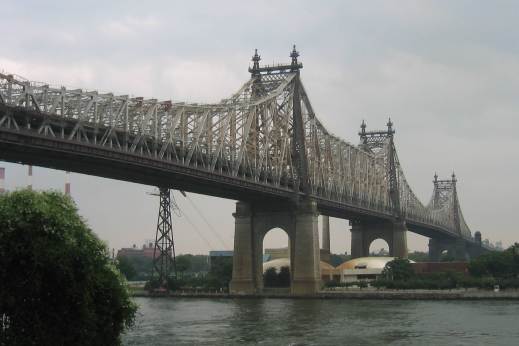
Lately the authorities have gotten into the nasty habit of adding or changing names to some of its bridges. The 59th Street Bridge was officially called the Queensboro Bridge until a few years ago when they decided to also name if after former New York City mayor Ed Koch. It’s now the Ed Koch/Queensboro Bridge. The Triborough Bridge has been renamed the RFK Bridge after Robert F. Kennedy, who was a U.S. Senator from New York when he was gunned down. This has been aggravating. I don’t want to call the Triborough the RFK Bridge. Triborough works better – it connects three boroughs and the name sums that up nicely.
The 59th Street Bridge is a depressing and aggravating bridge for drivers. It has all of the congested traffic of midtown Manhattan with the sooty industrial character of the more neglected parts of Queens. But it is free, so people will stew in hellish traffic to save themselves the $7.50 it now costs to take the Triborough Bridge. (Public policy experts note that the systems of tolls we have on bridges in New York is backward, that we should charge tolls for bridges over the East River that cause more traffic congestion and instead encourage people to use the larger, highway-connected bridges, which now charge tolls).
This past Saturday I was driving home after dropping off some good friends in midtown Manhattan. I made my way east from Times Square and seriously considered taking the Triborough home. No, I thought to myself, I must overcome my apprehension about taking the 59th Street Bridge and make a success of it this evening.
I found myself on First Avenue but did not make the first turnoff I saw for the bridge. I came upon another turn for the bridge and took it, following behind another pickup truck. I saw a sign saying that the outer roadway of the bridge was closed between 9 p.m. and 6 a.m. I thought nothing of it; I hadn’t planned on taking the outer roadway of the bridge, which I had never heard of anyway, and those signs usually referred to weekday construction.
The truck ahead of mine came to the entrance of the bridge, which was closed. It was blocked off with orange traffic barrels. The man got of his truck and just moved some of the barrels. He looked at me as he got back in his truck and his face wore the expression of someone who just did not give a fuck about closed roads. For all I knew he was an off-duty cop. I paused for a minute, not sure if I should follow this driver to a new illegally-opened section of the bridge. Fuck it, I thought. If the cops stop me then I’ll play dumb and just say I didn’t know the bridge was closed because the roadway wasn’t closed. That was technically true.
I could have been driving into a dangerous construction zone or have been tailgating some kind of undercover police operation or been intruding on some other kind of high crime or misdemeanor taking place over the East River. All of those unfortunate circumstances still sounded a lot more fun than contending with the convoluted traffic that would have been required to stay law abiding. I drove up the closed ramp of the bridge.
The outer roadway of the 59th Street Bridge (a.k.a. the Queensboro Bridge a.k.a. the Ed Koch Bridge) is one narrow late separated from the lower roadway by bridgeworks and thick concrete walls. Every once in a while there is a break in the wall and someone driving a smaller vehicle than my pickup truck could probably get away with maneuvering in and out of the lane. I was stuck on the outer roadway until the bitter end.
I drove on the closed outer roadway as quickly as I could while trying to look normal and blend in with the traffic, though there was no other traffic in my lane at all, except the daring barrel-mover, whose tail lights I could dimly make out far ahead of me. I drove on expecting the law to come bearing down on me any minute or to dead end into an impassable construction site. None of those things happened. I drove over the bridge with a paranoid mania until the regular traffic patterns of the bridge shunted me into a lane that didn’t help me get home.
The worse thing about it for someone driving home from Manhattan over it is that it is very tough to find your way when you reach the other side of the bridge. Whether you take the upper or lower roadway and what lane you take on either roadway can quickly determine your options when you reach Queens. Driving eastbound, it transports you from an anger-fueled Byzantine knot of Manhattan streets to a clustered maze of impossible roadways of Queens.
I eventually disentangled myself from whatever unappealing part of Long Island City I was in and found my way to Northern Boulevard and a more pleasant drive home.
Revenge of the Outer Boroughs

This past weekend the wife and I attended a co-ed baby shower for my friend and spiritual advisor Rabbi Jay Levitz and his wife Sarah. We were in Oceanside, Long Island, New York, a short drive outside the city for us, as we live in Eastern Queens. As we talked with Jay, the conversation turned to what constitutes the “bridge and tunnel crowd.”
We all agreed that the term was more of a cultural construct than a geographic one, though we acknowledge that the two go hand in hand in many ways. Where I live now in Queens is not a trendy area at all and is too far from any of the celebrated night life to become popular among the moneyed classes or the upwardly mobile youth any time soon. That is actually a blessing. We happen to have decent access to public transportation, though getting into Manhattan always involves at least one bus and one train. My commute to work is at least one bus and two subways, and it is terrible, subject at all times to the fickle whims of the increasingly incompetent MTA.
The “bridge and tunnel” term may have been initially meant to denote people coming from outside of New York City—especially from New Jersey, considered by many to be a cultural leper colony filled with only guidos and hill people. But my current settings would qualify me as a bridge and tunnel crowd person when I venture into Manhattan for cultural events.
Manhattan was once the undisputed epicenter of New York City’s cultural life. Now that cultural life is much more diffuse and spread through the outer boroughs, most prominently in Brooklyn. New movie theaters, restaurants and music venues are more likely to be opening in Brooklyn or Queens today than in Manhattan. Accordingly, real estate prices in the outer boroughs are still going through the roof.
This shift has made use of the term “Bridge and Tunnel” a bit outdated, but the cultural chasm between whose who perceive themselves as cultured city residents and the people who travel to the city only on the weekends to party is not gone. Someone who takes the Long Island Rail Road from Mineola to see a concert in Brooklyn is considered part of the bridge and tunnel crowd, though they did not use a bridge or tunnel (yes, I understand that the LIRR in Brooklyn does use subway tunnels and uses overpasses on its way to the city; shut up).
And these social demarcations between what is city and what is not stretch to the outer boroughs as well. I mentioned that I drove to Long Island to attend a baby shower this weekend, but as I live in Queens, I already live on Long Island. When New Yorkers talk about “Long Island” they don’t mean the Island itself but Nassau and Suffolk Counties, the parts of the Island that lie outside of the border of New York City.
I could never justify the expense of living in a more trendy or celebrated area of Manhattan. I had a chance to move to the Upper East Side one time. I looked at an apartment in Yorkville and realized that I would be doubling my rent and would still not be able to fit the modest furniture from my small studio in Ozone Park, Queens into the new place. It wasn’t worth the money. I could have said I lived on the Upper East Side, but I’d be living like a hobbit.
So while proximity to Manhattan is become less and less of a cultural touchstone to judge a neighborhood, I propose a new measure of the value of where you live: proximity to live Shakespeare.
A good measure of the value of any place to live is how far away you are from some free Shakespeare. When I lived in Inwood in uptown Manhattan, it had yet to become a trendy place to live and people hadn’t heard of it. But I lived across the street from Inwood Hill Park which had free Shakespeare plays every summer. Score.
I can’t easily walk to free Shakespeare like that, but I am a very short trip from more than one of the venues of the free Shakespeare in the Park in Queens.
Some will argue that this Shakespeare standard is an unfair way to judge where you live, but I don’t think so. I don’t want my children to live in a world where they can’t easily see some free Shakespeare every summer. I’ll be dragging their soggy asses to Two Gentlemen of Verona this season; I won’t need a bridge or tunnel to get there.
Great New Yorkers: My Grandmother
 This past weekend the wife and I packed our two baby girls into their car seats and drove upstate (upstate defined as north of the Bronx/Westchester border) to celebrate the 90th birthday of my Grandmother, Mary Sheahan.
They don’t make New Yorkers like Mary Sheahan anymore. My Grandmother immigrated from Ireland and went through Ellis Island as a child in 1925. She grew up in the Mott Haven section of The Bronx. She raised seven children in The Bronx and is a grandmother to nine and a great grandmother to three. My Grandmother remained in The Bronx as long as possible and then stayed a little longer. She has never been far from the city and still visits frequently. Her last child left the five boroughs only a few years ago (after living in the city more than 60 years) and she has two grandchildren living here now.
No person I have ever met represents unconditional love and the joy of living and loving family like my grandmother. You would be hard pressed to meet a better person in all of the world. Go ahead and try. You might find someone you think is pretty good but they won’t hold a candle to my grandmother. If you think you’ve got someone who can compare in kindness and sweetness I’m sure you’ll find something terrible if you dig a little deeper, like they torture cats in their spare time or something.
My grandmother is so sweet she even gives homes to insane dogs, like her current pet, Misty, a friendly but mentally ill and hyperactive beast who would be put into Kung Pao form in no time if it were up to anyone else other than Grandma. I don’t know how she manages to walk that crazy animal at age 90 but she manages somehow. I always make a point to walk that damn dog when I visit her so she’ll have at least a few hours of freedom from it.
But that’s one of the minor points about my grandmother’s excellence. Having her as my Grandma has been a great privilege. In my younger years, especially when I was a teenager, I was a jaded and angry person who hated the world. Even today I find it hard not to consider much of the world and the people in it loathsome. But no one can keep that disposition for long in the presence of my grandmother. Even in my angriest and most obnoxious teenage years when I thought it might be cool to murder my parents and live the life of an itinerant assassin for hire, I could never find it in my black heart to think a mean thought about my grandmother.
My grandmother’s wit is sharp as ever and she stays active. She can still drive and she walks under her own power, and I still try and promote the idea that she secretly runs a criminal empire and is just successful at not getting caught. It would be fun to learn that my Grandma has strangled mobsters with piano wire and brained drug lords with shovels.
It was great to introduce my own daughters to my grandmother and to take photos of her with her kids, most of her grandkids and all of her great grandkids. Grandma was happy as ever to have so many of her family in one place at one time. Her children and grandchildren now live all over the country. Family flew in from as far away as Georgia and Wisconsin to celebrate Mary Sheahan’s 90th birthday.
I am exceptionally lucky to have the family I have. And my family is exceptionally fortunate to have Mary Sheahan as its matriarch.
End the War on Strip Clubs
 Strip clubs are like fire houses and auto repair shops. No one wants to live next to one, but everyone is happy one is there when they need it.
Here in New York City, strip clubs have been regulated nearly to death, and the bell tolls for many of the survivors today. According to the New York Times community groups throughout the city have waged a war of attrition against strip clubs by petitioning the state liquor authority to take away the nudie bars’ liquor licenses and deny new strip club applicants the right to sell alcohol. That has been shuttering numerous strip clubs throughout the five boroughs.
It’s a sad commentary on society that strip clubs fail when they lose their liquor licenses. Topless women should trump alcohol. If you are a man who can’t enjoy the sight of a topless woman without a drink in your hand, you are either a deeply troubled closeted homosexual or a deeply troubled drunkard. But the lack of a liquor license is a revenue killer for the clubs, which makes a larger share of its money on alcohol than on the entertainment.
It also bestows an extra level of apprehension on the part of a customer considering going to a club. Strip clubs are sleazy places as it is, one that can’t get a liquor license will lose even non-drinking clientele.
The Giuliani administration started this foolishness with zoning restrictions on strip clubs that drove many to either move or go out of business. The new rules instituted by Giuliani limited the distance a strip club could be from a school or church. I’ll wager a lap dance at the Clermont Lounge that churches do more brain damage and aid in more sexual deviance than strip clubs.
I am not a frequent visitor to strip clubs. They are overpriced and your time and energies are better spent on trying to see a woman naked for free and privately. But there are some occasions where strip clubs are appropriate. A bachelor party without a stripper is like a wedding without a bride (Yes, I know that many gay weddings don’t have brides, but I guarantee you that plenty of gay bachelor parties have strippers).
There are certain times when the strip club is the logical place to go, when it is OK to live life at its most honest and primal and to do so without apology. It is nice to be in an environment where it is polite to stare at women’s breasts.
But even if you despise strip clubs and wish they would all fall into the sea, you must at least recognize their right to exist. I don’t like that there are Starbucks on every other street corner. I think that our neighborhoods would be better if we started putting the zoning crunch on the churches rather than the strip clubs. Churches don’t pay taxes like strip clubs do. But things I don’t like have the right to exist.
Banishing strip clubs is not only puritanically foolish and extremist, it is wantonly cruel towards people who earn their living there. Even ignoring the argument of what kind of mouth-breathing reactionary hates the idea of looking at naked women, what kind of heartless jackass wants to throw hundreds of people out of work out of some smug self-satisfied sense of righteousness?
End the war on strip clubs.
New York Winter Olympic Games
 The Winter Olympic Games are taking place in Sochi, Russia at a time when New York (and Atlanta) have more snow. Few would have thought that Russia, known for its cold weather, would be having problems keeping snow on the ground for the winter Olympics. These are strange days.
During the 2010 Olympics I nearly wiped out on the treadmill at the gym while ogling the Danish Women’s Curling Team who were on a nearby television screen. Beyond that I didn’t pay much mind to any Olympics until the Russia vs. U.S.A. game came on this past weekend. It was nice to see a U.S.A. victory of the Russians, though such victories are now without their Cold War benefits.
In New York City, heavy and sustained snowfall with cold temperatures have made the daily grind of life that much more difficult. The New York Times proposed a few new weather-related games. In that same vein, here are five proposed Olympic events specific to New Yorkers during a difficult winter.
Slush Slalom: This season’s snowfall has been heavy and ranks among the city’s worst as far as inches of snow received. What makes this year’s succession of storms so bothersome is that in addition to the quick sequences of snow storms, is that some of them have been accompanied by freezing rain that makes for heavier snow during the day and then ices over at night. It also produces a lot more slush a lot earlier than normal. I like to think I have mastered the nimble ballet of stepping over and around these odious slush puddles. An Olympic event could make use of these New York winter staples by letting competitors race through a slush-filled street like skiers or judging these dances of slush-avoidance as they would a figure skating competition.
Plow Wall Excavation: Snow plows in New York keep the streets clear of snow and generally do a good job. The Sanitation Department definitely does more to keep the business and tourist areas of Manhattan free of snow than it does for the outer boroughs. But wherever they operate, snow plows leave in their wake very heavy, compact walls of snow that are very difficult to shovel. Unfortunate car owners have had to spend significant amounts of time freeing their cars from these cold tombs of dense white. For an Olympic event, have a race where competitors with the same sized shovel have to dig out a car. The first team to free the car and drive it out of the blocked space wins the gold.
Improvised Sledding: There are lots of snow sleds you can buy at a store to ride down a snow-covered hill, but what’s more fun is having to improvise with found objects. Cardboard boxes, plastic fast food trays, garbage-can lids, these are some of the things that would be acceptable in competition. Anyone with a store-bought sled is disqualified. Competitors who could manage to sled acceptably with the more obscure objects would get extra points.
Bus Stop Endurance Wait-athalon: The Metropolitan Transit Authority does a lousy job shoving snow away from bus stops and subway entrances. Subway service is almost always delayed because of bad weather. City bus drivers have to contend with snowy streets and plow-wall blockage of curbs and bus stops. They also tend to run fewer busses and drivers take the liberty of avoiding stops they don’t like and letting passengers wait things out a little longer. Standing at a cold bus stop and waiting and waiting for a late bus is an easy endurance event. The gold medalist is the person who waits the longest for their respective bus without quitting.
Considerate Door Usage: Moving in and out of buildings and small businesses is an art that few have mastered. We need to get in and out quickly and open the door as little as possible to fit yourself through. Temperature gauges could measure how much cold air is let in by the competitors. Like gymnastics, this sport favors smaller competitors.
Boycotting the Irish
 New York City Mayor Bill de Blasio said that he won’t be attending the St. Patrick’s Day Parade because the parade does not let gay organizations march under their own banners.
The statement made the news, though it was not likely de Blasio’s intention to do so. He mentioned it in response to a question at a news conference he had called to announce the appointment of a deputy mayor. But the press likes controversy over cultural issues a lot more than rudimentary announcements of mayoral appointments, so there you have it.
The St. Patrick’s Day Parade does not outlaw gays. There’s no marshal on Fifth Avenue with a Shamrock Gaydar device pulling alleged homosexuals out of the parade. The St. Patrick’s Day Parade is organized by the Ancient Order of Hibernians. The AOH is religiously Catholic and since the Catholic Church, like almost every other major religion, considers homosexual acts sinful, it doesn’t want openly gay groups marching under their own banner.
I agree that the Ancient Order of Hibernians should allow gay Irish groups to march in the parade under their own banner, or at least give them the same consideration they would give to any other Irish group. I’m all for gays, lesbians and any and every other designation under the expanding LGBT nomenclature being treated equally under the law and given full respect and dignity.
But the Hibernians have the right to be as ancient as they like in their attitudes and parade policies. The parade even avoids certain city regulations because the parade predates the American Revolution. I would love to divorce Irish culture from Catholicism and put it on a more secular, nationalist bent. But it’s their parade and they can run it as they choose. Likewise, organizers of the gay pride parade can decide they don’t want Irish or Catholic gays marching under their own banner. That’s their right.
De Blasio is being consistent with his refusal to march in the main parade; he didn’t march as a councilman or as Public Advocate for the same reasons. But this consistency is now a problem. He’s not a councilman or the Public Advocate anymore. The job description changes when you are mayor. Mayors represent the entire city and to get drawn into battles over ethnic parades should be beneath them. Rudolph Giuliani, a Republican mayor who was pro-gay rights and first legalized same-sex unions in the city, marched in every St. Patrick’s Day parade as mayor.
I’m also curious as to how consistently political figures who avoid the mainstream St. Patrick’s Day parade are with their insistence on inclusion. There’s a Muslim Day Parade and other overtly religious parades that may also disapprove of gays. If they don’t have an openly gay group among their marchers, are they verboten also?
Taking the activist left position on everything only paints you into a corner. Though to be fair, there was an effort to convince the Mayor to ban city workers from marching in the St. Patrick’s Day parade in their uniforms and de Blasio didn’t take that left turn to crazyville.
By avoiding the St. Patrick’s Day parade, de Blasio doesn’t stand to change anything but lower his own standing. Lots of New Yorkers, Irish or otherwise, will look at him not as a more liberal-minded manager but as the white David Dinkins, involving himself in a well-tread skirmish in an old and tired battle.
Stop Horsing Around
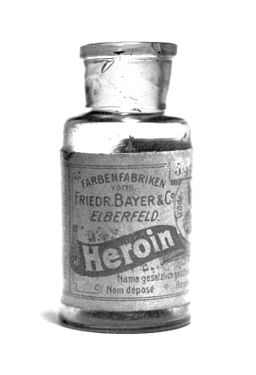 New York’s attempt to think about stupid stuff for a weekend came to an abrupt halt early on Super Bowl Sunday when word was leaked that Philip Seymour Hoffman was found dead of a heroin overdose.
Hoffman was a highly celebrated actor and I had the good fortune to see him on stage several times. His most well-known role was his Oscar-winning performance as Truman Capote in Capote. My personal favorite Hoffman film performances were his turns as the millionaire Lebowski’s assistant in the Coen brothers’ The Big Lebowski and as the furiously masturbating crank phone caller in Todd Solondz’s Happiness.
Heroin is one of the absolutely dumbest drugs you can take. It is horrifically addictive and even people who have been rid of it for years find themselves drawn back to it, as was apparently the case with Hoffman. I can think of several good people I knew, people I thought were too smart for it, people who were streetwise and experienced and with a lot of talent to offer and good years ahead of them, who have overdosed on smack. It’s one of the most senseless and undignified deaths imaginable. It’s an admission to the world that you were weak, that you let a small envelope of powder determine your fate.
It is immensely frustrating to see people with great talent and success piss away their lives with drugs or alcohol. But they have done so endlessly. The litany of great artistic drunks and drug addicts outnumbers the roster of brilliant teetotalers immeasurably.
One can argue that for big movie stars like Hoffman, arrogance and success drive them to drugs. I disagree. Hoffman likely began his life with drugs when he was little known. Most of the artists who die from drugs and alcohol are not famous people but nameless nobodies without much to their name.
Artists are drawn to substance abuse because they are constantly seeking transcendence. That’s why they are artists; they want to exist outside the humdrum of everyday life. Every creative person, myself included, has a star-gazed idea of themselves that rarely matches reality. Creative people almost always want to be something other than what they are. And for an artist, the worst thing in the world is to look in the mirror and realize that you’re a normal person like everyone else. Drink and drugs can keep that fun-house mirror in front of your face a lot longer than your brain can by itself. That’s the deadly trap of getting drunk or high. It’s a lot easier to sit in a pretty café and drink yourself into oblivion like Hemingway than it is to sit over a keyboard and write a novel like Hemingway.
As one of the world’s legion of frustrated writers, I have spent most of my adult life on the drunk list but became a teetotaler in recent years. I can say with confidence that you can excel at being creative while not indulging in substance abuse. I like to think that if I can quit drinking, anyone can quit anything (and without becoming a religious Alcoholics Anonymous zombie either, but that’s a topic for another time). Even Charles Bukowski, who made his reputation on being a habitual drunk, was able to quit drinking later in life without it damaging his writing output. A biographer quoted him as saying he hardly missed it.
Some people are determined to be junkies or drunks. There’s no excuse for it. Trying to make sense of it will break your heart. It doesn’t degrade the art they leave behind, but the loss of their talent makes their passing much more contemptible.
Making Babies for Fun and Posterity
 It’s always been my philosophy to engage in any and all adventure within reason. I have gone skydiving, hiked mountain trails, traveled to foreign lands, acted in a play, started a punk rock band and even had a bit part in a movie.
The one adventure that still terrified the shit out of me was having kids, but I could put it off no longer.
I once held the idea that having kids was a disastrous act reserved for spoiled suburbanites, entitled ghetto-dwellers, or saps too stupid to use birth control. I thought the human race was a doomed enterprise and the sooner the planet was turned back over to the hump-backed whales, baboons, tapirs and sloths, the better.
But circumstances blessed me in semi-adulthood with much younger siblings and I found my tolerance for dealing with children. When I was an underemployed bum living in my father and stepmother’s basement at the age of 24, playing with my stepbrothers and dancing to Johnny Cash songs with my young sister were among life’s few joys.
Over the years many of my friends have married and had children and I have watched people I once saw launch fireworks indoors or drink a jug of Southern Comfort at 10 in the morning suddenly in charge of small human lives and doing a good job of it.
Plenty of people with experience told me never to get married, but everyone I know who has had kids, no matter what misery has befallen them since, recommends having kids with the highest of praise and encouragement.
It’s a natural instinct. Everyone with a soul has the need to leave something behind in this world as a monument to the fact that they have lived. Few of us will wield the influence that will make our names live after for many years. History only has room for so many Caesars, Michaelangelos and Einsteins. But if we have kids, we’ve guaranteed at least a small piece of us will live on. We have made our mark in the world in some small way and shown we are secure enough in our personal survival to make more of our own kind. Of course part of this is ego-driven. I happen to think I’m a good person and that the world could use more people like my wife and me.
So it was with gusto and success that my wife and I set about to conceive. We soon learned that we were having twins and that they would both be girls. We debated names and set about preparing for their arrival.
Nine months passed by quickly, and it was soon time to deliver the goods to a phalanx of family and friends. With great patience and perseverance, my wife brought two beautiful baby girls into the world. They are perfect and destined for great things. If they are anything like me and my brother, they will fight like hell spawn for the first eighteen years of their lives.
So far my brief foray into the adventure of fatherhood has been all it was promised. I have a deep and abiding love for many of my family and friends, but if any of them crapped their pants while they were visiting me, they would be taking that all with them. True parental love is getting human feces on your hands and somehow not minding.
Living in New York City, raising children will be a difficult task. The cost of living is very high, waiting lists for good schools are long; there are dangers everywhere. The city is not designed for the modern conveniences of child-rearing. The streets, sidewalks and shops are too narrow for double-wide strollers, car seats, and screaming toddlers.
We have vowed not to become the worst of what I have seen in child-bearing among the many strangers I encounter in the Big Apple. A lot of people think that because they have reproduced that their lives are somehow more thrilling or important than others. The parents who have thrived in some of the “upwardly mobile” areas of the city have made their neighborhoods by-words for some the worst kind of overindulgent rot the human race has seen since the fall of Rome. I promise on my life and on the blood of my children that I will not become such an effete, self-satisfied, latte-breathed snob that are overrunning parts of Brooklyn and even Queens now. If that happens, I hope someone runs me down with a hijacked city bus.
There are many scary events on the horizon. These kids will get sick; they will say embarrassing things in public. They will refuse to eat their vegetables and maybe set fire to the cat. Eventually they will start dating, go to college and ask us to pay.
I don’t want to think about these terrifying things. I’ll save some money and make all the preparations I can, but this is the greatest and most consequential endeavor of all. There is little one can really coherently do but embrace parenthood as another great adventure. It’s the adventure where the stakes are the absolute highest and that you will never feel really prepared for.
Wish us luck.
 Matthew Sheahan
Recent Comments